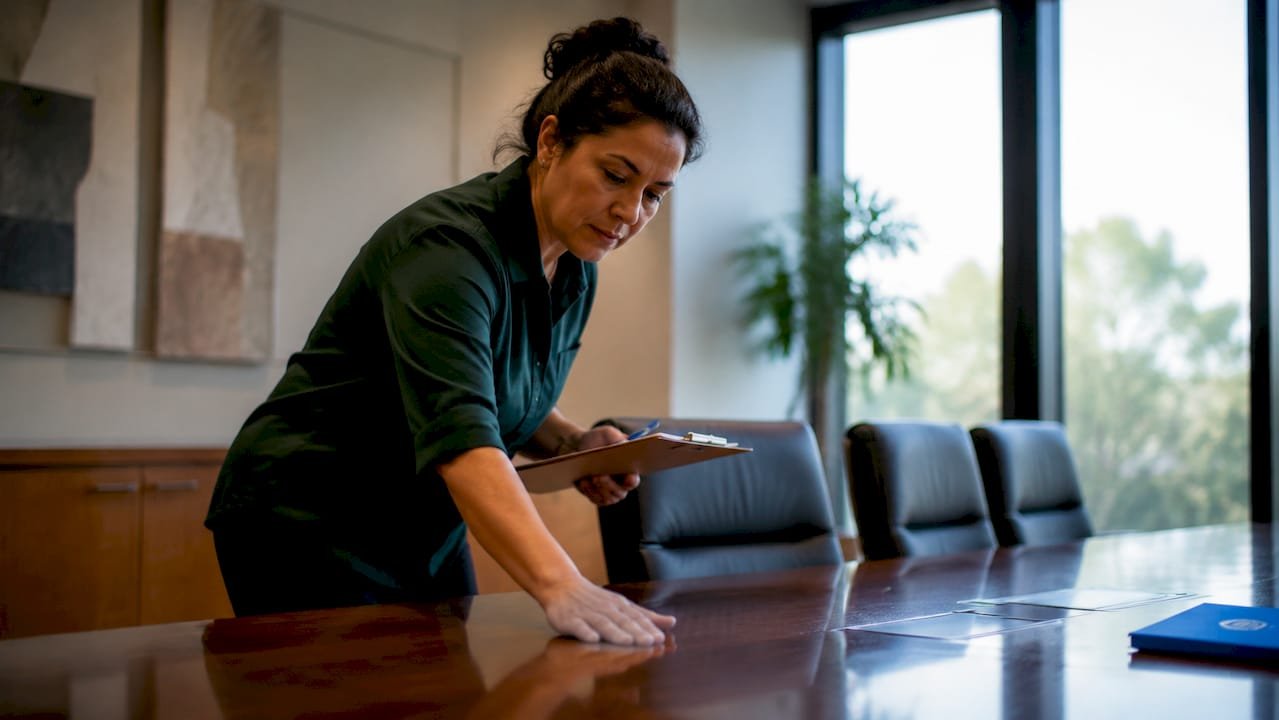
Quality control in cleaning is the structured system that guarantees every task is performed to a defined standard, every time. The role of quality control in cleaning goes far beyond a final walkthrough. It covers standard-setting, staff training, scheduled inspections, performance tracking, and corrective action. When these elements work together, cleaning operations deliver consistent results that build client trust and support business growth. This article breaks down each component so cleaning managers can build a system that actually holds up under real-world conditions.
What are the key components of an effective quality control system?
A five-component QC framework forms the backbone of any reliable cleaning operation: clear standards, rigorous training, scheduled inspections, data-driven tracking, and verified corrective action. Each component depends on the others. Remove one and the system develops gaps that complaints eventually expose.
Clear standards define exactly what “clean” means for each area. A restroom standard, for example, specifies which surfaces get disinfected, which products are used, and how long the task should take. Without that specificity, two technicians working the same space will produce two different results.
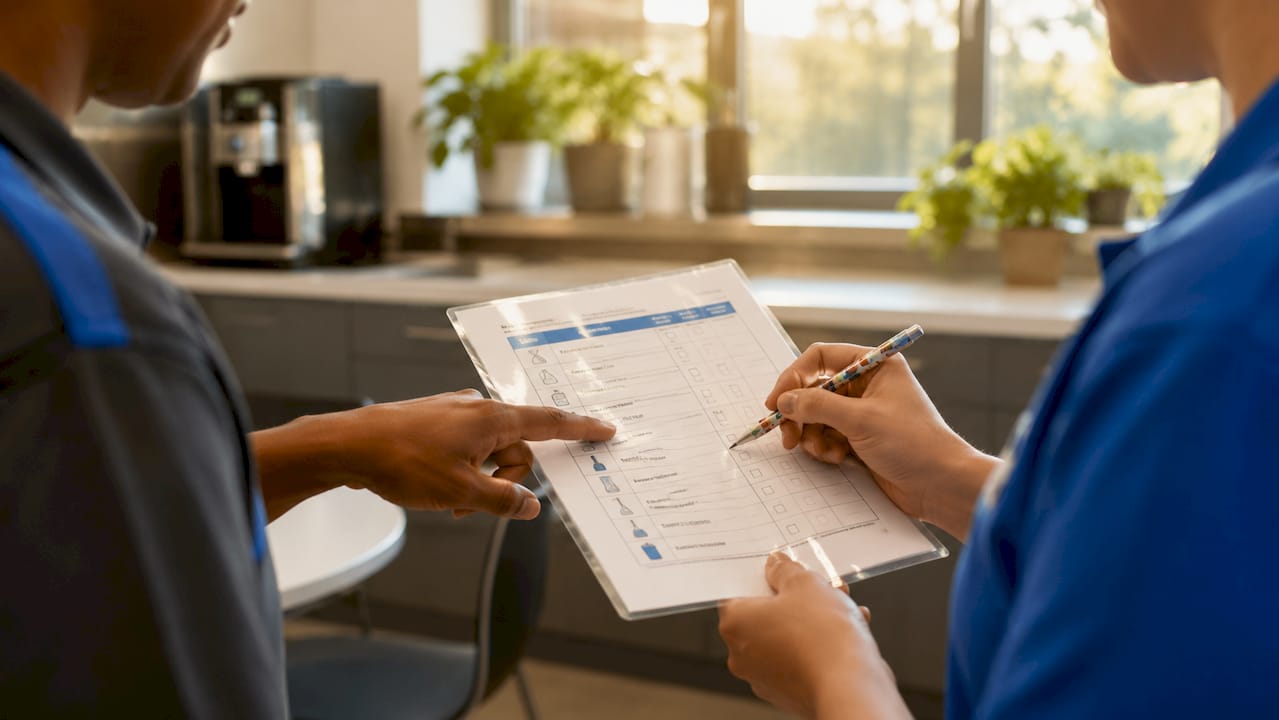
Staff training translates those standards into repeatable behavior. Training is not a one-time event. It is an ongoing process tied directly to inspection findings. When a recurring issue appears in audit data, the training program should respond to it within days, not quarters.
Scheduled inspections create the feedback loop that keeps standards alive. Random supervisor inspections cover 10–20% of service areas monthly, which is enough to detect drift without overwhelming supervisors. Frontline self-checks run daily and catch most issues before a supervisor ever arrives.
Data-driven tracking turns inspection results into trends. A single failed inspection is a data point. Ten failed inspections in the same area over three months is a pattern that demands a structural fix, not a verbal reminder.
Verified corrective action closes the loop. Identifying a problem without confirming the fix is the most common failure point in cleaning QC programs. Every deficiency needs a documented resolution, not just a note in a log.
Pro Tip: Use a numeric rating scale (1–5) rather than pass/fail on inspections. Numeric scores reveal gradual decline before it becomes a client-visible failure.
| Component | What it does |
|---|---|
| Clear standards | Defines the measurable outcome for each cleaning task |
| Staff training | Converts standards into consistent technician behavior |
| Scheduled inspections | Detects drift and confirms compliance across locations |
| Data tracking | Converts individual results into performance trends |
| Corrective action | Confirms deficiencies are resolved, not just recorded |
How does digital technology improve cleaning quality assurance?
Digital tools change quality assurance in cleaning from a paper-based, memory-dependent process into a documented, accountable system. Digital integration addresses up to 80% of common quality issues before they escalate into client complaints. That figure reflects a fundamental shift: problems get caught internally rather than reported externally.
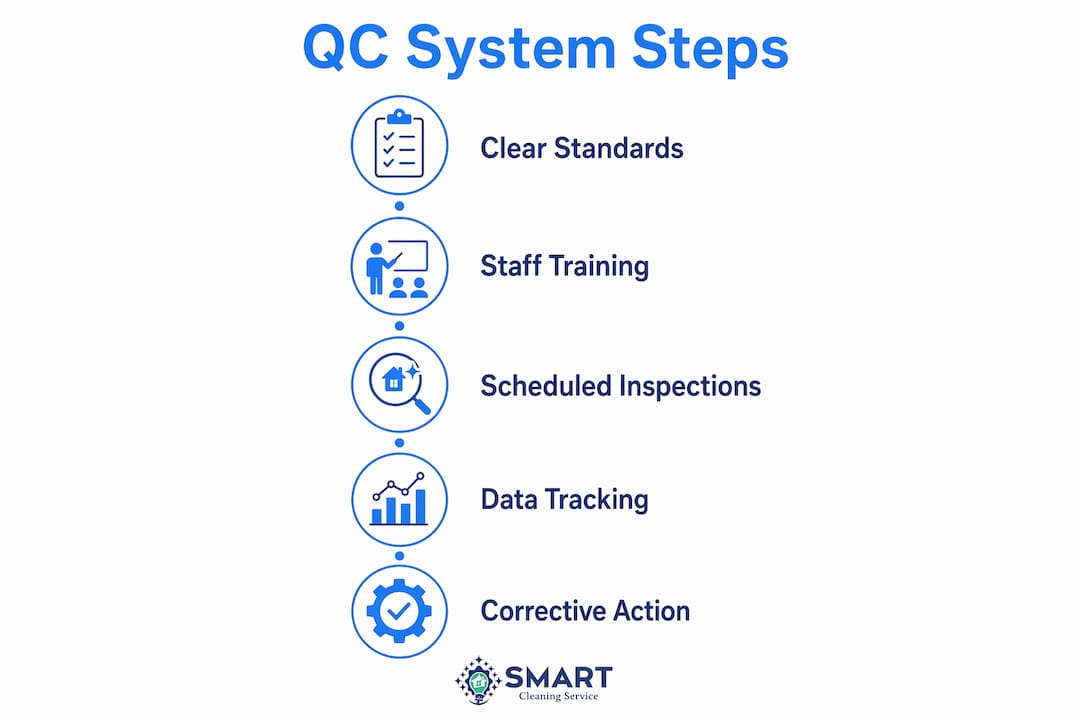
Photo documentation is the most underused tool in the industry. Before-and-after images taken at each job site do two things simultaneously. They provide proof of work for the client and serve as training material for the team. Sharing before-and-after images during team meetings reduces repeat errors by up to 30% compared to written memos alone. A technician who sees a photo of their own missed area corrects faster than one who reads a written note about it.
Digital checklists replace subjective memory with objective confirmation. A technician who checks off each task in a mobile app creates a timestamped record. That record tells a supervisor exactly what was completed, when, and by whom. It also flags incomplete tasks in real time, before the client notices.
Real-time client feedback tools close the communication gap between service delivery and client perception. When a client can submit feedback immediately after a visit, the cleaning team can respond the same day. That speed matters. Technology in cleaning services has made same-day response a realistic standard rather than an exception.
Pro Tip: Set up automatic photo uploads at job completion. This creates a searchable archive that supervisors can review remotely, without needing to be on-site for every inspection.
What inspection methods actually verify cleaning quality?
Inspection is the verification layer that confirms standards are being met, not just assumed. The most effective approach uses a tiered structure: daily frontline self-checks, weekly team lead reviews, and monthly randomized supervisor audits. Each tier catches different categories of issues at different frequencies.
Proactive inspections run on a schedule, independent of complaints. Reactive inspections happen after something goes wrong. The difference in outcome is significant. Proactive quality control prevents recurring problems. Reactive oversight fixes the same problems repeatedly without addressing root causes.
For specialized environments like medical offices, food service facilities, or high-traffic commercial spaces, objective measurement tools add a layer that visual inspection cannot provide. ATP bioluminescence meters measure organic residue on surfaces and provide quantitative sanitation validation independent of inspector judgment. A surface can look clean and still fail an ATP test. That gap between appearance and actual cleanliness is exactly what objective measurement closes.
The corrective action window is as important as the inspection itself. A strict 24-hour window for resolving identified deficiencies transforms inspections from punitive audits into trust-building exercises. Clients who see a problem corrected within 24 hours develop more confidence in the service than clients who never see a problem at all, because the response demonstrates accountability.
Here is a practical inspection sequence for a commercial account:
- Technician completes self-check using a digital checklist at job completion.
- Team lead reviews photos and checklist data within two hours of service.
- Supervisor conducts an unannounced on-site audit once per month.
- Any deficiency triggers a documented corrective action within 24 hours.
- Corrective action is verified and logged before the file is closed.
Understanding why residential cleaning standards differ from commercial ones helps managers calibrate inspection criteria correctly for each account type.
Why does continuous improvement matter in cleaning quality control?
Quality control is not a policy you set once and file away. QC standards must evolve dynamically with changes in building use patterns and client expectations. A standard written for a 50-person office becomes inadequate when that office grows to 200 people. Occupancy changes, seasonal traffic shifts, and new client priorities all require standard updates.
Trend data is the engine of continuous improvement. When inspection scores for a specific area decline over three consecutive months, that trend signals a systemic issue, not a one-off mistake. Acting on trends prevents the kind of compliance drift that leads to contract losses.
Client feedback feeds directly into the improvement cycle. Structured feedback, collected consistently after each visit, reveals patterns that internal inspections sometimes miss. A client who repeatedly mentions a specific area is providing free audit data. The cleaning manager’s job is to treat that feedback as a data point, not a complaint.
Standardized processes across teams enable consistent delivery regardless of personnel changes. When standards are documented and training is tied to those documents, a new technician can reach acceptable performance faster than in an undocumented operation. That consistency is what makes a cleaning business scalable.
Pro Tip: Review your QC standards at the start of each quarter. Check whether occupancy levels, client priorities, or seasonal conditions have changed since the last review. Update standards before problems appear, not after.
Continuous training keeps the team aligned with current standards. Sharing trend data with technicians, not just supervisors, creates a culture where quality is everyone’s responsibility. Transparency about performance data builds team engagement faster than any incentive program.
Key Takeaways
Effective quality control in cleaning requires five integrated components, digital verification tools, tiered inspections, and continuous standard updates to deliver consistent results that clients trust.
| Point | Details |
|---|---|
| Five-component framework | Standards, training, inspections, tracking, and corrective action must all function together. |
| Digital tools catch issues early | Photo documentation and digital checklists address up to 80% of quality issues before client complaints. |
| Tiered inspections prevent drift | Daily self-checks and monthly supervisor audits catch different issue categories at the right frequency. |
| 24-hour corrective action window | Resolving deficiencies within 24 hours builds more client trust than a flawless record alone. |
| Standards must evolve | Review QC criteria quarterly to reflect occupancy changes, seasonal shifts, and client feedback. |
Quality control is the foundation, not the finish line
Most cleaning operations treat quality control as a safety net. They build it to catch problems after they occur. That framing is the root cause of most service failures I have seen. A QC system designed to catch problems is always one step behind. A QC system designed to prevent problems is where consistent client retention actually comes from.
The managers who build the most reliable operations share one habit: they treat inspection data as operational intelligence, not as a report card. When scores decline in a specific area, they ask why before they ask who. That distinction separates a learning organization from a blame-driven one.
Technology adoption is the single biggest lever available to cleaning managers right now. Teams that still rely on paper checklists and verbal feedback are operating with a structural disadvantage. Digital documentation, photo archives, and real-time feedback loops do not replace good technicians. They make good technicians visible and accountable in ways that paper never could.
The other mistake I see consistently is treating training as a one-time onboarding event. Training should be a living process, updated every time inspection data reveals a recurring gap. When you connect training directly to audit findings, you close the loop between what the standard says and what the team actually does. That connection is what turns a QC policy into a QC culture.
— Wilker
How Smartcleaningwa builds quality into every service
Smartcleaningwa applies structured quality control across every service it provides in the Greater Seattle Area, from recurring house cleaning to office cleaning in Seattle and Airbnb turnover work. Every visit follows documented standards, digital checklists, and a real-time communication process that keeps clients informed without requiring them to follow up.
Trained staff, photo documentation, and a clear corrective action process are built into Smartcleaningwa’s operations, not added as an afterthought. If you want cleaning service backed by a real accountability system, request a free estimate and see how a process-driven approach changes what consistent cleaning actually looks like.
FAQ
What is quality control in cleaning services?
Quality control in cleaning is the systematic process of setting standards, training staff, conducting inspections, tracking performance, and verifying corrective actions to deliver consistent results on every visit.
Why does quality assurance in cleaning matter for client retention?
Clients renew contracts with services that demonstrate accountability. A documented QC system with a 24-hour corrective action window builds more trust than a service that simply avoids visible problems.
How often should cleaning inspections be conducted?
Frontline self-checks should run daily, team lead reviews weekly, and supervisor audits monthly. Random supervisor inspections covering 10–20% of service areas each month are sufficient to detect compliance drift.
What metrics are used to measure cleaning quality?
Common quality metrics include numeric inspection scores, ATP surface test results, corrective action response times, and client feedback ratings. Numeric scales reveal gradual decline that pass/fail systems miss entirely.
How do digital tools support cleaning quality control?
Digital checklists, photo documentation, and real-time feedback platforms create timestamped, searchable records of every service visit. These tools help manage multiple cleaning crews consistently across locations without requiring supervisors to be on-site for every job.
Recommended
- Smart Cleaning Service™ House Cleaning Seattle Kirkland Bellevue Redmond
- The Role of Communication in Cleaning Services – Smart Cleaning Service
- Smart Cleaning Service™ House Cleaning Seattle Kirkland Bellevue Redmond
- Why Automate Property Cleaning: A Manager’s Guide