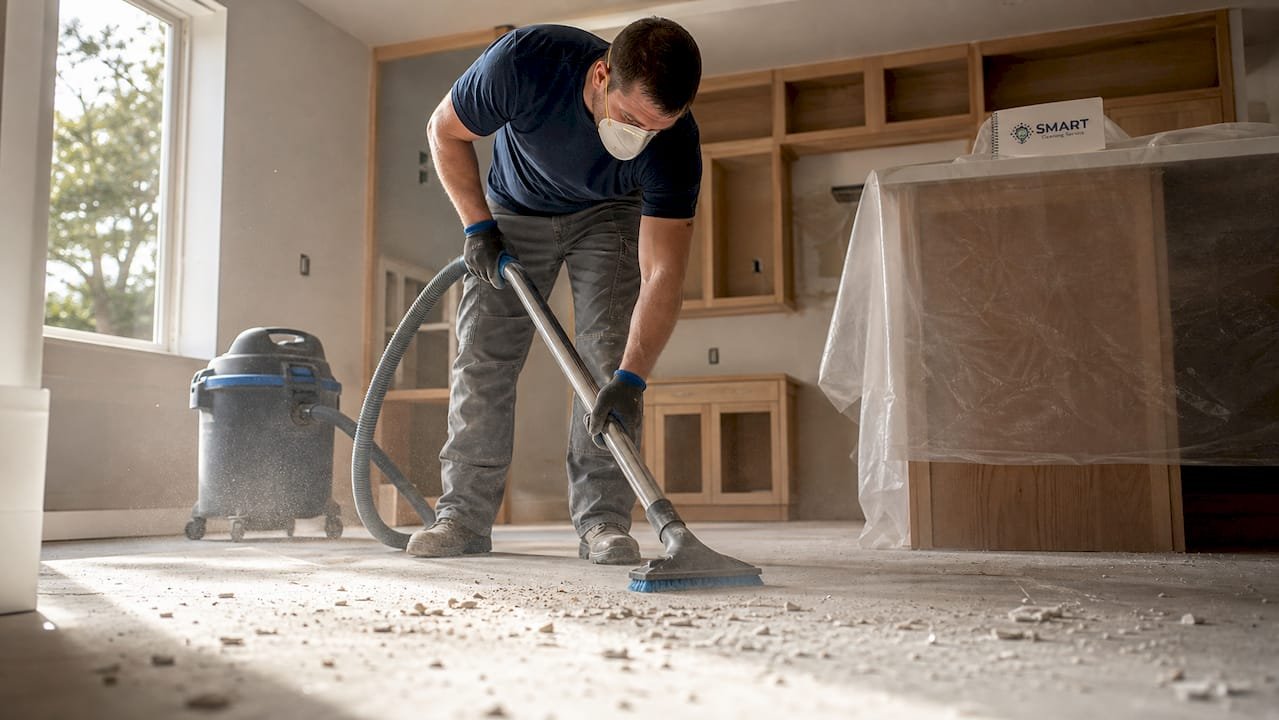
Cleaner vacuuming debris in a new construction room
#image_title

How to Clean After Construction: A Complete Guide

Post-construction cleaning is the process of removing debris, dust, and residue after renovation or building work to make a space safe and move-in ready. Knowing how to clean after construction properly separates a finished project from a truly livable one. Contractors typically deliver a broom-swept finish, leaving the deep cleaning of fine dust, chemical residues, and surface grime to homeowners or professionals. HEPA filtration and a structured, multi-phase approach are the two non-negotiable standards for effective post-construction cleanup in 2026.

What tools and safety gear are essential for post-construction cleaning?

The right tools determine whether you remove construction dust or simply move it around. Construction dust is chemically distinct from household dust. It contains silica particles, drywall compounds, and chemical residues that require HEPA-rated tools to capture safely. Standard household vacuums lack the filtration to handle this material.

Hands holding a HEPA vacuum hose with PPE nearby

Core tools for the job

Every post-construction cleanup needs these items before work begins:

  • HEPA-filtered vacuum or shop vac: Captures fine particles without recirculating them. HEPA filters remove 99.97% of particulates, including silica, mold spores, and bacteria. That level of filtration is the difference between a clean room and a health hazard.
  • Microfiber cloths: Trap dust electrostatically instead of spreading it. Use separate cloths for different surfaces to avoid cross-contamination.
  • Flat mop with washable pads: Covers large floor areas without pushing debris into corners.
  • Extension dusters: Reach ceiling fans, light fixtures, and high shelves before vacuuming lower surfaces.
  • Spray bottles and pH-neutral cleaners: Safe for most finished surfaces including painted walls and sealed wood.
  • Buckets and scrub brushes: For grout lines, tile, and stubborn residue on hard surfaces.

Personal protective equipment (PPE)

PPE is not optional during post-construction cleanup. Fine silica dust causes respiratory damage with repeated exposure. Wear an N95 respirator mask, safety goggles, and nitrile gloves throughout every phase of cleaning. If you are working in a space with poor ventilation, add a disposable coverall to keep dust off your clothing.

ToolPurposeSafety Note
HEPA vacuumCaptures fine dust and particlesRequired; standard vacuums spread dust
Microfiber clothsTrap surface dust without spreadingUse damp, never dry, after vacuuming
N95 respiratorProtects lungs from silica and chemicalsWear throughout all cleaning phases
Safety gogglesShields eyes from airborne debrisRequired when dusting overhead surfaces
Nitrile glovesProtects skin from chemical residuesReplace when torn or saturated
Extension dusterReaches high surfaces before vacuumingStart here to push dust downward

Pro Tip: Never use a standard household vacuum for construction dust. Fine dust damages vacuum motors permanently and blows particles back into the air. Rent or purchase a shop vac with a HEPA filter specifically for this job.

How to perform a multi-phase cleaning after construction

Professional post-construction cleaning follows three distinct phases: rough clean, final detail clean, and touch-up clean. Each phase has a specific purpose and timing. Skipping phases or combining them leads to rework, which costs more time than doing it right the first time.

Infographic illustrating three phases of post-construction cleaning

Phase 1: Rough clean

The rough clean happens during or immediately after active construction ends. The goal is bulk debris removal, not perfection.

  1. Remove all large debris: lumber scraps, packaging, broken tiles, and hardware.
  2. Sweep or shovel loose material from floors into contractor bags.
  3. Clear all safety hazards: exposed nails, broken glass, and sharp metal edges.
  4. Remove temporary protective coverings from floors and countertops.
  5. Dispose of all construction waste according to local regulations.

This phase takes the most physical labor. Do not attempt fine dust removal here. Construction activity may still be ongoing nearby, and fine dust will resettle before you finish.

Phase 2: Final detail clean

The final detail clean is the most technical phase. All construction work must be fully complete before starting.

  1. Replace HVAC filters before running any air systems.
  2. HEPA-vacuum all surfaces from top to bottom: ceilings, walls, shelves, then floors.
  3. Damp-wipe all surfaces with microfiber cloths after vacuuming each area.
  4. Clean windows, glass, and mirrors with a streak-free glass cleaner.
  5. Scrub tile grout and remove grout haze with a specialized grout haze remover.
  6. Sanitize kitchen surfaces, sinks, and bathroom fixtures.
  7. Clean inside cabinets, drawers, and closets.

Pro Tip: Vacuum before wet wiping every time. Applying water to dusty surfaces turns fine particles into a paste that stains and damages finishes. Sequence matters more than effort.

Phase 3: Touch-up clean

The touch-up clean happens 24–48 hours after the final detail clean, once residual dust has settled.

  1. Re-vacuum all floor surfaces.
  2. Wipe down door handles, light switches, and outlet covers.
  3. Remove fingerprints and smudges from glass and mirrors.
  4. Check baseboards and window sills for settled dust.
  5. Conduct a final walkthrough with a flashlight to catch missed areas.
PhaseTimingPrimary Focus
Rough cleanDuring or just after constructionBulk debris and safety hazard removal
Final detail cleanAfter all work is completeFine dust, surfaces, fixtures, and sanitizing
Touch-up clean24–48 hours after final detailSettled dust, smudges, and final inspection

What special considerations are needed for HVAC and surface residues?

HVAC systems are the most overlooked part of post-construction cleanup. Construction dust settles deep in ductwork and gets redistributed throughout the entire home every time the system runs. Many homeowners expect the HVAC to filter out construction dust on its own. It does not. Without cleaning ducts and replacing filters, dust contamination continues for weeks after construction ends.

Cleaning HVAC systems after construction

  • Replace all air filters immediately after construction ends. Use MERV 11 or higher rated filters, or HEPA-grade filters where the system supports them.
  • Vacuum all supply and return vents with a HEPA vacuum before running the system.
  • Run the system on fan-only mode for 30 minutes, then replace filters again.
  • Consider professional duct cleaning for major renovations involving drywall, concrete cutting, or insulation work.

Removing surface-specific construction residues

Different residues require different removal methods. Using the wrong product causes permanent damage.

  • Paint splatters: Let latex paint dry fully, then peel or scrape with a plastic scraper. Use a chemical solvent designed for paint removal on stubborn spots. Test in a hidden area first.
  • Caulk excess: Score dried caulk with a utility knife, then peel away. Apply a caulk remover solvent to soften residue before wiping.
  • Grout haze: Apply a commercial grout haze remover to tile surfaces. Allow dwell time per product instructions, then scrub with a stiff brush and rinse thoroughly.
  • Adhesive residue: Use a citrus-based adhesive remover on hard surfaces. Avoid petroleum-based solvents on sealed wood or vinyl flooring.
  • Drywall dust on wood: Vacuum first, then wipe with a barely damp microfiber cloth. Excess moisture raises wood grain and damages finishes.

Pro Tip: Always test any chemical cleaner on an inconspicuous spot and wait 10 minutes before applying it broadly. New finishes are especially vulnerable to solvents, and a damaged surface costs far more to repair than the time saved by skipping the test.

For broader home maintenance after renovation, pest control checks are worth scheduling alongside your cleanup, since construction activity often disturbs existing pest barriers.

What are the most common post-construction cleaning mistakes?

Most cleaning failures after renovation come from sequence errors, not effort. Cleaning out of order causes dust to resettle on surfaces you already cleaned, forcing rework. Construction cleaning is a test of sequence, not speed.

The most frequent mistakes homeowners and contractors make include:

  • Dry sweeping fine dust: Sweeping pushes fine particles airborne, where they stay suspended for hours. Vacuum instead.
  • Cleaning floors first: Dust follows gravity. Clean ceilings, walls, and shelves before touching the floor. Professional crews always finish floors last to prevent recontamination.
  • Using a standard household vacuum: Non-HEPA vacuums spread fine dust back into the air and risk motor damage. Use a shop vac or HEPA-rated vacuum only.
  • Skipping HVAC filter replacement: Running the system before replacing filters distributes dust through every room.
  • Wet wiping before vacuuming: Water turns dust into a paste. Always vacuum first, then follow with damp microfiber cloths.
  • Rushing the touch-up phase: Residual dust continues to settle for 24–48 hours after the final detail clean. Skipping the touch-up leaves visible dust on floors and ledges.

Pro Tip: Walk through the space with a bright flashlight held at a low angle before declaring the job done. Raking light across surfaces reveals dust and smudges that overhead lighting hides completely.

For a broader look at common cleaning mistakes and how to fix them, the pattern of errors in post-construction work mirrors what happens in regular home cleaning, just at a higher stakes level.

When should you hire professional post-construction cleaning services?

DIY post-construction cleaning works well for small remodels with limited dust. Larger projects create conditions that exceed what most homeowners can handle safely without professional-grade equipment.

Hire a professional cleaning service when any of these apply:

  • The project involved drywall, concrete cutting, or insulation work. These materials produce fine silica and fibrous dust that requires industrial HEPA equipment to remove safely.
  • You do not own a HEPA vacuum or air scrubber. Renting equipment adds cost and complexity. Professional crews bring everything needed.
  • The HVAC system needs duct cleaning. Duct cleaning requires specialized equipment and is not a DIY task.
  • The space must pass inspection before occupancy. Professional cleaning meets the documentation and quality standards that inspections require.
  • Time is limited. A professional crew completes in hours what takes a homeowner days.

The case for DIY is straightforward for small bathroom or kitchen tile work with minimal dust. The case for professional help is equally clear for whole-room renovations, new construction, or any project involving hazardous materials. Professional cleaning after renovation also protects property value by preventing surface damage from improper cleaning methods.

Key Takeaways

Post-construction cleaning requires a structured three-phase approach with HEPA equipment and a strict top-to-bottom sequence to remove fine dust safely and permanently.

PointDetails
Use HEPA equipment onlyStandard vacuums spread fine dust and risk motor damage; use a HEPA or shop vac throughout.
Follow the three-phase processRough clean, final detail clean, and touch-up clean each serve a distinct purpose.
Clean top to bottom, alwaysDust falls with gravity; floors must be cleaned last to prevent recontamination.
Replace HVAC filters firstRunning the system before replacing filters distributes construction dust through every room.
Vacuum before wet wipingApplying water to dusty surfaces creates paste that stains and damages finishes.

The part most people get wrong about post-construction cleaning

After years of working with renovation projects, the single most consistent mistake I see is treating post-construction cleanup like regular house cleaning. Homeowners grab a mop, start on the floor, and wonder why the space still looks dusty an hour later. The dust came right back down from the walls and ceiling they had not touched yet.

The sequence is everything. HEPA-vacuuming from ceiling to floor, in every room, before touching a single damp cloth, is the only method that actually works. I have watched crews spend twice as long on a space because they skipped this order. The rework cost more time than doing it right the first pass.

The HVAC system is the other piece that gets ignored until it is too late. Most people flip the heat or AC back on the moment construction wraps up. That system then pulls fine dust through every duct and deposits it on every surface you just cleaned. Replace the filter before you run the system. Run it on fan-only for a short cycle. Replace the filter again. That sequence saves hours of rework.

Post-construction cleaning is not glamorous work, but it is precise work. Approach it with the right tools, the right order, and the patience to let each phase finish before starting the next. The result is a space that is genuinely clean, not just visually clean.

— Wilker

Smartcleaningwa post-construction cleaning in the Greater Seattle Area

Post-construction cleaning done right takes professional-grade equipment, a trained eye, and time most homeowners and contractors do not have after a renovation wraps up.

https://smartcleaningwa.com

Smartcleaningwa provides multi-phase post-construction cleaning for residential and commercial properties across Seattle, Kirkland, Bellevue, and Redmond. Every job uses HEPA-rated equipment, a top-to-bottom cleaning sequence, and a final walkthrough to confirm the space is move-in ready. Smartcleaningwa is licensed, insured, and built around reliable communication and real-time updates. Get a free cleaning estimate and find out how quickly your space can be ready for occupancy.

FAQ

What does post-construction cleaning include?

Post-construction cleaning covers bulk debris removal, HEPA vacuuming of all surfaces, damp wiping, window cleaning, grout haze removal, and HVAC filter replacement. It follows a three-phase process: rough clean, final detail clean, and touch-up clean.

How do you remove construction dust from a house?

HEPA-vacuum all surfaces from top to bottom before using any wet cleaning method. Replace HVAC filters before running the system to prevent dust from recirculating through the ducts.

Can I use a regular vacuum for construction dust?

No. Standard household vacuums lack the filtration to capture fine construction particles and risk permanent motor damage. Use a shop vac or a vacuum with a certified HEPA filter rated for fine dust.

How long does post-construction cleaning take?

Timing depends on project size and the number of phases required. A single-room renovation typically takes 4–8 hours for a thorough final detail clean. Whole-home or new construction projects often require multiple days across all three phases.

When should I clean HVAC ducts after construction?

Replace HVAC filters immediately after construction ends, before running the system. For major renovations involving drywall or concrete work, schedule professional duct cleaning to remove embedded dust that filter replacement alone cannot address.