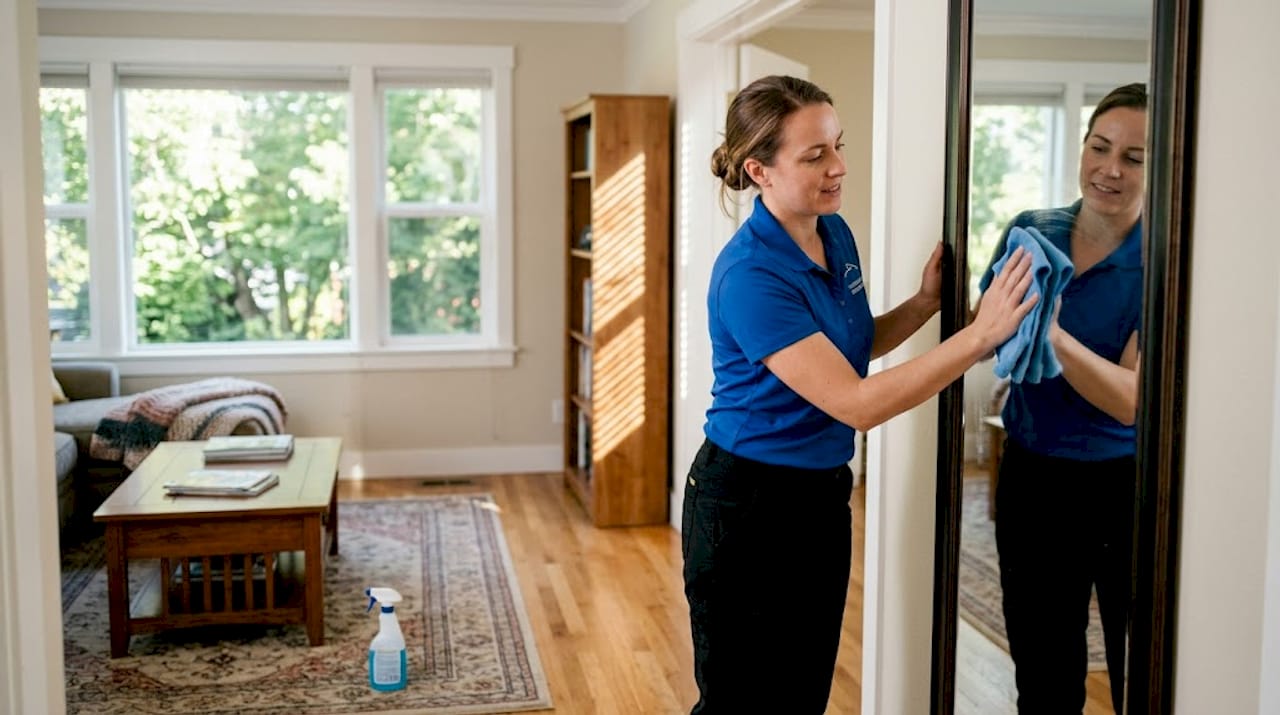
Most people assume residential cleaning is just tidying up with better supplies. That assumption costs time, money, and in some cases, your health. True professional residential cleaning is a structured process built around sanitation, efficiency, and consistency — not just making things look presentable. For Seattle-area homeowners and renters dealing with year-round rain, mold-friendly humidity, and high-traffic living spaces, the gap between basic tidying and professional cleaning is especially significant. This guide breaks down what residential cleaning actually involves, how professionals approach it, and when it makes the most sense to bring in expert help.
Table of Contents
- What defines residential cleaning?
- Core methodologies: How professionals clean efficiently
- Standard cleaning vs. deep cleaning: What’s included?
- When and why do Seattle residents hire professional cleaners?
- Our take: Why residential cleaning is more important than you think
- Experience professional residential cleaning with Smart Cleaning WA
- Frequently asked questions
Key Takeaways
| Point | Details |
|---|---|
| Beyond basic tidying | Residential cleaning focuses on hygiene and sanitation rather than mere appearance. |
| Professional methods matter | Experts use top-to-bottom and dry-before-wet strategies to save time and ensure thorough results. |
| Deep vs. standard cleaning | Deep cleaning covers hard-to-reach areas and costs more but is crucial for special situations. |
| Seattle’s unique needs | Local weather and lifestyle make regular or move-in/out cleaning especially important. |
| Value of hiring pros | Professional cleaning brings expertise and reliability, enhancing home health for Seattle residents. |
What defines residential cleaning?
Residential cleaning is not the same as picking up clutter or running a vacuum before guests arrive. It is a structured, repeatable process focused on hygiene, sanitation, and removing the buildup that everyday routines miss. The goal is not just a clean-looking home — it is a genuinely healthier living environment.
Professional residential cleaning covers a specific set of tasks that go well beyond surface-level tidying:
- Dusting ceiling fans, light fixtures, and shelving
- Disinfecting high-touch surfaces like door handles, light switches, and countertops
- Scrubbing bathrooms including toilets, sinks, and shower walls
- Cleaning kitchen surfaces, stovetops, and cabinet exteriors
- Vacuuming carpets, rugs, and upholstered furniture
- Mopping hard floors with appropriate cleaning solutions
- Emptying trash and relining bins
For Seattle residents specifically, residential cleaning carries extra weight. The Pacific Northwest’s wet climate creates ideal conditions for mold, mildew, and dust mite growth. Moisture settles into grout lines, window tracks, and bathroom corners faster than in drier climates. Seasonal grime from rain-tracked mud and pollen adds another layer of buildup that a quick wipe-down simply will not address.
“Residential cleaning emphasizes sanitation and hygiene beyond what typical DIY routines achieve. Consistent methods and proper sequencing are what separate professional results from average ones — and professionals bring both the expertise and the right supplies to do it efficiently.”
This is exactly why a regular cleaning service matters more than most people realize. Trained cleaners bring commercial-grade equipment, industry-tested products, and a systematic approach that delivers results you cannot replicate with a mop and some all-purpose spray.
Now that the difference between basic tidying and real cleaning is clear, let’s explore what a professional cleaning routine actually looks like step by step.
Core methodologies: How professionals clean efficiently
Professionals do not just clean harder — they clean smarter. The methods they use are designed to eliminate rework, reduce time on-site, and ensure nothing gets missed. Understanding these methods explains why a trained cleaner can do in two hours what takes most homeowners an entire afternoon.
Here is the order of operations most professionals follow:
- Gather and stage supplies before entering any room to avoid back-and-forth trips
- Declutter surfaces so cleaning products can actually reach the area being treated
- Work top to bottom — dust ceiling fans, shelves, and light fixtures before touching floors
- Apply cleaning products and allow dwell time before wiping, so disinfectants can actually kill bacteria
- Use zone cleaning — complete all glass surfaces, then all countertops, rather than jumping between tasks
- Clean dry before wet — sweep and dust before mopping or wiping to avoid spreading debris
- Finish with floors — vacuum carpets and mop hard floors last, working backward toward the exit
Pro Tip: The biggest mistake DIY cleaners make is mopping before dusting. Dust falls from shelves and fans onto a freshly mopped floor, forcing you to redo the work. Always go top to bottom.
The top-to-bottom and dry-before-wet methodologies are the two most impactful sequencing rules in professional cleaning. They prevent re-cleaning and dramatically cut down total time on the job.
Here is a quick comparison of how DIY and professional approaches typically differ:
| Factor | DIY approach | Professional approach |
|---|---|---|
| Sequencing | Random or room-by-room | Structured top-to-bottom, zone-based |
| Product knowledge | General purpose sprays | Task-specific, commercial-grade products |
| Dwell time | Rarely observed | Built into the workflow |
| Time efficiency | 3-5 hours for average home | 1.5-3 hours with same or better results |
| Consistency | Varies each session | Repeatable checklist-driven process |
This structured approach is what makes a regular cleaning checklist so effective when followed by trained professionals. It is not about working longer — it is about working in the right order.
Standard cleaning vs. deep cleaning: What’s included?
Not all cleaning sessions are created equal. Standard cleaning and deep cleaning serve different purposes, and knowing which one your home needs can save you money and frustration.
Standard cleaning covers the visible, high-traffic areas of your home on a recurring basis. Think of it as maintenance mode — keeping your home consistently clean between deeper sessions.
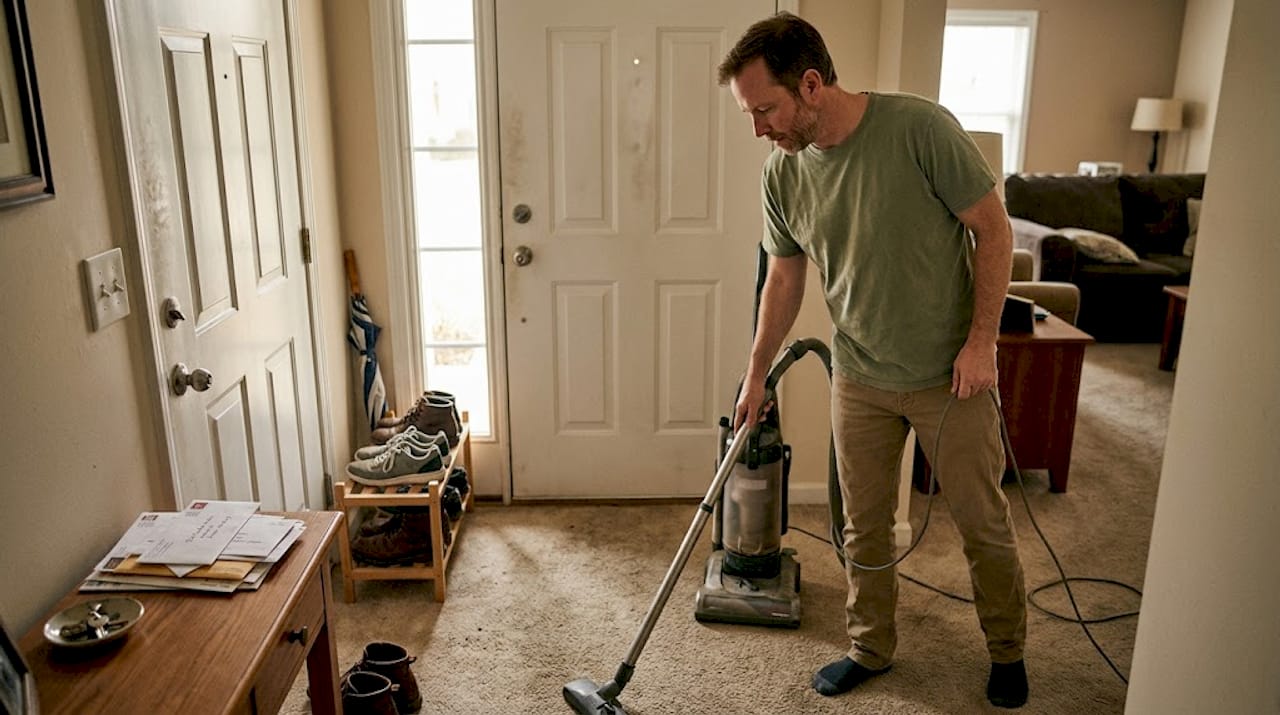
Deep cleaning goes further. It targets areas that standard cleaning skips: inside the oven and refrigerator, behind large appliances, grout lines, baseboards, window sills, vents, and light fixtures. According to cleaning industry comparisons, deep cleaning takes 2-3x longer and is typically priced 1.5-2.5x higher than a standard clean.
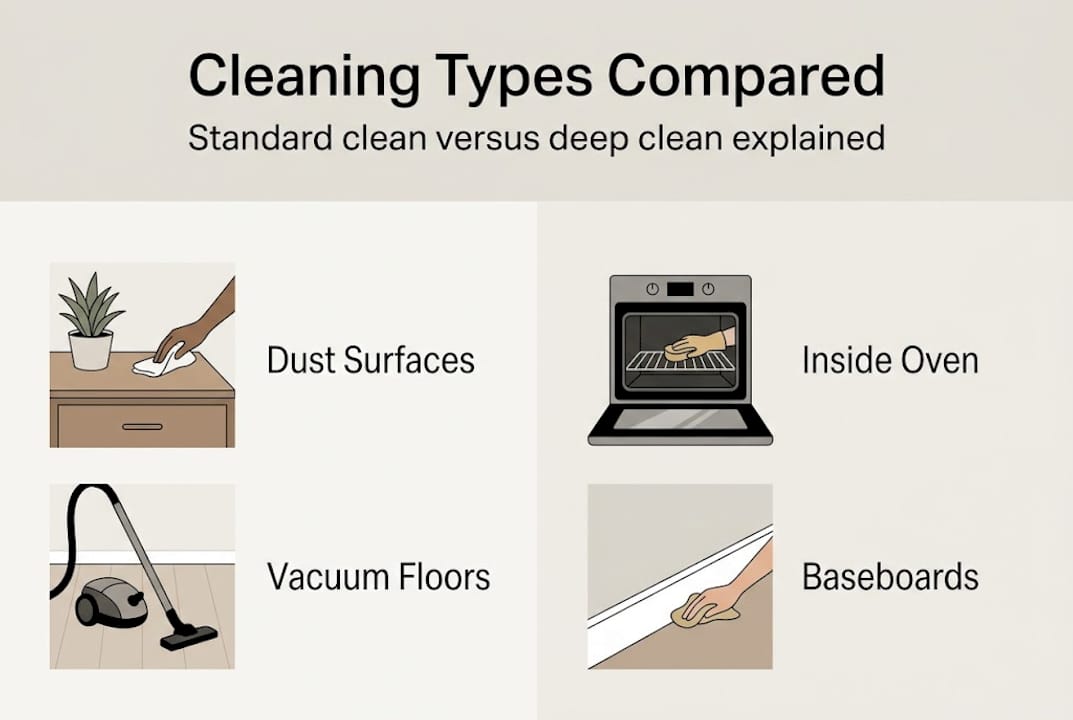
| Area | Standard cleaning | Deep cleaning |
|---|---|---|
| Countertops and surfaces | Yes | Yes (detailed) |
| Bathrooms | Yes | Yes (grout, behind toilet) |
| Kitchen appliances (exterior) | Yes | Yes (interior too) |
| Baseboards | No | Yes |
| Inside oven/fridge | No | Yes |
| Behind furniture | No | Yes |
| Window sills and tracks | No | Yes |
| Vents and light fixtures | No | Yes |
Deep cleaning is the right call in specific situations:
- Moving into a new home or apartment
- Preparing a property for new tenants
- After a renovation or construction project
- Seasonal refreshes (especially fall and spring in Seattle)
- First-time professional clean before starting a recurring schedule
For Seattle renters especially, a thorough deep cleaning service before move-out can directly impact whether you get your security deposit back. Landlords notice baseboards, grout, and appliance interiors. A standard clean will not cover those.
If you are maintaining a home that already gets regular home cleaning, you may only need a deep clean once or twice a year. But if it has been months since a thorough clean, starting with deep cleaning and then moving to a recurring schedule is the smarter approach. Neighborhoods like Redmond with older housing stock often benefit from Redmond deep cleaning services that address specific local grime patterns.
Now let’s see how cleaning applies to real-life situations for Seattle-area residents.
When and why do Seattle residents hire professional cleaners?
Seattle’s lifestyle creates specific cleaning demands that are different from drier, sunnier cities. Rain-tracked mud, mold-prone bathrooms, and the city’s active rental market all push residents toward professional cleaning more often than they might expect.
Here is a breakdown of the most common situations:
| Situation | Recommended service | Frequency |
|---|---|---|
| Ongoing home maintenance | Standard recurring clean | Weekly, biweekly, or monthly |
| Moving into a new place | Deep clean | Once, before move-in |
| Moving out of a rental | Move-out clean | Once, before final walkthrough |
| Airbnb or short-term rental | Turnover clean | After every guest stay |
| Post-renovation cleanup | Deep clean | Once, after project completion |
| Seasonal refresh | Deep clean | 1-2 times per year |
For renters, move-in/out cleaning is one of the highest-value services available. A professional clean documents the state of the property and ensures you are not held responsible for the previous tenant’s mess. For landlords, it protects the property’s condition between tenants.
Airbnb hosts in Seattle face a different challenge: consistency. Every guest expects the same level of cleanliness, and a single bad review about hygiene can tank your listing’s rating. Professional turnover cleaning solves that problem by removing the variability of doing it yourself after a long guest stay.
For homeowners, recurring professional cleaning is not a luxury — it is a time and health investment. Deep cleaning for Seattle homes addresses the moisture-related buildup that accumulates faster here than in most U.S. cities. As noted in cleaning industry research, deep cleaning is ideal for first-time cleans, seasonal refreshes, and move-in/out transitions.
To tie it all together, here is how the Seattle cleaning industry is evolving and what most guides miss.
Our take: Why residential cleaning is more important than you think
Most people think of professional cleaning as a convenience. We see it differently. After working with hundreds of Seattle-area homes, we believe residential cleaning is one of the most undervalued investments a homeowner or renter can make.
Here is the uncomfortable truth: DIY cleaning has hidden costs. The time you spend, the products you buy, and the areas you inevitably miss all add up. Mold in a bathroom corner that gets overlooked for three months is not a cleaning problem anymore — it is a remediation problem.
Professionals bring something beyond tools and technique. They bring consistency. The same surfaces get cleaned the same way every visit. That predictability is what actually maintains a healthy home over time.
We also think the deep cleaning perspectives conversation needs to shift. Deep cleaning is not a one-time fix — it is a reset that makes recurring maintenance more effective. Start clean, stay clean. That is the framework that actually works.
The homeowners who get the most value from professional cleaning are not the ones who hire help when things get bad. They are the ones who invest in prevention.
Experience professional residential cleaning with Smart Cleaning WA
If this guide clarified what residential cleaning actually involves, the next step is experiencing it firsthand.
At Smart Cleaning Service, we bring the same structured, professional methods described in this article to every home we clean across the Greater Seattle Area. Whether you need a one-time schedule deep cleaning to reset your space, or you are ready to set up regular cleaning options that keep your home consistently healthy, we are here to help. Licensed, insured, and focused on real results — not just a surface-level shine. Get a free estimate today and find out what professional cleaning looks like for your home.
Frequently asked questions
What does residential cleaning include?
Residential cleaning includes dusting, disinfecting, vacuuming, mopping, and sanitizing common touchpoints throughout your home. Unlike basic tidying, it follows a structured process focused on sanitation and hygiene that DIY routines rarely achieve consistently.
How is deep cleaning different from regular cleaning?
Deep cleaning tackles appliance interiors, grout, baseboards, and overlooked areas that standard cleaning skips. It takes 2-3x longer and is typically priced 1.5-2.5x higher than a regular cleaning session.
When should I schedule professional cleaning in Seattle?
Schedule professional cleaning before move-ins/outs, after seasonal changes, or on a recurring basis to manage Seattle’s moisture-related buildup. First-time cleans and seasonal refreshes are ideal starting points for deep cleaning.
How do professionals save time during cleaning?
Professionals use top-to-bottom and dry-before-wet methods along with zone cleaning to eliminate rework and move efficiently through a home without missing surfaces.
Is residential cleaning suitable for Airbnb turnovers?
Yes, professional residential cleaning ensures consistent hygiene and presentation between guest stays. It removes the variability of self-cleaning and protects your listing’s reputation, since move-ins/outs and turnovers are exactly the situations professional cleaning is designed for.