
The most critical cleaning mistakes homeowners make fall into three categories: misusing products, using ineffective dusting methods, and neglecting cleaning tool maintenance. These errors do not just leave your home looking dirtier. They actively create conditions where dust, bacteria, and residue build up faster. The good news is that fixing these habits takes less effort than the repeated cleaning cycles they cause. This guide covers the most common cleaning pitfalls and gives you the exact corrections to get better results every time.
1. Top cleaning mistakes: using too much product
Overusing cleaning products is one of the most widespread errors homeowners make. Excessive cleaner use leaves sticky residue on surfaces that actively attracts new dust and dirt. That residue then becomes harder to remove with each subsequent cleaning, creating a cycle of buildup that makes your home look perpetually dull.
The damage goes beyond aesthetics. On hardwood floors, stone countertops, and finished cabinetry, chemical residue can degrade protective coatings over time. The fix is straightforward: use less product than you think you need, then add more only if the surface requires it.
- Use a pea-sized amount of cleaner for most countertop tasks
- Dilute multipurpose sprays according to label directions, not by feel
- Rinse surfaces with a damp cloth after applying any cleaner to remove leftover product
- Check manufacturer guidelines for specific surfaces like granite or stainless steel
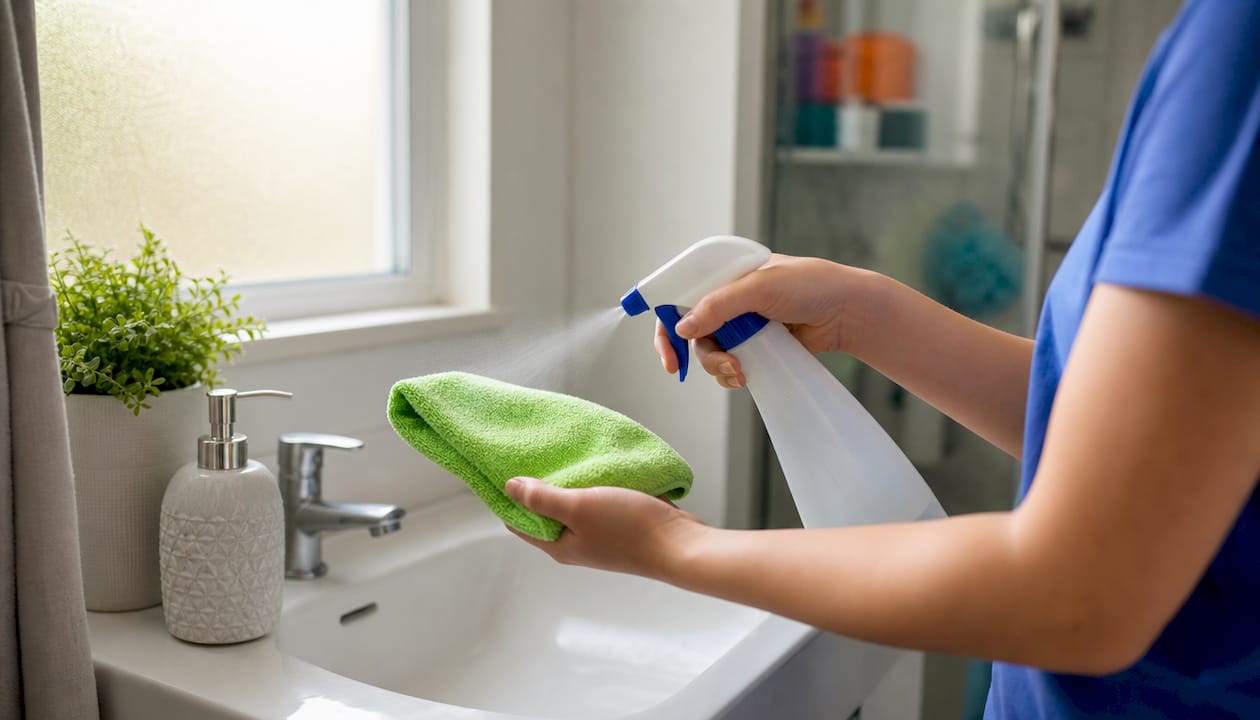
Pro Tip: Spray your cleaner onto the cloth, not the surface. You control the amount better, and you avoid pooling product in grout lines or seams.
2. Common dusting mistakes that spread dust instead of removing it
Traditional feather dusters are one of the biggest cleaning blunders in any home. Feather dusters launch dust into the air rather than trapping it, meaning that dust settles right back onto your furniture and floors within minutes. You end up cleaning the same surfaces repeatedly without ever actually removing the problem.
Microfiber cloths are the correct tool for dusting. Their fibers carry a slight electrostatic charge that traps particles instead of scattering them. For stubborn dust on wood or glass, a slightly damp microfiber cloth captures even fine particles that a dry cloth would miss.
The order you dust in matters just as much as the tool you use. Follow this sequence every time:
- Start at ceiling corners and light fixtures
- Move to shelves, cabinets, and wall art
- Wipe down furniture surfaces and lamp shades
- Clean baseboards last before vacuuming
Skipping hidden dust collectors is another common error. Ceiling fans, air vents, and the tops of door frames collect dust that falls onto freshly cleaned surfaces below. Cleaning vents and high-traffic areas directly affects indoor air quality, not just surface cleanliness.
Pro Tip: Keep indoor humidity between 30% and 50%. Dust becomes sticky and clings to surfaces when humidity runs too high, making your dusting efforts far less effective.
3. Neglecting cleaning tool maintenance
Dirty cleaning tools are a direct source of cross-contamination. Neglecting tool maintenance spreads bacteria from one surface to another and reduces the cleaning effectiveness of every cloth and brush you own. A sponge used on a raw meat cutting board and then wiped across a countertop transfers pathogens, not cleanliness.
Microfiber cloths require specific care that most homeowners overlook. Fabric softeners clog microfiber fibers, destroying their ability to trap dust and leaving streaks instead. Wash microfiber cloths in warm water with a small amount of plain detergent and skip the softener entirely.
Vacuum maintenance is equally critical. Dirty vacuum filters and full bags reduce suction and blow dust back into the air rather than capturing it. That means you are redistributing the problem, not solving it.
- Wash microfiber cloths after every two to three uses
- Never use fabric softener or dryer sheets on microfiber
- Empty vacuum bags or canisters when they reach two-thirds full
- Clean or replace vacuum filters every one to three months
- Designate separate cloths for bathrooms, kitchens, and general surfaces
For a full overview of which tools belong in each room, the types of cleaning supplies guide from Smartcleaningwa breaks down the right equipment for every task.
4. Spraying cleaning agents directly on surfaces
Spraying cleaner directly onto a surface seems logical, but it causes two problems. Spraying directly on surfaces creates uneven application and leaves behind harder-to-remove residue that traps more dirt over time. On electronics, mirrors, and wood finishes, direct spray can seep into seams and cause lasting damage.
The correct method is to spray the cloth first, then wipe the surface. This gives you full control over how much product contacts the material and prevents liquid from pooling in areas you cannot easily reach. On delicate surfaces like TV screens or antique wood, a barely damp cloth is all you need.
Mixing cleaning agents is a related error that compounds the problem. Combining vinegar and baking soda neutralizes both cleaners, producing ineffective saltwater rather than a cleaning solution. Many popular DIY combinations either cancel each other out or create fumes that are harmful in enclosed spaces.
Pro Tip: Read the label on every product before combining it with another. If the label does not explicitly list a compatible product, treat them as incompatible.
5. Cleaning in the wrong order
Cleaning sequence is one of the most overlooked factors in home cleaning effectiveness. Top-to-bottom cleaning is the standard professional approach because dust and debris always fall downward. If you vacuum first and then dust shelves, the dislodged particles settle onto your freshly vacuumed floor and you have to start over.
The correct sequence follows a simple logic: work from the highest point in the room to the lowest, and always vacuum or mop last. This prevents recontamination and cuts the total time you spend cleaning each room.
| Wrong sequence | Result |
|---|---|
| Vacuum, then dust shelves | Dust falls onto clean floor, requiring a second vacuum pass |
| Mop, then clean counters | Drips and crumbs land on wet floor |
| Clean bathrooms last | Cross-contamination risk from bathroom bacteria to other rooms |
| Wipe mirrors after cleaning sinks | Water splatter from sink work lands on clean mirror |
The right approach: start with bathrooms, move to bedrooms and living areas, clean kitchens second to last, and always vacuum or mop as your final step in each room. For a room-by-room breakdown of this method, the dusting tips guide from Smartcleaningwa walks through the exact sequence for each space.
Proper cleaning sequence also applies to carpet cleaning and air quality. Vacuuming carpets last, after all surface dusting is complete, captures the maximum amount of settled particles and measurably improves indoor air quality.
6. Ignoring recurring dust sources
Recurring dust problems often come from environmental factors, not just technique. Leaky windows and high humidity accelerate dust accumulation regardless of how often you clean. Sealing window gaps and managing indoor humidity removes the root cause rather than just treating the symptom.
Air vents are the most commonly skipped dust source in any home. Dust that builds up inside vents gets redistributed every time your HVAC system runs, coating surfaces you just cleaned. Cleaning vent covers monthly and scheduling duct cleaning annually addresses this at the source.
Pet dander, tracked-in debris, and poor air filtration all contribute to fast-returning dust. Upgrading to a HEPA-rated vacuum filter and replacing HVAC filters on schedule makes a measurable difference in how quickly surfaces accumulate dust between cleanings.
Key Takeaways
Avoiding the top cleaning mistakes requires using the right tools in the right order with the right amount of product.
| Point | Details |
|---|---|
| Use less product | Excess cleaner leaves sticky residue that attracts more dirt and damages surfaces. |
| Switch to microfiber | Microfiber cloths trap dust instead of scattering it, unlike traditional feather dusters. |
| Maintain your tools | Wash cloths without fabric softener and clean vacuum filters regularly to prevent cross-contamination. |
| Spray the cloth, not the surface | Applying cleaner to the cloth prevents uneven buildup and protects delicate finishes. |
| Clean top to bottom, vacuum last | Following the correct sequence stops dust from resettling on areas you already cleaned. |
What I have learned from watching homeowners clean
The mistake I see most often is not a single bad habit. It is a cluster of small errors that reinforce each other. A homeowner uses too much spray, wipes it with a fabric-softener-treated cloth that cannot actually trap residue, and then wonders why the surface looks streaky an hour later. Each mistake makes the next one worse.
The other pattern I notice is that people clean reactively instead of systematically. They spot a dirty area and attack it without thinking about sequence or tool choice. That approach takes more time and produces worse results than a simple, consistent routine.
The fix that makes the biggest difference is almost always the simplest one: slow down and use less product. Most surfaces need a fraction of the cleaner people apply. Once you break the habit of over-applying, the residue cycle stops, and your home stays cleaner between sessions without extra effort.
Incremental changes work better than overhauling everything at once. Pick one correction from this list, practice it for two weeks, then add another. Within a month, your cleaning routine will be faster, more effective, and easier to maintain. The healthy cleaning guide from Smartcleaningwa is a good next step if you want to go deeper on safer product choices and surface-specific techniques.
— Wilker
When professional cleaning makes the difference
Knowing the right techniques is one thing. Having the time and consistency to apply them every week is another.

Smartcleaningwa serves homeowners and renters across Seattle, Kirkland, Bellevue, and Redmond with recurring house cleaning, deep cleaning, and move-in/move-out services. Every team member is trained on proper product amounts, correct cleaning sequences, and microfiber cloth care so that residue buildup and cross-contamination never become your problem. If you want a professionally cleaned home without managing the details yourself, Smartcleaningwa offers a free estimate with no obligation. Licensed, insured, and focused on results you can see.
FAQ
What is the most common cleaning mistake homeowners make?
Overusing cleaning products is the most common error. Excess cleaner leaves sticky residue that attracts more dust and dirt, making surfaces look dirtier faster.
Why does dust come back so quickly after cleaning?
Dust returns fast when feather dusters scatter particles into the air instead of trapping them, or when humidity runs above 50%, causing dust to cling to surfaces. Switching to microfiber cloths and controlling indoor humidity slows dust accumulation significantly.
Can you mix vinegar and baking soda for cleaning?
Combining vinegar and baking soda neutralizes both ingredients, producing saltwater with no cleaning power. Use each product separately for the tasks they are suited for.
What order should you clean a room in?
Start at the top of the room, dust all surfaces from high to low, and vacuum or mop last. This prevents dust from settling onto areas you already cleaned.
How often should you wash microfiber cleaning cloths?
Wash microfiber cloths every two to three uses in warm water with plain detergent. Never use fabric softener, as it clogs the fibers and eliminates their ability to trap dust.
Recommended
- 10 Ways to Improve Cleaning Results at Home
- Types of Cleaning Supplies Every Homeowner Should Know
- Smart Cleaning Service™ House Cleaning Seattle Kirkland Bellevue Redmond
- Dusting Tips for Homes: Your Room-by-Room Guide