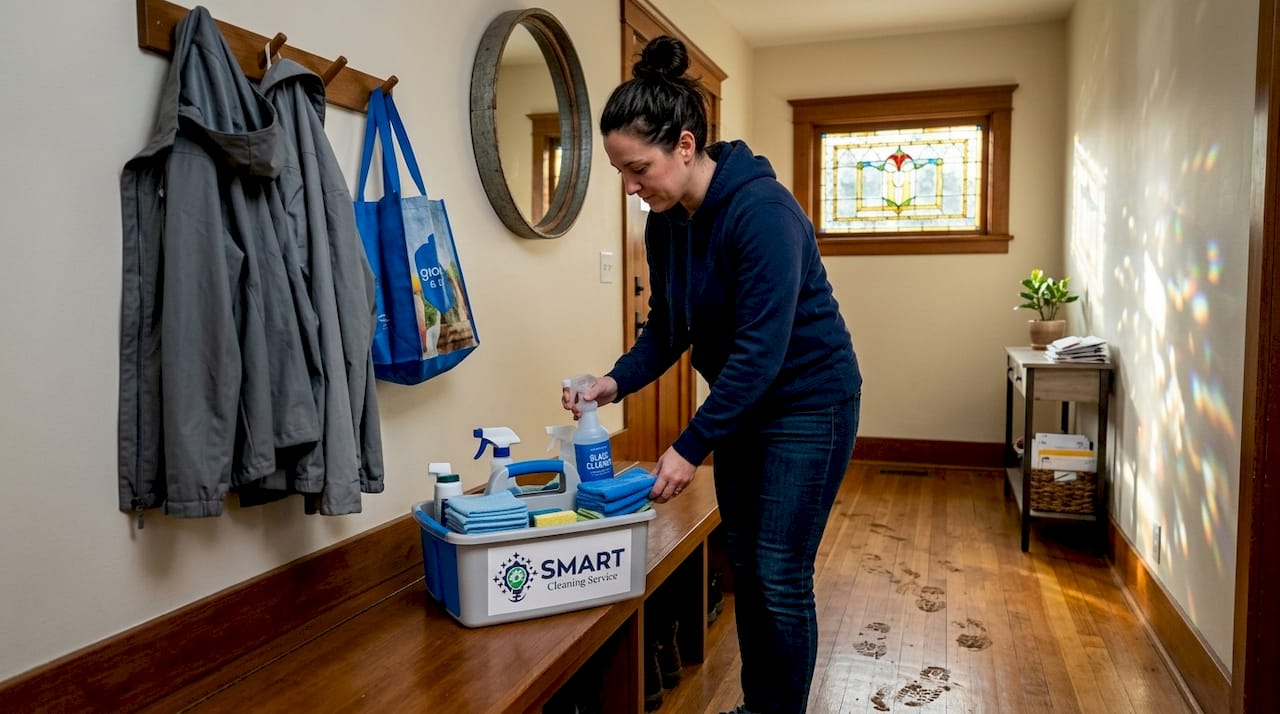
Seattle homes face a cleaning challenge that most guides never acknowledge. Between October and March, your windows stay shut, moisture creeps in from constant rain, and everyday foot traffic grinds mud and debris into floors, carpets, and entryways. That combination creates the perfect environment for mold spores, dust mites, and bacteria to take hold. A quick weekly wipe-down won’t cut it. What you need is a structured, seasonal deep cleaning plan that matches the way Seattle homes actually get dirty, so you can protect your family’s health and keep your living space feeling fresh all year long.
Table of Contents
- Gather your cleaning materials and prep your space
- Room-by-room seasonal deep cleaning checklist
- Seattle-specific deep cleaning priorities for winter
- Smarter scheduling: Daily, weekly, and seasonal strategies
- What most guides miss: The convenience factor and Seattle realities
- Ready for a deeper clean? Professional help is just a click away
- Frequently asked questions
Key Takeaways
| Point | Details |
|---|---|
| Room-by-room approach | Tackling each area separately makes deep cleaning more manageable and thorough. |
| Seattle winter focus | Prioritize germs, moisture, and indoor air quality during the Pacific Northwest’s colder, wetter months. |
| Smart scheduling | Break deep cleaning into smaller daily or weekly tasks to prevent burnout and keep your space consistently healthy. |
| Prep for success | Gathering supplies and decluttering before cleaning streamlines the entire process. |
| Professional help available | Expert services can provide a deeper, more efficient clean when you need extra support. |
Gather your cleaning materials and prep your space
Before you scrub a single surface, getting organized is the move that separates a productive cleaning day from a frustrating one. Professionals know this well. A step-by-step house deep cleaning process always begins with a clear plan and the right tools in hand. Hunting for a scrub brush mid-clean breaks your momentum and wastes more time than most people realize.
Experts consistently recommend a declutter-first approach, working room-by-room from top to bottom so you never re-clean surfaces you already finished. That means before any product hits any surface, you move items off floors, clear countertops, and get clutter out of the way. Think of it as resetting each room to a blank slate.
Here’s a comparison of what you truly need versus what’s optional:
| Must-have supplies | Nice-to-have supplies |
|---|---|
| Microfiber cloths (at least 6) | Steam cleaner |
| All-purpose disinfectant spray | Electric scrubber |
| Grout brush and tile cleaner | UV sanitizing wand |
| Mop and bucket | Dryer sheet for baseboards |
| Vacuum with HEPA filter | Rotating mop system |
| Rubber gloves | Scented cleaning concentrates |
| Baking soda and white vinegar | Spray bottle with labels |
| Toilet brush and bowl cleaner | Extendable duster kit |
For Seattle homes specifically, a HEPA-filter vacuum matters more than in drier climates. Why? Because Pacific Northwest air carries more mold spores and allergens, especially in fall and winter. Those particles settle into carpets, rugs, and upholstered furniture at higher rates when homes are closed up for months.
Key supplies to stock before you start:
- Microfiber cloths in at least two colors (one for toilets, one for everything else)
- Non-abrasive scrub pads for tile and grout
- A quality mold and mildew spray for bathroom surfaces
- Trash bags in multiple sizes
- A caddy or bucket to carry supplies room to room
Pro Tip: Assemble every supply you need in a single caddy the night before your deep cleaning day. When you don’t have to stop and search for tools, you can complete each room 30 to 40 percent faster. It sounds simple, but it genuinely changes the experience. Our local cleaning guide covers more Seattle-specific prep strategies worth bookmarking.
Room-by-room seasonal deep cleaning checklist
With your tools ready and space prepped, it’s time to start the systematic room-by-room seasonal deep cleaning. The good news is that you don’t have to reinvent the wheel. Established outlets agree that the core seasonal deep cleaning tasks include dusting ceilings, vents, and fans, cleaning baseboards, washing linens, deep cleaning showers and tubs, degreasing kitchen hoods and ovens, and tackling carpets and rugs. These aren’t suggestions, they’re the tasks that actually make a difference in air quality and surface hygiene.
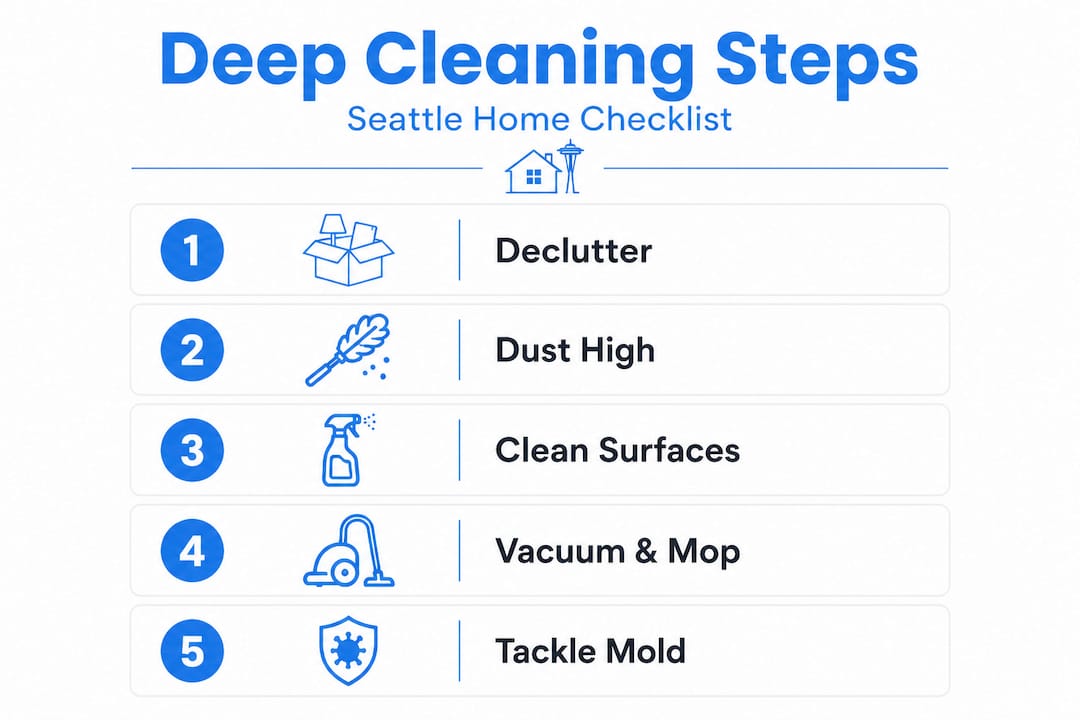
Here’s a room-by-room breakdown of what to tackle each season:
| Room | Spring/Summer focus | Fall/Winter focus |
|---|---|---|
| Kitchen | Degrease oven, hood, clean fridge coils | Deep clean microwave, sanitize high-touch surfaces |
| Bathroom | Scrub grout, wash shower curtain | Treat mold, replace exhaust fan filter |
| Living room | Dust ceiling fans, clean rugs | Vacuum upholstery, wipe heating vents |
| Bedrooms | Wash pillows, flip mattress | Launder heavy blankets, dust blinds |
| Entryway | Clean door frames, wash mats | Sanitize coat hooks, mop muddy floors |
Kitchen cleaning sequence (numbered for efficiency):
- Remove everything from cabinets on one wall at a time and wipe down shelves.
- Degrease the range hood filter by soaking it in hot water with dish soap.
- Clean the oven interior with baking soda paste, let it sit for 20 minutes, then wipe clean.
- Scrub the microwave interior with a bowl of heated water and vinegar to loosen splatter.
- Pull the fridge out from the wall and vacuum the coils underneath.
- Sanitize countertops, knobs, and drawer pulls last.
Our kitchen cleaning secrets from local Seattle professionals go even deeper on degreasing tactics that work in Pacific Northwest kitchens.
Commonly missed areas in every home:
- Interior light switch plates and outlet covers
- The tops of door frames and baseboards
- Underneath bathroom sink cabinetry
- Ceiling fan blades (not just the light fixture)
- Window tracks and sill edges
Pro Tip: Always work top to bottom and left to right within every room. Dust from ceiling corners and fan blades will fall down, so you want to vacuum and mop floors last, not first. This single habit eliminates the need to re-clean surfaces. Residents in the Eastside area will find our Redmond deep cleaning resource helpful for addressing neighborhood-specific quirks like older building construction and higher humidity near Lake Sammamish. If you want professional support rather than going solo, our professional deep cleaning service handles every room with this same systematic approach.
Seattle-specific deep cleaning priorities for winter
Seattle’s climate makes winter cleaning especially important, so let’s dig into the details for healthier indoor air and surfaces. From November through February, most Seattle homes keep windows closed for weeks at a time. That means indoor air circulates through the same filters and ducts repeatedly, and any germs, dust, or mold spores stay trapped inside with you.
Expert note: Winter deep cleaning in Seattle should prioritize germ control on high-touch surfaces and HVAC maintenance, including filter replacement, along with moisture-related surfaces like bathroom grout and tile. Closed-up homes spread winter germs far more easily than homes with open windows and fresh airflow.
That blockquote carries real weight for Seattle residents. When you’re closed up from October to April, your indoor air quality depends almost entirely on how clean your filters, vents, and surfaces are.
High-touch and moisture-prone areas to prioritize in winter:
- HVAC filters (replace every 60 to 90 days in heavy-use seasons)
- Bathroom exhaust fans and grout lines
- Kitchen faucet handles and sink edges
- Door handles, light switches, and remote controls
- Windowsill condensation zones and rubber window seals
- Entryway floors and coat closets where wet gear gets stored
Mold deserves special attention here. Seattle’s humidity levels regularly sit above 80 percent in winter, and bathrooms without proper exhaust ventilation can develop mold within weeks. Scrubbing grout lines with a dedicated mold-killing cleaner and sealing them afterward is one of the smartest investments a Seattle homeowner can make each fall.
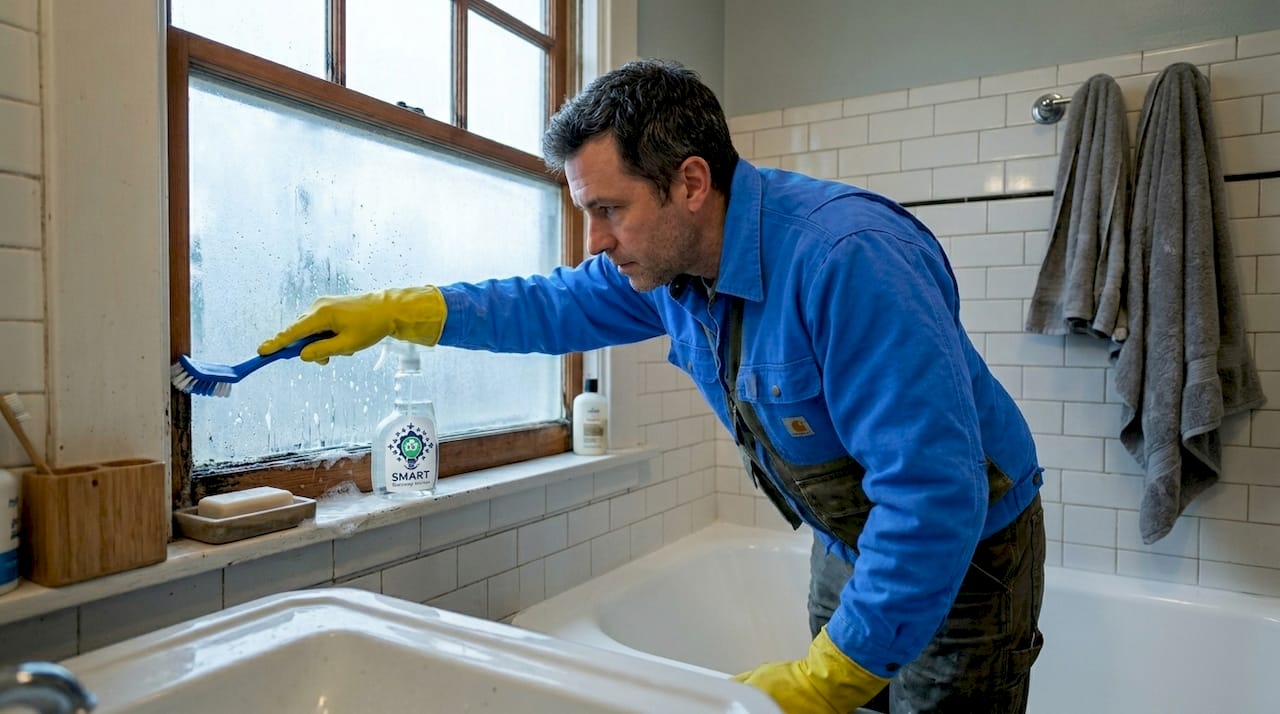
Pro Tip: Set a phone reminder every 60 days to check your HVAC filter. Hold the filter up to a light. If you can’t see light through it clearly, it’s time to replace it. Pair that habit with a monthly bathroom grout inspection to catch early mold growth before it spreads to drywall. You’ll find even more practical guidance in our article about deep cleaning myths debunked, which clears up common misunderstandings about what deep cleaning actually accomplishes. For more tailored local advice, our Seattle winter cleaning tips break down what local homeowners and renters should focus on by month.
Smarter scheduling: Daily, weekly, and seasonal strategies
Now that you know how to tackle each season, let’s focus on strategies for staying consistent year-round. The biggest reason people fall behind on deep cleaning isn’t laziness. It’s that they treat it like an all-or-nothing event. One massive cleaning day every few months feels overwhelming and rarely gets done well.
A far smarter approach is what some call the seasonal refresh model, where deep cleaning tasks are broken into one-hour daily blocks across a week or two rather than tackled in a single marathon session. For busy households and renters juggling work schedules, this approach sticks.
Sample daily and weekly cleaning plan:
- Monday: Vacuum all carpets and rugs, sweep hard floors.
- Tuesday: Wipe down all kitchen surfaces, clean microwave and stovetop.
- Wednesday: Scrub bathrooms, including toilets, sinks, and mirrors.
- Thursday: Dust all surfaces, light fixtures, and ceiling fans.
- Friday: Mop hard floors and clean entryway.
- Weekend: Tackle one deep-focus task, such as cleaning oven, washing bedding, or organizing a closet.
Benefits of breaking tasks into smaller chunks:
- Prevents the “Sunday panic clean” that never quite finishes
- Keeps allergen levels lower throughout the month, not just after big clean days
- Makes it easier to stay motivated when each session has a clear, achievable goal
- Allows renters to maintain lease standards without scrambling before inspections
- Distributes physical effort so you avoid back strain and fatigue
Renters have a slightly different set of priorities than homeowners. They can’t always repair grout or replace exhaust fans, but they should document existing mold or moisture damage in writing when they move in. Focusing deep cleaning energy on high-touch surfaces, appliance interiors, and personal area rugs protects both their health and their security deposit.
Pro Tip: Use your phone’s built-in reminder app or a free habit tracker to schedule weekly cleaning tasks just like you would a work meeting. Cleaning done in small, consistent sessions also means you’ll rarely face the kind of deep-set grime that requires harsh chemicals or hours of scrubbing. Learn how to fit professional visits into your routine at schedule cleaning services.
What most guides miss: The convenience factor and Seattle realities
Most deep cleaning guides are written as if every home is the same size, every family has a free weekend, and every climate is warm and dry. They’re not wrong about the tasks, but they’re often completely disconnected from real life.
Here’s what we’ve seen working with Seattle homeowners and renters over the years: the single biggest barrier to a clean home isn’t lack of knowledge. It’s underestimating how much Seattle’s environment fights back.
Consider this. A homeowner in Phoenix who deep cleans in spring doesn’t have to worry about mold returning in two weeks because it’s dry outside. A Seattle homeowner who skips their bathroom grout in October might be looking at visible mold by Thanksgiving. The timeline is shorter here, the stakes are higher, and the “clean once and forget it” mindset genuinely doesn’t apply.
We’ve also seen how the all-at-once marathon cleaning day fails most households. People start enthusiastic, get tired, cut corners on the bathroom and bedroom, and declare victory with a half-finished job. Then three months later, the same areas need double the work. Splitting the load across multiple sessions, as we covered in the scheduling section, actually results in cleaner outcomes, not just easier ones.
Another thing most guides skip: your cleaning method should match your home layout. Seattle has a wide range of home styles, from craftsman bungalows with original 1920s trim that traps dust in ornate molding, to modern Capitol Hill condos with open floor plans that circulate air differently. A step-by-step deep cleaning approach that accounts for your specific layout will always outperform a generic checklist copied from a national lifestyle magazine.
Our honest take: professional cleaning, even once a season, resets the baseline so your daily and weekly efforts actually maintain a clean home rather than constantly trying to recover from accumulated grime. It’s not about outsourcing your entire routine. It’s about being strategic.
Ready for a deeper clean? Professional help is just a click away
Tackling Seattle’s seasonal cleaning challenges with a structured plan makes a real difference, but sometimes you need a thorough professional reset to start fresh.
Smart Cleaning Service offers Deep Cleaning Services Seattle residents trust for exactly this kind of detailed, room-by-room work. Our licensed and insured team brings the right tools, techniques, and local knowledge to every job. If you’ve wondered how pros transform homes room by room, we’d love to show you firsthand. Getting started is easy. Request your free cleaning estimate today and let us handle the hard parts so you can enjoy a genuinely clean, healthy home this season.
Frequently asked questions
How often should I perform a deep clean in Seattle?
Most experts recommend a deep clean at least once per season, with additional attention in winter when homes are closed up and filter replacement becomes critical for air quality and germ control.
What supplies are essential for a seasonal deep clean?
The core supplies include microfiber cloths, disinfectant spray, grout brush, vacuum with HEPA filter, mop, rubber gloves, and specialty cleaners for your kitchen and bathroom. A declutter-first baseline before any cleaning begins makes every supply work more effectively.
What areas do Seattle renters often overlook during deep cleaning?
High-touch points like door handles and light switches, bathroom grout, ceiling fan blades, and HVAC filters in winter are the most commonly skipped areas in closed-up Seattle homes.
Can seasonal deep cleaning help with allergies or mold?
Absolutely. Regular attention to HVAC filter replacement and moisture-prone surfaces like bathroom grout and window seals reduces both allergen levels and mold risk, which is especially important in Seattle’s high-humidity winters.
Recommended
- Smart Cleaning Service™ House Cleaning Seattle Kirkland Bellevue Redmond
- Smart Cleaning Service™ House Cleaning Seattle Kirkland Bellevue Redmond
- Smart Cleaning Service™ House Cleaning Seattle Kirkland Bellevue Redmond
- Smart Cleaning Service™ House Cleaning Seattle Kirkland Bellevue Redmond