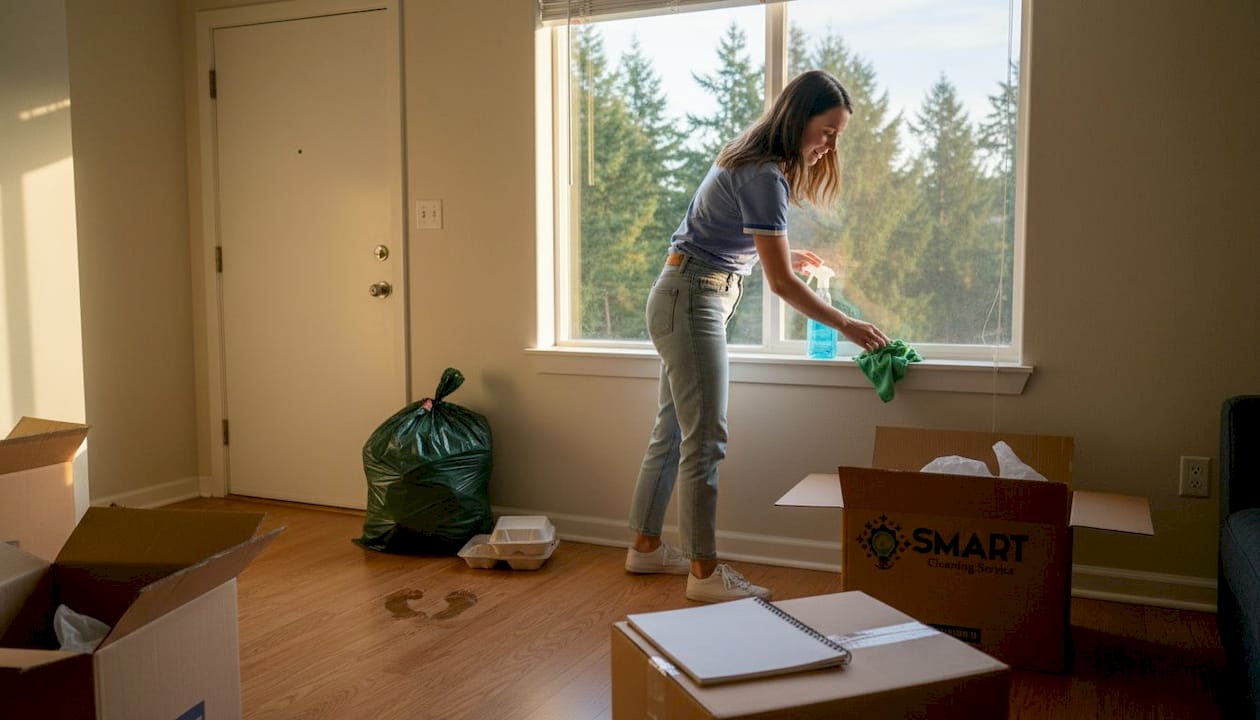
Moving out in the Greater Seattle Area carries real financial stakes. For renters, a single missed cleaning task can cost hundreds in deposit deductions. For homeowners, a dirty property can slow a sale or lower buyer confidence. Washington state law requires tenants to return a rental in move-in condition, minus normal wear and tear, and landlords here have strict timelines for returning deposits. Whether you’re a renter trying to protect every dollar or a homeowner prepping for closing, this checklist gives you a clear, room-by-room plan, legal context, and insider tips to get it done right.
Table of Contents
- Understand move out cleaning standards in Washington
- Complete move out cleaning checklist: Room-by-room breakdown
- Comparison: Professional cleaning vs. DIY for move out
- Essential move out inspection tips for renters and sellers
- Why thorough move out cleaning pays off—what most guides miss
- Next steps: Get professional help for your Seattle move out
- Frequently asked questions
Key Takeaways
| Point | Details |
|---|---|
| Legal standards matter | Understanding Washington’s laws ensures deposit protection and smoother sales. |
| Room-by-room checklist | A detailed checklist reduces the risk of missed spots or deposit deductions. |
| DIY vs. pro cleaning | Professional cleaning is wise if your deposit is large or you’re pressed for time. |
| Inspection readiness | Preparation and documentation are key for passing final inspections without stress. |
| Local tips pay off | Adapting your checklist for Seattle’s climate and standards yields better outcomes. |
Understand move out cleaning standards in Washington
Before you grab a mop, it helps to know exactly what you’re being measured against. Washington state law sets the baseline, and understanding it saves you from over-cleaning some things while missing what actually matters.
RCW 59.18.280 outlines tenant obligations at move out, including returning the property in substantially the same condition as when you moved in. The key phrase is “normal wear and tear,” which is legally protected. Small scuffs on walls, minor carpet compression from furniture, and faded paint over years of use all fall into this category. You are not responsible for those.
What landlords can deduct for is a different story. The most common cleaning-related deduction in Washington is not damage. It is excessive dirt. Grease-caked stovetops, mold in the bathroom, and carpets matted with pet hair are the real culprits. Knowing this shifts your focus toward the right priorities.
Here is what Washington law and local practice expect from tenants:
- Return the unit to its move-in condition, accounting for normal wear
- Remove all personal belongings and trash
- Clean appliances, fixtures, and surfaces to a reasonable standard
- Repair any damage you caused beyond normal use
- Leave the property ready for the next occupant without additional cleaning costs
For homeowners selling a property, there is no legal deposit at stake, but the standard still applies as a professional courtesy. Buyers and their agents notice a clean home. It signals that the property has been cared for, which builds confidence during inspections and negotiations.
“The most overlooked fact about move out cleaning is that you do not automatically need to hire a professional cleaner unless your lease specifically requires it. A thorough DIY clean that meets the move-in standard is legally sufficient.”
You can review the full move out cleaning legal guide for a deeper breakdown of tenant rights in Washington. For those booking Seattle move-in/out cleaning services, knowing the legal standard also helps you communicate exactly what level of clean you need.
Complete move out cleaning checklist: Room-by-room breakdown
With standards and legal expectations clear, here is your actionable checklist for every area of your home. Work through it systematically to avoid backtracking and missing spots.
Kitchen
- Clean inside and outside of all appliances, including oven, microwave, refrigerator, and dishwasher
- Degrease stovetop burners, drip pans, and hood vent filters
- Wipe down all cabinet interiors and exteriors
- Scrub sink, faucet, and garbage disposal
- Clean countertops, backsplash, and light switches
Bathrooms
- Scrub toilet, inside and out, including base and behind the tank
- Clean shower walls, tub, and grout lines
- Wipe mirror, vanity, and all fixtures
- Mop floor and clean baseboards
- Replace any burned-out light bulbs
Bedrooms and living areas
- Vacuum and spot-clean carpets; arrange professional carpet cleaning if pet hair or stains are present
- Wipe all window sills, blinds, and glass
- Dust ceiling fans, light fixtures, and vents
- Clean walls for any marks beyond normal wear
- Wipe baseboards and door frames
Garage and outdoor areas
- Sweep garage floor and remove all items
- Wipe down shelving if provided
- Mow lawn, pull weeds, and remove debris
- Clean exterior entry areas and sweep walkways
Property managers in Seattle consistently flag carpets, trash removal, light bulbs, and minor repairs as the top items on their move-out checklists. These are the details that most renters overlook.
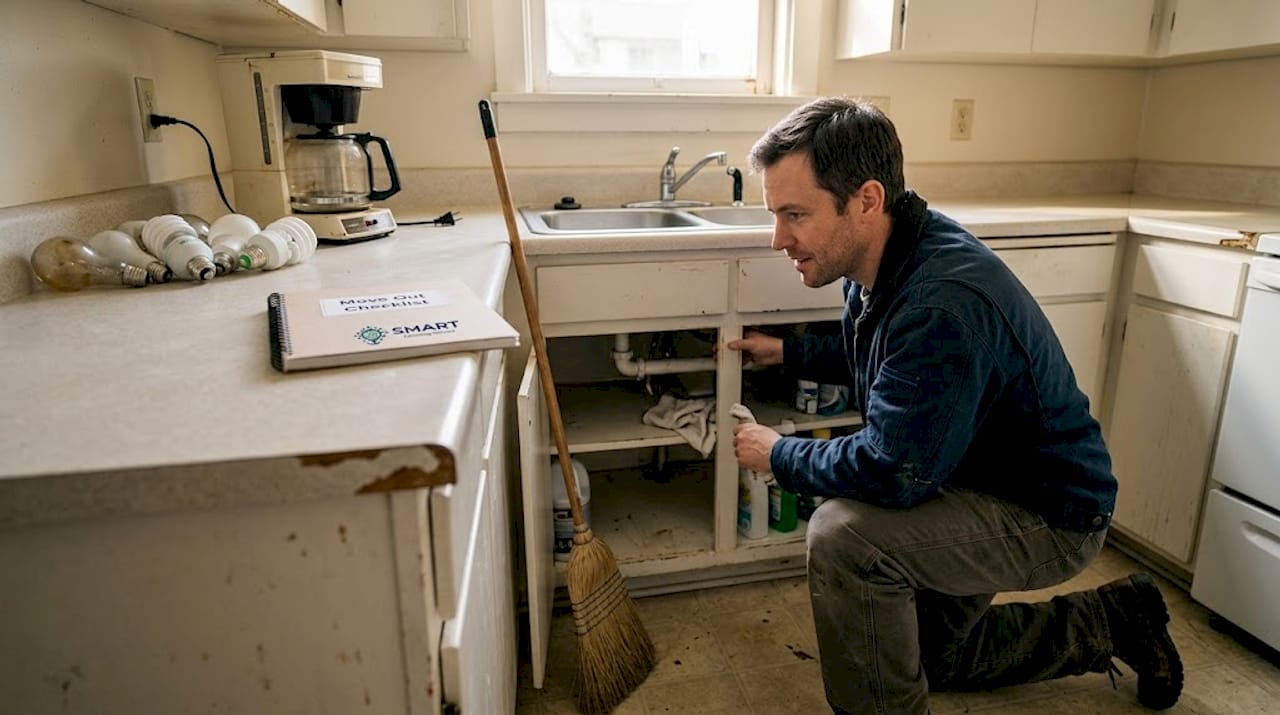
Pro Tip: Do a final walkthrough with a flashlight. Shine it along floors, inside cabinets, and under appliances. You will catch crumbs, dust bunnies, and residue that normal lighting hides.
For a more detailed room-by-room approach, the deep cleaning guide on our site walks through every surface. If you are in the Eastside area, Redmond move out cleaning services follow this same checklist standard. You can also cross-reference with moving checklist tips for additional ideas on what buyers and landlords notice most.
Comparison: Professional cleaning vs. DIY for move out
Once you know what must be cleaned, decide if you will tackle the checklist yourself or bring in pros. Here is how the options stack up.
| Factor | DIY cleaning | Professional cleaning |
|---|---|---|
| Cost | Low (supplies only) | $150 to $400+ depending on size |
| Time required | 6 to 12+ hours | 2 to 4 hours on-site |
| Deposit protection | Depends on thoroughness | High, with documented results |
| Equipment quality | Basic consumer tools | Commercial-grade equipment |
| Flexibility | Clean on your schedule | Requires booking in advance |
| Best for | Small units, tight budgets | Large homes, pets, short timelines |
DIY cleaning works well when your unit is small, relatively clean, and you have a full day to dedicate. You control the pace, you save money, and you know exactly what was done. The downside is that without commercial equipment, carpets and grout rarely reach the standard a landlord expects after years of use.
Professional cleaning pays off in specific situations:
- Your deposit is over $1,000 and worth protecting
- You have pets that left hair, dander, or odors behind
- Your timeline is tight because of overlapping move dates
- Your lease requires professional cleaning documentation
- The property has not had a deep clean in over a year
A professional cleaning investment is worthwhile when your deposit exceeds $1,000 or your timeline is limited. The math is simple: if a $300 cleaning service protects a $2,000 deposit, it is an easy decision.
Pro Tip: Ask your cleaning company for a receipt or invoice that lists the work performed. Some landlords require proof of professional cleaning, and having documentation protects you if a dispute arises.
For renters and homeowners who want the confidence of a professional result, Seattle move out professionals provide detailed service that covers every item on the checklist above.
Essential move out inspection tips for renters and sellers
After cleaning, inspection is your last hurdle. Here is how to pass confidently and avoid costly deductions.
Preparation before the inspection is just as important as the cleaning itself. Gather your original move-in checklist, any receipts for repairs or cleaning services, and photos from when you first moved in. These documents create a clear before-and-after record that protects you.
Here is what to address before the inspector or landlord arrives:
- Replace every burned-out light bulb in the unit
- Remove all trash, including items in closets, the garage, and outdoor areas
- Test smoke detectors and replace batteries if needed
- Patch any nail holes you made, unless your lease allows them
- Return all keys, remotes, and access cards
Photographic proof is your best defense. Walk through the property after cleaning and photograph every room, every appliance interior, and every surface you cleaned. Timestamp the photos. If a dispute arises later, these images are your evidence.
A striking statistic: 27% of deposit losses are due to excessive cleaning charges, not damage. That means most renters who lose part of their deposit lose it over something that was preventable with a thorough clean.
Washington landlords must return your deposit within 21 to 30 days and provide an itemized statement of any deductions. If they miss this window, they may forfeit the right to make deductions at all. Knowing this timeline helps you follow up appropriately.
For a smooth experience in the Eastside, the stress-free move out in Kirkland service walks clients through inspection prep as part of the process.
Why thorough move out cleaning pays off—what most guides miss
Most move out guides focus on the checklist and stop there. What they miss is the relationship layer, and in Seattle’s rental and real estate market, that layer matters.
Landlords talk to each other. Property managers in the Greater Seattle Area often share tenant references, and leaving a property spotless builds a reputation that follows you. We have seen clients get faster application approvals because a previous landlord mentioned how clean they left the unit. That is not something you can put a dollar value on easily, but it is real.
Seattle also has local quirks that national checklists ignore entirely. The rainy season means mud tracked into entryways and garages throughout fall and winter. Homes with dogs or outdoor-loving families accumulate a specific kind of grime near entry points that requires targeted scrubbing. Pet hair in Pacific Northwest homes tends to embed deeply in carpet fibers due to the damp climate, making standard vacuuming insufficient.
For homeowners selling, a clean property signals pride of ownership. Buyers touring a spotless home during a Seattle spring showing feel a different emotional response than those walking into a dusty, cluttered space. That feeling translates into offers. You can explore more on this angle through our house cleaning buyer tips.
Going above the basics is not about perfectionism. It is about removing every possible objection before it becomes a problem.
Next steps: Get professional help for your Seattle move out
You now have the checklist, the legal context, and the comparison to make a confident decision. If you want the peace of mind that comes with a professionally cleaned home, Smart Cleaning Service is ready to help.
We specialize in Seattle move out cleaning for renters and homeowners across the Greater Seattle Area, including Kirkland, Redmond, and Bellevue. Our teams follow a detailed checklist, use commercial-grade equipment, and provide documentation you can share with your landlord or agent. Need a full Seattle deep cleaning before your final walkthrough? We handle that too. Request a cleaning estimate today and move out with confidence.
Frequently asked questions
What counts as normal wear and tear in Washington move out cleaning?
Normal wear includes small scuffs, faded paint, or minor carpet marks from regular use. Excess dirt, stains, or damage caused by neglect can lead to deposit deductions.
How soon must landlords return my deposit after move out in Seattle?
Washington landlords must return deposits within 21 to 30 days and provide an itemized list of any deductions made.
Do I need to hire professional cleaners for move out in Seattle?
Professional cleaning is not required by law unless your lease states otherwise. It is worth the investment when your deposit is large or your available time is limited.
What should homeowners do before closing a sale in Seattle?
Homeowners should follow a room-by-room checklist similar to renters, including sweeping the garage and tidying outdoor areas, to create a strong first impression and support a smooth closing.
What areas are commonly missed during move out cleaning?
Landlord checklists consistently flag inside appliances, behind furniture, windows, light bulbs, and garage floors as the zones most renters forget to clean.
Recommended
- Smart Cleaning Service™ House Cleaning Seattle Kirkland Bellevue Redmond
- Professional Move-In/Out Cleaning Services in Seattle, WA
- Smart Cleaning Service™ House Cleaning Seattle Kirkland Bellevue Redmond
- Seamless Transitions: Move-In/Out Cleaning in Redmond, WA
- Cleaning for Moving Day: Secure 100% Deposit Return
- 7 Essential Steps for a Move-Out Cleaning Checklist