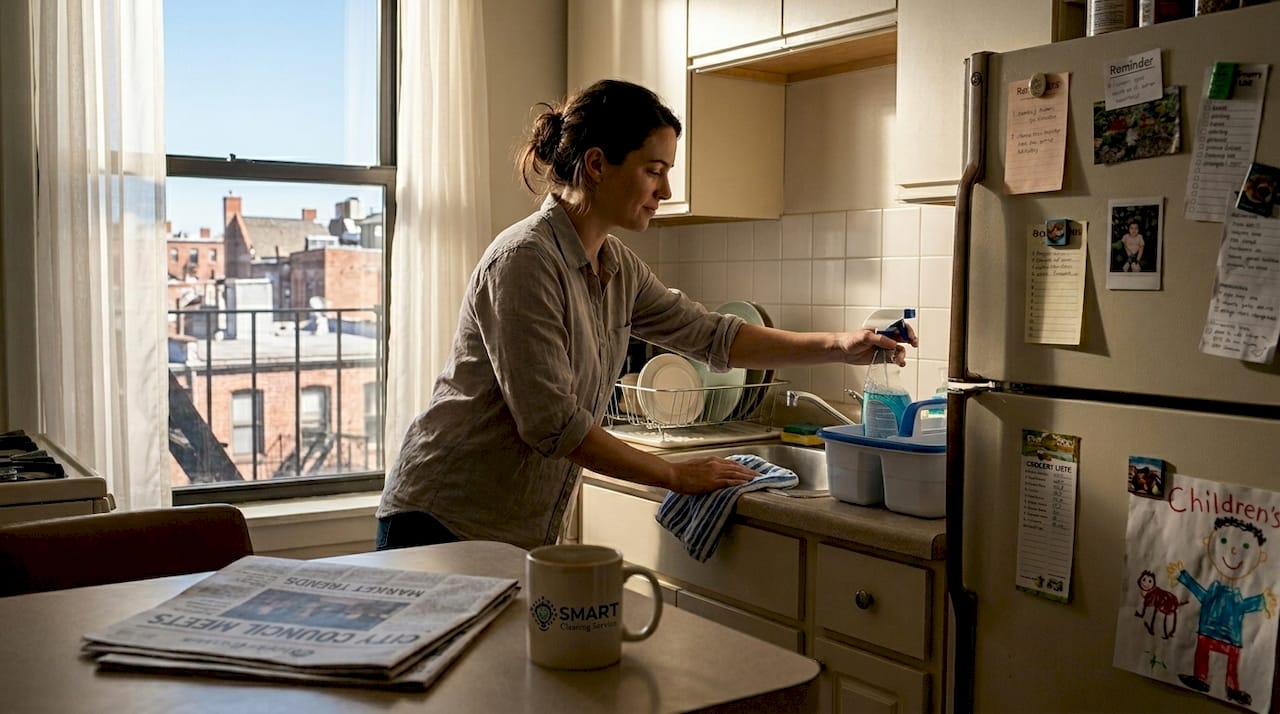
Balancing a packed schedule with keeping your apartment consistently clean is one of those quiet frustrations that never fully goes away. You finish work, make dinner, and suddenly the weekend is half gone before you’ve touched a sponge. The good news is that cleaning doesn’t have to feel like a second job. With the right sequence, a few reliable supplies, and a realistic routine, you can maintain a genuinely fresh space without burning through your entire Saturday. This guide pulls together expert-backed strategies tailored for renters and homeowners throughout the Greater Seattle Area, where damp weather and busy lives make a smart cleaning approach more important than ever.
Table of Contents
- Set the stage: Decluttering and prepping your space
- Master the flow: Top-to-bottom and back-to-front cleaning
- Room-by-room strategies: Kitchen and bathroom deep cleaning
- DIY routine or call the pros? Choosing the right approach
- Our take: Why less is more when cleaning your apartment
- Ready for a sparkling apartment? Let experts help
- Frequently asked questions
Key Takeaways
| Point | Details |
|---|---|
| Prep before cleaning | Declutter and gather all supplies before starting to save time and frustration. |
| Follow a smart sequence | Cleaning from top to bottom and back to front prevents wasted effort. |
| Tackle kitchens and baths | Focus on high-traffic areas with targeted strategies for appliance and surface care. |
| Know when to hire pros | DIY works for maintenance, but pros are best for deep or move-out cleanings. |
| Consistency beats perfection | Regular, simple routines keep apartments clean without overwhelming effort. |
Set the stage: Decluttering and prepping your space
Before you spray a single surface, the most impactful thing you can do is clear the clutter. Trying to clean around piles of mail, stray shoes, or dishes stacked on the counter slows you down and means you’ll miss spots underneath. Think of decluttering as laying the groundwork so every cleaning motion actually counts.

The fastest method is the three-pile approach: trash, donate, and keep. Move through each room with a laundry basket or bag in hand. If something is broken, toss it. If you haven’t used it in six months, it belongs in the donate pile. If it’s a keeper, put it where it actually belongs before you start wiping anything down. This step alone can cut your cleaning time significantly because surfaces are clear and you’re not shuffling objects from one spot to another.
Once the clutter is handled, gather your supplies into a single portable caddy. Decluttering first using trash, donate, and keep piles, then loading a caddy with microfiber cloths, a multi-purpose cleaner, and a vacuum is the backbone of any efficient apartment cleaning session. You move through rooms without backtracking to the supply closet, and everything you need is at arm’s reach.
Essential supplies to have in your caddy:
- Microfiber cloths (at least four, so you’re not cross-contaminating surfaces)
- Multi-purpose spray cleaner
- Glass cleaner for mirrors and windows
- Disinfectant wipes for quick touch-ups
- Scrubbing brush or old toothbrush for grout and tight corners
- Trash bags in multiple sizes
- A compact vacuum or handheld vac for quick spot work
If you want to go deeper than a surface wipe-down, check out our step-by-step deep cleaning guide for a more thorough room-by-room breakdown.
Pro Tip: Keep a small donation box in your closet year-round. Every time you come across something you no longer use, drop it in. When the box fills up, donate it. This ongoing habit means you’ll rarely face a massive declutter session before cleaning.
The prep phase takes maybe ten to fifteen minutes, but it pays dividends in every room that follows. Think of it as sharpening the saw before cutting the wood. Skipping it means you’ll spend twice as long working around obstacles rather than cleaning efficiently.
Master the flow: Top-to-bottom and back-to-front cleaning
With the space set and supplies at hand, the key to efficient cleaning is following the right sequence. Most people clean wherever feels dirtiest first, which leads to wasted effort. You wipe the countertop, then dust the shelf above it, and watch the debris fall right back onto the clean counter. Sound familiar? There’s a simple fix.
Clean apartments top-to-bottom and back-to-front to avoid re-cleaning areas as dust and debris fall downward. Starting at ceiling fans and upper shelves and working your way to baseboards and floors means gravity works for you, not against you. The back-to-front rule means you start cleaning at the far end of a room and work toward the exit, so you’re never stepping on freshly mopped floors or tracking dust back over vacuumed carpet.
“The sequence you choose matters just as much as the products you use. Clean from top to bottom and work yourself out of the room, and you’ll never have to redo a surface twice.”
Here’s a practical numbered sequence you can apply to any room in your apartment:
- Dust ceiling fans, light fixtures, and the tops of cabinets or shelves
- Wipe down walls, window sills, and door frames
- Clean mirrors, windows, and glass surfaces
- Wipe countertops, tables, and furniture surfaces
- Scrub sinks, tubs, or appliances depending on the room
- Sweep or vacuum the floor, working from back to front
- Mop hard floors last, then exit the room to let it dry
This sequence works whether you’re tackling the kitchen, bathroom, bedroom, or living room. It’s not complicated, but it requires discipline to resist starting on the floor because it looks the dirtiest. Follow the sequence and you’ll be done faster and more thoroughly every single time.
Pro Tip: Keep two microfiber cloths with you at all times while cleaning. One stays damp for wiping surfaces, one stays dry for polishing and buffing. Switching between them takes seconds and produces a noticeably cleaner finish without streaks.
If you’re planning a more thorough session, our deep cleaning steps page walks through each room in detail with specific focus areas that standard weekly routines often miss.
Room-by-room strategies: Kitchen and bathroom deep cleaning
Once you master the overall flow, focusing on high-impact areas brings your routine up a notch. The kitchen and bathroom are the two rooms that get used the most, attract the most bacteria, and tend to develop the most stubborn buildup over time. Giving them dedicated attention with the right tools makes a real difference to how your apartment feels and smells.
A reliable kitchen cleaning checklist covers wiping cabinet exteriors and interiors, degreasing the stovetop and backsplash, running a vinegar cycle through the dishwasher, using baking soda in the fridge and oven to neutralize odors, and cleaning out the garbage disposal. These steps prevent buildup that becomes much harder to remove if ignored for months.
Here’s a side-by-side breakdown of key cleaning tasks for both rooms:
| Task | Kitchen | Bathroom |
|---|---|---|
| Surface wipe-down | Countertops, backsplash, cabinet exteriors | Vanity, toilet tank, mirror frame |
| Deep scrub targets | Stovetop grates, oven interior, sink basin | Grout lines, toilet bowl, shower tiles |
| Odor control | Baking soda in fridge, vinegar dishwasher cycle | Baking soda on drains, clean exhaust fan |
| Overlooked spots | Cabinet interiors, under appliances, disposal | Behind toilet, showerhead, caulk lines |
| Disinfection priority | Handles, faucets, cutting board surfaces | Toilet seat, faucet handles, light switch |
Recommended supplies for the kitchen:
- Degreaser spray for stovetop and backsplash
- White vinegar for dishwasher cycles and cutting through mineral deposits
- Baking soda for fridge shelves, oven, and disposal odors
- Scrub brush or abrasive sponge for stubborn grease
- Microfiber cloths for streak-free appliance surfaces
Recommended supplies for the bathroom:
- Tile and grout cleaner or a baking soda paste
- Disinfectant spray for toilet, sink, and faucets
- Glass cleaner for mirrors
- Old toothbrush for grout lines and fixture bases
- Exhaust fan duster for built-up lint and grime
One thing many people skip entirely: the inside of cabinets. Cabinet interiors accumulate crumbs, dust, and expired products quietly over months. In Seattle’s damp climate, that moisture can create the perfect environment for mold to develop in overlooked corners. A quarterly wipe-down of cabinet interiors, paired with replacing shelf liner when it gets worn, keeps things fresh and sanitary. For a more detailed deep clean approach, we cover these often-missed spots with specific techniques.
DIY routine or call the pros? Choosing the right approach
Now that you know how to clean efficiently, it’s important to understand your options, especially when time is tight or a lease is ending. Not every cleaning situation calls for the same response. Knowing when to handle it yourself and when to bring in professionals saves you both time and frustration.
A solid 30-minute DIY maintenance routine looks something like this: wipe down kitchen surfaces, disinfect the bathroom sink and toilet, sweep high-traffic floors, and do a quick declutter of common areas. That’s enough to keep your apartment feeling livable between deeper sessions. DIY cleaning for maintenance through 30-minute routines saves time and reduces daily stress, while hiring professionals for deep or move-out cleaning provides the expertise needed on tricky areas like grout, mold, and tight corners that matter when a deposit is on the line.
| Factor | DIY cleaning | Professional cleaning |
|---|---|---|
| Cost | Low upfront | Higher, but targeted |
| Time investment | High | Minimal for you |
| Depth of clean | Surface to moderate | Thorough, consistent |
| Equipment quality | Basic consumer tools | Commercial-grade tools |
| Best for | Weekly and monthly upkeep | Move-out, post-renovation, deep clean |
| Deposit recovery | Variable results | Significantly improved outcomes |
Choose DIY when:
- You’re maintaining a clean apartment on a regular schedule
- You enjoy the process and have time on weekends
- The apartment only needs surface-level refreshing
- You’re spot-treating specific messes quickly
Consider professionals when:
- You’re moving out and want your deposit back
- The apartment hasn’t had a deep clean in six months or more
- You’re preparing for a lease inspection or home sale
- Mold, heavy grout staining, or post-party cleanup is involved
- Your schedule simply doesn’t allow for thorough cleaning
Building efficient cleaning routines into your weekly schedule handles the everyday upkeep. But understanding how pros transform homes through systematic deep cleaning gives you a realistic picture of what’s possible when trained cleaners with professional-grade equipment step in. The difference in grout color alone is often remarkable.
Our take: Why less is more when cleaning your apartment
Here’s something most cleaning guides won’t say outright: trying to do a full deep clean every single week is one of the most common reasons people abandon their routine entirely. Perfection-driven cleaning sessions feel overwhelming before they even start, so they keep getting pushed to “next weekend” until the mess becomes genuinely difficult to manage.
The smarter approach, based on what we’ve seen in homes across Seattle, is the 10-minute daily touch-up paired with a focused weekly reset. Wipe the kitchen counter after dinner. Swipe the bathroom sink before bed. Put things back where they belong before you sit down. These micro-habits interrupt the buildup cycle before it starts, meaning your weekly clean takes 20 minutes instead of two hours.
Fewer supplies also leads to better habits. When your caddy has six products instead of twenty, you actually use all of them. Complexity creates hesitation. Simplicity creates action.
The apartments we see that stay the cleanest aren’t the ones where someone scrubs everything top to bottom every Saturday. They’re the ones where the resident has a short, consistent routine and sticks to it. Pair that with simple cleaning routines that are easy to repeat, and you’ve built a system that works long-term.
Pro Tip: Tape a simple weekly cleaning checklist to the inside of a kitchen cabinet door. When a task is done, check it off. Reset the list every Sunday. This tiny visual cue keeps your routine visible and your motivation steady without requiring any willpower.
Ready for a sparkling apartment? Let experts help
Sometimes life in Seattle gets genuinely busy, and even the best routine isn’t enough. Whether you’re preparing for a move-out inspection, recovering from a renovation, or just ready to hand the work off to someone reliable, professional cleaning is worth considering.
Smart Cleaning Service provides regular home cleaning for renters and homeowners throughout the Greater Seattle Area, along with specialized deep cleaning services for those times when a surface wipe-down simply won’t cut it. We’re licensed, insured, and communicate in real time so you always know exactly what’s happening in your space. If you’re ready to reclaim your weekends and walk into a consistently clean home, get a free estimate and we’ll match you with the right service for your situation.
Frequently asked questions
What rooms should I clean first in my apartment?
Start with high-traffic rooms like the kitchen and bathroom since they carry the most bacteria and grime, then move to living areas and bedrooms. Following a top-to-bottom sequence within each room ensures you never have to re-clean a surface.
How often should apartment carpets and floors be cleaned?
Vacuum high-traffic areas weekly and spot-clean spills right away. Deep clean carpets every three to six months to remove allergens, dust, and embedded grime that regular vacuuming misses.
Do I need special cleaners for the kitchen and bathroom?
Most jobs respond well to a multi-purpose or vinegar-based cleaner, while baking soda handles tough odors. For the kitchen specifically, running a vinegar cycle through the dishwasher and using baking soda in the fridge and oven are reliable, low-cost solutions.
What’s the fastest way to declutter before cleaning?
Sort into trash, donate, and keep piles before you touch any surface. Clearing the clutter first means every cleaning motion actually counts and you won’t spend time shuffling objects around while wiping down counters.
Should I hire a professional cleaner before moving out?
Yes, especially if deposit recovery matters to you. Professionals tackle the grout lines, behind-appliance buildup, and hard-to-reach spots that landlords check closely, and their results consistently improve the likelihood of getting your full deposit returned.
Recommended
- Smart Cleaning Service™ House Cleaning Seattle Kirkland Bellevue Redmond
- Regular Home Cleaning Seattle | Smart Cleaning WA
- Smart Cleaning Service™ House Cleaning Seattle Kirkland Bellevue Redmond
- Smart Cleaning Service™ House Cleaning Seattle Kirkland Bellevue Redmond