
Automating property cleaning is the process of using software and technology to handle scheduling, staff assignment, task verification, and reporting without manual intervention at every step. Property managers who adopt this approach cut administrative time, protect cleaning standards, and scale their portfolios without adding overhead. The core benefits of property cleaning automation show up fast: fewer missed turnovers, fewer reworks, and cleaner records. This guide explains exactly how automation improves cleaning operations, where it works best, and how to sequence your rollout for maximum impact.
Why automate property cleaning: the core case
The single strongest reason to automate property cleaning is time. Automating cleaning coordination reduces administrative time by 60–80% for managers running 10 or more properties. Manual coordination that once consumed 5–8 hours per week drops to under one hour after implementation. That is not a marginal gain. It is the difference between running your portfolio and being buried in it.
Automated scheduling tools sync directly with property management systems (PMS) like Guesty or Hostaway, triggering cleaning assignments the moment a guest checks out. No phone calls. No spreadsheets. No chasing confirmations. The system fires the right cleaner, at the right property, at the right time.
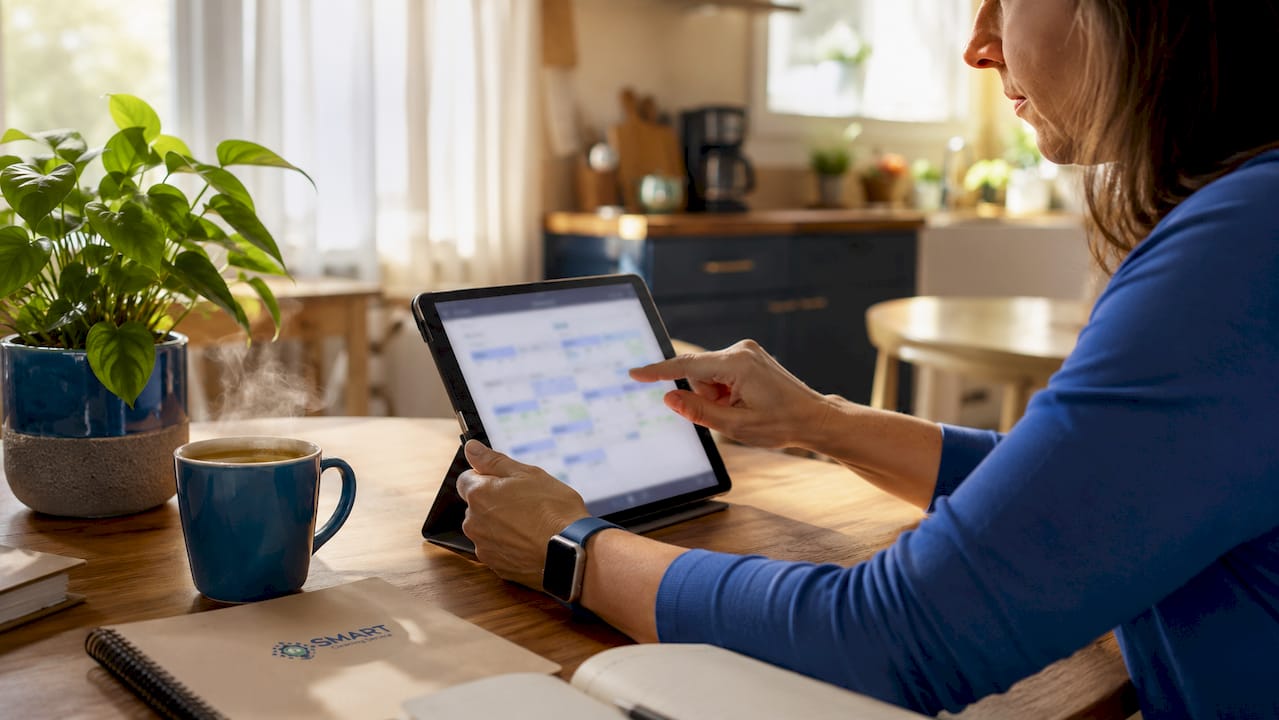
For managers handling Airbnb turnovers or multi-unit residential buildings, this kind of property cleaning efficiency is not optional. It is the foundation of a reliable operation.
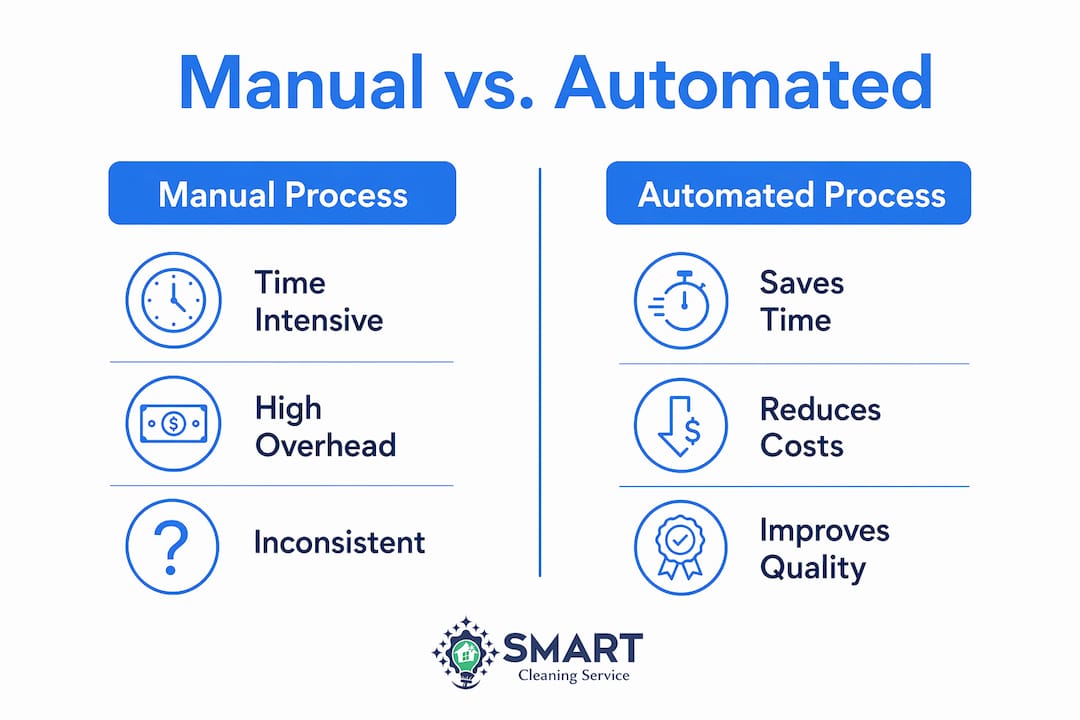
Manual vs. automated coordination: a direct comparison
| Task | Manual process | Automated process |
|---|---|---|
| Scheduling a cleaning | Phone call or text, 10–20 min | Auto-triggered by checkout, 0 min |
| Assigning a cleaner | Manual review of availability | Rule-based auto-assignment |
| Confirming completion | Follow-up call or text | Photo verification + timestamp |
| Invoicing | Manual entry per job | Auto-generated on task close |
| Error rate | High, human-dependent | Low, system-enforced |
Cleaning companies automating move-out coordination report 35–50% lower administrative overhead per job. Automation replaces 6–8 manual touchpoints per cleaning request. Each touchpoint removed is a potential error eliminated.
Pro Tip: Connect your PMS directly to your cleaning platform before anything else. If the two systems do not talk to each other, you will still be making manual calls to fill the gaps.
How does automation improve cleaning quality and consistency?
Quality is where automation earns its second argument. The biggest threat to cleaning standards is not a bad cleaner. It is inconsistency across cleaners, shifts, and properties. Digital standard operating procedures (SOPs) solve this by embedding your standards into the workflow itself, not into the memory of individual staff.
A master cleaning schedule paired with digital SOPs protects asset values across property portfolios. When a cleaner leaves or a new hire joins, the checklist does not change. The standard travels with the task, not the person.
Photo verification takes this further. Implementing a hybrid system with automated scheduling, robovacs, and photo-verified checklists cut turnover time nearly 50%, from 75 to 38 minutes. Photo verification alone reduced reworks by 62%. That number matters because reworks cost double: the time to redo the job and the guest complaint that triggered it.
Manual vs. automated quality control
| Quality control method | Manual | Automated |
|---|---|---|
| Checklist completion | Paper, easy to skip | Digital, required to close task |
| Proof of completion | Verbal confirmation | Timestamped photo upload |
| Standard consistency | Varies by cleaner | Embedded in task template |
| Rework rate | High without supervision | Reduced by over 60% with photo verification |
| Response to complaints | Reactive | Proactive, with documented evidence |
Robovacs play a specific role in this quality picture. They handle routine floor maintenance between manual cleans, keeping surfaces guest-ready without adding labor hours. The hybrid cleaning protocol works because it assigns each task to the right tool. Floors go to the robot. Bathrooms, mirrors, and high-touch surfaces go to a trained human.
Pro Tip: Build your photo verification checklist around the areas guests photograph most: bathrooms, kitchen counters, and bed linens. These are the rooms that drive five-star reviews or one-star complaints.
What can automation actually do, and what can it not?
Automation handles repetitive, rule-based tasks well. It struggles with judgment, texture, and context. Understanding this boundary is what separates a well-run automated operation from one that creates new problems.
Robovacs are highly effective for routine floor care, but humans remain essential for detailed cleaning like bathrooms and stain removal. No current robotic system reliably handles grout scrubbing, toilet sanitizing, or the kind of surface-level polish that defines a five-star guest experience. Automation tools cannot replace final physical inspection. Humans must verify high-touch and aesthetic areas for top-tier quality assurance.
Tasks well-suited for automation:
- Scheduling and auto-assigning cleaners based on checkout times
- Sending pre-clean instructions and post-clean confirmation requests
- Generating invoices and tracking payment status
- Logging job history and tracking cleaner performance metrics
- Triggering smart plug resets and thermostat adjustments between guests
Tasks that require human judgment:
- Stain identification and treatment
- Restocking supplies based on actual usage
- Reporting maintenance issues like leaks or broken fixtures
- Final aesthetic review before guest arrival
- Deep cleaning tasks like oven interiors and grout lines
Smart plugs and automated triggers are an underused tool in this category. Setting a smart plug to cut power to a TV or reset a router between guests takes 30 seconds to configure and saves a support call every time. These small automations compound across a portfolio.
What is the right order to automate cleaning operations?
Most property managers make the same mistake: they automate cleaning schedules first. Sequencing automation should prioritize guest communication, then pricing, and finally cleaning workflows for the best operational result. Automating cleaning before fixing communication bottlenecks means your cleaners arrive on time to a property where the guest has not yet checked out.
Follow this sequence:
- Guest communication. Automate check-in instructions, checkout reminders, and review requests. This reduces last-minute surprises that delay cleaning windows.
- Pricing and booking. Use dynamic pricing tools to fill gaps in your calendar. A fuller calendar means more predictable cleaning volume, which makes scheduling automation more effective.
- Cleaning scheduling and verification. Once your calendar is stable and guests know when to leave, auto-triggered cleaning assignments and photo verification work as designed.
- Data tracking and contract strategy. Automation-generated data on job volume helps convert transactional cleaning clients into long-term exclusive contracts through volume-based pricing. Tracking your own cleaning frequency and costs also gives you leverage when negotiating service agreements.
Automation reallocates human staff to high-value tasks like quality control and tenant communication. This shift improves customer loyalty and makes your operation more competitive. The professional cleaning workflow becomes a repeatable system rather than a daily improvisation.
Pro Tip: Avoid running three separate platforms that do not integrate. One tool for scheduling, one for communication, and one for invoicing that share no data will create more manual work than you started with. Choose platforms with open APIs or native integrations.
Key Takeaways
Automating property cleaning delivers the greatest return when scheduling, verification, and communication work as a connected system rather than isolated tools.
| Point | Details |
|---|---|
| Time savings are immediate | Automation cuts cleaning coordination from 5–8 hours per week to under one hour. |
| Quality depends on digital SOPs | Embedding standards in checklists protects consistency when staff changes occur. |
| Photo verification cuts reworks | Timestamped photo uploads reduce rework rates by over 60% across properties. |
| Sequence your rollout correctly | Start with guest communication, then pricing, then cleaning automation for best results. |
| Humans remain essential | Robots handle floors; trained staff must handle bathrooms, stains, and final inspections. |
The part most guides skip: automation without judgment is just faster chaos
I have seen property managers invest in scheduling platforms, photo verification apps, and robovacs, then wonder why their guest ratings did not improve. The technology worked. The strategy did not.
The core of successful cleaning automation is the operational blueprint, not the software. A data-driven master schedule that standardizes workflows is what protects quality. The software just enforces it. If your SOPs are vague, your automated checklists will be vague. Garbage in, garbage out.
The managers I respect most treat automation as a measurement tool first. They track cleaning duration, rework frequency, and guest complaint rates by property. That data tells them which units need deeper attention, which cleaners perform consistently, and where their manual processes are still leaking time. Automation without measurement is just a faster way to repeat the same mistakes.
The other thing worth saying directly: cleaning boosts real estate value and tenant satisfaction in ways that show up on your balance sheet. Properties that are cleaned consistently and documented properly command better reviews, lower vacancy rates, and stronger renewal rates. Automation is how you deliver that consistency at scale without burning out your team or yourself.
— Wilker
How Smartcleaningwa supports automated property cleaning
Property managers in the Greater Seattle Area use Smartcleaningwa to back their automated workflows with a professional team that shows up on time, follows detailed checklists, and documents every job. Whether you manage Airbnb turnovers in Bellevue, recurring residential cleans in Kirkland, or commercial offices in Seattle, Smartcleaningwa integrates with your scheduling systems and delivers verified results.
The team at Smartcleaningwa is licensed, insured, and trained to meet the standards your digital SOPs require. Real-time updates and photo documentation mean you always know a job is done before your next guest arrives. Request a free cleaning estimate and see how professional service fits your automated property maintenance plan. For Airbnb hosts, the short-term rental cleaning guide is a strong starting point.
FAQ
Why automate property cleaning instead of hiring more staff?
Automation reduces the administrative work that consumes manager time, not the physical cleaning itself. Adding staff without automation still leaves scheduling, verification, and invoicing as manual bottlenecks.
How much time does cleaning automation actually save?
Property managers running 10 or more properties report dropping from 5–8 hours of weekly coordination to under one hour after implementing automated scheduling tools.
Can robovacs replace professional cleaners?
Robovacs handle routine floor maintenance effectively, but they cannot clean bathrooms, remove stains, or perform the final inspection that five-star guest standards require. Human cleaners remain essential.
What is the first thing to automate in a property cleaning operation?
Guest communication comes first. Automating checkout reminders and check-in instructions prevents delays that push back cleaning windows and create scheduling conflicts downstream.
Does automation help with move-out cleaning coordination?
Automation replaces 6–8 manual touchpoints per move-out cleaning request, reducing administrative overhead by 35–50% per job and speeding turnaround for the next tenant.
Recommended
- Smart Cleaning Service™ House Cleaning Seattle Kirkland Bellevue Redmond
- Smart Cleaning Service™ House Cleaning Seattle Kirkland Bellevue Redmond
- Smart Cleaning Service™ House Cleaning Seattle Kirkland Bellevue Redmond
- Smart Cleaning Service™ House Cleaning Seattle Kirkland Bellevue Redmond