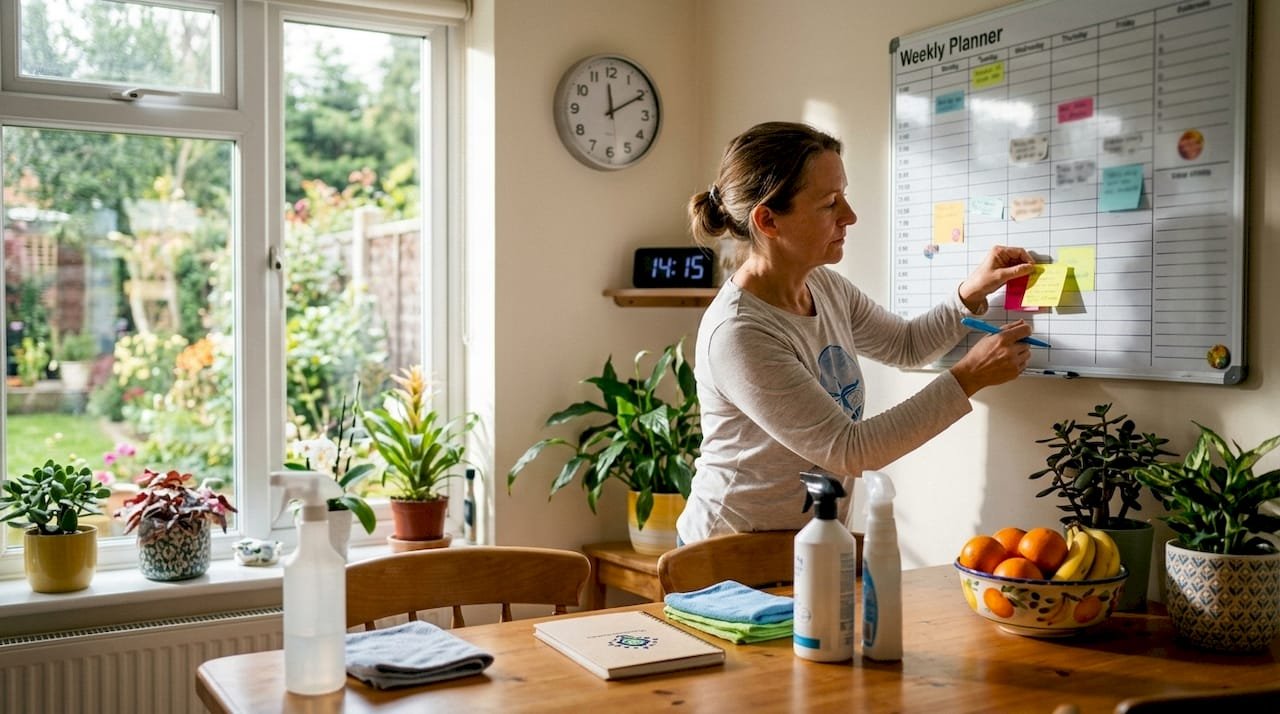
A flexible cleaning schedule is a customizable plan that lets you change cleaning frequency, timing, and specific tasks based on your real needs, rather than following a rigid, fixed routine. Unlike locked-in weekly contracts, flexible cleaning plans allow you to skip, reschedule, or shift tasks without penalty. Flexible schedules can save 10–20% compared to fixed bookings, making them a practical choice for busy households and offices alike. Smartcleaningwa builds this kind of adaptability into every recurring service it offers, from weekly house cleaning to on-demand deep cleans across the Greater Seattle Area.
What is a flexible cleaning schedule and how does it work?
A flexible cleaning schedule is defined by three core adjustments: task shifting, time slicing, and frequency changes. Task shifting and time slicing let you swap which rooms get attention on a given day and break sessions into 15–45 minute blocks instead of one long marathon. Frequency changes let you move from weekly to bi-weekly visits when life gets busy, then back again when you need more support. The result is a cleaning routine that fits your actual life, not a calendar someone else set for you.
The industry term for this approach is an adjustable cleaning timetable, though most homeowners and service providers simply call it a flexible plan. The key distinction from a fixed routine is that no single missed session derails your entire system. You adapt, you continue, and your home stays clean without the guilt of falling behind.

How flexible cleaning plans differ from fixed routines
Fixed cleaning routines operate on a set schedule: every Tuesday at 10:00 AM, every room, every task. That structure works well when life is predictable. The problem is that life rarely is.
A flexible plan removes the penalty for change. You can skip a visit during a vacation, add an extra session before a dinner party, or shift focus from bathrooms to the kitchen when one area needs more attention. Shifting frequency visit-by-visit to meet client needs builds loyalty without locking anyone into rigid contracts. That is a fundamentally different relationship between you and your cleaning routine.
Pricing models also differ. Fixed contracts typically charge a flat rate regardless of what gets done. Flexible plans often offer two options:
- Flat-rate recurring visits: A set price for a defined scope of work, repeated at a frequency you choose and can adjust.
- Hourly or time-based sessions: You purchase a block of time (say, two hours), and the cleaner prioritizes tasks within that window.
Pro Tip: If you choose an hourly flexible model, write out your priority task list before the session starts. Cleaners can only cover what time allows, so putting your most important rooms first protects your outcome.
The emotional difference between fixed and flexible is real. Fixed routines create stress when you miss a session. Flexible routines treat a missed session as a simple reschedule. That shift in mindset is what makes flexible home cleaning sustainable long-term.
How to set a flexible cleaning schedule that fits your life
Building a flexible routine starts with one rule: do not try to do everything at once. Over-scheduling early on is the biggest reason flexible plans fail. Start small, build habits, then layer in complexity.
Here is a practical framework for creating your own adjustable cleaning timetable:
- Identify your non-negotiables. List the tasks that must happen daily to keep your home functional: dishes, counters, a quick floor sweep. These are your baseline.
- Apply the Daily Reset method. The Daily Reset concept separates quick daily maintenance from deep cleaning. Spend 15–20 minutes each day on surface tasks. This prevents grime from building up and makes deep cleans far less intense.
- Assign zones, not days. Instead of cleaning the whole house on Saturday, assign Monday to the kitchen, Wednesday to bathrooms, and Friday to living areas. If Wednesday is a bad day, shift bathrooms to Thursday. The zone still gets done.
- Add weekly rotating tasks. Once your daily habits are solid, layer in weekly tasks like vacuuming, mopping, or wiping down appliances. Rotate these across the week based on your energy and schedule.
- Review and adjust monthly. At the end of each month, look at what got skipped and why. Adjust your zones or frequency to match your real patterns, not your ideal ones.
Pro Tip: Use a simple notes app or a whiteboard to track your zones for the week. You do not need a dedicated app. Visibility is what matters, not the tool.
Time-saving strategies for busy families often center on exactly this kind of zone-based approach. Breaking cleaning into short, focused sessions prevents the all-or-nothing trap that kills most routines.
What are the benefits and challenges of flexible cleaning?
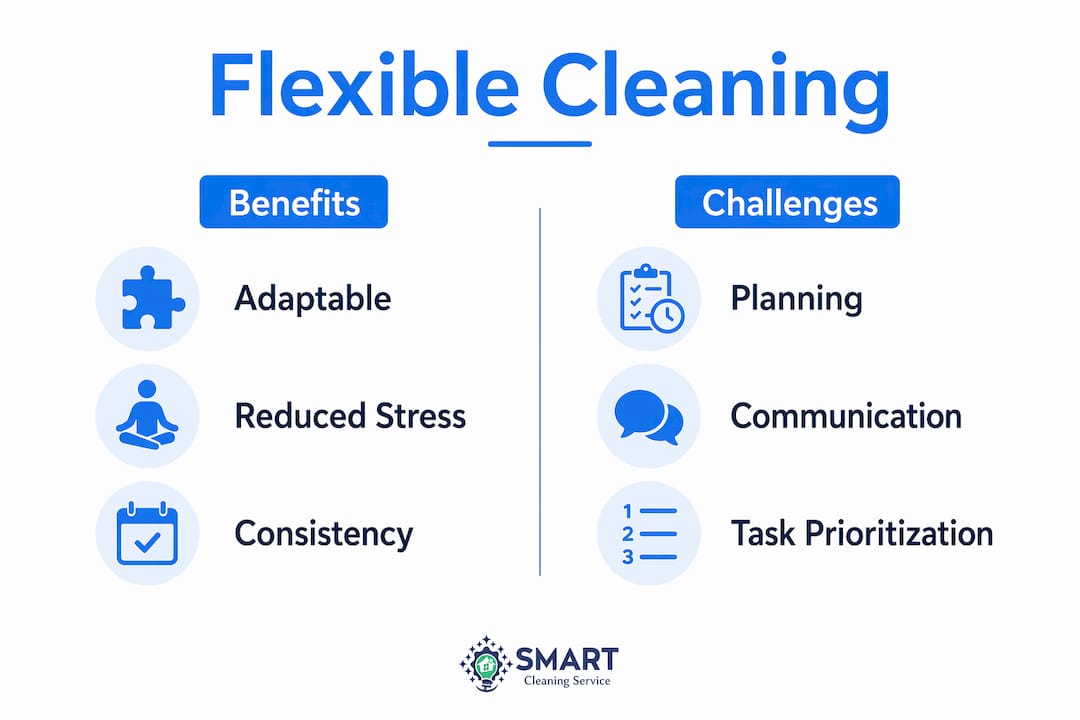
Flexible cleaning delivers real, measurable advantages. It also comes with pitfalls that are easy to avoid once you know what to watch for.
The core benefits:
- Cost control. Recurring flexible plans save 10–20% compared to fixed bookings, and you only pay for what you actually need.
- Reduced burnout. Flexibility targets efficiency and stress reduction by letting you customize task timing. You clean when it makes sense, not when a contract demands it.
- Better consistency. Counterintuitively, flexible routines often produce more consistent results than rigid ones. When a plan bends instead of breaking, you stick with it longer.
- Control over your environment. You decide which areas get priority. A home with a new baby needs different focus than a home with a traveling professional.
- Commercial efficiency. Flexible schedules in commercial settings align cleaning with peak or low-occupancy times, reducing disruptions and maximizing hygiene impact.
The common challenges:
- Over-scheduling. Adding too many tasks too soon is the fastest way to abandon a flexible plan. Start with daily essentials only.
- Unclear task priorities. Without a priority list, flexible sessions drift toward easy tasks and skip the ones that matter most.
- Poor communication with service providers. A flexible professional cleaning relationship requires clear, ongoing dialogue. If your needs change, your provider needs to know before the visit, not after.
The role of cleaning frequency in maintaining a healthy home is well established. Flexible plans support that frequency by removing the barriers that cause people to skip cleaning entirely.
Professional flexible cleaning vs. DIY flexible plans
Both professional services and self-managed routines can be flexible. The right choice depends on your time, budget, and how much you want to delegate.
| Factor | DIY flexible plan | Professional flexible service |
|---|---|---|
| Cost | Low direct cost; high time investment | $135–$295 per visit in urban areas for recurring plans |
| Task control | Full control; you set every priority | Client sets priorities; cleaner executes within scope or time |
| Flexibility | Unlimited; adjust anytime | Adjust frequency, scope, or timing with advance notice |
| Consistency | Depends on personal discipline | Consistent quality with trained professionals |
| Best for | Smaller spaces, lower budgets, hands-on homeowners | Busy households, larger homes, offices needing reliable results |
Professional flexible cleaning typically offers two pricing structures. Flat-rate pricing is standard for recurring visits; hourly pricing suits on-demand or task-specific sessions. Small apartments typically require 2–3 hour sessions, while larger homes need 3–4 hours depending on tasks.
Transparent communication is the single most important factor in a successful professional flexible cleaning relationship. Before each visit, confirm which areas matter most. If your schedule changes, notify your provider as early as possible. That simple habit protects both your time and your results.
For offices and commercial spaces, flexible schedules boost workplace hygiene by aligning cleaning windows with operational cycles. Cleaning during low-occupancy hours reduces disruption and improves the quality of the work itself.
Key Takeaways
A flexible cleaning schedule works because it adapts to your real life, reduces burnout, and produces more consistent results than any rigid routine can.
| Point | Details |
|---|---|
| Core definition | A flexible plan adjusts frequency, tasks, and timing without penalty or fixed contracts. |
| Start small | Begin with daily essential tasks only; layer in weekly and rotating tasks gradually. |
| Daily Reset method | Spend 15–20 minutes daily on surface maintenance to prevent grime buildup. |
| Professional pricing | Flat-rate suits recurring visits; hourly suits on-demand sessions with a clear priority list. |
| Communication is critical | Tell your service provider about schedule changes and task priorities before each visit. |
Why I think most people overcomplicate flexible cleaning
Most articles on flexible cleaning schedules treat flexibility as a feature to be managed. I think that gets it backward. Flexibility is the default state of any cleaning routine that actually survives contact with real life.
The people I have seen struggle most with cleaning are not lazy. They built a plan that assumed perfect conditions: the same free Saturday every week, the same energy level, the same number of people in the house. When one variable changed, the whole system collapsed.
The shift that works is treating cleaning like a budget, not a calendar. A budget tells you where your money goes based on what matters most right now. A flexible cleaning plan does the same for your time and energy. Some weeks the kitchen gets three sessions. Some weeks the bathrooms get skipped. The baseline stays intact because the daily tasks never stop.
My strongest advice: resist the urge to build a detailed schedule on day one. Pick two or three daily tasks. Do them for two weeks. Then add one weekly task. That slow build is what creates a routine you will still be running six months from now. The professional cleaning workflow that Smartcleaningwa uses with clients follows exactly this logic: establish a baseline, then expand scope as habits form.
Flexibility is not permission to clean less. It is permission to clean smarter.
— Wilker
How Smartcleaningwa supports your flexible cleaning needs
Smartcleaningwa offers residential cleaning services across Seattle, Kirkland, Bellevue, and Redmond with no long-term contracts required. You choose the frequency, set your task priorities, and adjust your schedule as your life changes. Every visit includes real-time updates and direct communication so you always know what was done and what comes next.
Whether you need weekly recurring cleaning, a one-time deep clean, or a move-in service before a new tenant arrives, Smartcleaningwa builds the plan around your priorities, not a fixed template. Licensed, insured, and focused on consistent results, the team handles the cleaning so you can focus on everything else. Request a free estimate and get a plan that fits your actual schedule.
FAQ
What is a flexible cleaning schedule?
A flexible cleaning schedule is a customizable plan that lets you adjust cleaning frequency, timing, and specific tasks without penalty. It adapts to your lifestyle instead of locking you into a fixed routine.
How often should I clean with a flexible schedule?
Daily maintenance tasks should happen every day in 15–20 minute sessions. Deeper cleaning tasks rotate weekly or bi-weekly based on your needs and energy.
Is a flexible cleaning plan cheaper than a fixed contract?
Flexible recurring plans save 10–20% compared to fixed bookings. Hourly professional sessions in urban areas typically range from $135–$295 per visit depending on home size and scope.
What should I tell my cleaner before a flexible session?
Give your cleaner a prioritized task list before each visit. In hourly models, not all tasks may fit the purchased time, so stating your top priorities protects your most important areas.
Can flexible cleaning work for offices too?
Flexible schedules in commercial settings align cleaning with low-occupancy windows, reducing disruption and improving hygiene outcomes. The same principle applies to any space with variable occupancy patterns.
Recommended
- The Role of Scheduling in Cleaning Your Home
- Short Term Rental Cleaning Guide for Hosts in 2026
- Smart Cleaning Service™ House Cleaning Seattle Kirkland Bellevue Redmond
- Smart Cleaning Service™ House Cleaning Seattle Kirkland Bellevue Redmond