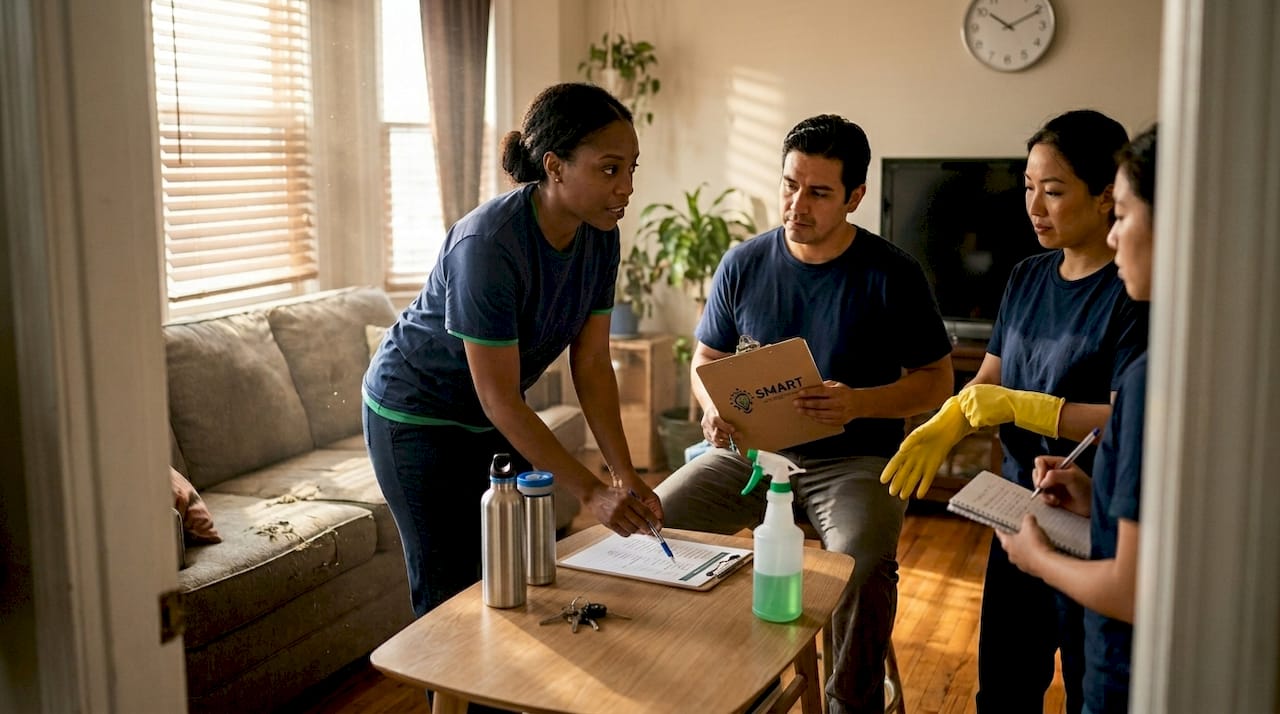
Picture this: it’s 10 a.m. on a Saturday, you have four units checking out and three checking in by 3 p.m., and your lead cleaner just called in sick. That panic is real for property managers and Airbnb hosts across Seattle every single weekend. Organizing cleaning teams is not just a logistical exercise. It is the difference between five-star reviews and refund requests. This guide walks you through assessing your needs, structuring your team, implementing systems, and scaling operations so you can handle back-to-back turnovers without losing sleep or guests.
Table of Contents
- Assess your needs and gather requirements
- Choose and structure your cleaning team
- Implement processes: Checklists, SOPs, and tech tools
- Schedule, dispatch, and supervise for consistent results
- Handling edge cases and scaling up
- Why tech and team culture matter more than checklists
- Streamline your turnovers with expert cleaning partners
- Frequently asked questions
Key Takeaways
| Point | Details |
|---|---|
| Specialize team roles | Assign cleaners by skill or task, not just area, to boost speed and consistency during turnovers. |
| Use digital SOPs | Automating checklists with photo proof and app-based task management eliminates errors and verifies quality. |
| Schedule and supervise with tech | Sync PMS calendars and cleaning software for seamless scheduling and employ KPIs for reliable oversight. |
| Build redundancy | Always roster 2-3 cleaners per property in case of emergencies or high turnover periods. |
| Seattle-specific best practices | Cluster teams by neighborhood and use local tools for faster, regionally optimized turnovers. |
Assess your needs and gather requirements
Before you recruit a single cleaner, you need a clear picture of what your properties actually demand. Start by listing every unit you manage, its square footage, number of bedrooms and bathrooms, and average turnover frequency. Seattle neighborhoods like Capitol Hill, Fremont, and South Lake Union each have their own pace and cleaning challenges, from older building layouts to high-traffic shared spaces.
Different team setups each carry real trade-offs. Here is a quick comparison:
| Setup | Pros | Cons |
|---|---|---|
| Freelancers | Flexible, lower cost | Higher no-show risk, inconsistency |
| Cleaning agency | Reliable, insured, scalable | Higher cost, less direct control |
| Dedicated STR team | Trained for turnovers, loyal | Hard to recruit, slower to scale |
The right choice depends on your portfolio size and how much variability you can tolerate. For most hosts managing three or more units, a hybrid approach works best: a core agency or dedicated team backed by a roster of vetted freelancers for overflow.
Key requirements to map out before you hire:
- Number of units and average square footage
- Peak checkout windows (Friday/Saturday in Seattle tend to cluster)
- Maximum acceptable turnover time per property type
- Geographic spread across neighborhoods
- Special cleaning needs (pet-friendly units, shared laundry rooms)
For larger properties, team-based cleaning approaches consistently outperform solo cleaners on speed and thoroughness. Research confirms you should structure teams with 2-3 people per turnover for larger properties and cross-train for backups. Strong best practices for cross-training your team also protect you when someone calls out sick.
Pro Tip: For every property, roster at least two backup cleaners beyond your primary team. When your main cleaner cancels, you want options in under 10 minutes, not a two-hour scramble.
Benchmarks matter here too. Industry data on team size, turnover time, and cost give you realistic targets to measure against as you grow.
Choose and structure your cleaning team
With requirements in hand, you can now assemble and structure your cleaning teams for reliability and speed. The recruitment process matters as much as the structure itself. Rushing to fill spots with unvetted cleaners is a common and costly mistake.
Here is a step-by-step approach to building your team:
- Define roles before recruiting. Decide upfront whether you need generalists or specialists for kitchens, bathrooms, and linen management.
- Post on targeted platforms. Use local Seattle job boards, STR-specific hiring platforms, and referrals from trusted property manager networks.
- Conduct structured interviews. Ask candidates about their experience with timed turnovers, not just general cleaning. Test their speed and attention to detail with a paid trial shift.
- Assign task specialization. Splitting duties by area (one cleaner owns bathrooms and kitchens, another handles bedrooms and linens) is faster and more consistent than asking one person to do everything.
- Sequence assignments by checkout clustering. Group your team’s route by neighborhood so they move efficiently between properties. Geographic clustering of properties minimizes travel time and maximizes daily productivity.
- Cross-train everyone. Every team member should be able to cover at least one other role. Review cross-training cleaners as a structured practice, not a one-time training session.
Task specialization is worth emphasizing. Research on team cleaning methods shows that using a team cleaning methodology outperforms zone cleaning for both speed and quality. When one person owns bathrooms across all units rather than cleaning one unit top to bottom, they build rhythm and catch errors faster.
For team structures for short-term rentals, a tiered hierarchy also helps. Have a lead cleaner or supervisor per cluster of properties who can make on-site decisions without calling you.
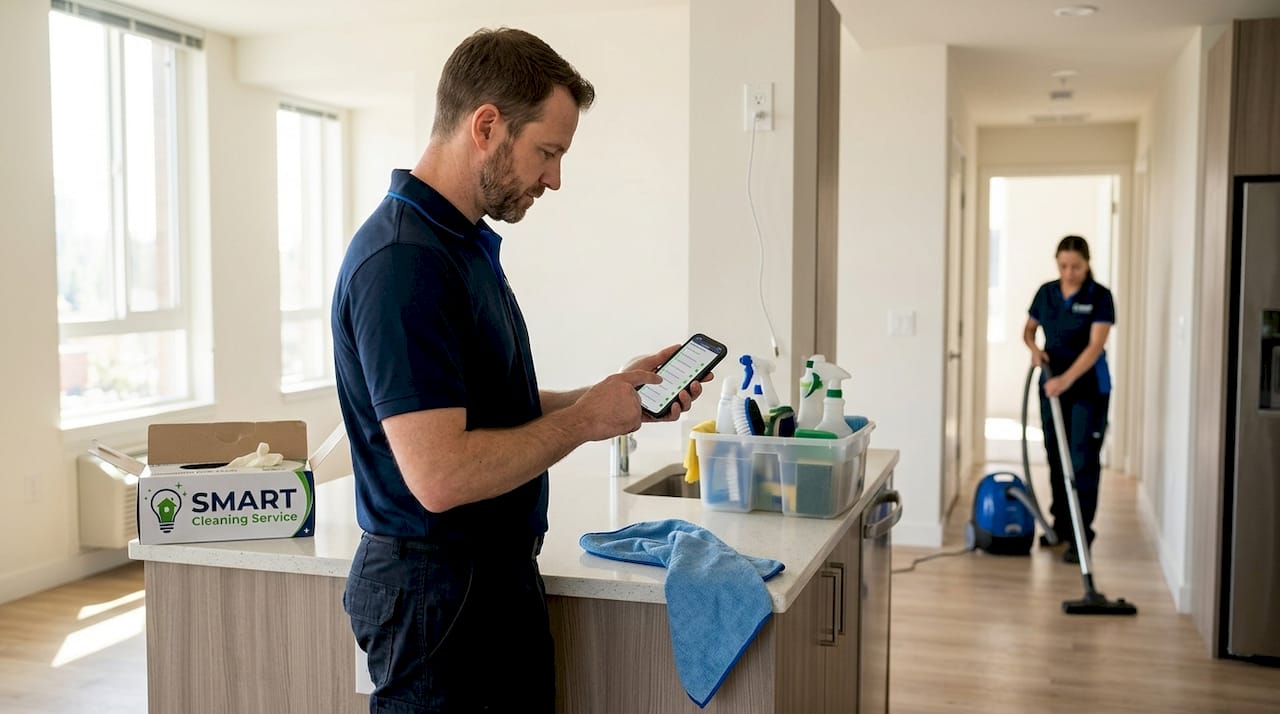
Pro Tip: Maintain a tiered backup list ranked by reliability, not just availability. Your Tier 1 backups get called first every time. Tier 2 is for genuine emergencies only.
Implement processes: Checklists, SOPs, and tech tools
With your team ready, the right systems and tech make consistent quality possible, even during rushed turnovers. A cleaner who knows exactly what to do in what order will always outperform one guessing from memory.
Here is how to implement your process infrastructure:
- Write a property-specific SOP. Cover every room, every task, and the expected time for each. Do not use generic templates. Tailor SOPs to each unit’s quirks.
- Convert SOPs into digital checklists. Apps like Turno, Properly, or SpotlessApp let you push checklists directly to cleaners’ phones.
- Require photo verification. Digital checklists with photo verification create a consistent, auditable standard that raises quality across the board.
- Integrate your property management system. Automating scheduling by syncing PMS calendars with your cleaning software eliminates manual hand-offs and missed assignments.
- Build escalation flags into the app. If a cleaner finds a broken fixture or damage, they flag it in the app instantly rather than texting you 30 minutes later.
Here is a comparison of popular tools:
| Tool | PMS Integration | Photo Verification | Mobile App | Best For |
|---|---|---|---|---|
| Turno | Yes | Yes | Yes | Multi-property hosts |
| Properly | Yes | Yes | Yes | STR teams with SOPs |
| SpotlessApp | Yes | Yes | Yes | Automated scheduling |
| Breezeway | Yes | Yes | Yes | Maintenance tracking |
The scale argument is hard to ignore. PMS integration and mobile apps reduce errors by 90%, which directly protects your review scores. Look at enforcing SOPs as a system problem, not a people problem. If cleaners skip steps, the SOP or cleaning team checklists probably need better structure.
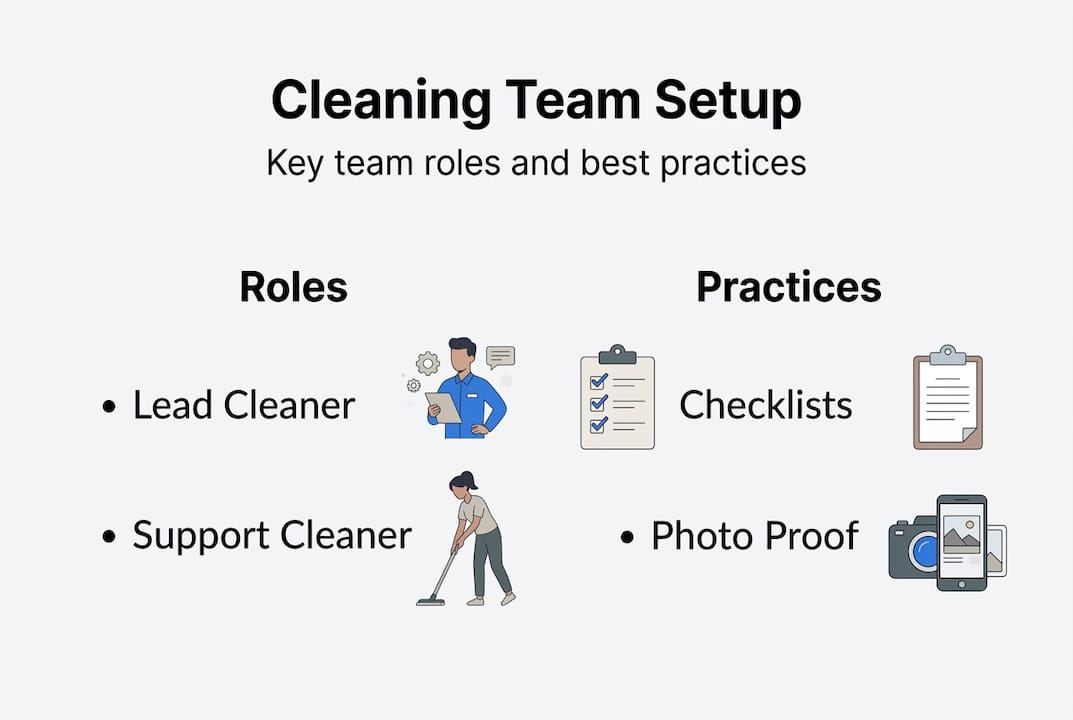
Pro Tip: Use escalation steps directly inside your cleaning app. When a cleaner flags unexpected maintenance, it goes to your inbox immediately with photos and location, not a confusing text chain.
Schedule, dispatch, and supervise for consistent results
Efficient process needs strong supervision and precise scheduling to perform reliably under real-world constraints. Building your system is one thing. Running it day to day without degradation is another challenge entirely.
Steps to automate and manage your dispatch:
- Sync your PMS calendar with your cleaning software. New bookings should auto-trigger cleaning assignments without any manual step.
- Group assignments geographically. Cluster the same team to the same neighborhoods each day to cut travel time.
- Use checkout window buffers. Schedule cleaners to arrive 10 minutes after checkout, not the moment it happens. This protects against late checkouts without cascading delays.
- Set hard deadlines per unit. Every property needs a completion time, not just a start time.
Supervision methods that actually work:
- Supervisor spot-checks on at least 20% of turnovers weekly
- Mandatory photo reports submitted through the cleaning app before the cleaner leaves
- KPI tracking such as inspection scores, re-clean rates, and on-time completion rates
- Weekly team check-ins to surface friction before it becomes a pattern
Cleanliness consistently ranks as the number one factor guests cite in negative reviews. One missed turnover or substandard clean can cost you your Superhost status and multiple future bookings.
Quality control using supervisor inspections, photo reports, and performance incentives tied to KPI scores is the standard method high-performing property managers use. Locally, Seattle STR operators using 200-point checklists and staggered teams report measurably better review outcomes.
For KPI tracking for cleaning teams and building out inspection routines for high standards, treat your cleaning operation like a small business with metrics, not just a task list.
Handling edge cases and scaling up
Once the basics are running, you need to be ready for the real-world exceptions and how to scale teams as your portfolio grows. Edge cases are where even well-organized operations fall apart.
Common edge cases to plan for:
- Back-to-back bookings: Full team needed within a compressed window; have your fastest crew assigned and confirm the night before.
- Early check-ins or late checkouts: Build a buffer policy and communicate it clearly to guests upfront.
- Gap days: Split the cleaning into a light reset plus a deep clean across two days when the calendar allows.
- Emergency damage: Have a documented response process so cleaners know exactly what to photograph and report.
- Peak Seattle events: Conferences, sports events, and festivals spike occupancy across the city and require pre-staged extra teams.
For back-to-back bookings needing full teams in compressed windows, charge rush fees for under-three-hour windows. It protects your team and filters out unrealistic host expectations. When scaling cleaning operations across more properties, redundancy is not optional. Roster 2-3 cleaners per property and use escrow-style payment structures to protect both sides when things go sideways.
Scaling in the Greater Seattle Area also means navigating local regulations around short-term rentals, which affect how frequently units turn over and what sanitation standards apply.
Pro Tip: Every time you add a new property or process change, document it the same day and push the update to your digital checklists immediately. Outdated SOPs are one of the most common causes of inconsistency at scale.
Why tech and team culture matter more than checklists
Here is the uncomfortable reality most guides skip: the majority of property managers who struggle with turnover quality have perfectly good checklists. Their SOPs are detailed. Their cleaning apps are set up. And their teams still miss things or cut corners under pressure.
The problem is not the checklist. It is that nobody bought into it.
We have seen this pattern consistently. A team that feels respected, receives clear feedback, and earns performance bonuses operates at a completely different level than one that is just handed a task list and sent to work. Technology matters too, but only when the people using it actually trust it. A cleaner who photographs a spotless bathroom because they know it protects their reputation is worth five cleaners who submit photos just to check the box.
Veteran property managers in Seattle who maintain high-quality home cleaning standards year-round invest in ongoing feedback loops, not just onboarding training. They celebrate top performers publicly, upgrade their tools regularly, and ask cleaners what is slowing them down. That two-way conversation is what makes the SOP actually work.
Invest in culture as deliberately as you invest in software. The ROI shows up in your reviews.
Streamline your turnovers with expert cleaning partners
Managing the system above takes real effort, and for many property managers in Seattle, partnering with a reliable local cleaning company removes the heaviest parts of that load.
Smart Cleaning Service works directly with Airbnb hosts and property managers across the Greater Seattle Area, providing dedicated turnover teams, digital reporting, and flexible scheduling that syncs with your bookings. Whether you need regular cleaning services for ongoing maintenance or specialized move-in/out cleaning solutions between tenants, we bring the structure and reliability your operation needs. Ready to simplify your next turnover season? Get your free cleaning estimate and see what a professional partner looks like in practice.
Frequently asked questions
What is the ideal cleaning team size for Airbnb turnovers?
For most 2-3 bedroom properties, 2-person teams finish turnovers in 2-2.5 hours; larger properties need three or more cleaners to stay within tight checkout windows.
What tools or apps help automate cleaning schedules?
Syncing your property management system with apps like Turno or SpotlessApp automates scheduling and eliminates the manual hand-offs that lead to missed turnovers.
How do I ensure cleaners follow my standards every time?
Digital checklists with photo verification combined with regular supervisor inspections create the accountability layer that keeps standards consistent across every shift.
What are common mistakes to avoid with cleaning teams?
Relying on a single cleaner with no backup is the most dangerous gap; always roster 2-3 cleaners per property who are cross-trained so one absence does not derail your entire turnover day.
How does cleaning team organization impact guest reviews?
Well-structured teams using team cleaning methods and thorough checklists deliver consistent results that drive five-star reviews, while Seattle operators report that strict checklists and team methods directly correlate with higher guest satisfaction scores.
Recommended
- Smart Cleaning Service™ House Cleaning Seattle Kirkland Bellevue Redmond
- Smart Cleaning Service™ House Cleaning Seattle Kirkland Bellevue Redmond
- Free Estimate Near Me – Smart Cleaning Service Estimate
- Smart Cleaning Service™ House Cleaning Seattle Kirkland Bellevue Redmond
- How to clean your home: Practical strategies for a spotless space
Hosting tip: many of our Airbnb hosts also use our recurring cleaning service for their own home — weekly or biweekly visits that keep it consistently clean while you focus on your guests.