
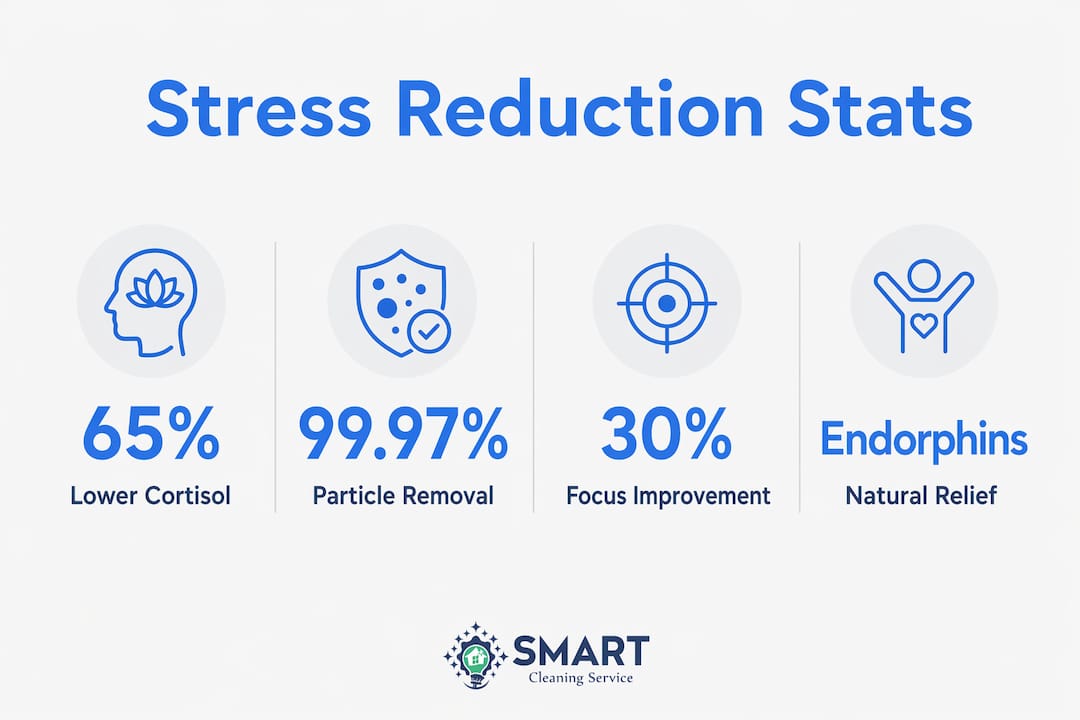
A clean home is one of the most direct and underrated tools for managing stress. Research shows that mindfulness during cleaning produces a 27% reduction in nervousness and a 25% improvement in mental inspiration. Those numbers reflect a real physiological shift, not just a tidy room. Understanding how does professional cleaning reduce stress means looking at what clutter does to your brain, what your body feels when order is restored, and why outsourcing the work delivers benefits that DIY cleaning rarely matches. Smartcleaningwa serves the Greater Seattle Area with exactly this outcome in mind.
How does professional cleaning reduce stress?
Stress from a messy home is not imaginary. Clutter competes for attention and raises cortisol, the body’s primary stress hormone. Elevated cortisol impairs memory, disrupts sleep, and makes it harder to focus on anything else. A cluttered kitchen counter or a pile of laundry on the bedroom floor keeps your brain in a low-level state of alert, even when you are trying to relax.
Professional cleaning breaks that cycle at the source. When a trained team removes the mess, your nervous system stops processing the visual noise. The result is a measurable drop in mental tension, not just a cleaner floor. Psychologists describe this as environmental regulation: your surroundings directly shape your internal state.
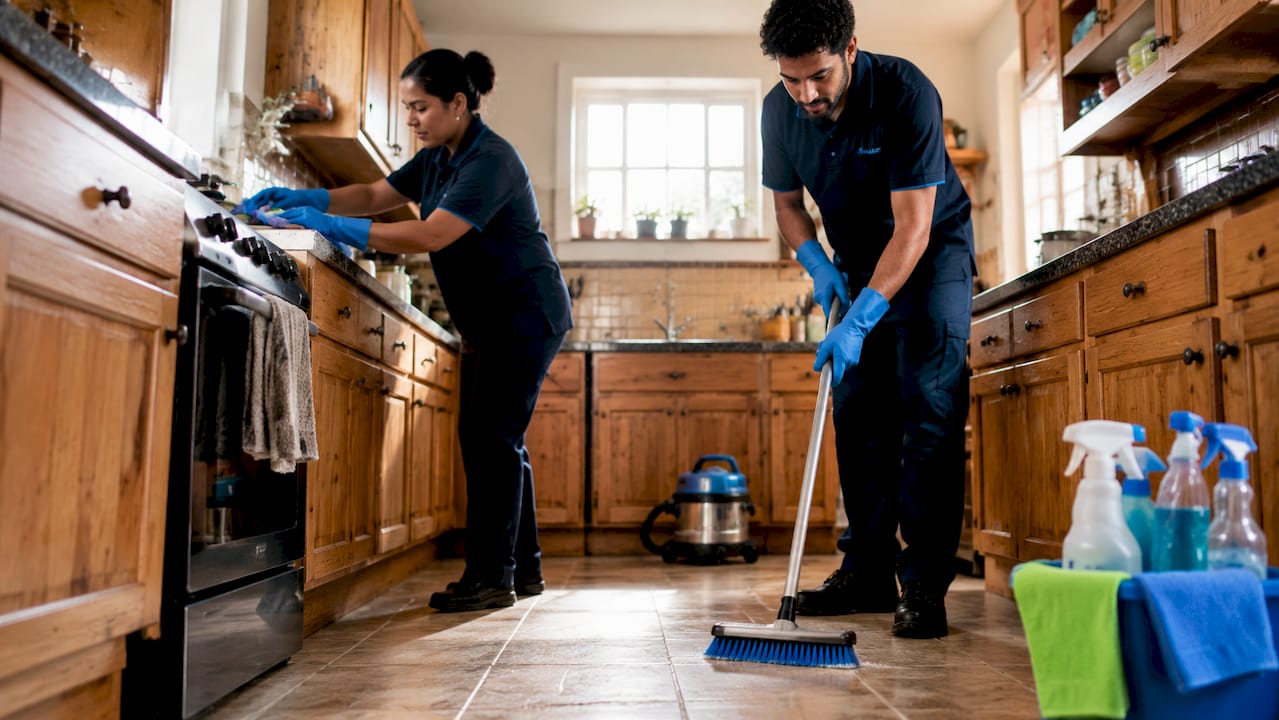
The physical act of cleaning also triggers endorphin release, which acts as a natural stress and pain reliever. That biochemical response explains why people often feel lighter after a cleaning session, even when they did not expect to. Professional cleaning amplifies this effect because the results are more thorough and longer lasting than what most people achieve on their own.
What psychological mechanisms connect cleaning to stress reduction?
Three distinct mechanisms explain why a clean space calms the mind.
- Cortisol suppression. Visual disorder signals unfinished business to the brain. That signal keeps the stress response active. Removing clutter cuts off that signal and allows cortisol to drop.
- Behavioral activation. Physical movement during cleaning counts as mild exercise. Exercise releases endorphins and serotonin, both of which lift mood and reduce anxiety.
- Neurological grounding. Repetitive cleaning tasks provide predictability that calms the nervous system. The rhythm of wiping a surface or vacuuming a room anchors attention in the present moment, which is the same mechanism behind mindfulness meditation.
Psychologists note that grounding through routine physical tasks is one of the most accessible anxiety management tools available. Cleaning fits that description precisely because it is concrete, achievable, and produces a visible result. That visible result matters. Completing a task, even a small one, generates a sense of control that directly counters the helplessness that anxiety creates.
Pro Tip: Try engaging mindfully with one cleaning task per day, focusing on the physical sensations of the work. This short practice can lower nervousness and improve your sense of mental clarity within minutes.
The connection between cleaning and mental health is well established in clinical psychology under the concept of behavioral activation therapy, which uses structured activity to interrupt depressive and anxious thought patterns. Cleaning is one of the most practical forms of that therapy available at home.
Why professional cleaning delivers deeper stress relief than DIY
DIY cleaning addresses what you can see. Professional cleaning addresses what you cannot.
| Area | DIY cleaning | Professional cleaning |
|---|---|---|
| Surface dust and debris | Partially removed | Thoroughly removed |
| Allergens in carpet and upholstery | Minimally reduced | Captured by HEPA-filtered vacuums |
| Baseboards, grout, and vents | Often skipped | Targeted in deep cleaning |
| Mental load of scheduling | Remains with you | Transferred to the service provider |
| Consistency of results | Variable | Standardized and reliable |
HEPA-filtered vacuums capture 99.97% of particles down to 0.3 microns. That level of filtration removes allergens, dust mites, and mold spores that standard consumer vacuums leave behind. For people with allergies or asthma, this difference is the gap between a home that triggers symptoms and one that does not.
Deep cleaning targets hidden areas like baseboards, grout lines, and air vents. These spots accumulate dust and mold that create subconscious unease, even when you cannot identify the source. Removing them eliminates a background stressor that most people never consciously register.
The mental load reduction is equally significant. Outsourcing cleaning eliminates the cognitive burden of tracking what needs to be done, when to do it, and whether it was done well enough. That freed mental bandwidth is available for work, relationships, and rest. For busy families especially, this shift in mental load is one of the most tangible benefits of hiring a professional service.
Practical ways cleaning services help manage anxiety and improve focus
Scheduling professional cleaning on a recurring basis does more than keep your home tidy. It builds a predictable structure that reduces decision fatigue and supports mental health over time.
- Set a recurring schedule. Weekly or biweekly visits create a reliable rhythm. You stop spending mental energy deciding when to clean and start trusting that it will happen. Predictable cleaning schedules reduce decision fatigue and lower background stress hormones.
- Prioritize the bedroom. The National Sleep Foundation links sleep quality improvement to clean, fresh sleeping environments. Ask your cleaning service to focus on the bedroom first if sleep is a concern.
- Address clutter before the team arrives. Decluttering before a professional visit compounds the benefit. You get the grounding effect of the physical task plus the deeper clean that follows.
- Request targeted deep cleaning. Areas like the kitchen, bathroom grout, and air vents carry the highest allergen load. Targeting these areas reduces both physical irritants and the subconscious stress they create.
- Treat the service as self-care. Engaging a cleaning professional is an act of self-care that supports mental well-being, not a luxury or an indulgence. Reframing it this way removes guilt and reinforces the psychological benefit.
For people managing anxiety or depression, trauma-informed cleaning services offer a compassionate, non-judgmental approach. These services work at the client’s pace and treat emotional barriers to cleanliness with the same care as physical ones. The result is psychological progress alongside a cleaner home.
Improved focus is another direct outcome. Tidy living spaces are linked with lower cortisol, better concentration, and stronger emotional regulation. When your environment is ordered, your mind follows. That is not a metaphor. It reflects how the brain allocates attention when it is not managing visual disorder.
How consistent professional cleaning builds long-term well-being
A single cleaning visit improves your mood. A consistent schedule changes your baseline.
Routine professional cleaning reduces cortisol, improves sleep quality, and sharpens focus over time. These are cumulative benefits. Each visit reinforces the last, and the psychological payoff compounds the same way a fitness routine does. You do not feel the full benefit after one session. You feel it after six weeks of consistency.
The predictability of a scheduled service also provides emotional comfort. Knowing that your home will be clean on Thursday removes a category of low-grade worry from your week. That is not a small thing. Chronic low-grade worry is one of the primary drivers of burnout and anxiety disorders.
“Cleaning routines foster emotional stability by reducing mental clutter and providing a sense of achieved goals.”
That insight from behavioral health research captures something important. The benefit is not just the clean room. It is the experience of having completed something, of having taken care of yourself and your space. That sense of accomplishment is a genuine psychological resource.
Non-judgmental, supportive cleaning services add another layer. For people whose anxiety or depression has made it hard to maintain their home, a compassionate service removes shame from the equation. The focus shifts from what went wrong to what is getting better. That shift supports emotional healing alongside physical tidiness. You can read more about why detailed cleaning matters for both health and mental clarity.
Key takeaways
Professional cleaning reduces stress by lowering cortisol, removing allergens, eliminating mental load, and building the predictable routines that support long-term psychological well-being.
| Point | Details |
|---|---|
| Clutter raises cortisol | Visual disorder keeps the stress response active; removing it lowers stress hormones measurably. |
| HEPA cleaning removes hidden stressors | Professional vacuums capture 99.97% of particles, eliminating allergens that trigger anxiety and physical symptoms. |
| Mental load reduction matters | Outsourcing cleaning frees cognitive bandwidth for rest, relationships, and focus. |
| Consistency compounds the benefit | Recurring visits build predictable routines that lower baseline stress over weeks, not days. |
| Self-care framing reinforces the outcome | Treating professional cleaning as a mental health investment removes guilt and deepens the psychological benefit. |
Why I think most people underestimate what a clean home actually does
People talk about cleaning as a chore. That framing undersells what is actually happening when a space gets properly cleaned. What I have observed, both personally and through the clients Smartcleaningwa serves, is that the mood shift after a thorough professional clean is not subtle. It is immediate and physical. People breathe differently in a clean room. They sit differently. They make eye contact more easily.
The research on cortisol and clutter confirms what most of us already sense but rarely articulate: your environment is not neutral. It is either working for you or against you. A cluttered, dusty home is working against you every hour you spend in it, even when you are not consciously aware of it.
What I find most underappreciated is the mental load angle. The invisible weight of knowing your home needs cleaning, of tracking what has not been done, of feeling vaguely behind on something you cannot quite name. That weight is real and it accumulates. Handing it to a professional team does not just clean your home. It clears a tab in your brain that was running in the background all week.
My advice is to stop treating professional cleaning as something you do when things get bad enough. Schedule it before things get bad. Use it as a maintenance tool for your mental state, the same way you would use exercise or sleep. The benefits of hiring a cleaning service extend well beyond the visible results. The people who get the most out of it are the ones who treat it as a regular investment, not a one-time fix.
— Wilker
Smartcleaningwa: professional cleaning for a calmer home
Smartcleaningwa provides recurring house cleaning, deep cleaning, and move-in and move-out services across Seattle, Kirkland, Bellevue, and Redmond. Every visit uses professional-grade equipment and a structured checklist that covers the areas most likely to carry allergens and create subconscious stress.
Scheduling a recurring service with Smartcleaningwa removes the mental load of tracking your home’s cleanliness and replaces it with a reliable, predictable routine. For residents in the Greater Seattle Area looking to reduce stress through a cleaner environment, residential cleaning services from Smartcleaningwa are a direct and practical starting point. Request a free cleaning estimate and take the first step toward a calmer, cleaner home.
FAQ
Does cleaning actually reduce anxiety?
Yes. Cleaning reduces anxiety by lowering cortisol, releasing endorphins, and removing the visual clutter that keeps the brain’s stress response active.
How often should I schedule professional cleaning for mental health benefits?
Weekly or biweekly visits produce the most consistent results. Recurring schedules reduce decision fatigue and build the predictable routines that lower baseline stress hormones over time.
What makes professional cleaning better than cleaning myself?
Professional teams use HEPA-filtered vacuums that capture 99.97% of particles and target areas like baseboards and grout that most people skip. They also remove the mental load of planning and executing the cleaning yourself.
Can a clean bedroom improve my sleep?
Yes. The National Sleep Foundation links clean, fresh sleeping environments to better sleep quality. A professionally cleaned bedroom removes allergens and creates the calm sensory conditions that support deeper rest.
What is trauma-informed cleaning?
Trauma-informed cleaning is a compassionate, non-judgmental service approach designed for people whose anxiety or depression has made it difficult to maintain their home. It prioritizes client comfort and pacing to support emotional healing alongside physical tidiness.
Recommended
- Smart Cleaning Service™ House Cleaning Seattle Kirkland Bellevue Redmond
- Smart Cleaning Service™ House Cleaning Seattle Kirkland Bellevue Redmond
- Smart Cleaning Service™ House Cleaning Seattle Kirkland Bellevue Redmond
- Smart Cleaning Service™ House Cleaning Seattle Kirkland Bellevue Redmond