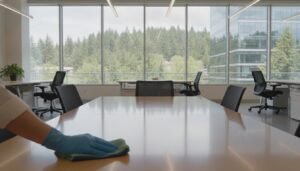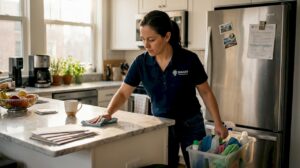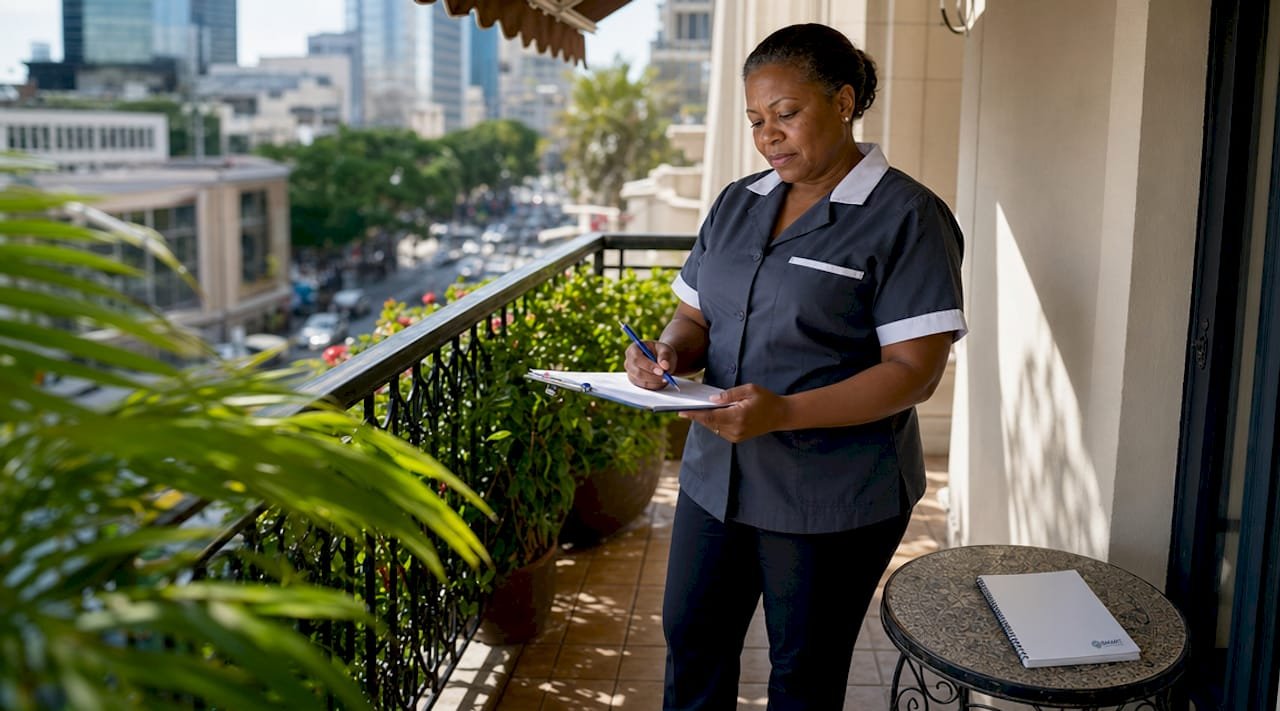
Hospitality cleaning is defined as the systematic, protocol-driven process of maintaining sanitary, guest-ready environments across hotels, resorts, and short-term rental properties. Unlike general janitorial work, it covers guest rooms, public areas, back-of-house spaces, and linen management under documented standards that directly affect guest satisfaction scores and revenue. Industry bodies like The Tourism Institute and research platforms like Vynta confirm that cleanliness is the single most cited factor in guest reviews. For hospitality professionals and business owners, understanding what hospitality cleaning involves is not optional. It is the operational foundation your entire guest experience is built on.
What does hospitality cleaning involve?
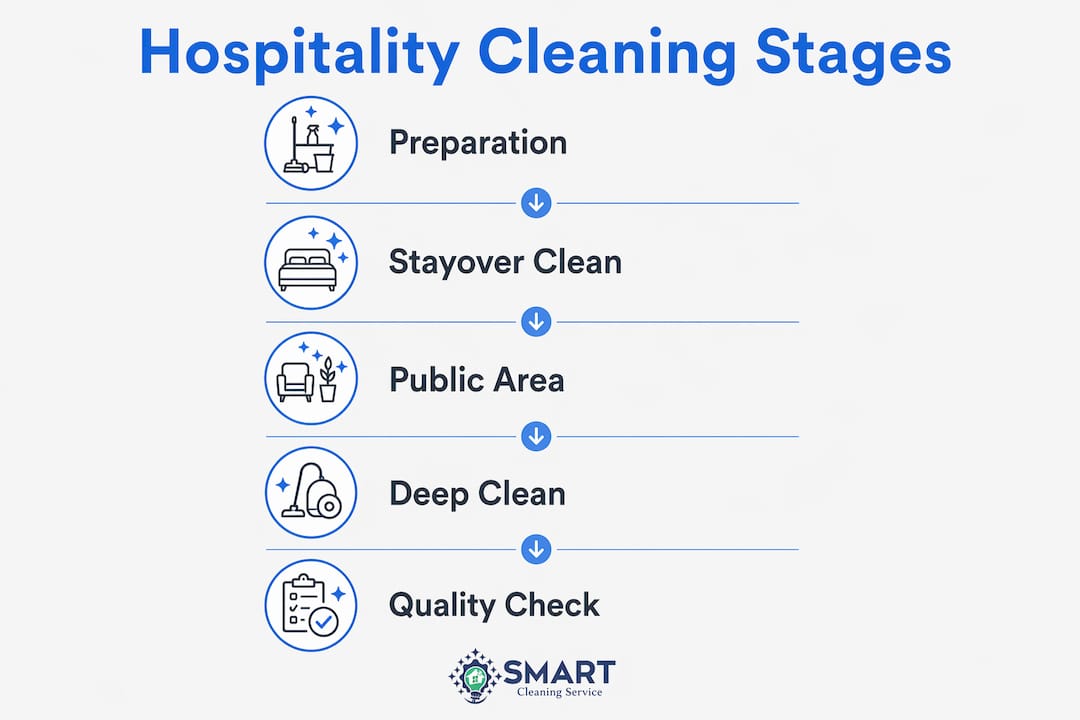
Hospitality cleaning covers four distinct operational zones, each with its own frequency, chemical requirements, and quality benchmarks. Missing any one of them creates gaps that guests notice immediately.
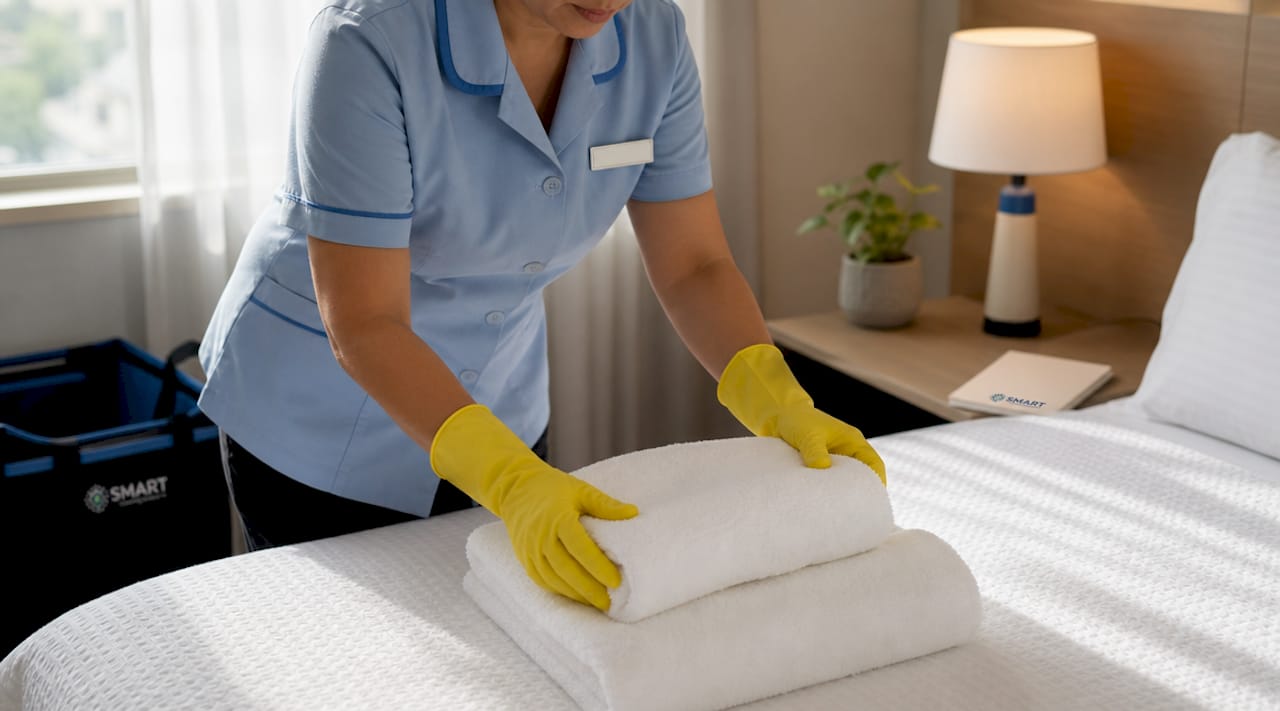
Guest room cleaning splits into two types. A stayover clean refreshes an occupied room: replacing towels, emptying bins, wiping surfaces, and restocking amenities without disturbing the guest’s belongings. A departure clean, also called a checkout clean, is a full reset. Checkout cleaning time ranges from 25 minutes for a standard room to over 60 minutes for a suite, so scheduling realistic time blocks is critical to keeping turnover on track.
Public area cleaning runs on a tighter frequency than most managers expect. Lobbies, elevators, restrooms, and corridors need attention multiple times daily, while deep cleaning public areas is typically performed two to seven times per week depending on foot traffic, usually overnight. This overnight scheduling prevents disruption to guests while allowing thorough scrubbing, carpet extraction, and disinfection of high-contact surfaces.
Back-of-house sanitation covers kitchens, laundry rooms, staff areas, and storage. Kitchen hygiene in particular requires food-safe disinfectants, grease-cutting degreasers, and documented cleaning logs that satisfy health department inspections. These are not the same products used in guest rooms, and cross-using them creates both safety and compliance risks.
Linen and amenities management is the logistical backbone of the operation. The industry standard uses a three-par linen set per room: one set in use, one in laundry, and one in storage. This rotation prevents shortages during peak occupancy and keeps linen quality consistent across every room.
- Strip all linens before touching any surface
- Clean from high surfaces to low surfaces to prevent recontamination
- Disinfect high-touch points: remote controls, light switches, door handles, and faucets
- Vacuum and mop floors last
- Remake the bed as the final step to keep it uncontaminated
Pro Tip: Assign specific color-coded microfiber cloths to each zone (bathroom, bedroom, kitchen) to prevent cross-contamination between surfaces. This single practice reduces pathogen transfer and satisfies most brand audit requirements without adding cost.
Scheduled deep cleans add another layer: carpet shampooing, drapery laundering, HVAC vent cleaning, and bedbug visual inspections. These are not daily tasks, but skipping them creates compounding hygiene problems that surface in guest complaints months later.
How cleaning standards directly affect guest satisfaction and revenue
Cleanliness is not just a comfort factor. It is a financial lever. One-point review score improvements drive a 7 to 8% rise in revenue per available room (RevPAR). That figure means a mid-size hotel running at $150 average daily rate can generate tens of thousands in additional annual revenue simply by tightening its cleaning protocols.
“Hospitality cleaning is the core product of the hotel experience; guests forgive many issues but rarely tolerate unclean rooms.” — Vynta, Hotel Cleaning 2026
The connection between cleaning and repeat bookings is equally direct. Guests who leave a property citing cleanliness issues rarely return, and they post reviews that suppress future bookings. The role of cleaning in guest satisfaction is well-documented: properties that invest in quality assurance programs consistently outperform competitors on both review platforms and brand audit scores.
Quality assurance means more than cleaning the room. Supervisory inspection roles improve brand audit scores and guest satisfaction by verifying rooms meet standards before check-in. A supervisor who catches a missed bathroom spot before the guest does prevents a one-star review. That is a measurable return on the time invested in inspection.
Operational benefits extend beyond reviews. Properties with high cleaning standards report fewer service recovery incidents, lower complaint-handling costs, and reduced maintenance calls because housekeeping staff identify and report issues like broken fixtures or water leaks during their rounds. Cleaning and facility maintenance are not separate functions in high-performing properties. They operate as one integrated system.
What are best practices in hospitality cleaning?
Consistent quality at scale requires documented workflows, not individual effort. The following practices define the difference between a property that passes inspections and one that leads its competitive set.
Follow a fixed cleaning sequence. The standard checkout sequence strips linens first, cleans from high to low surfaces, and vacuums or mops floors last. This sequence exists to prevent cross-contamination, not to save time. Deviating from it undermines the entire sanitation effort.
Maintain documented cleaning logs. Legal compliance requires cleaning logs, Chemical Safety Data Sheets (SDS), and staff training records to pass health inspections and manage liability. A verbal assurance that a room was cleaned is not defensible in a health inspection or a guest injury claim.
Schedule deep cleans proactively. Public area deep cleaning and periodic room tasks like HVAC vent cleaning should appear on a fixed calendar, not be triggered by complaints. Reactive scheduling always costs more than preventive scheduling.
Train staff on chemical safety and guest interaction. Hospitality cleaners work in occupied or recently vacated spaces. They need to know which disinfectants are appropriate for which surfaces, how to handle guest belongings respectfully, and how to report maintenance issues. Training records also satisfy the documentation requirements above.
Integrate technology for scheduling and audits. AI-powered cleaning operations reduce guest complaints by 23% and improve room turnover times by 18%. Platforms that assign rooms dynamically based on check-in priority and track completion in real time eliminate the scheduling gaps that cause late check-ins and guest frustration.
Pro Tip: Build your hospitality cleaning checklist around your brand’s audit criteria, not a generic template. Most major hotel brands publish their housekeeping audit standards. Aligning your SOPs to those criteria means your team is always audit-ready, not just clean.
For properties managing short-term rentals alongside traditional hotel inventory, the principles for organizing cleaning teams apply directly. Turnover speed, quality verification, and linen logistics are identical challenges regardless of the booking platform.
How does hospitality cleaning differ from residential or regular cleaning?
The difference between hospitality cleaning and residential cleaning is not just scale. It is scope, accountability, and consequence. A missed spot in a private home is a personal inconvenience. The same miss in a hotel room generates a public review that affects future revenue.
Hotel cleaning differs from residential cleaning across five measurable factors: time per room, cleaning frequency, chemical strength, documentation requirements, and guest interaction standards. The table below makes those differences concrete.
| Factor | Hospitality cleaning | Residential cleaning |
|---|---|---|
| Time per room | 25 to 60+ minutes per checkout | 1 to 3 hours per full home |
| Frequency | Daily or per-stay turnover | Weekly, biweekly, or monthly |
| Chemical strength | Commercial-grade disinfectants, EPA-registered | Consumer or mild professional products |
| Documentation | Cleaning logs, SDS sheets, training records required | No formal documentation required |
| Guest interaction | Professional service standards, privacy protocols | Direct client relationship, informal |
The documentation gap is the most consequential difference for business owners. Residential cleaning standards do not require the same compliance rigor as hospitality environments. A hotel that cannot produce cleaning logs during a health inspection faces fines, closure orders, and brand penalties. A residential cleaner faces none of those consequences.
Staffing implications follow from this difference. A room attendant typically cleans 15 to 20 rooms per shift, which means speed and consistency must coexist. Residential cleaners work at a different pace with different priorities. Hiring residential cleaners to staff a hotel operation without retraining them for hospitality protocols is a common and costly mistake.
Key takeaways
Hospitality cleaning is the operational core of guest experience, and properties that treat it as a compliance checkbox rather than a revenue driver consistently underperform on both reviews and RevPAR.
| Point | Details |
|---|---|
| Cleaning drives revenue | A one-point review score improvement generates a 7 to 8% RevPAR increase. |
| Four zones require distinct protocols | Guest rooms, public areas, back-of-house, and linen management each need separate standards. |
| Documentation is non-negotiable | Cleaning logs, SDS sheets, and training records are legal requirements, not optional records. |
| Hospitality differs from residential | Commercial-grade chemicals, daily frequency, and guest interaction standards set hospitality apart. |
| Technology accelerates results | AI-powered scheduling cuts complaints by 23% and improves turnover speed by 18%. |
Why I think most properties underinvest in the wrong place
After working closely with hospitality operations across the Pacific Northwest, the pattern I see most often is properties spending heavily on amenities and décor while treating housekeeping as a cost center to minimize. That is exactly backwards. Guests will forgive a dated lobby. They will not forgive a hair on the bathroom floor or a stain on the duvet.
The properties that consistently earn top review scores are not the ones with the most expensive furniture. They are the ones where the housekeeping supervisor does a physical inspection of every checkout room before it is released. That single quality gate, which costs nothing beyond staff time, catches the errors that generate one-star reviews.
I have also seen the technology conversation go sideways. Managers invest in AI scheduling platforms before they have documented SOPs. The technology then optimizes a broken process faster, which just produces consistent mediocrity at scale. Get the workflow right first. Document it. Train to it. Then automate it.
The other underrated practice is integrating cleaning with maintenance reporting. When room attendants are trained to log maintenance issues during their rounds, properties catch plumbing leaks, HVAC failures, and electrical faults weeks before they become guest-facing problems. That integration is where facility maintenance and cleaning converge into genuine operational efficiency.
— Wilker
How Smartcleaningwa supports hospitality and short-term rental cleaning
Smartcleaningwa delivers professional cleaning services across the Greater Seattle Area, including Airbnb turnover cleaning, deep cleaning, and recurring commercial cleaning built around the same protocols described in this guide.
Every Smartcleaningwa team arrives with documented checklists, commercial-grade supplies, and real-time communication so you always know when a property is guest-ready. For hospitality professionals managing short-term rentals or commercial spaces who need reliable professional cleaning without the overhead of an in-house team, Smartcleaningwa offers the scheduling flexibility and quality assurance that guest-facing properties require. Reach out to discuss a cleaning program built around your occupancy calendar and brand standards.
FAQ
What is hospitality cleaning in simple terms?
Hospitality cleaning is the systematic process of cleaning, sanitizing, and resetting guest-facing environments in hotels, resorts, and short-term rentals to meet defined quality and safety standards. It covers guest rooms, public areas, back-of-house spaces, and linen management.
How many rooms does a hotel housekeeper clean per shift?
A single room attendant typically cleans 15 to 20 rooms per shift under current industry guidance from The Tourism Institute. The actual number depends on room size, property type, and whether rooms are stayover cleans or full checkout resets.
Why does cleanliness matter so much for hotel revenue?
A one-point improvement in guest review scores drives a 7 to 8% increase in RevPAR, according to Vynta’s 2026 hotel cleaning research. Cleanliness is the most cited factor in guest reviews, making it the highest-leverage variable in a property’s revenue performance.
What documents are required for hospitality cleaning compliance?
Legal compliance requires cleaning logs, Chemical Safety Data Sheets (SDS), and staff training records to pass health inspections and manage liability. These documents are not optional. They are the baseline for operating a guest-facing property safely and legally.
How is a hospitality cleaning checklist different from a regular cleaning list?
A hospitality cleaning checklist follows a fixed sequence (strip linens, clean high to low, floors last, bed last) and includes compliance checkpoints like chemical labeling, maintenance issue reporting, and supervisor sign-off. A residential checklist typically covers tasks without the sequencing, documentation, or quality verification steps that hospitality standards require.
Recommended
- Smart Cleaning Service™ House Cleaning Seattle Kirkland Bellevue Redmond
- Smart Cleaning Service™ House Cleaning Seattle Kirkland Bellevue Redmond
- Smart Cleaning Service™ House Cleaning Seattle Kirkland Bellevue Redmond
- Smart Cleaning Service™ House Cleaning Seattle Kirkland Bellevue Redmond