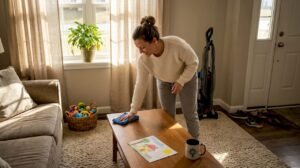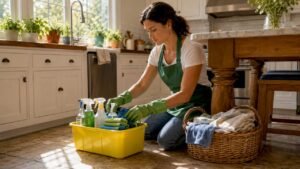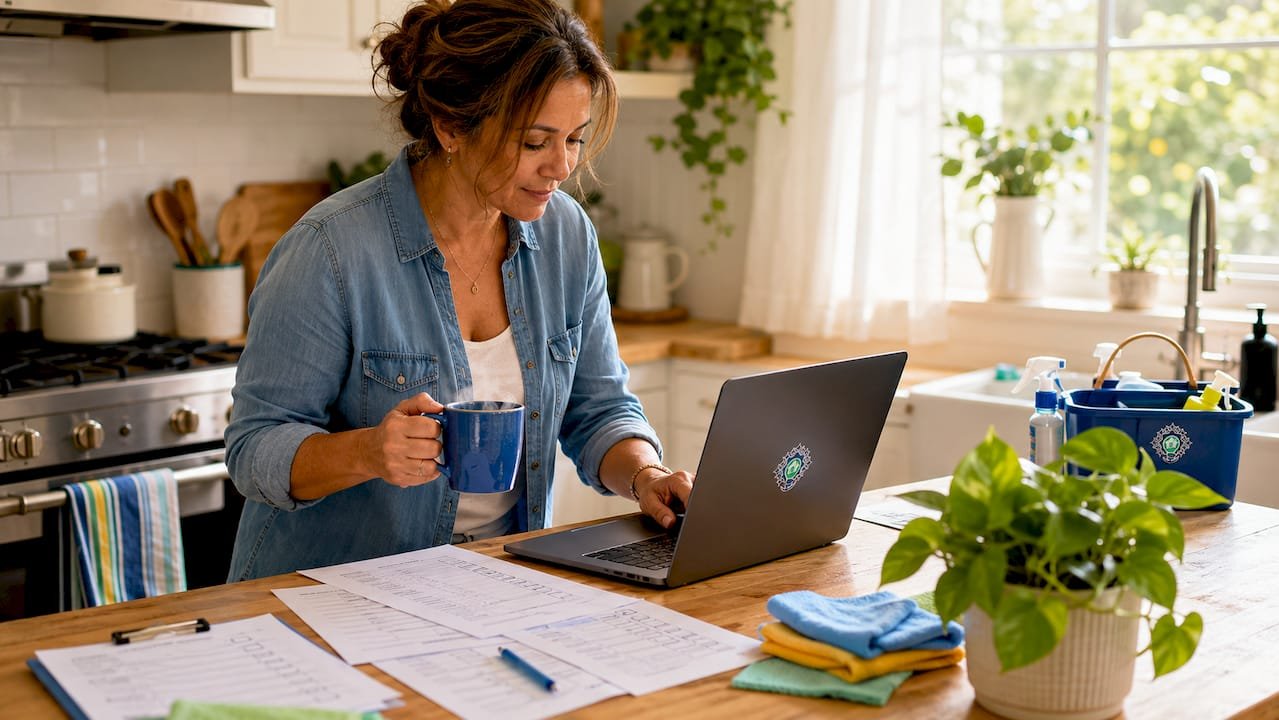
A spring cleaning checklist is an organized, prioritized list of deep cleaning tasks designed to systematically restore every area of your home after winter. The American Cleaning Institute defines effective spring cleaning as starting with supply inventory, decluttering, and task sequencing before a single cloth touches a surface. The EPA identifies mold, dust mites, pet dander, pollen, and viruses as the primary indoor biological pollutants that accumulate over winter months. A structured checklist, organized room by room and top to bottom, is the most reliable method for reducing those pollutants and restoring a genuinely fresh home environment.
1. How to build your spring cleaning checklist before you start
Preparation is the step most homeowners skip, and it is exactly why spring cleaning stalls halfway through. The American Cleaning Institute advises starting with a full supply inventory: check your stock of microfiber cloths, all-purpose cleaners, scrub brushes, rubber gloves, and mop heads before you begin. Running out of supplies mid-task breaks momentum and extends the process by hours.
Once supplies are confirmed, build your to-do list divided by room or task type. Grouping tasks this way prevents the mental fatigue of jumping between areas. Good Housekeeping recommends tackling whole-house tasks first, such as baseboards, walls, and windows, before moving into individual rooms. This sequencing prevents dust from resettling on already-cleaned surfaces.
Decluttering before cleaning is non-negotiable. Cleaning around clutter wastes time and leaves allergens trapped under objects you should have removed. Donate, discard, or box up items using labeled storage bins before your first cleaning session begins.
- Restock microfiber cloths, all-purpose cleaners, and rubber gloves
- Divide your task list by room: kitchen, bathrooms, bedrooms, living areas
- Declutter each room before cleaning it
- Schedule high-effort tasks like window cleaning for separate days
- Label storage bins during decluttering to keep organization intact
Pro Tip: For apartment dwellers, check out these expert apartment cleaning tips before building your checklist. Smaller spaces have specific challenges, like shared ventilation and limited storage, that affect task order.
2. Room-by-room spring cleaning checklist essentials
A thorough deep clean follows a specific order. Good Housekeeping’s expert checklist starts with whole-house tasks before moving room by room. This prevents the common mistake of cleaning a floor only to have ceiling fan dust fall back onto it an hour later.
Whole-house tasks first:
- Dust and wipe all baseboards and wall surfaces
- Clean windows inside and out
- Vacuum all vents and ceiling fan blades
- Wash curtains and window treatments
Bedrooms:
- Wash all bedding including pillows, comforters, and mattress covers
- Clean the mattress surface with a vacuum and baking soda
- Organize closets and donate unused clothing
- Vacuum under beds and furniture
Bathrooms:
- Deep clean the shower, tub, toilet, and sink
- Check for mold or mildew around grout and caulking
- Wash all towels and bath mats
- Wipe down mirrors and light fixtures
Kitchen:
- Clean the refrigerator and freezer interiors
- Degrease the vent hood and clean its grease filter
- Deep clean the oven and microwave
- Wipe down cabinet fronts and drawer interiors
Living room:
- Dust all furniture surfaces and electronics
- Deep clean upholstery with an appropriate fabric cleaner
- Launder throw rugs and blankets
Laundry room and basement:
- Clean the washing machine drum and door seal
- Clear the dryer lint trap and vent hose
- Address any moisture or mold in the basement
Pro Tip: The ACI’s top-to-bottom workflow is the single most effective way to avoid rework. Always start at ceiling height and work down to the floor. Dust falls. Cleaning in reverse order means you clean the same surface twice.
| Room | Key tasks |
|---|---|
| Bedrooms | Wash bedding, clean mattress, organize closets, vacuum under furniture |
| Bathrooms | Deep clean fixtures, check for mold, wash linens |
| Kitchen | Clean appliances, degrease hood, wipe cabinets |
| Living room | Dust electronics, clean upholstery, launder rugs |
| Laundry/basement | Clean washer drum, clear lint trap, address moisture |
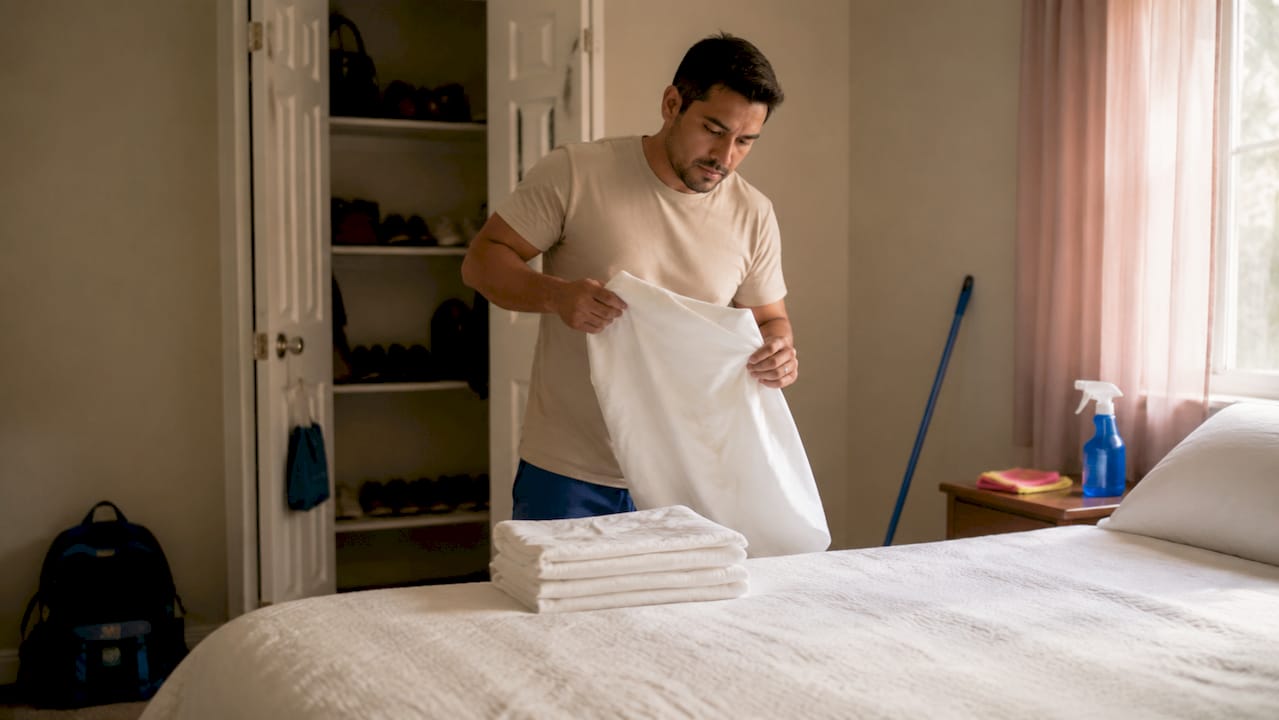
For a detailed room breakdown tailored to Pacific Northwest homes, the seasonal deep cleaning guide from Smartcleaningwa covers Seattle-specific considerations like humidity and mold prevention.
3. Sanitizing and disinfecting: what your checklist is missing
Most spring cleaning checklists stop at “clean.” That is not enough for high-touch surfaces. The CVS 2026 spring cleaning guide defines the three-step hierarchy clearly: cleaning removes visible dirt and dust, sanitizing lowers germ counts to safe levels, and disinfecting kills germs outright. Each step serves a different purpose and applies to different surfaces.
Doorknobs, light switches, remote controls, faucet handles, and cabinet pulls all require sanitizing or disinfecting, not just wiping. These surfaces transfer bacteria and viruses between household members daily. A microfiber cloth and all-purpose cleaner will not eliminate pathogens on contact surfaces.
Cleaning before disinfecting is critical. Grease, soap residue, or visible dirt physically blocks disinfectants from reaching the surface. Applying a disinfectant to an uncleaned surface reduces its effectiveness significantly. Always clean first, then apply an EPA-approved disinfectant and allow the required dwell time.
- High-touch surfaces: doorknobs, light switches, remote controls, faucet handles
- Use EPA-approved disinfectants and follow label dwell times exactly
- Wear rubber gloves when handling disinfectants
- Never mix bleach-based products with ammonia-based cleaners
- Ventilate the room during and after disinfecting
Pro Tip: Disinfecting every surface in your home is unnecessary and can introduce harsh chemical residues. Focus disinfection on high-touch zones and areas that contact food or bodily fluids. For a deeper look at how professionals approach home hygiene, read how professional cleaners protect your home’s health.
4. Managing indoor air quality through spring cleaning
Spring cleaning is one of the most effective tools for improving indoor air quality, but only if you target the right sources. The EPA identifies mold, bacteria, pollen, pet dander, viruses, dust mites, and cockroach debris as the primary biological pollutants affecting indoor air. These accumulate in moisture-prone areas, upholstery, vents, and window frames over winter.
Ventilation is the partner to cleaning that most checklists ignore. The EPA recommends using range hoods that vent outdoors, opening windows when weather permits, and upgrading HVAC filters to MERV 13 rating to capture fine particles. Portable air cleaners with HEPA filters add another layer of protection in bedrooms and living areas.
| Pollutant | Primary location | Targeted cleaning action |
|---|---|---|
| Dust mites | Mattresses, bedding, upholstery | Wash bedding in hot water, vacuum mattress |
| Mold | Bathrooms, basement, window frames | Scrub with mold-killing cleaner, improve ventilation |
| Pet dander | Upholstery, carpets, vents | Deep clean upholstery, vacuum with HEPA filter |
| Pollen | Window sills, entryways, curtains | Wipe sills, wash curtains, change HVAC filter |
| Cooking residue | Kitchen surfaces, range hood | Degrease hood, clean grease filter, use exhaust fan |
Cleaning moisture-prone areas like bathroom grout, basement walls, and window seals directly reduces mold growth. Pairing that cleaning with improved ventilation prevents pollutants from redistributing after you finish. This combination is what separates a surface-level clean from one that actually improves your home’s air. For more on why this matters, detailed cleaning benefits are well documented for long-term respiratory health.
5. Turning your spring checklist into a year-round cleaning schedule
A spring cleaning checklist works best when it feeds into a recurring cleaning schedule rather than standing alone as a once-a-year event. Real Simple recommends pacing tasks across days or weeks and mixing daily maintenance with monthly deep cleaning to avoid the overwhelming reset that annual cleaning requires. This approach also keeps allergen levels consistently low rather than letting them spike over winter.
A practical structure looks like this: daily tasks cover dishes, counters, and quick floor sweeps. Weekly tasks address bathrooms, vacuuming, and laundry. Monthly tasks include appliance cleaning, dusting vents, and wiping baseboards. Spring and fall become targeted deep cleans rather than full resets. This is the logic behind recurring cleaning plans that professional services use to maintain consistent results between visits.
Breaking the annual checklist into these tiers also makes it easier to involve other household members. Assign daily and weekly tasks by person rather than leaving everything to one individual. The spring deep clean then becomes a shared project with clear ownership rather than a solo marathon.
Key takeaways
A spring cleaning checklist delivers lasting results only when it follows a structured order: prep and declutter first, clean top to bottom by room, then sanitize high-touch surfaces and address ventilation.
| Point | Details |
|---|---|
| Prep before you clean | Inventory supplies and declutter each room before any cleaning begins. |
| Follow top-to-bottom order | Start at ceiling height and work down to floors to avoid resettling dust. |
| Clean before disinfecting | Remove dirt and grease first so disinfectants can work on truly clean surfaces. |
| Target biological pollutants | Focus on moisture-prone areas, vents, and upholstery to reduce allergens. |
| Build a recurring schedule | Connect spring cleaning to weekly and monthly routines to maintain results year-round. |
Why I stopped treating spring cleaning as a single event
The biggest shift in how I think about spring cleaning came when I stopped treating it as a one-time reset and started treating it as a calibration point. Most people approach the annual deep clean with the goal of getting back to zero. That framing sets you up for exhaustion and disappointment, because a home with people living in it never stays at zero.
What actually works is using the spring checklist to identify where your regular routines are failing. If the grout in your shower is black by March, your weekly bathroom routine needs adjustment, not just a harder scrub in April. If your kitchen vent hood is caked in grease, your monthly maintenance is missing a step. The checklist becomes diagnostic rather than just corrective.
I also think most people underestimate how much the order of tasks matters. Skipping the whole-house dust pass before room-by-room cleaning is the single most common reason spring cleaning takes twice as long as it should. You clean the bathroom, then dust the hallway, and suddenly the bathroom floor needs attention again. The ACI’s top-to-bottom, whole-house-first approach is not a suggestion. It is the difference between a four-hour clean and an eight-hour one.
Finally, involve your household. Not because it is faster, though it is, but because shared ownership of the space changes how people treat it afterward. A teenager who cleaned the bathroom is less likely to leave it wrecked the following week. That behavioral shift is worth more than any cleaning product.
— Wilker
Ready to take the heavy lifting off your list?
Some tasks on a spring cleaning checklist are genuinely better handled by professionals. Deep cleaning behind appliances, scrubbing tile grout, and sanitizing high-touch surfaces throughout an entire home takes hours and specialized equipment.
Smartcleaningwa provides residential deep cleaning services across Seattle, Kirkland, Bellevue, and Redmond. Whether you want a one-time spring deep clean or a regular cleaning plan to maintain results year-round, the team is licensed, insured, and focused on thorough results with real-time communication. Get a free cleaning estimate tailored to your home’s size and specific needs.
FAQ
What should be on a basic spring cleaning checklist?
A basic spring cleaning checklist covers whole-house tasks like dusting baseboards and vents, then room-by-room tasks including washing bedding, deep cleaning kitchen appliances, scrubbing bathrooms, and laundering rugs. The American Cleaning Institute recommends decluttering and restocking supplies before starting any cleaning tasks.
What is the correct order for spring cleaning?
Start with whole-house tasks at ceiling height, including ceiling fans, vents, and walls, then work downward to floors. Good Housekeeping’s expert checklist confirms this top-to-bottom approach prevents dust from resettling on already-cleaned surfaces.
How is disinfecting different from cleaning during spring cleaning?
Cleaning removes visible dirt and dust, while disinfecting kills germs on contact surfaces. The CVS 2026 guide specifies that cleaning must happen before disinfecting, because grease and residue block disinfectants from working effectively.
How does spring cleaning improve indoor air quality?
Spring cleaning targets the primary indoor biological pollutants identified by the EPA: mold, dust mites, pet dander, and pollen. Combining targeted cleaning of moisture-prone areas with MERV 13 HVAC filters and ventilation significantly reduces airborne allergens.
How often should you deep clean your home after spring cleaning?
Real Simple recommends a structure of daily maintenance tasks, weekly cleaning of bathrooms and floors, and monthly deep cleaning of appliances and vents. This keeps allergen levels consistently low and reduces the scale of work needed each spring.
Recommended
- Smart Cleaning Service™ House Cleaning Seattle Kirkland Bellevue Redmond
- Smart Cleaning Service™ House Cleaning Seattle Kirkland Bellevue Redmond
- Smart Cleaning Service™ House Cleaning Seattle Kirkland Bellevue Redmond
- Smart Cleaning Service™ House Cleaning Seattle Kirkland Bellevue Redmond