Healthy cleaning is the practice of using non-toxic products and methods that reduce harmful chemical exposure while maintaining a genuinely clean, safe indoor environment. The industry term for this approach is “green cleaning,” though healthy cleaning goes further by prioritizing human health outcomes alongside environmental impact. If you live in the Greater Seattle Area or anywhere with older housing stock and limited ventilation, the products you use to clean your home may pose a greater risk to your health than the dirt you are removing. Certifications from the EPA Safer Choice program and EWG Verified labels exist precisely because the gap between “looks clean” and “is safe” is wider than most people realize.
What health risks do conventional cleaning products pose?
Conventional cleaning products are one of the most underestimated sources of indoor air pollution in American homes. 30 common cleaning products contain 193 hazardous chemicals, including volatile organic compounds (VOCs) that directly irritate the respiratory system. That number means the average cleaning cabinet is a slow-release source of airborne toxins that accumulates over years of use.
VOCs evaporate at room temperature and enter the air you breathe during and after cleaning. Short-term exposure causes eye irritation, headaches, and throat inflammation. Long-term exposure links to more serious outcomes including asthma, hormone disruption, and chronic respiratory disease.
The cumulative exposure risk is the part most people miss. Research shows that cleaning weekly for 10 years carries similar health risks to cleaning twice daily for one year. Frequency and product choice together determine your total chemical load, not just how often you scrub.
Common hazardous chemicals found in standard products include:
- Phthalates in synthetic fragrances, linked to endocrine disruption
- Ammonia in glass cleaners, which irritates airways and worsens asthma
- Chlorine bleach in disinfectants, which releases chlorine gas when mixed with acids
- Triclosan in antibacterial soaps, associated with antibiotic resistance
- 2-Butoxyethanol in all-purpose sprays, a solvent that absorbs through skin
Mixing bleach with vinegar or hydrogen peroxide produces toxic chlorine gas. This is one of the most common and preventable household chemical accidents. Never combine these substances, even in diluted form.
The risks are not theoretical. The American Lung Association identifies cleaning supply chemicals as a primary contributor to poor indoor air quality, particularly in homes with limited airflow. Understanding this is the first step toward making different choices.
How to identify truly healthy, non-toxic cleaning products
The phrase “natural” on a cleaning product label means nothing legally. Neither does “eco-safe,” “plant-based,” or “green formula.” These terms are marketing language with no regulatory definition, and they are the primary tools of greenwashing in the cleaning industry.
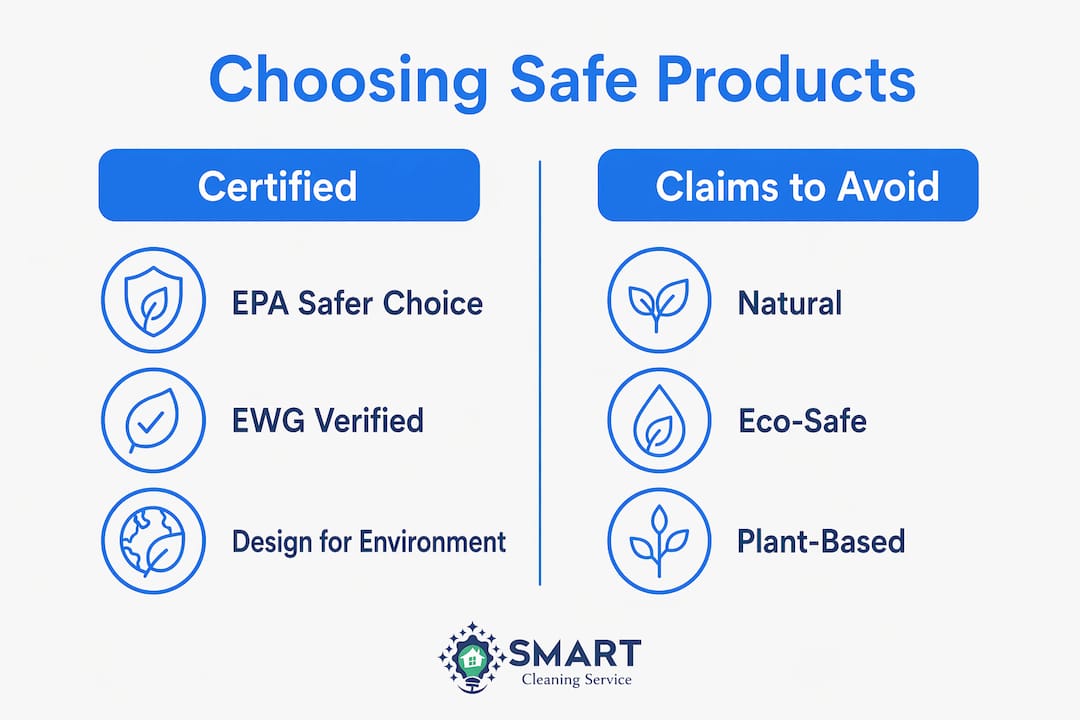
Third-party certification is the only reliable shortcut. The EPA Safer Choice and Design for the Environment certifications confirm that every ingredient in a product meets strict health and environmental standards. EWG Verified goes further by requiring full ingredient disclosure and prohibiting chemicals of concern. When you see one of these logos, the product has been independently reviewed, not just self-labeled.
Here is how to evaluate a product before you buy it:
- Look for third-party certification logos. EPA Safer Choice, EWG Verified, and Design for the Environment are the three most credible in the U.S. market.
- Read the ingredient list. Legitimate healthy cleaning products disclose every ingredient. If the label says “fragrance” without further detail, that single word can represent dozens of undisclosed chemicals.
- Search the product on EWG’s Healthy Cleaning database. EWG rates thousands of products on a scale from A to F based on ingredient safety and transparency.
- Avoid synthetic fragrances. Natural citrus fragrances can react with indoor ozone to form harmful secondary pollutants. Fragrance-free is the safest choice for indoor air quality, especially for households with children, elderly members, or anyone with respiratory conditions.
- Check for concentrated or refillable formats. Products sold as concentrates reduce packaging waste and often cost less per use, which matters when you are replacing an entire cleaning cabinet.
Pro Tip: Search any cleaning product on the EWG Healthy Cleaning Guide at ewg.org before purchasing. A product rated A or B meets the core standards of non-toxic, healthy home cleaning practices without requiring you to read every ingredient yourself.
Greenwashing is most aggressive in the “natural” cleaning segment because consumer demand is high and regulatory oversight is low. Transparency and ingredient disclosure are the two factors that separate genuinely safe products from well-packaged conventional ones.
Healthy cleaning vs. green cleaning vs. traditional methods
These three approaches overlap but are not the same thing. Understanding the differences helps you make smarter choices rather than assuming any one label covers everything.
| Approach | Primary Focus | Key Limitation |
|---|---|---|
| Traditional cleaning | Removing visible dirt and killing germs | Uses chemicals that harm health and environment |
| Green cleaning | Reducing environmental impact | May still use ingredients harmful to human health |
| Healthy cleaning | Protecting human health and indoor air quality | Requires more label scrutiny and product knowledge |
Green cleaning, as defined by organizations like the U.S. Green Building Council’s LEED program, focuses on reducing a product’s environmental footprint. That includes biodegradable formulas, reduced packaging, and lower aquatic toxicity. A product can be genuinely green and still contain synthetic fragrances or preservatives that irritate airways.
Healthy cleaning prioritizes what enters your body, not just what enters the watershed. The two goals usually align, but not always. A product can score well on environmental metrics and still be a poor choice for someone with asthma or chemical sensitivities.
Traditional cleaning methods create a third category of risk that is often overlooked. Soap and water are sufficient for routine sanitation in most households. Disinfection with stronger chemicals is only necessary when someone in the home is sick or immunocompromised. Most people over-disinfect, which increases chemical exposure without meaningfully improving cleanliness.
Key distinctions to keep in mind:
- Disinfection kills pathogens. Cleaning removes them. For daily use, cleaning is enough.
- Ventilation is not optional. Proper ventilation before, during, and after cleaning disperses VOCs and reduces respiratory risk regardless of which products you use.
- Healthy cleaning and green cleaning together represent the most protective approach for both people and the planet.
How to build a healthy, eco-friendly cleaning routine at home
A practical healthy cleaning routine does not require a complete product overhaul on day one. The most sustainable approach is gradual replacement combined with a few immediate habit changes that cost nothing.
Start with four core ingredients
Distilled white vinegar, baking soda, castile soap, and rubbing alcohol cover the majority of household cleaning needs without specialized chemical products. Vinegar cuts grease and mineral deposits. Baking soda deodorizes and provides mild abrasion. Castile soap, made from plant oils, cleans surfaces and floors effectively. Rubbing alcohol disinfects hard surfaces and dries quickly without residue.
One critical safety note: mixing vinegar with hydrogen peroxide or bleach produces toxic gases. Use each ingredient separately, and never combine them in a spray bottle or bucket. Vinegar also damages natural stone surfaces like marble and granite, so use a pH-neutral castile soap solution on those instead.
Dust first, then clean
Dust-first cleaning with damp microfiber cloths reduces airborne particulates more effectively than spray-and-wipe methods. Dry dusting with a feather duster moves particles into the air where you breathe them. A damp microfiber cloth traps them. This single habit change improves indoor air quality without any product switch.
Pro Tip: Store DIY cleaners in amber glass bottles to protect natural ingredients from UV degradation. Add silicone bottle boots to prevent breakage on hard floors. Label each bottle with the contents and mixing date so you always know what you are using.
Gradual product replacement
Replacing cleaning products gradually with concentrated, refillable, and certified alternatives reduces both financial strain and waste. When a conventional product runs out, replace it with an EPA Safer Choice certified alternative rather than buying the same product again. This approach avoids throwing away half-used bottles and spreads the cost of transition over several months.
The table below shows a practical swap schedule based on product use frequency:
| Conventional product | Healthy swap | Certification to look for |
|---|---|---|
| All-purpose spray | Castile soap dilution or EPA Safer Choice spray | EPA Safer Choice |
| Glass cleaner | Diluted white vinegar in water | No certification needed |
| Disinfectant spray | Rubbing alcohol (70%) for targeted use | N/A |
| Laundry detergent | EWG Verified or Safer Choice detergent | EWG Verified |
| Bathroom cleaner | Baking soda paste with castile soap | No certification needed |
Pair every cleaning session with open windows or a running exhaust fan. The role of cleaning frequency in your home’s health is as significant as product choice. Cleaning more often with safer products beats infrequent cleaning with harsh ones every time.
Key takeaways
Healthy cleaning reduces chemical exposure through certified non-toxic products, dust-first microfiber techniques, and proper ventilation, making it the most protective approach for indoor air quality and long-term health.
| Point | Details |
|---|---|
| Certifications matter most | EPA Safer Choice and EWG Verified are the only reliable indicators of a truly non-toxic product. |
| VOCs are the primary risk | 30 common cleaners contain 193 hazardous chemicals; cumulative exposure builds over years of routine use. |
| Soap and water are enough | Disinfection is only necessary for sick or immunocompromised households; over-disinfecting increases chemical load. |
| Four ingredients cover most needs | Vinegar, baking soda, castile soap, and rubbing alcohol handle the majority of home cleaning tasks safely. |
| Gradual transition works best | Replace products one at a time as they run out to reduce waste and avoid financial strain. |
Why I stopped chasing “germ-free” and started cleaning smarter
The biggest misconception I see is the belief that a cleaner-smelling home is a healthier one. That pine scent or lemon burst from a conventional spray is often VOC-laden fragrance, not cleanliness. After years of working in and around residential cleaning, the pattern is consistent: the homes with the strongest chemical smell after cleaning often have the worst indoor air quality.
Excessive disinfectant use is a real problem. Soap and water remain the gold standard for most cleaning needs, and reaching for a disinfectant spray for every surface is both unnecessary and counterproductive. The respiratory damage from chronic disinfectant exposure is well-documented, yet the marketing around “killing 99.9% of germs” keeps people locked into habits that work against their health.
What I have found actually works is a combination of microfiber cloths, a small set of certified products, and consistent ventilation. The healthy home cleaning tips that make the most difference are not the dramatic ones. They are the small, repeatable habits: dust before you spray, open a window, read the label before you buy.
Sustainable cleaning is about progress, not perfection. Gradual product replacement reduces immediate burdens and waste. You do not need to throw out everything in your cabinet today. You need to make one better choice the next time something runs out.
— Wilker
How Smartcleaningwa supports a healthier home environment
Smartcleaningwa provides professional residential cleaning across the Greater Seattle Area with a focus on non-toxic, environmentally responsible products and methods. Every service, from recurring house cleaning to deep cleaning and move-in/move-out cleans, is designed to leave your home genuinely clean without filling it with harsh chemical residue. The team at Smartcleaningwa brings the expertise to apply healthy cleaning practices consistently, so you get the results of a thorough clean and the air quality benefits of safer products. If you are ready to experience what professional healthy cleaning looks like in practice, Smartcleaningwa is the place to start.
FAQ
What is healthy cleaning in simple terms?
Healthy cleaning is the use of non-toxic products and safe methods that remove dirt and contaminants without releasing harmful chemicals into your home’s air. It prioritizes human health and indoor air quality alongside cleanliness.
What is the difference between green cleaning and healthy cleaning?
Green cleaning focuses on reducing environmental impact through biodegradable formulas and sustainable packaging. Healthy cleaning focuses on protecting human health by avoiding VOCs, synthetic fragrances, and other chemicals that affect indoor air quality. The two approaches overlap but are not identical.
Are DIY cleaning products actually effective?
Yes. Distilled white vinegar, baking soda, castile soap, and rubbing alcohol cover most household cleaning needs without specialized chemical products. The key is using each ingredient correctly and never mixing incompatible substances like vinegar and bleach.
How do I know if a cleaning product is truly non-toxic?
Look for EPA Safer Choice, EWG Verified, or Design for the Environment certification logos. These third-party certifications confirm that every ingredient meets health and environmental standards, unlike unregulated terms like “natural” or “eco-safe.”
Does ventilation really make a difference when cleaning?
Ventilation is one of the most effective ways to reduce VOC exposure during and after cleaning. Opening windows and running exhaust fans disperses airborne chemicals and lowers the concentration of residual pollutants, regardless of which products you use.
Recommended
- Smart Cleaning Service™ House Cleaning Seattle Kirkland Bellevue Redmond
- Smart Cleaning Service™ House Cleaning Seattle Kirkland Bellevue Redmond
- Smart Cleaning Service™ House Cleaning Seattle Kirkland Bellevue Redmond
- Smart Cleaning Service™ House Cleaning Seattle Kirkland Bellevue Redmond