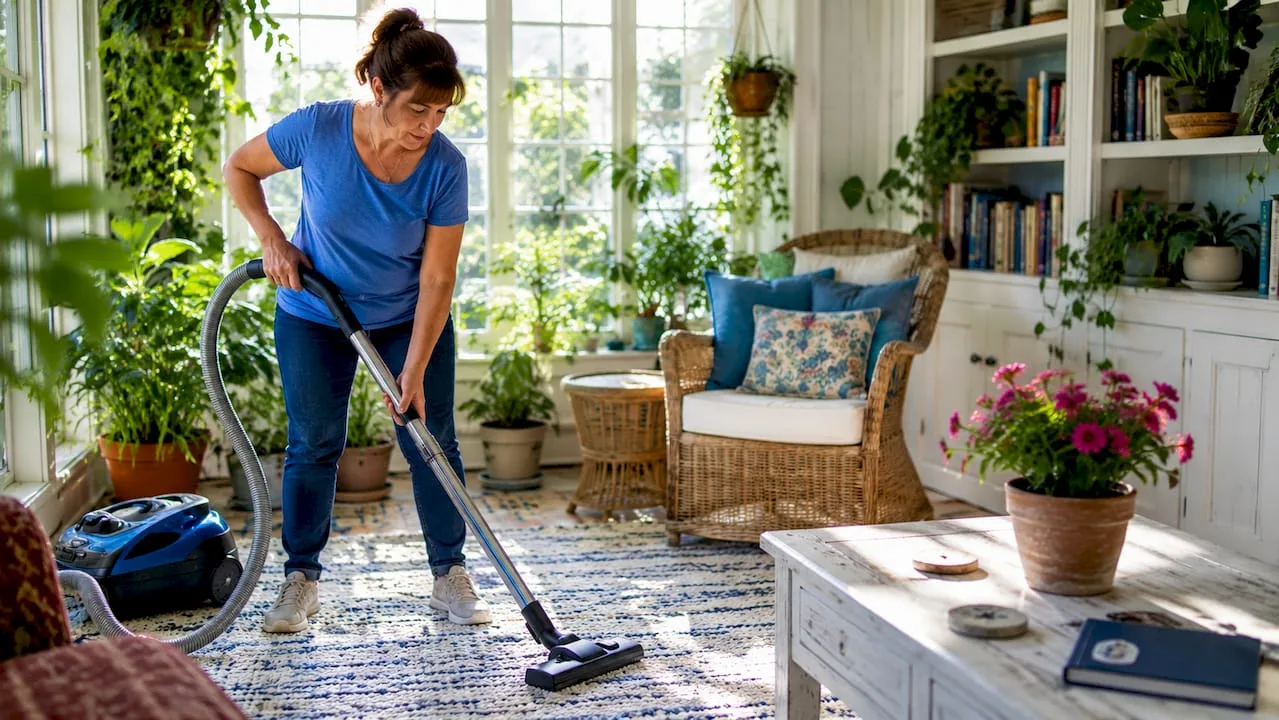
Efficient cleaning is defined as completing the highest-impact cleaning tasks in the least time, using a systematic sequence that prevents rework and protects your health. This efficient cleaning methods guide covers the exact tools, sequences, and routines used by professionals, including the American Cleaning Institute and the Clean Mama Method, to help you maintain a genuinely clean home without burning hours every week. The core methods are top-to-bottom cleaning, the 80/20 rule for prioritizing rooms, and layering daily tasks with weekly and rotating deep cleans. Follow these best cleaning techniques and you will spend less time cleaning while getting better results.
What tools and products are essential for efficient cleaning?
The right supplies are the foundation of any effective cleaning strategy. Walking back to the supply closet mid-clean is one of the biggest time wasters in any household routine. Gather everything before you start.
Your core toolkit:
- Microfiber cloths: These trap dust and bacteria without spreading them. They outperform paper towels on most surfaces and are reusable.
- Vacuum cleaner with HEPA filter: A HEPA filter captures fine particles instead of recirculating them into the air.
- Mop and bucket: A flat microfiber mop covers more floor area per pass than a traditional string mop.
- Stiff-bristle brush: Use this for grout lines, toilet bowls, and textured surfaces.
- All-purpose cleaner, disinfectant spray, and glass cleaner: These three products handle the majority of surfaces in any home.
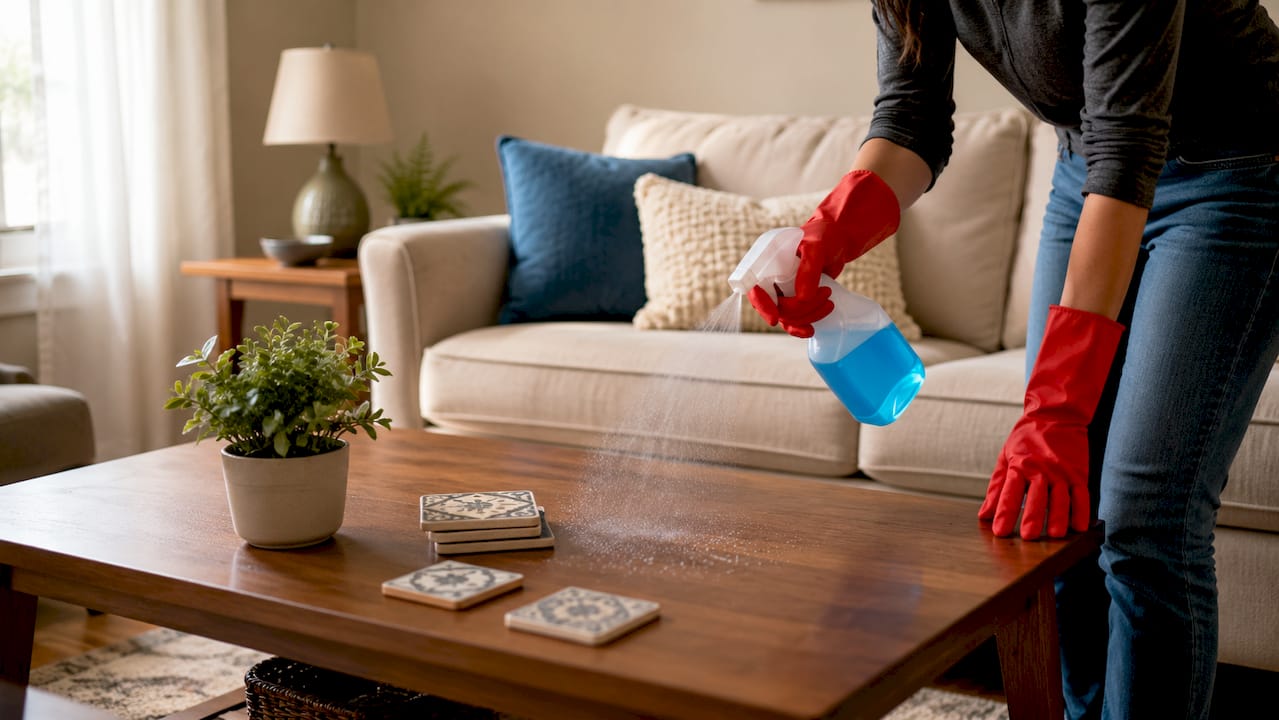
Choose products that are safe for your surfaces and always read the label before applying. Many homeowners skip this step and end up damaging countertops or leaving residue. The label also tells you the required dwell time, which is the amount of time the product needs to stay wet on a surface to actually work.
Pro Tip: Let your disinfectant spray sit for the full contact time listed on the label, typically 30 seconds to 2 minutes, before wiping. Dwell-time cleaning is a core professional technique that cuts scrubbing effort while improving bacteria removal.
How to follow a systematic cleaning process for maximum efficiency
A systematic process is the single biggest difference between a professional clean and a scattered one. The top-to-bottom cleaning method, recommended by the American Cleaning Institute, prevents dust and debris from falling onto surfaces you have already cleaned. It eliminates rework entirely.
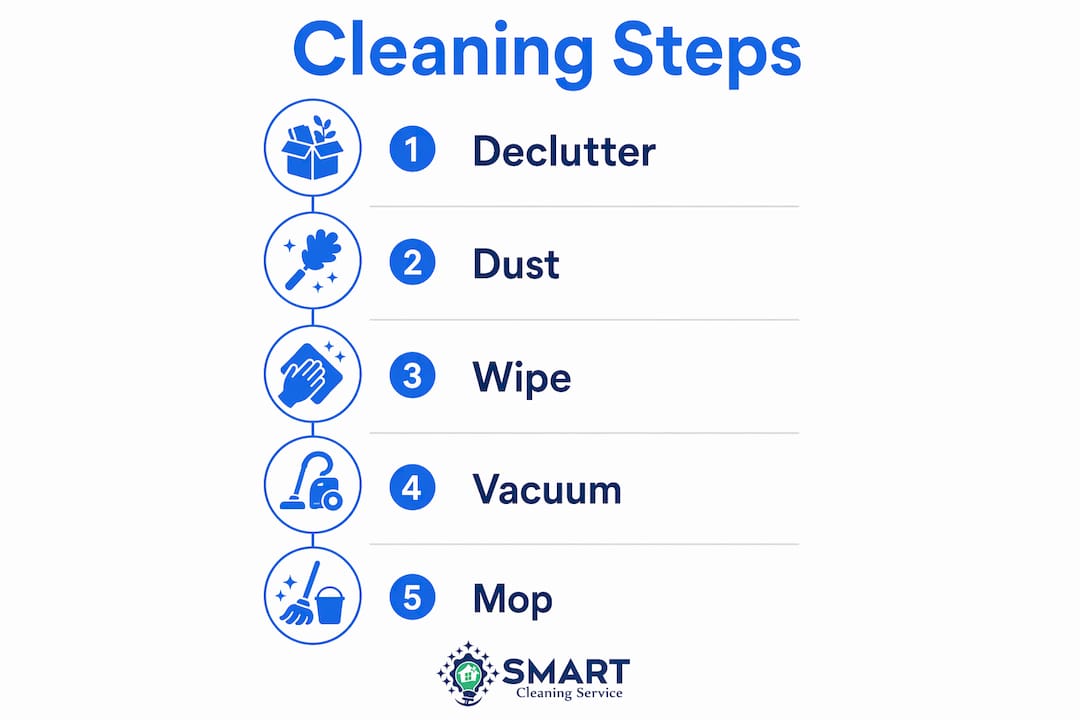
Step-by-step room sequence:
- Remove clutter from all surfaces and floors before touching any cleaning product.
- Dust ceiling fans, light fixtures, and the tops of cabinets first.
- Wipe down walls and windows from top to bottom.
- Clean countertops, shelves, and furniture surfaces next.
- Scrub sinks, toilets, or appliances depending on the room.
- Vacuum or dry-dust all floors before any wet mopping.
- Mop or wet-clean floors last, working from the furthest corner toward the exit.
Working from the furthest corner to the door means you never step on a surface you just cleaned. This sounds obvious, but most people start at the door and back themselves into a corner. The professional cleaning workflow always ends at the exit.
| Step | Action | Why It Matters |
|---|---|---|
| 1 | Declutter surfaces | Clears the path for actual cleaning |
| 2 | Dust high surfaces | Debris falls down, not onto clean areas |
| 3 | Clean mid-level surfaces | Catches any fallen dust from above |
| 4 | Dry-dust or vacuum floors | Removes loose particles before wet cleaning |
| 5 | Mop toward the exit | Prevents walking on wet, freshly cleaned floors |
Pro Tip: Set a timer for each room. Knowing you have 10 minutes per room creates focus and prevents over-cleaning one space while neglecting others.
Which home areas should be prioritized and why?
Kitchens and bathrooms are the highest-priority rooms in any home. They carry the most bacteria, generate the most grime, and have the greatest impact on how clean your home feels and smells. Tackling these rooms first, as expert advice from Southern Living confirms, preserves your energy for the most demanding tasks before fatigue sets in.
The 80/20 rule applies directly here. Focusing on 20% of high-impact areas delivers 80% of the visible cleanliness in your home. In practice, that means kitchen counters, stovetop, bathroom sink, toilet, and the floors in both rooms. These five surfaces drive most of the visual and hygienic impact of a clean home.
High-impact zones to prioritize every week:
- Kitchen counters and stovetop (food residue and bacteria)
- Bathroom sink and toilet (highest germ contact surfaces)
- Entry floors and mats (track dirt throughout the home if neglected)
- Living room floors and sofa cushions (dust and allergen buildup)
Layering your tasks by frequency makes this manageable. Daily maintenance covers quick wipe-downs and dishes. Weekly routines hit the high-impact zones above. Rotating deep cleans, done monthly or quarterly, address areas like baseboards, inside appliances, and window tracks.
“Cleaning the dirtiest rooms first ensures you tackle the most demanding tasks while your energy and motivation are highest.” — Southern Living
For a detailed breakdown of the bathroom specifically, the bathroom cleaning process at Smartcleaningwa walks through every surface in sequence.
How to create and sustain a daily and weekly cleaning routine
A consistent routine prevents the buildup that turns a 20-minute clean into a 3-hour ordeal. The Clean Mama Method structures cleaning into daily habits, weekly focus tasks, and rotating seasonal work. This layered approach is the most sustainable system for homeowners and renters who do not want cleaning to dominate their weekends.
Sample daily 20-minute routine:
- Make beds and tidy bedroom surfaces (5 minutes).
- Wipe kitchen counters and load or unload the dishwasher (7 minutes).
- Wipe bathroom sink and mirror (3 minutes).
- Sweep or spot-vacuum high-traffic floors (5 minutes).
For weekly tasks, assign one focus area per day rather than cleaning the entire home on Saturday. Monday handles bathrooms, Tuesday handles dusting, Wednesday handles vacuuming, and so on. This spreads the effort and keeps every area from falling too far behind.
Cleaning frequency matters more than cleaning intensity. Small, consistent efforts prevent the kind of buildup that requires exhausting reactive deep cleans. The 80/20 rule in practice transforms occasional hours-long sessions into manageable daily 15-minute maintenance.
Pro Tip: Use a simple checklist app like Tody or a paper tracker on the fridge to log completed tasks. Seeing a visual record of what you have done builds the habit faster than relying on memory alone.
Common mistakes that slow down your cleaning
Most cleaning inefficiencies come from a handful of repeated mistakes. Fixing these alone can cut your cleaning time significantly.
- Wet cleaning before dry-dusting: Applying a wet product to a dusty surface creates a paste that is harder to remove than either dust or grime alone. Always vacuum or dry-dust first before any wet product touches a surface.
- Skipping dwell time: Spraying a disinfectant and wiping it immediately is the same as not using it. The product needs contact time to kill bacteria. Read the label and wait.
- Cleaning windows in direct sunlight: Sunlight causes glass cleaner to evaporate too quickly, leaving streaks before you can wipe. Clean windows on overcast days or in the early morning for streak-free results.
- Neglecting your tools: A clogged vacuum filter reduces suction by a significant margin. A worn mop head spreads dirt instead of lifting it. Replace mop heads every 2–3 months and clean or replace vacuum filters on the manufacturer’s schedule.
- Tackling stubborn stains with the wrong product: Grease on a stovetop needs a degreaser, not an all-purpose spray. Hard water stains on a faucet need an acid-based cleaner like white vinegar, not a disinfectant. Matching the product to the soil type cuts scrubbing time in half.
For apartment renters dealing with limited storage and shared spaces, the apartment cleaning tips at Smartcleaningwa address specific challenges like small kitchens and high-traffic entryways.
Key takeaways
Efficient home cleaning comes down to three non-negotiable habits: working top-to-bottom, targeting high-impact zones first, and maintaining consistency over intensity.
| Point | Details |
|---|---|
| Top-to-bottom sequence | Always clean high surfaces before floors to prevent rework and cross-contamination. |
| 80/20 rule for rooms | Focus on kitchens and bathrooms first to capture 80% of visible cleanliness with 20% of the effort. |
| Dwell time matters | Let disinfectants sit for the full contact time before wiping to actually kill bacteria. |
| Layer your routine | Combine daily 20-minute tasks with weekly focus areas to prevent exhausting buildup. |
| Fix your tools | Clean vacuum filters and replace mop heads regularly so your equipment works at full capacity. |
Why i stopped trying to clean everything perfectly
I spent years approaching cleaning the way most people do: ignoring it until it became overwhelming, then spending an entire Saturday trying to restore order. The result was burnout, a home that looked clean for about 48 hours, and zero sustainable habits.
The shift that changed everything was accepting the 80/20 rule not just as a cleaning tip but as a philosophy. The kitchen counter and bathroom sink are not just two surfaces among dozens. They are the two surfaces that signal “this home is clean” to anyone who walks in, including you. When those are consistently maintained, the rest of the home feels manageable rather than chaotic.
Combining professional methods like dwell-time application and the top-to-bottom sequence with a simple daily routine removed the mental weight of cleaning entirely. I stopped thinking about what needed to be done and started following a system. The detailed cleaning standards that professionals use are not complicated. They are just consistent.
The most underrated cleaning tip is this: your tools matter as much as your technique. A microfiber cloth on a clean surface takes seconds. A worn cotton rag on the same surface takes minutes and leaves streaks. Invest in the right supplies once and the time savings compound every single week.
— Wilker
When a professional clean makes sense for your home
Even the most consistent home routine has limits. Grout, baseboards, inside appliances, and hard-to-reach areas accumulate grime that daily maintenance cannot address. That is where a scheduled professional deep clean fills the gap.
Smartcleaningwa provides residential cleaning services across Seattle, Kirkland, Bellevue, and Redmond, covering recurring house cleaning, deep cleaning, move-in and move-out cleans, and Airbnb turnover. The team uses professional-grade tools and systematic workflows to handle the areas your routine misses. Pairing a professional deep clean every month or quarter with your daily and weekly habits is the most effective way to maintain a genuinely healthy home year-round. You can request a free estimate directly on the Smartcleaningwa website.
FAQ
What is the most efficient way to clean a house?
The most efficient method is top-to-bottom cleaning combined with the 80/20 rule. Start with kitchens and bathrooms, work from high surfaces to floors, and dry-dust before any wet cleaning.
How long should a full home cleaning take?
A consistent daily 20-minute routine prevents buildup so that a full weekly clean takes 1–2 hours for most homes. Skipping routine maintenance is what turns cleaning into an all-day event.
Does dwell time really make a difference for disinfectants?
Yes. Dwell-time cleaning is a core professional technique. Wiping a disinfectant immediately after spraying removes it before it can kill bacteria. Most products need 30 seconds to 2 minutes of contact time.
What rooms should i clean first?
Clean kitchens and bathrooms first. Tackling the dirtiest rooms early preserves your energy and motivation for the most demanding tasks before fatigue reduces your effort.
Why do my windows streak after cleaning?
Streaks form when glass cleaner evaporates before you wipe it. Clean windows on overcast days or in the early morning to prevent rapid evaporation and get a streak-free finish.
Recommended
- Smart Cleaning Service™ House Cleaning Seattle Kirkland Bellevue Redmond
- Smart Cleaning Service™ House Cleaning Seattle Kirkland Bellevue Redmond
- Smart Cleaning Service™ House Cleaning Seattle Kirkland Bellevue Redmond
- Smart Cleaning Service™ House Cleaning Seattle Kirkland Bellevue Redmond