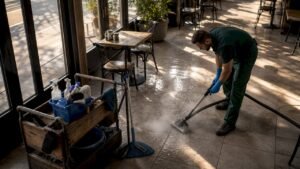
Choose a visit frequency based on the property, use of the space and tasks you want addressed. Discuss scheduling and the cleaning scope with the office before booking. Related reading: Airbnb.
What does a short term rental cleaning guide actually cover?
Smart Cleaning Service is a local cleaning company serving Seattle and the Eastside since 2016. Contact the office to discuss the property and the work you need.
Cleaning standards are the foundation of a high-occupancy business. Property ratings suffer rapidly if standards slip even once. Treating your cleaning operation as a documented system, not a casual task list, is the difference between consistent reviews and unpredictable ones.

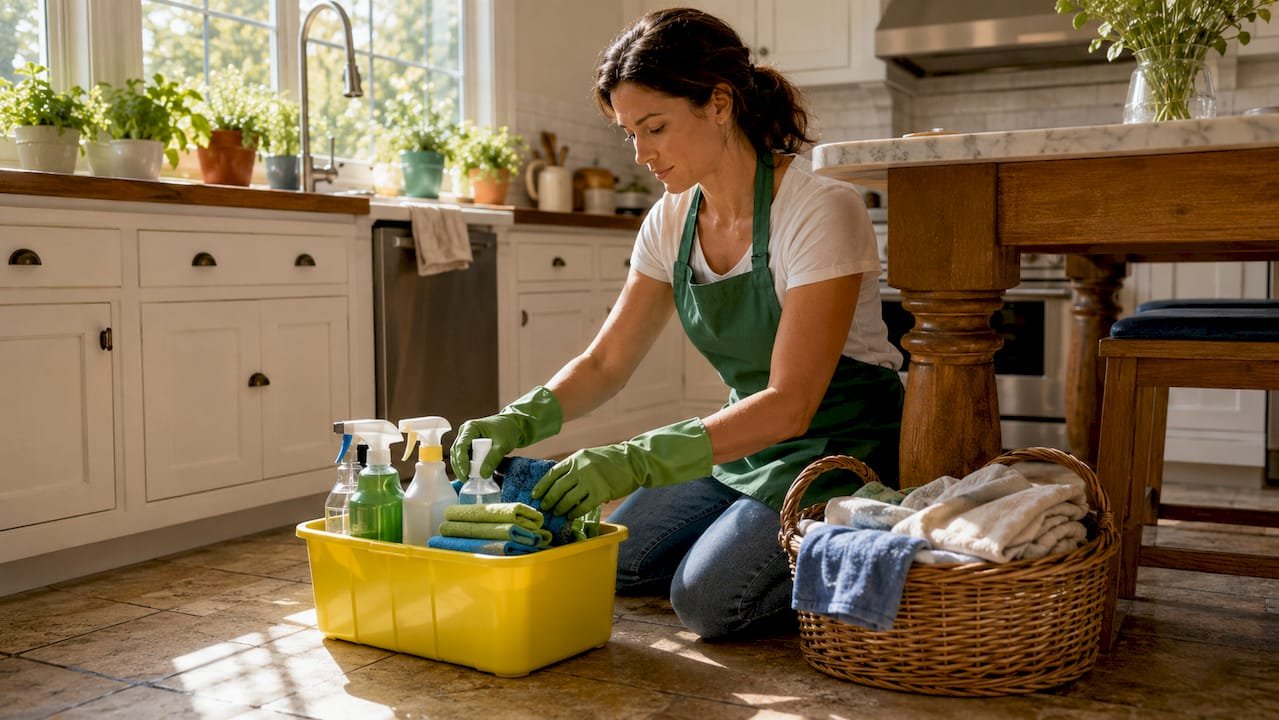
What tools and supplies do you need for rental cleaning?
For kitchen work, identify the accessible counters, sink and appliance surfaces to be cleaned. Appliance interiors and other additional tasks should be discussed before the visit.
Must-have tools vs. optional tools
| Category | Must-Have | Optional |
|---|---|---|
| Cloths | Microfiber cloths (color-coded by zone) | Disposable wipes for quick touch-ups |
| Floors | Vacuum with attachments, mop and bucket | Steam mop for grout and tile |
| Surfaces | Routine surface cleaning | Confirm the scope before booking |
| Bathrooms | Toilet brush, grout brush, scrubber | Pumice stone for hard water stains |
| Organization | Color-coded caddies, laminated property card | Cleaning app or digital checklist |
| Linens | Three sets per bed for rotation | Linen press service for hotel folds |
A home cleaning visit can include kitchens, bathrooms, accessible surfaces and floors. Share the areas you want addressed and confirm the tasks in your quote.
Supply restocking standards
Discuss the bathroom surfaces and fixtures that need attention. Tell the office about buildup, delicate finishes or maintenance issues before scheduling.
Maintain three sets of linens per bed. One set is on the bed, one is in the laundry, and one is clean and ready to swap. This rotation prevents delays when laundry runs long between back-to-back bookings.
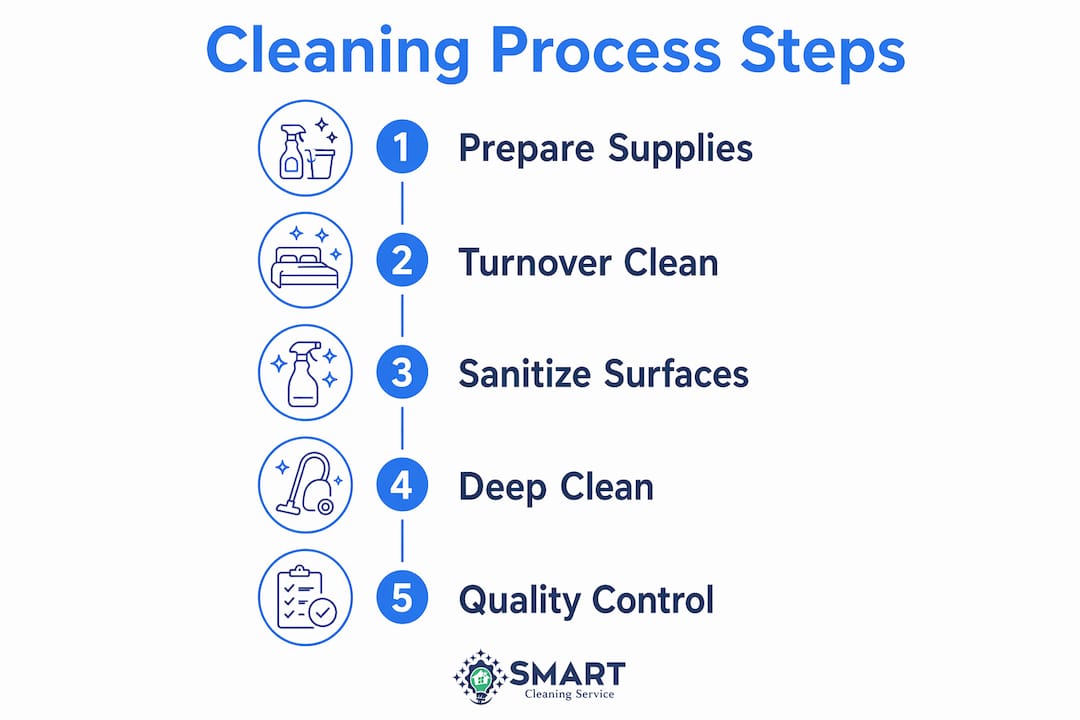
How to perform an effective turnover clean: step-by-step
A standard turnover clean takes 45 to 210 minutes depending on property size. A typical one-bedroom unit requires 1.5 to 2.5 hours. Larger properties need 3.5 to 5 or more hours. Knowing your property’s baseline time lets you schedule cleaners accurately and avoid rushed finishes.
When the window is under two hours, prioritize in this order: bathrooms, kitchen, bedrooms, living areas. Guests notice bathrooms and kitchens first. A spotless bathroom with a slightly dusty bookshelf scores better than the reverse.
Room-by-room turnover process
- Strip and bag linens from all beds immediately upon entry. Start laundry before cleaning anything else.
- Bathrooms first. Scrub toilets, sinks, tubs, and showers. Wipe mirrors and fixtures. Restock toilet paper, soap, and towels. Use a grout brush on tile lines every turnover to prevent buildup that becomes expensive to remove later.
- Kitchen second. Wipe all counters, appliance exteriors, and cabinet fronts. Clean the stovetop, microwave interior, and sink. Check inside the refrigerator for left-behind food.
- Bedrooms third. Make beds with fresh linens, dust surfaces, and vacuum floors. Check under beds and inside closets for forgotten guest items.
- Living areas last. Vacuum upholstery and rugs, wipe remotes and light switches, and check all lamps and electronics function correctly.
- Final walkthrough. Check every room against your photo guide. Restock consumables, confirm trash is removed, and lock up.
Routine Cleaning Tasks and Priorities
A home cleaning visit can include kitchens, bathrooms, accessible surfaces and floors. Share the areas you want addressed and confirm the tasks in your quote.
The cleaning plan should identify the rooms, tasks and priorities for your visit. Tell the office about access restrictions, delicate surfaces or areas that should be left alone.
Efficiency during turnovers also depends on how you handle last-minute cleanings. Having a clear priority list and pre-packed caddies means you can respond to same-day bookings without panic.
When and how to conduct deep cleaning for short term rentals
Deep cleaning is a scheduled, thorough clean that goes beyond the turnover routine to address areas that accumulate grime over weeks and months. Experts recommend scheduling deep cleans every 3 to 6 months for high-turnover rental units. Properties with weekly bookings should lean toward the three-month end of that range.
The time for a deep cleaning visit depends on size, condition, access and the agreed priorities. Discuss appliance interiors, cabinets and other accessible areas that need additional attention before booking. We do not offer carpet extraction, steam cleaning, deep upholstery cleaning, pressure washing or exterior window cleaning. Our cleaning visits can include ordinary vacuuming and agreed work on accessible surfaces.
Turnover clean vs. deep clean: scope and timing
| Factor | Turnover Clean | Deep Clean |
|---|---|---|
| Frequency | Every guest checkout | Every 3 to 6 months |
| Duration | 45 minutes to 5+ hours | 3 to 8 hours |
| Focus areas | Visible surfaces, linens, bathrooms, kitchen | Inside cabinets, appliances, grout, HVAC, carpets |
| Goal | Guest-ready presentation | Long-term property condition |
| Trigger | Scheduled checkout | Calendar schedule or visible buildup |
How to identify deep clean triggers during turnovers
For kitchen work, identify the accessible counters, sink and appliance surfaces to be cleaned. Appliance interiors and other additional tasks should be discussed before the visit.
Aligning deep cleans with your occupancy calendar is the most practical approach. Schedule one before peak season starts and one after it ends. This keeps the property in top condition when reviews matter most and avoids costly repairs from deferred maintenance.
Pro Tip: During every deep clean, do a full maintenance walkthrough. Check light bulbs, test all remotes, run every appliance, and inspect under sinks for leaks. Catching a dripping faucet during a deep clean costs nothing. A guest discovering it mid-stay costs you a review.
For Seattle-area hosts, Smartcleaningwa’s seasonal deep cleaning guide maps this process to the Pacific Northwest’s specific occupancy patterns.
How to manage cleaning teams and quality control
Written standard operating procedures are the single most effective tool for consistent cleaning outcomes across multiple cleaners or properties. Professional STR cleaning teams use property-specific cards detailing access codes, special staging notes, inventory par levels, and photographic references. This is especially critical for remote owners managing multiple units.
Requirements vary with the property, activity and circumstances. Review the applicable requirements with a qualified adviser; a cleaning appointment does not certify legal or regulatory compliance.
Quality control practices that work
- Before-and-after photos: Require cleaners to photograph each room after completion. Compare against your staging reference photos. This creates accountability without micromanagement.
- List the rooms and accessible surfaces you want cleaned before requesting an estimate. The work completed depends on the agreed priorities, property condition and time used.
- Rush fee policy: Define your rush fee structure in writing before you need it. Last-minute turnovers are common in STR operations. A clear policy prevents conflict and keeps cleaners available.
- Checklist sign-off: Have cleaners check off each task and submit the list digitally or physically. This creates a record and catches omissions before the next guest arrives.
- Scheduled check-ins: Review cleaning feedback monthly. Identify recurring misses and update your SOP rather than repeating the same correction.
Pro Tip: Build your cleaning team workflow around the checklist, not around individual cleaners. When a cleaner is unavailable, a new person should be able to walk in with the property card and checklist and deliver the same result.
Discuss floor vacuuming and mopping as part of the visit. Tell the office about the floor material and any manufacturer-specific care instructions.
Key Takeaways
Requirements vary with the property, activity and circumstances. Review the applicable requirements with a qualified adviser; a cleaning appointment does not certify legal or regulatory compliance.
| Point | Details |
|---|---|
| Cleanliness drives ratings | Confirm the scope before booking |
| Turnover timing matters | A one-bedroom turnover takes 1.5 to 2.5 hours; prioritize bathrooms and kitchens under tight windows. |
| Routine surface cleaning | Routine surface cleaning |
| Deep clean on a schedule | Schedule deep cleans every 3 to 6 months to address grout, HVAC, cabinets, and carpets. |
| SOPs protect consistency | Property cards, photo verification, and written checklists keep quality consistent across all cleaners. |
Why I think most hosts underestimate the cleaning operation
Most hosts treat cleaning as a cost to minimize rather than a system to invest in. That framing is the root cause of inconsistent reviews.
The hosts who get this right share one habit: they document everything. Not because they distrust their cleaners, but because documentation removes ambiguity. A cleaner who knows exactly what “guest-ready” looks like in your specific unit does not have to guess. Guessing is where standards slip.
List the rooms and accessible surfaces you want cleaned before requesting an estimate. The work completed depends on the agreed priorities, property condition and time used.
A home cleaning visit can include kitchens, bathrooms, accessible surfaces and floors. Share the areas you want addressed and confirm the tasks in your quote. Related reading: short stay cleaning checklist.
How Smartcleaningwa supports Airbnb hosts and property managers
The work for your visit should be agreed in the quote. Our team focuses on cleaning accessible surfaces, kitchens, bathrooms and floors, with additional priorities discussed before the appointment.
Whether you manage one unit or a growing portfolio, Smartcleaningwa delivers consistent, guest-ready results without the scheduling stress. The team is licensed, insured, and experienced with the specific demands of short-term rental turnovers. Get a free cleaning estimate and see how professional cleaning services for rentals translate directly into better reviews and fewer headaches. For hosts exploring full-service options, the Airbnb housekeeping guide on the Smartcleaningwa site explains exactly what to expect from a professional cleaning partnership.
FAQ
How long does a short term rental turnover clean take?
A standard turnover clean takes 45 to 210 minutes depending on property size. A one-bedroom unit typically requires 1.5 to 2.5 hours, while larger properties need 3.5 to 5 or more hours.
How often should you deep clean a vacation rental?
Deep cleans should be scheduled every 3 to 6 months for high-turnover properties. Units with weekly bookings benefit from the three-month schedule to prevent grout buildup, HVAC dust, and cabinet grime.
Routine Cleaning Tasks and Priorities
A home cleaning visit can include kitchens, bathrooms, accessible surfaces and floors. Share the areas you want addressed and confirm the tasks in your quote.
How many towel sets should a short term rental provide?
List the rooms and accessible surfaces you want cleaned before requesting an estimate. The work completed depends on the agreed priorities, property condition and time used.
What is the most effective quality control tool for cleaning teams?
Property-specific cards with access codes, staging photos, inventory par levels, and a signed cleaning checklist are the most effective tools. They create accountability and allow any cleaner to deliver consistent results without verbal briefing. For home visits, we send you a message when we’re on our way and another when the cleaning is finished.
Recommended
- Smart Cleaning Service™ House Cleaning Seattle Kirkland Bellevue Redmond
- Smart Cleaning Service™ House Cleaning Seattle Kirkland Bellevue Redmond
- Smart Cleaning Service™ House Cleaning Seattle Kirkland Bellevue Redmond
- Smart Cleaning Service™ House Cleaning Seattle Kirkland Bellevue Redmond