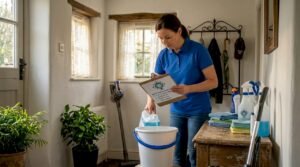
Time-saving cleaning tips are practical methods and routines designed to help you clean your home faster by eliminating redundant effort, organizing your tools, and following a repeatable sequence. The American Cleaning Institute defines efficient cleaning as working top-to-bottom and room-by-room to avoid backtracking and rework. Tools like microfiber cloths, portable caddies, and 15-minute timers are the backbone of any fast cleaning system. Structured routines from systems like Clean Mama’s schedule and the American Cleaning Institute’s workflow recommendations turn cleaning from a weekend ordeal into a manageable daily habit.
1. The most efficient cleaning workflow starts with order
The single biggest time drain in household cleaning is not the scrubbing. It is the backtracking, the forgotten rooms, and the surfaces you have to re-clean because you dusted after you vacuumed. The ACI recommends starting by removing clutter, then working top-to-bottom and from the farthest corner toward the entrance. Dust falls down, so cleaning high surfaces first means you sweep and mop only once.
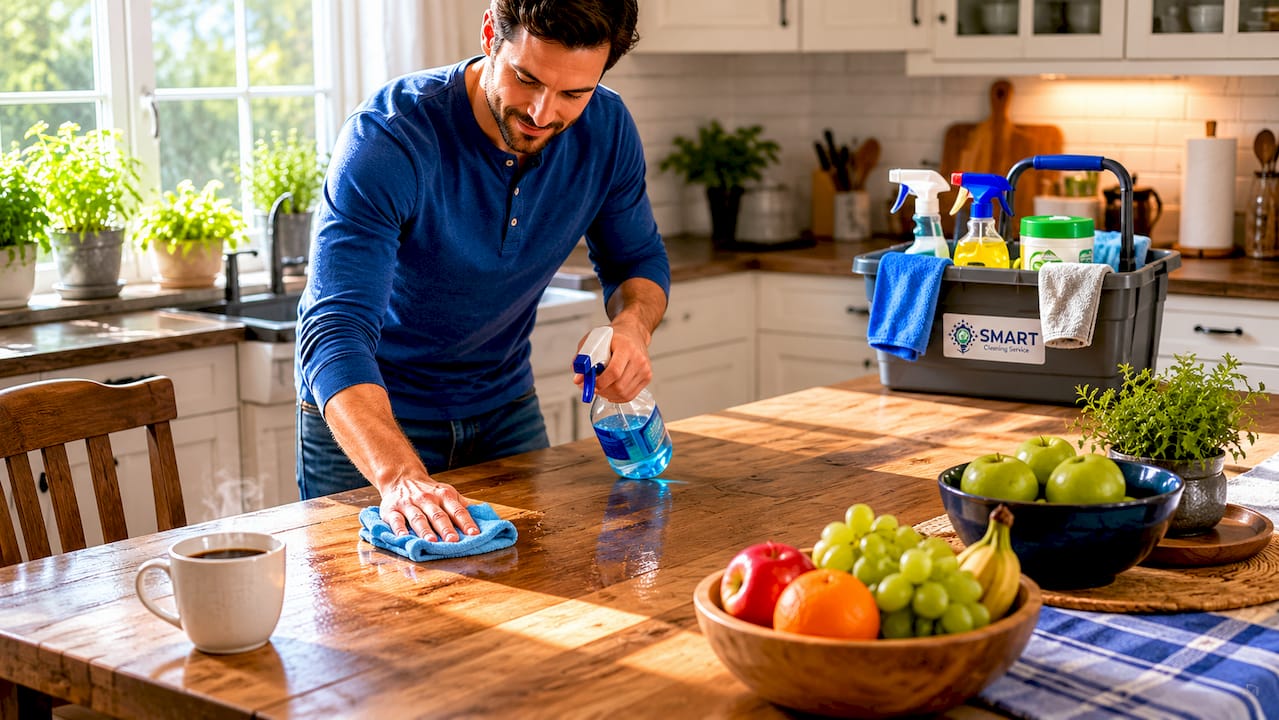
Room order matters just as much as surface order. Start with the kitchen and bathroom because these areas carry the highest germ load and require the most pretreatment time. HealthyChildren.org advises breaking cleaning into room-based tasks focused on hygiene, particularly in bathrooms and kitchens. Finishing these rooms first also gives cleaning agents time to work while you move on to lower-priority areas.
Speed-cleaning expert Debbie Sardone, featured in Popular Mechanics, argues that a consistent room order and methodical sequence allows you to clean your home in half the normal time. The logic is simple: your brain stops making decisions and your body moves on autopilot. You also stop forgetting spots, which eliminates the frustrating second pass.
Pro Tip: Spray bathroom surfaces and let the cleaner sit before you move to the next room. When you return, the grime wipes off with almost no scrubbing. This single habit cuts bathroom cleaning time significantly.
2. How daily and weekly routines prevent cleaning overload
Structured schedules are the most underrated time-saving cleaning method available to any household. Clean Mama’s rotating task system divides chores into daily, weekly, and monthly groups, which prevents any single session from becoming overwhelming. Daily tasks like wiping counters and doing one load of laundry take under 10 minutes. Weekly tasks like vacuuming and mopping rotate by room so the whole house gets attention without a full-day commitment.
Assigning specific tasks to specific days removes decision fatigue entirely. When Monday is always laundry day and Wednesday is always kitchen day, you stop spending mental energy deciding what to clean next. Structured cleaning schedules reduce cognitive load by eliminating daily decision-making and preventing reactive catch-up cleaning sessions. That mental relief is real and measurable over weeks of consistent practice.
The ACI’s weekly scheduling guidance pairs routine tasks with timers and portable supply caddies to keep sessions focused and fast. Setting a timer for each room creates a game-like urgency that prevents the common trap of over-cleaning one area while neglecting others.
- Daily tasks (under 10 minutes): Wipe kitchen counters, do one load of laundry, do a quick bathroom wipe-down, and put items back in their designated spots.
- Weekly tasks (rotating by room): Vacuum, mop, dust surfaces, clean mirrors, and scrub the toilet and sink.
- Monthly tasks: Deep-clean appliances, wash windows, wipe baseboards, and declutter one area of the home.
Pro Tip: Write your weekly schedule on a whiteboard or use a free app like Tody or OurHome to assign tasks to family members. Shared accountability cuts total household cleaning time because the work is distributed, not duplicated.
3. Quick cleaning hacks that actually cut time
The 15-minute timer method is one of the most effective quick cleaning hacks for people who feel paralyzed by a messy home. Real Simple advocates short, timed cleaning bursts combined with surface pretreatment to loosen grime before you return to wipe it away. Setting a 15-minute timer creates a hard boundary that makes starting easier and stopping guilt-free.
Multitasking during dwell time is where serious time gets saved. Spray your toilet bowl cleaner, then go wipe down the bathroom mirror and counters while the cleaner works. Both the ACI and Real Simple recommend this approach as a core part of any time-efficient cleaning method. You are not working harder. You are letting chemistry do the work while your hands stay busy elsewhere.
Here are the most practical shortcuts that deliver the biggest time savings:
- Start appliances first. Load the dishwasher and start a laundry cycle before you begin any surface cleaning. Both run without you, so you gain 30 to 60 minutes of machine time during your cleaning session.
- Use microfiber cloths. Microfiber picks up dust, bacteria, and grease with water alone, cutting the need for multiple product applications. One cloth replaces several paper towels and a spray bottle in many situations.
- Clean as you go. Wiping a stovetop immediately after cooking takes 30 seconds. Waiting until the weekend turns it into a 10-minute scrubbing job.
- Keep a portable caddy stocked. Carrying all your supplies in one caddy means zero trips back to the supply closet. Popular Mechanics recommends small spray bottles and organized tools to maintain momentum throughout the home.
- Declutter before you clean. Picking up items off the floor before vacuuming saves you from stopping and starting every few feet.
4. How the right tools make efficient house cleaning faster
Choosing the right tools is not about spending more money. It is about removing friction from every task. Microfiber cloths and a quality vacuum cleaner are the two tools that deliver the highest return on time investment for most households. Microfiber traps particles rather than pushing them around, which means one pass does the work of three with a standard cloth. A vacuum with strong suction and a good filter handles both hard floors and carpet without switching machines.
The portable caddy principle from Popular Mechanics is simple: every trip back to the supply closet costs you 60 to 90 seconds and breaks your momentum. Over a full cleaning session, those interruptions add up to 10 or 15 minutes of pure waste. Filling a caddy before you start and carrying it room to room eliminates that entirely.
Here is how tool setups differ by home size:
| Home type | Recommended setup | Key time benefit |
|---|---|---|
| Studio or 1-bedroom apartment | One caddy, microfiber cloths, handheld vacuum | Everything fits in one pass per room |
| 2 to 3-bedroom home | Full caddy, upright vacuum, mop with washable pad | Reduces product switching between rooms |
| 4+ bedroom or multi-floor home | Two caddies (one per floor), cordless vacuum, steam mop | Eliminates carrying supplies up and down stairs |
For apartment dwellers, the expert apartment cleaning tips from Smartcleaningwa show how a single well-stocked caddy and a room-by-room sequence can cut cleaning time by a third compared to unstructured cleaning. For larger homes, a second caddy on a different floor is the single highest-impact tool investment you can make. You can also explore professional cleaning tools to understand which equipment types suit different surfaces and tasks.
5. Adapting time-saving methods to your household type
No single cleaning schedule fits every household. A single professional working long hours needs a different approach than a family of five with young children. The key is matching the system to your actual life, not to an idealized version of it.
For busy professionals, the priority is maintenance over deep cleaning. A 10-minute daily reset, a focused 30-minute weekend session, and one monthly deep-clean keeps a home consistently presentable without consuming your limited free time. The professional cleaning workflow guide from Smartcleaningwa outlines exactly how pros sequence tasks to minimize time without cutting quality.
Here is how to adjust your approach by household type:
- Families with young children: Assign age-appropriate tasks to kids. Children as young as four can put toys away and wipe low surfaces. Shared responsibility cuts your personal cleaning time and builds habits in children.
- Couples or roommates: Divide rooms rather than tasks. One person owns the kitchen and bathrooms; the other owns living spaces and floors. Clear ownership prevents duplication and the frustrating “I thought you did it” problem.
- Apartment dwellers: Focus on vertical surfaces and storage. Clutter accumulates faster in small spaces, so a daily 5-minute declutter prevents the buildup that turns a 20-minute clean into a 90-minute one.
- Large homes: Use the two-caddy system described above and clean one floor per day rather than the whole house in one session. Spreading the work across the week makes it sustainable.
- Combining tasks: Pair cleaning with decluttering on the same day each month. Cleaning around clutter wastes time. Removing it first makes every future session faster.
Key takeaways
Efficient house cleaning is less about speed and more about eliminating redundant effort through consistent sequences, smart tools, and structured schedules.
| Point | Details |
|---|---|
| Workflow order saves the most time | Work top-to-bottom and room-by-room to avoid re-cleaning surfaces and backtracking. |
| Routines eliminate decision fatigue | Assign specific tasks to specific days using systems like Clean Mama’s schedule to prevent catch-up cleaning. |
| Pretreatment multiplies your effort | Spray surfaces and multitask during dwell time so chemistry does the scrubbing for you. |
| The right tools remove friction | A portable caddy and microfiber cloths cut supply-search time and reduce the number of passes per surface. |
| Match the system to your household | Adjust daily and weekly task loads based on family size, home type, and your actual schedule. |
What I have learned from years of watching people clean inefficiently
Most people do not have a cleaning problem. They have a sequencing problem. I have watched homeowners spend three hours on a Saturday cleaning a space that should take 45 minutes, not because they were lazy or slow, but because they were making it up as they went. They cleaned the floor, then knocked dust off a shelf onto the clean floor. They sprayed the shower, then immediately wiped it before the cleaner had time to work. They walked back to the supply closet four times in one bathroom.
The timed cleaning burst changed how I think about this entirely. When you set a 15-minute timer and commit to one room, you stop overthinking and start moving. The first few times feel uncomfortable because you will not finish perfectly. That discomfort fades fast when you realize the room is 90% cleaner in 15 minutes than it was after 45 minutes of unfocused effort.
The portable caddy is the other thing I wish more people took seriously. It sounds trivial until you track how many times you leave a room mid-task to grab something. Each interruption costs you momentum, not just seconds. Preparing your caddy before you start is the closest thing to a guaranteed time saving that exists in household cleaning.
The hardest part of all of this is not learning the techniques. It is resisting the urge to skip the prep. Skipping declutter before vacuuming, skipping pretreatment before scrubbing, skipping the caddy fill because you think you will just grab things as needed. Every shortcut in the prep phase costs you double the time during the actual cleaning. Consistency in the routine beats intensity in the session, every single time.
— Wilker
When your schedule needs more than tips can solve
Some weeks, the tips are not enough. Work runs long, the kids get sick, and the house falls behind faster than any 15-minute timer can fix. That is exactly where Smartcleaningwa steps in. As a licensed and insured residential cleaning company serving Seattle, Kirkland, Bellevue, and Redmond, Smartcleaningwa brings professional-grade workflows and tools to your home so you can reclaim your time without sacrificing cleanliness. Whether you need recurring weekly cleaning, a one-time deep clean, or a move-out service, the team delivers real-time updates and consistent results. Book a free estimate and see what professional cleaning looks like when it is done right. You can also learn more about residential cleaning options to find the service that fits your household.
FAQ
What is the fastest way to clean a house?
Work top-to-bottom and room-by-room, starting with the kitchen and bathrooms. The American Cleaning Institute recommends this sequence to avoid backtracking and re-cleaning surfaces.
How do I build a cleaning routine that actually sticks?
Assign specific tasks to specific days using a rotating system like Clean Mama’s schedule. Structured schedules reduce decision fatigue and prevent the reactive catch-up cleaning that makes chores feel overwhelming.
What cleaning tools save the most time?
Microfiber cloths and a portable supply caddy deliver the highest time savings for most households. Microfiber reduces the number of passes needed per surface, and a caddy eliminates trips back to the supply closet.
How does pretreatment speed up cleaning?
Spraying surfaces and letting the cleaner dwell while you work on another task lets the product break down grime before you wipe. Both the ACI and Real Simple recommend this multitasking approach to cut scrubbing time.
How do I get my family involved in cleaning faster?
Divide rooms by ownership rather than splitting individual tasks. Assign age-appropriate chores to children and give each adult a clear zone of responsibility to prevent duplication and confusion.
Recommended
- Smart Cleaning Service™ House Cleaning Seattle Kirkland Bellevue Redmond
- Smart Cleaning Service™ House Cleaning Seattle Kirkland Bellevue Redmond
- Smart Cleaning Service™ House Cleaning Seattle Kirkland Bellevue Redmond
- Smart Cleaning Service™ House Cleaning Seattle Kirkland Bellevue Redmond