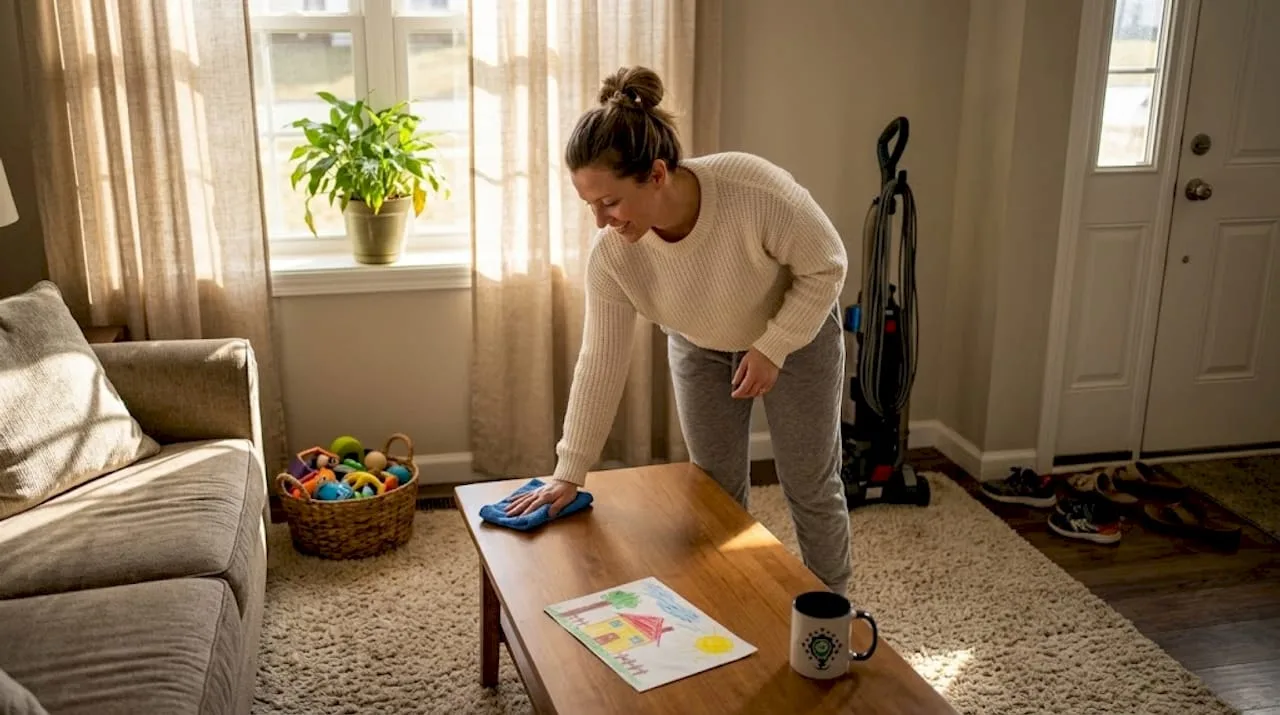
Most people judge cleaning by what they can see. A tidy countertop, a freshly vacuumed rug, no obvious mess. But what defines high quality cleaning goes much deeper than that surface impression. Real quality is measured by consistency, the right products, proper equipment, and systems that verify results every single time. Whether you hire a professional service or handle things yourself, understanding these standards will change how you think about your home’s cleanliness and health.
Table of Contents
- Key Takeaways
- What defines high quality cleaning in a home
- Choosing products that actually work safely
- Consistency through quality control systems
- How equipment care shapes your results
- How to audit and improve your home cleaning
- What I’ve learned homeowners consistently miss
- How Smartcleaningwa puts these standards into practice
- FAQ
Key Takeaways
| Point | Details |
|---|---|
| Visible tidiness isn’t enough | True cleaning quality depends on measurable standards, not just what looks clean at a glance. |
| Cleanliness levels guide expectations | APPA’s five-level framework gives homeowners a concrete benchmark to evaluate results zone by zone. |
| Product certification matters | EPA Safer Choice certified products deliver real cleaning performance without compromising your family’s health. |
| Consistency requires systems | Checklists, audits, and feedback loops are what separate one-time clean from sustained cleanliness. |
| Equipment care affects outcomes | Dirty filters and worn brushes directly reduce cleaning effectiveness, no matter how good your technique is. |
What defines high quality cleaning in a home
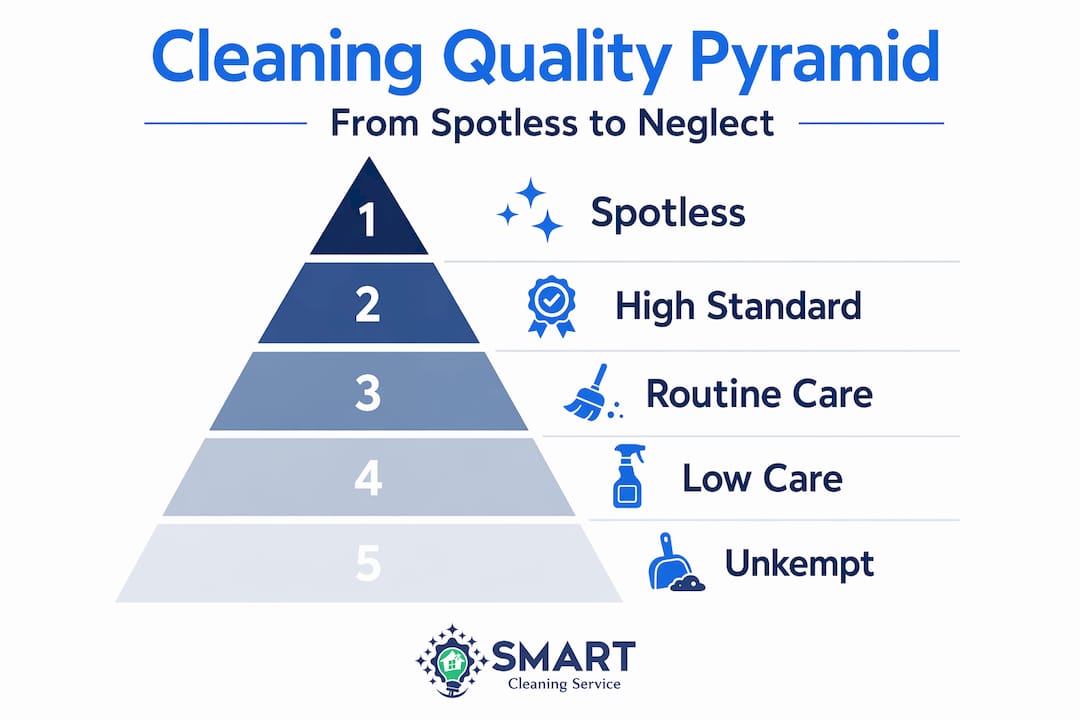
Before you can evaluate whether your home is truly clean, you need a framework that goes beyond gut feeling. The APPA (Association of Physical Plant Administrators) developed five cleanliness levels that range from Level 1, described as Orderly Spotlessness, all the way down to Level 5, which represents Unkempt Neglect. Most well-maintained homes realistically target Level 2, called Ordinary Tidiness. That means clean floors with no buildup, minimal dust on surfaces, and no visible flaws under normal lighting.
What makes this framework useful is that it shifts your thinking from “does it look okay” to “does it meet a defined standard.” That shift matters enormously. A space can feel clean and still fall short on zone-by-zone assessments. High-touch areas like door handles, light switches, and kitchen faucets need more frequent attention than a bedroom corner shelf. Quality cleaning programs treat these zones differently because they carry different health risks.
| APPA Level | Description | Home Implication |
|---|---|---|
| Level 1 | Orderly Spotlessness | Rarely achieved in active households; used as an aspirational benchmark |
| Level 2 | Ordinary Tidiness | Typical quality target; clean floors, minimal dust, no visible defects |
| Level 3 | Casual Inattention | Some dust, smudges, stray debris; noticeable to careful observers |
| Level 4 | Moderate Dinginess | Visible buildup, stains, and neglected corners becoming the norm |
| Level 5 | Unkempt Neglect | Widespread dirt, damage risk, and health concerns |
Pro Tip: Walk through your home and score each room against the APPA levels before your next cleaning session. You’ll spot patterns in the zones that consistently fall to Level 3 or below, which is exactly where your focus needs to go.
Choosing products that actually work safely
The cleaning product aisle is full of bold claims. “Eco-safe,” “all-natural,” “green formula.” The problem is that none of these labels carry any legal definition or third-party verification. Consumers often overestimate how meaningful “green” marketing claims are, which is why the EPA created a certification that actually means something.
The EPA Safer Choice certification identifies products that use ingredients verified as safer for human health and the environment, without sacrificing cleaning performance. When you see that label, you know the formula has been reviewed at the ingredient level, not just evaluated on the finished product’s branding.
Beyond certification, knowing what to look for on any product label helps you make smarter choices. Here is what characteristics of quality cleaning products share:
- Transparent ingredient disclosure (not just “surfactants”)
- No undisclosed fragrance compounds linked to respiratory irritation
- pH appropriate for the surface being cleaned (acidic for mineral deposits, alkaline for grease)
- Concentration guidance that prevents overuse and reduces waste
- Biodegradable formulas that don’t accumulate in indoor surfaces
Proper chemical management also involves knowing how to use products correctly. Diluting a concentrated cleaner incorrectly can either reduce effectiveness or create unnecessary exposure risks. The product’s instructions exist for a reason, and following them is part of what makes cleaning effective rather than just theatrical.
Pro Tip: When shopping, search the EPA’s Safer Choice product database directly at epa.gov rather than relying on front-label claims. It takes two minutes and removes all the guesswork.
Consistency through quality control systems
One thorough clean doesn’t define a clean home. A clean home is the result of systems that deliver the same standard every visit, every week, without depending on memory or mood. That’s the core of quality control, and it’s what separates professional cleaning standards from casual tidying.
Quality control systems built around inspections, checklists, and client feedback are what give both professional services and motivated homeowners a way to verify their results rather than assume them. Here’s how a solid quality control process works in practice:
- Define the standard first. Before any cleaning begins, identify what “done” looks like in each zone. Vague goals produce vague results.
- Use zone-specific checklists. Bathrooms, kitchens, and high-touch areas each need their own criteria. A single whole-home checklist misses too much detail.
- Inspect after completion. Don’t assume the checklist was followed. A physical walkthrough, or in professional settings, photo documentation, confirms actual outcomes.
- Collect feedback consistently. Whether you’re reviewing your own work or evaluating a service, client feedback loops are what drive continuous improvement over time.
- Audit regularly and track trends. If the bathroom consistently scores lower than other areas, that’s a training or process gap worth addressing.
“A systematic inspection and audit approach is what differentiates mere cleaning presence from quality delivery. Checklists alone don’t ensure quality. Auditing and photographic evidence must validate completed work to catch issues proactively.” (Janitorial Quality Inspection Checklist for Facility Cleaning Audits)
Digital inspection tools improve APPA cleanliness scores by up to 25% compared to paper records alone. The lesson for homeowners: even a simple notes app used consistently after each cleaning session beats trying to remember what you covered three weeks ago.
How equipment care shapes your results
Your technique can be perfect and your products can be certified. But if your tools are compromised, your results will be too. This is one of the most overlooked factors for cleaning success, and it shows up most visibly in vacuum performance.
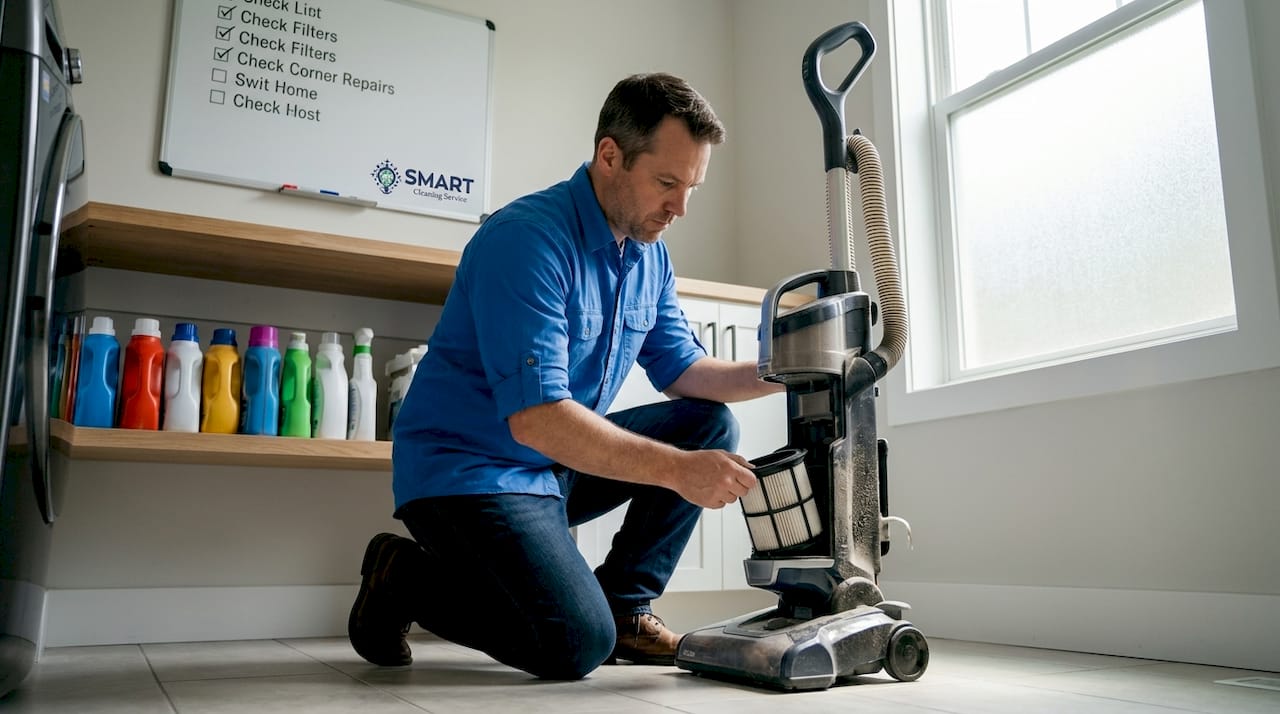
Routine filter cleaning and brush maintenance directly affect how much dust and debris a vacuum actually collects versus redistributes. A clogged HEPA filter doesn’t just reduce suction. It can push fine particulates back into the air, undoing the health benefit of vacuuming entirely. For robot vacuums, tangled brush rolls and dirty sensors cause the unit to miss zones and run inefficiently.
Here’s a practical maintenance routine that keeps your equipment performing at the level it was designed for:
- Vacuum filters: Clean or replace every 1 to 3 months depending on use and household (pets and carpet push toward the shorter end)
- Brush rolls: Remove wrapped hair and debris after every 3 to 5 uses to prevent motor strain and floor scratching
- Robot vacuum sensors: Wipe cliff and wall sensors monthly with a dry cloth to prevent navigation errors
- Mop heads and pads: Wash microfiber pads after each use to prevent bacteria transfer from session to session
- Spray bottles: Rinse and dry between product types to prevent cross-contamination of formulas
The connection to indoor air quality is real here. A vacuum that can’t trap fine particles effectively is releasing allergens back into the air you breathe, which matters especially in homes with children, elderly residents, or anyone with respiratory sensitivities.
Pro Tip: Set a recurring monthly reminder to check all your cleaning equipment. Five minutes of maintenance once a month prevents the slow performance decline that makes you think you need to clean more often when the real problem is that your tools aren’t working correctly.
How to audit and improve your home cleaning
Knowing what defines quality is only useful if you apply it. Here’s a step-by-step approach to evaluate your current cleaning and raise the bar.
- Assign APPA levels to each room. Walk through your home as if you’re an inspector. Score each space honestly. Don’t aim for perfection. Aim for accurate awareness.
- Identify your high-touch zones. Door handles, faucets, light switches, cabinet pulls, and remote controls are touched dozens of times daily. If these aren’t on your current routine, add them now.
- Check your products. Review what’s under your sink and search each product on the EPA Safer Choice database. Swap out anything with unverified “green” claims for certified alternatives.
- Inspect your equipment. Before your next cleaning session, check filters, brush rolls, and mop pads. Replace or clean anything that’s past its effective life.
- Create a simple zone checklist. One page with your kitchen, bathrooms, living areas, and bedrooms. Use it for three consecutive cleanings and note where you consistently fall short.
- Build in a feedback cycle. If you use a professional cleaning service, communicate your standards clearly and ask for a follow-up after the first few visits. Accountability goes both ways.
The features of top cleaning services aren’t mysterious. They apply the same principles you’d use yourself, just with more discipline, better tools, and a defined quality system behind every visit.
What I’ve learned homeowners consistently miss
In my experience working with residential clients, the most common gap isn’t effort. Most homeowners work hard. The gap is in defining what “done” actually looks like before the mop hits the floor.
I’ve seen spotless-looking kitchens with completely neglected cabinet handles and light switches. Bathrooms that pass a visual scan but have never had grout scrubbed or exhaust fans cleaned. The visible tidiness tricks the eye. It doesn’t trick a thermometer or a petri dish.
What I’ve found is that small investments in awareness pay off more than expensive products. Knowing which zones matter most, understanding how detailed cleaning connects to long-term home health, and building even a minimal feedback system into your routine creates compounding improvements over months.
My honest take on product marketing: if a label says “green” without an EPA seal, treat it as decoration. The cleaning industry is full of well-designed packaging and hollow claims. Certification is the only shortcut worth trusting.
And on equipment: I’d rather see someone clean their home with a well-maintained three-year-old vacuum than a brand-new one with a clogged filter. The tool’s condition matters more than its age or price.
— Wilker
How Smartcleaningwa puts these standards into practice
Understanding what makes cleaning effective is one thing. Having a team that applies it consistently in your home is another. Smartcleaningwa brings the same measurable standards, zone-based assessments, and quality control systems described in this article to every visit. Whether you need recurring house cleaning to maintain a healthy baseline or a thorough deep clean to reset your space, every service is backed by real protocols, not guesswork. Licensed, insured, and committed to transparent communication, Smartcleaningwa serves homeowners and renters across the Greater Seattle Area. If you’re ready to experience residential cleaning done right, Smartcleaningwa is worth a look.
FAQ
What does high quality cleaning actually mean?
High quality cleaning means consistently meeting a defined cleanliness standard in every zone of your home, using safe and effective products, maintained equipment, and a verified process that goes beyond surface appearance.
How do I know if a cleaning product is truly safe?
Look for the EPA Safer Choice certification, which confirms the product’s ingredients have been reviewed for both human health safety and environmental impact without sacrificing cleaning effectiveness.
What is the APPA cleanliness level system?
APPA’s five cleanliness levels range from Level 1 (Orderly Spotlessness) to Level 5 (Unkempt Neglect), with Level 2 representing the typical quality target for well-maintained residential spaces.
Why does vacuum maintenance affect cleaning quality?
A clogged filter or tangled brush roll reduces suction and can push fine particles back into the air. Routine maintenance keeps the device working at the performance level it was designed for.
How often should I audit my home’s cleaning quality?
A zone-by-zone review every four to six weeks is enough to catch recurring gaps before they become buildup problems, especially in high-touch areas that need more frequent attention than low-traffic zones.
Recommended
- Smart Cleaning Service™ House Cleaning Seattle Kirkland Bellevue Redmond
- Deep Cleaning Services Seattle | Smart Cleaning WA
- Smart Cleaning Service™ House Cleaning Seattle Kirkland Bellevue Redmond
- Smart Cleaning Service™ House Cleaning Seattle Kirkland Bellevue Redmond