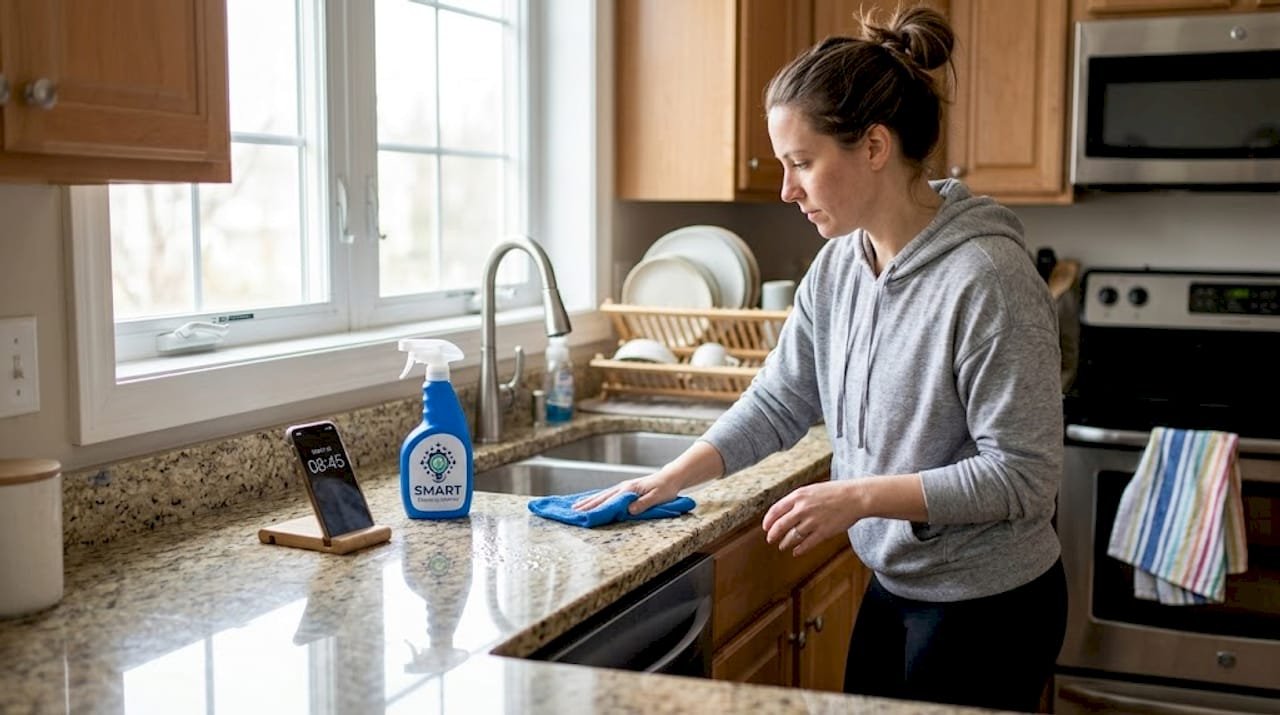
The phone rings. Your friend just texted that they’re thirty minutes away. You look around and see exactly what you were hoping no one else would. Knowing how to handle last minute cleanings is one of those practical life skills nobody really teaches, but everyone needs. The good news is that you don’t need a spotless house. You need a noticeably cleaner one. With the right approach, the right sequence, and a little mental preparation, you can transform your space from chaotic to welcoming in less time than you think.
Table of Contents
- Key takeaways
- How to handle last minute cleanings before you start
- The step-by-step fast cleaning sequence
- Common mistakes that slow you down
- The final walkthrough before guests arrive
- My honest take on last-minute cleaning stress
- When you need more than a quick fix
- FAQ
Key takeaways
| Point | Details |
|---|---|
| Prioritize what guests see first | Focus on the entryway, living room, and bathroom before anything else. |
| Use the doorway viewpoint | Focusing on visible clutter from doorways cuts your cleaning time by 50% or more. |
| Keep a quick reset basket | Store a basket to sweep clutter out of sight and maintain visual calm fast. |
| Skip the deep clean entirely | Avoid appliance interiors, closets, and low-traffic areas when time is short. |
| Use the one-minute rule | Any task under 60 seconds should be done immediately to prevent buildup. |
How to handle last minute cleanings before you start
Before you grab a single sponge, take sixty seconds to mentally prepare. The biggest mistake people make when cleaning in a rush is jumping in without a plan and spending twenty minutes on something guests will never see.
The first thing you need is the right gear within arm’s reach. Keeping your supplies organized for quick access is non-negotiable if you want to move fast.
Here is what you actually need within reach:
- Multi-surface spray cleaner (one bottle handles counters, sinks, and mirrors)
- Microfiber cloths (at least 3 to 4 so you can move room to room without stopping)
- A trash bag pre-opened and ready to go
- Toilet brush and bowl cleaner staged under the sink
- A quick reset basket for corralling clutter fast
- A broom or cordless vacuum for high-traffic floors
- Air freshener or a candle for the final sensory touch
| Tool | Best for | Time saved |
|---|---|---|
| Multi-surface spray | Counters, mirrors, sinks | Eliminates switching products |
| Microfiber cloths | Dusting, wiping, polishing | Faster than paper towels |
| Quick reset basket | Clutter control | Avoids decision-making mid-clean |
| Cordless vacuum | Floors and rugs | No cord setup time |
| Trash bag (pre-opened) | Kitchen and bathroom waste | One swipe, done |
A quick reset basket is one of the most underrated last minute cleaning hacks. Grab any bin or laundry basket, sweep everything off visible surfaces into it, and tuck it in a bedroom or closet. You are not organizing. You are creating visual calm so your brain and your guests can both breathe.
Pro Tip: Stage a small cleaning caddy under your kitchen or bathroom sink permanently. When time is tight, that thirty seconds of not hunting for supplies makes a real difference.
The mental side matters just as much. You are not deep cleaning. You are staging a space for human eyes. That reframe alone takes a significant amount of pressure off.
The step-by-step fast cleaning sequence
This is your core last minute house cleaning sequence. Follow it in order. Do not improvise. The sequence is designed around what guests physically encounter from the moment they walk in.
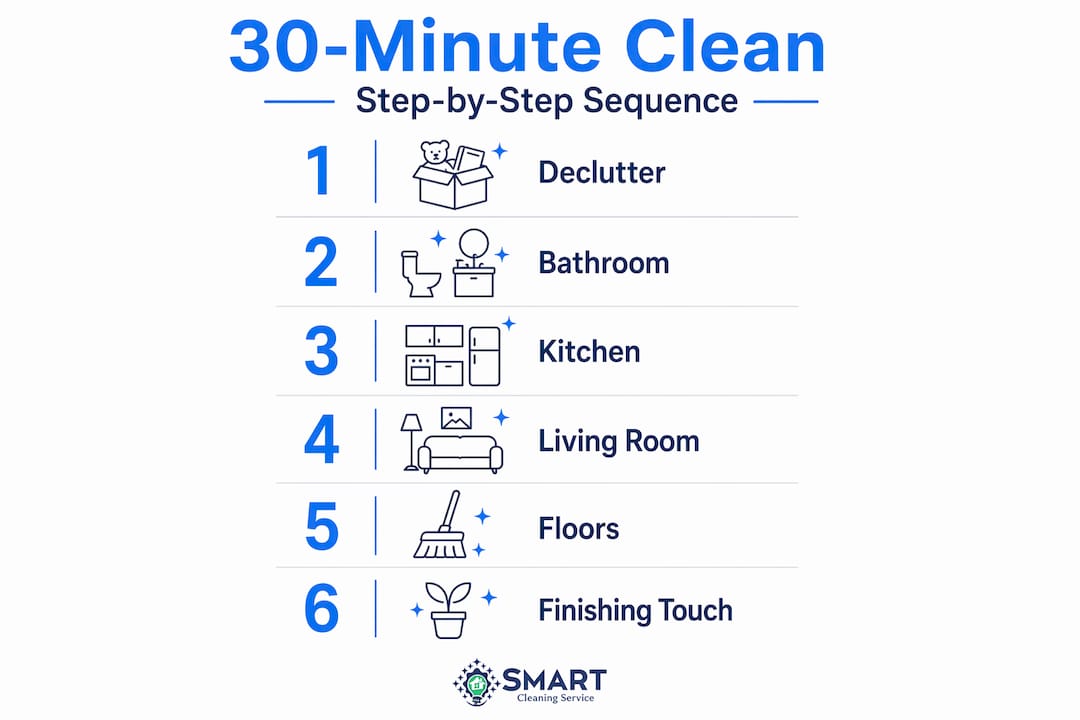
Step 1: Grab your basket and do a clutter sweep (5 minutes)
Walk through every visible room with your reset basket. Pick up everything that does not belong and dump it in. Do not sort. Do not fold. Move.
Step 2: Clean the bathroom (7 minutes)
Spray the sink, toilet, and mirror. Wipe in that order. Replace the hand towel with a fresh one. Empty the trash. Touch points like faucets and light switches give a disproportionate return on effort, so wipe those down quickly too.
Step 3: Hit the kitchen surfaces (5 minutes)
Wipe the counters, stovetop, and sink. Put dishes in the dishwasher or stack them out of sight. Wipe the fridge handle. You do not need to clean inside the fridge. Skip appliance interiors entirely during a quick clean.
Step 4: Refresh the living room (5 minutes)
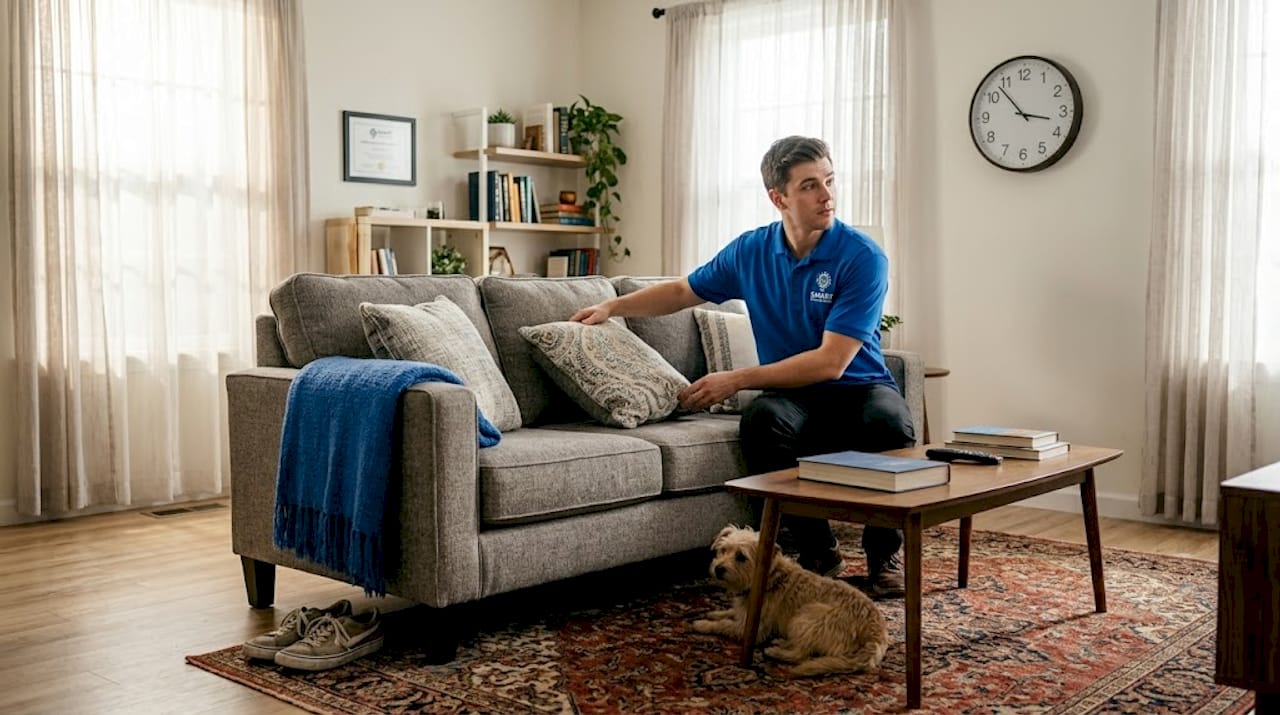
Fluff the couch cushions. Fold or drape the throw blanket. Wipe the coffee table. Stand at the doorway and look in. If something catches your eye, fix it. If it blends in, leave it.
Step 5: Sweep or vacuum the entry and main floor (5 minutes)
Floors are what people look down at when they talk. A vacuumed rug and a swept entry make a space feel genuinely clean, not just tidied.
Step 6: The sensory finish (2 minutes)
Light a candle, spray a room freshener, or open a window. Take the trash out. These two steps do more for the feeling of a clean home than almost anything else.
The whole sequence runs about 30 minutes. The one-minute rule applies throughout: if you spot something that takes under 60 seconds to fix, do it immediately. Do not flag it for later.
Pro Tip: Use your phone timer. Set it per room. Once it goes off, you stop and move on. This prevents the most common time trap: over-cleaning one space while others are ignored.
Common mistakes that slow you down
Rushing creates its own category of errors, and most of them are predictable. Knowing what to avoid is just as valuable as knowing what to do.
- Starting with the wrong room. Many people instinctively head to the kitchen because it feels messy. Start at the front door and work inward. Guests enter through the front.
- Getting lost in organizing. Sorting through a junk drawer or refolding a shelf is not cleaning for guests. It is reorganizing that kills momentum and steals your time.
- Ignoring floors and touchpoints. These two categories are the most noticed by visitors. A spotless counter next to a dirty floor registers as a dirty kitchen.
- Deep cleaning hidden spaces. Skipping areas like closets and appliance interiors is not laziness during a quick clean. It is correct prioritization.
- Letting your phone distract you. Put it face down or in another room. One text thread can cost you ten minutes.
- Chasing perfection. Your goal is a noticeably improved space, not a magazine photo shoot. A welcoming home is not a perfect one. It is a comfortable one.
The psychological effect of first impressions is real. A clean entryway and main living area creates a welcoming feeling even if other areas in the home are less tidy. Guests perceive the whole home through what they see first.
The final walkthrough before guests arrive
You’ve cleaned fast. Now spend five minutes confirming your work actually lands the way you intended.
Start at your front door and walk through the space exactly as your guest will. This is the single most useful quality check for last minute house cleaning. Here is what to confirm:
- Are there any odors? (Use a candle, fresh air, or a spritz of fabric refresher on upholstered surfaces)
- Are visible surfaces clear and wiped?
- Is the bathroom stocked with soap and a fresh hand towel?
- Are floors visibly clean in the entry and main rooms?
- Is the trash emptied in both the kitchen and bathroom?
- Is the lighting set right? (Bright light shows mess. Dimming it slightly creates warmth without hiding dirt.)
Small environmental touches do a lot of work here. Fresh towels, a bowl of fruit on the counter, or even just turning on a lamp shifts the entire feeling of a space. These details are part of how to prep for guests quickly in a way that feels intentional rather than panicked.
For ongoing control, the one-minute rule is worth making a permanent habit. Completing small tasks immediately prevents the slow buildup that makes last-minute cleaning feel impossible in the first place. Wipe the stovetop right after cooking. Put things back as you go. The benefit compounds quickly.
If airborne dust is a recurring issue in your home, you can also review tips to reduce bedroom dust as a longer-term strategy that makes every quick clean faster.
My honest take on last-minute cleaning stress
I’ve watched this pattern play out hundreds of times: someone gets a sudden call, panics, and tries to turn thirty minutes of cleaning into a three-hour deep clean that never finishes. They’re exhausted, their guests arrive, and the house still doesn’t look that different. All that stress for nothing.
Here is what I’ve learned. The gap between “cleaned” and “looks clean” is mostly psychological, and it works in your favor. Guests are not inspectors. They are people coming to see you. A space that smells fresh, feels uncluttered, and has clean visible surfaces reads as a clean home to virtually every guest. The baseboards can wait.
What actually matters is keeping your pace up and your expectations grounded. I’ve seen people spend fifteen minutes organizing one bookshelf and leave their bathroom untouched. That is the wrong trade. Spend your minutes where eyes go first.
The real secret to managing these situations without burning out is building a baseline that makes quick cleans shorter over time. If you practice the professional cleaning workflow principles of working room to room and resetting as you go, the “emergency” stops feeling like one.
Last-minute cleaning is not about being perfect. It is about being present enough to make your guests feel welcome. That is genuinely achievable in thirty minutes or less.
— Wilker
When you need more than a quick fix
Sometimes thirty minutes is not enough, and that is completely okay to admit. If you are hosting a larger gathering, doing a pre-sale showing, or simply have not had time for a proper clean in weeks, a professional team makes a real difference.
Smartcleaningwa serves the Greater Seattle Area with residential cleaning, deep cleaning, and same-day availability for those moments when you need reliable help fast. Whether you want to maintain a consistently clean home so emergencies feel manageable, or you need a one-time refresh before a big occasion, the team at Smartcleaningwa shows up prepared, communicates in real time, and delivers results you can count on. You can explore residential cleaning options or get a quick free estimate online in minutes. For ongoing peace of mind, a regular cleaning schedule means the next surprise visit is never a crisis.
FAQ
How do I clean my home fast before guests arrive?
Focus on the entry, living room, kitchen surfaces, and bathroom in that order. Use the doorway viewpoint to prioritize only what guests will see, and skip closets and appliance interiors entirely.
What are the best last minute cleaning hacks?
Use a reset basket to clear visible clutter in seconds, wipe high-touch surfaces like door handles and light switches, and freshen the air with a candle or open window. These three steps create the biggest perceived improvement for the least effort.
How long does a last minute house cleaning take?
A focused 30-minute session using a room-by-room sequence is enough to make a home feel noticeably cleaner. Targeting visible areas and skipping low-traffic zones keeps you within that window.
What should I never clean during a quick clean?
Skip appliance interiors, closets, under furniture, and seldom-used rooms. Time spent there is time taken from the bathroom or kitchen, which guests will actually use.
Can I get same-day professional cleaning in Seattle?
Yes. Smartcleaningwa offers same-day cleaning solutions for Seattle-area homes, with real-time communication and priority scheduling for urgent requests.
Recommended
- Smart Cleaning Service™ House Cleaning Seattle Kirkland Bellevue Redmond
- Smart Cleaning Service™ House Cleaning Seattle Kirkland Bellevue Redmond
- Smart Cleaning Service™ House Cleaning Seattle Kirkland Bellevue Redmond
- Smart Cleaning Service™ House Cleaning Seattle Kirkland Bellevue Redmond