
Compare estimates by the work listed, team size, minimum charge and billing method. Confirm the scope and any additional charges before the appointment.
Routine Cleaning Tasks and Priorities
For kitchen work, identify the accessible counters, sink and appliance surfaces to be cleaned. Appliance interiors and other additional tasks should be discussed before the visit.
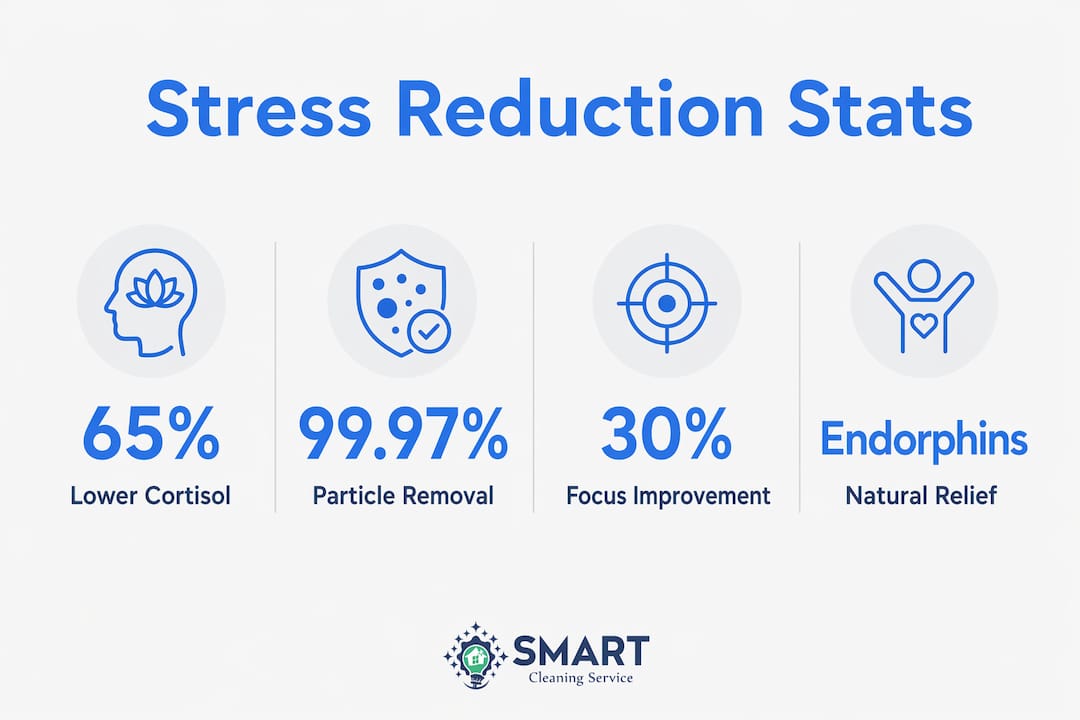
Professional cleaning breaks that cycle at the source. When a trained team removes the mess, your nervous system stops processing the visual noise. The result is a measurable drop in mental tension, not just a cleaner floor. Psychologists describe this as environmental regulation: your surroundings directly shape your internal state.
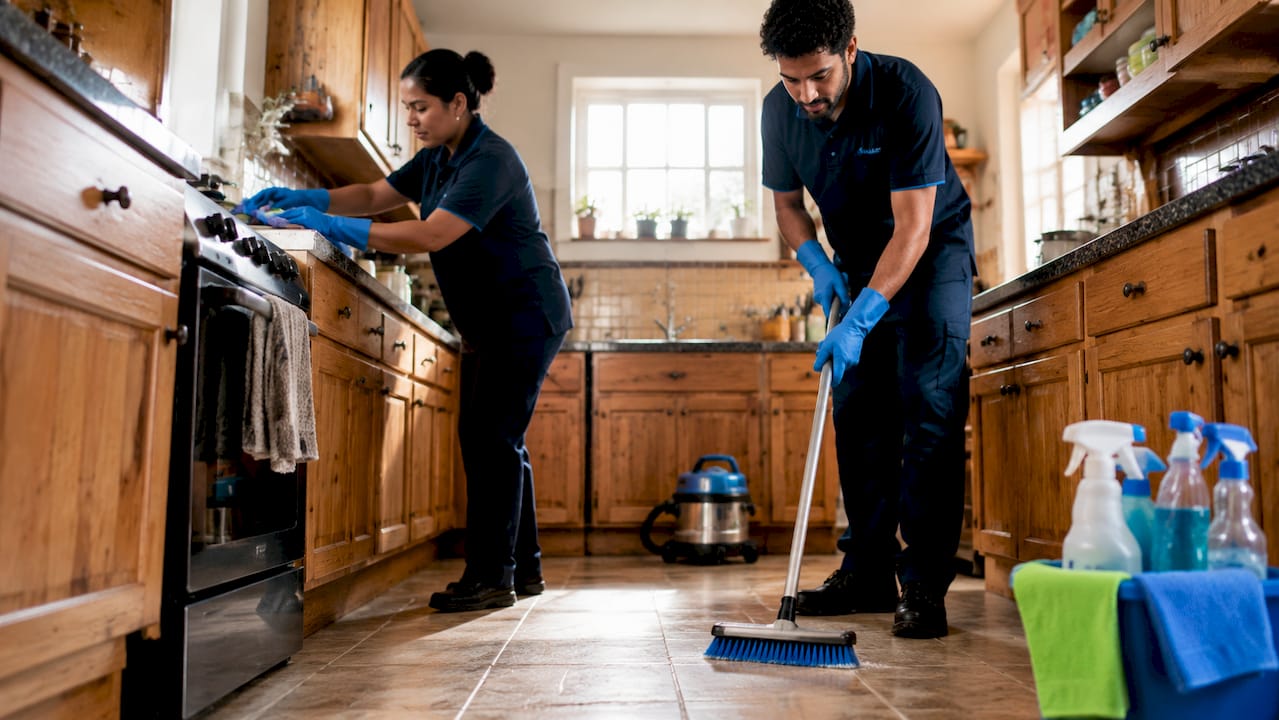
The physical act of cleaning also triggers endorphin release, which acts as a natural stress and pain reliever. That biochemical response explains why people often feel lighter after a cleaning session, even when they did not expect to. Professional cleaning amplifies this effect because the results are more thorough and longer lasting than what most people achieve on their own.
What psychological mechanisms connect cleaning to stress reduction?
Three distinct mechanisms explain why a clean space calms the mind.
- For routine home cleaning, discuss dusting, floor care, kitchen surfaces and bathroom tasks. Detailed or additional work should be agreed before the appointment.
- List the rooms and accessible surfaces you want cleaned before requesting an estimate. The work completed depends on the agreed priorities, property condition and time used.
- Neurological grounding. Repetitive cleaning tasks provide predictability that calms the nervous system. The rhythm of wiping a surface or vacuuming a room anchors attention in the present moment, which is the same mechanism behind mindfulness meditation.
Psychologists note that grounding through routine physical tasks is one of the most accessible anxiety management tools available. Cleaning fits that description precisely because it is concrete, achievable, and produces a visible result. That visible result matters. Completing a task, even a small one, generates a sense of control that directly counters the helplessness that anxiety creates.
For routine home cleaning, discuss dusting, floor care, kitchen surfaces and bathroom tasks. Detailed or additional work should be agreed before the appointment.
Routine home and office cleaning is separate from specialist remediation, clinical work or building maintenance. Describe the work before booking and consult an appropriate specialist when it falls outside ordinary cleaning.
Why professional cleaning delivers deeper stress relief than DIY
DIY cleaning addresses what you can see. Professional cleaning addresses what you cannot.
| Area | DIY cleaning | Professional cleaning |
|---|---|---|
| Surface dust and debris | Partially removed | Thoroughly removed |
| Routine surface cleaning | Minimally reduced | Check the product specifications and the agreed cleaning scope. |
| Baseboards, grout, and vents | Often skipped | Targeted in deep cleaning |
| Mental load of scheduling | Remains with you | Transferred to the service provider |
| Consistency of results | Variable | Standardized and reliable |
Routine home and office cleaning is separate from specialist remediation, clinical work or building maintenance. Describe the work before booking and consult an appropriate specialist when it falls outside ordinary cleaning.
Discuss the bathroom surfaces and fixtures that need attention. Tell the office about buildup, delicate finishes or maintenance issues before scheduling.
For routine home cleaning, discuss dusting, floor care, kitchen surfaces and bathroom tasks. Detailed or additional work should be agreed before the appointment. Related reading: busy families.
Practical ways cleaning services help manage anxiety and improve focus
Choose a visit frequency based on the property, use of the space and tasks you want addressed. Discuss scheduling and the cleaning scope with the office before booking.
- Set a recurring schedule. Weekly or biweekly visits create a reliable rhythm. You stop spending mental energy deciding when to clean and start trusting that it will happen. Predictable cleaning schedules reduce decision fatigue and lower background stress hormones.
- Prioritize the bedroom. The National Sleep Foundation links sleep quality improvement to clean, fresh sleeping environments. Ask your cleaning service to focus on the bedroom first if sleep is a concern.
- Address clutter before the team arrives. Decluttering before a professional visit compounds the benefit. You get the grounding effect of the physical task plus the deeper clean that follows.
- For kitchen work, identify the accessible counters, sink and appliance surfaces to be cleaned. Appliance interiors and other additional tasks should be discussed before the visit.
- Treat the service as self-care. Engaging a cleaning professional is an act of self-care that supports mental well-being, not a luxury or an indulgence. Reframing it this way removes guilt and reinforces the psychological benefit.
For people managing anxiety or depression, trauma-informed cleaning services offer a compassionate, non-judgmental approach. These services work at the client’s pace and treat emotional barriers to cleanliness with the same care as physical ones. The result is psychological progress alongside a cleaner home.
The cleaning plan should identify the rooms, tasks and priorities for your visit. Tell the office about access restrictions, delicate surfaces or areas that should be left alone.
How consistent professional cleaning builds long-term well-being
A single cleaning visit improves your mood. A consistent schedule changes your baseline.
List the rooms and accessible surfaces you want cleaned before requesting an estimate. The work completed depends on the agreed priorities, property condition and time used.
The predictability of a scheduled service also provides emotional comfort. Knowing that your home will be clean on Thursday removes a category of low-grade worry from your week. That is not a small thing. Chronic low-grade worry is one of the primary drivers of burnout and anxiety disorders.
“Cleaning routines foster emotional stability by reducing mental clutter and providing a sense of achieved goals.”
That insight from behavioral health research captures something important. The benefit is not just the clean room. It is the experience of having completed something, of having taken care of yourself and your space. That sense of accomplishment is a genuine psychological resource.
List the rooms and accessible surfaces you want cleaned before requesting an estimate. The work completed depends on the agreed priorities, property condition and time used. Related reading: why detailed cleaning matters.
Key takeaways
For routine home cleaning, discuss dusting, floor care, kitchen surfaces and bathroom tasks. Detailed or additional work should be agreed before the appointment.
| Point | Details |
|---|---|
| Routine surface cleaning | Visual disorder keeps the stress response active; removing it lowers stress hormones measurably. |
| Check the product specifications and the agreed cleaning scope. | Confirm the scope before booking |
| Mental load reduction matters | Outsourcing cleaning frees cognitive bandwidth for rest, relationships, and focus. |
| Consistency compounds the benefit | Recurring visits build predictable routines that lower baseline stress over weeks, not days. |
| Self-care framing reinforces the outcome | Routine surface cleaning |
Why I think most people underestimate what a clean home actually does
People talk about cleaning as a chore. That framing undersells what is actually happening when a space gets properly cleaned. It is immediate and physical. People breathe differently in a clean room. They sit differently. They make eye contact more easily.
Dusting can be included for accessible surfaces in the agreed rooms. Point out delicate items, shelves that should be left alone and any areas that need additional attention.
What I find most underappreciated is the mental load angle. The invisible weight of knowing your home needs cleaning, of tracking what has not been done, of feeling vaguely behind on something you cannot quite name. That weight is real and it accumulates. Handing it to a professional team does not just clean your home. It clears a tab in your brain that was running in the background all week.
My advice is to stop treating professional cleaning as something you do when things get bad enough. Schedule it before things get bad. Use it as a maintenance tool for your mental state, the same way you would use exercise or sleep. The benefits of hiring a cleaning service extend well beyond the visible results. The people who get the most out of it are the ones who treat it as a regular investment, not a one-time fix.
Smartcleaningwa: professional cleaning for a calmer home
Choose a visit frequency based on the property, use of the space and tasks you want addressed. Discuss scheduling and the cleaning scope with the office before booking. Related reading: Kirkland, Bellevue.
Choose a visit frequency based on the property, use of the space and tasks you want addressed. Discuss scheduling and the cleaning scope with the office before booking. Related reading: residential cleaning services, free cleaning estimate.
FAQ
Routine Cleaning Tasks and Priorities
For routine home cleaning, discuss dusting, floor care, kitchen surfaces and bathroom tasks. Detailed or additional work should be agreed before the appointment.
Routine Cleaning Tasks and Priorities
Weekly or biweekly visits produce the most consistent results. Recurring schedules reduce decision fatigue and build the predictable routines that lower baseline stress hormones over time.
What makes professional cleaning better than cleaning myself?
Routine home and office cleaning is separate from specialist remediation, clinical work or building maintenance. Describe the work before booking and consult an appropriate specialist when it falls outside ordinary cleaning.
Can a clean bedroom improve my sleep?
Dusting can be included for accessible surfaces in the agreed rooms. Point out delicate items, shelves that should be left alone and any areas that need additional attention.
What is trauma-informed cleaning?
Trauma-informed cleaning is a compassionate, non-judgmental service approach designed for people whose anxiety or depression has made it difficult to maintain their home. It prioritizes client comfort and pacing to support emotional healing alongside physical tidiness.
Recommended
- Smart Cleaning Service™ House Cleaning Seattle Kirkland Bellevue Redmond
- Smart Cleaning Service™ House Cleaning Seattle Kirkland Bellevue Redmond
- Smart Cleaning Service™ House Cleaning Seattle Kirkland Bellevue Redmond
- Smart Cleaning Service™ House Cleaning Seattle Kirkland Bellevue Redmond