
For a move-out visit, review your lease checklist and agree the cleaning priorities before scheduling. Cleaning is separate from the landlord’s inspection and deposit decision. Related reading: early tenant complaints.
What is tenant ready cleaning and how does it differ from regular cleaning?
Tenant ready cleaning, also called turnover cleaning, is a full reset of a rental unit between occupancies. Regular cleaning maintains a space that is already reasonably clean. Turnover cleaning addresses the accumulated grime, grease, and wear that builds up over an entire tenancy.
Vacant properties face higher standards because there is no furniture to conceal dust, stains, or damage. Every surface is exposed and subject to inspection by property managers and prospective tenants alike. That reality raises the bar significantly compared to a standard house clean.
The scope of a proper turnover clean includes:
- Kitchen: Inside the oven, refrigerator, and dishwasher; cabinet interiors and drawer tracks; range hood filters; grout lines on tile backsplashes
- Bathrooms: Grout scrubbing, toilet base and tank, exhaust fan covers, and inside medicine cabinets
- Living areas and bedrooms: Ceiling fans, baseboards, window tracks and sills, light switch plates, and door frames
- Floors: Deep scrubbing of tile grout, carpet spot treatment, and hard floor edge cleaning
A turnover clean requires 6 to 10 labor hours for a standard 3-bedroom home. That figure reflects the depth of work involved, not just the square footage. Distinguishing between a deep clean and a turnover clean helps property managers apply the right level of service based on their inspection goals.
Dusting can be included for accessible surfaces in the agreed rooms. Point out delicate items, shelves that should be left alone and any areas that need additional attention.

How does tenant ready cleaning fit into the make-ready process?
“Make-ready” is a broader term than turnover cleaning. Make-ready bundles cleaning, paint touch-ups, minor repairs, and lock rekeying into a single coordinated service, typically completed within 24 to 72 hours after a tenant vacates. Turnover cleaning is one component of make-ready, not a synonym for it.
Understanding this distinction matters operationally. A property owner who orders only a cleaning service may still have a unit with a broken cabinet hinge, a scuffed wall, or an unchanged lock. Those gaps create tenant complaints and potential liability.
The table below clarifies the scope of each service level:
| Service type | Scope | Typical timeline |
|---|---|---|
| Cleaning only | Sanitation, grime removal, surface cleaning | 1 day |
| Make-ready | Cleaning plus paint touch-ups, minor repairs, lock rekey | 24 to 72 hours |
| Full turnover | Confirm applicable requirements | 2 to 5 days |
Make-ready also covers safety measures such as smoke alarm checks and minor maintenance tasks that cleaning alone does not address. Property owners managing multiple units benefit most from a full turnover approach because it reduces the risk of missing a compliance item. For end-of-lease situations, end of lease cleaning standards typically align with the cleaning-only tier but must meet the benchmarks set in the original entry condition report.
Pro Tip: Request a written scope of work from any cleaning or make-ready vendor before the job starts. Verbal agreements lead to disputes over what was and was not included.
What steps should property managers follow for effective turnover cleaning?
The sequence of tasks matters as much as the tasks themselves. Property managers who get the order wrong waste time and money.
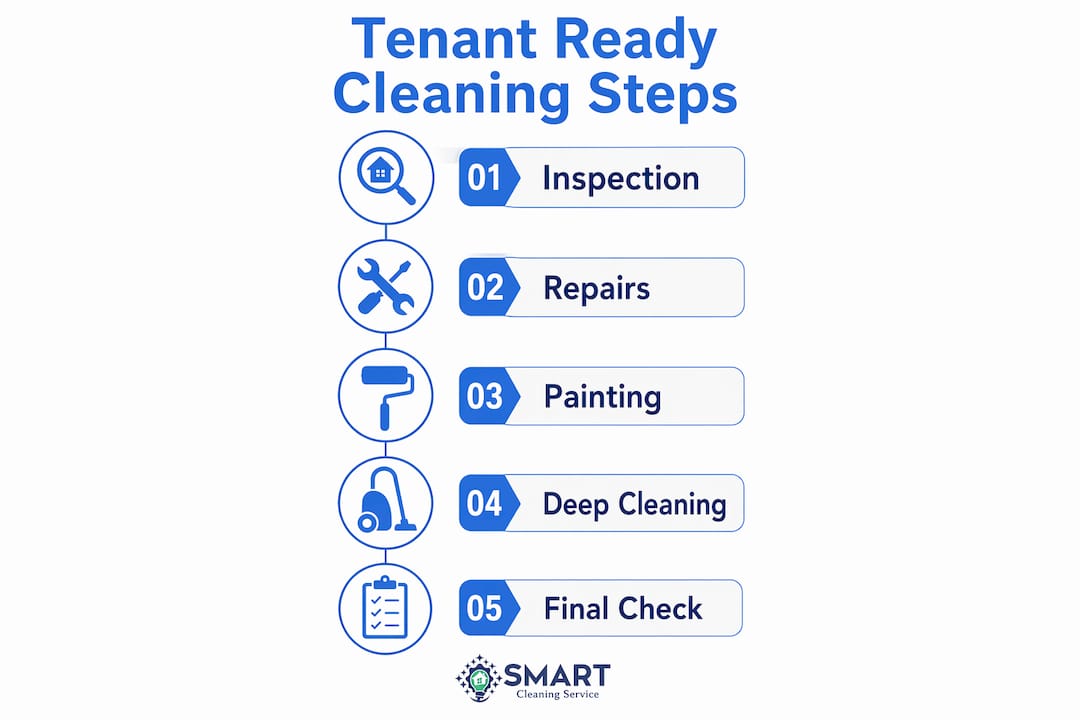
Conduct the move-out inspection first. Cleaning before the inspection removes physical evidence needed to support deposit deductions. Walk the unit with the outgoing tenant, document every defect with photos, and sign the condition report before any cleaning begins.
Complete repairs and painting before the final clean. Scheduling repairs before cleaning avoids re-cleaning after post-repair dust and paint splatter settle on surfaces. Painting a wall after the floors are cleaned means the floors need cleaning again. This is one of the most common and costly mistakes in rental turnovers.
Schedule the tenant ready clean as the final step. Once repairs and painting are done, the cleaning crew can work through the full checklist without interruption. This produces a cleaner result and a faster turnaround.
Verify quality against the move-in checklist. Use a move-in cleaning checklist to confirm every item on the scope was completed. Compare the cleaned unit against the entry condition report to confirm the property meets or exceeds the standard documented at the start of the previous tenancy.
Select cleaning professionals with rental turnover experience. General house cleaners and turnover specialists are not the same. Turnover specialists know which areas inspectors scrutinize, how to document their work, and how to meet the higher standards that vacant units require.
Pro Tip: Build a 48-hour buffer between the cleaning completion and the new tenant’s move-in date. That window lets you address any items the cleaning crew missed without delaying occupancy.
What legal and operational considerations apply to tenant cleaning responsibilities?
Tenant ready cleaning sits at the intersection of property law and operational management. Getting it wrong creates financial exposure for landlords.
Routine home and office cleaning is separate from specialist remediation, clinical work or building maintenance. Describe the work before booking and consult an appropriate specialist when it falls outside ordinary cleaning.
Key legal and operational points for property owners:
- Habitability standards require a clean property at move-in. Most jurisdictions hold landlords responsible for delivering a unit that is sanitary and safe. Failing to meet this standard gives tenants grounds to withhold rent or terminate the lease.
- Exit condition reports must reference the entry report. Deposit deductions for cleaning are defensible only when the exit condition is measurably worse than what was documented at entry.
- Common dispute areas include oven interiors, carpet stains, and bathroom grout. These are the surfaces most likely to generate disagreement because they degrade gradually and are easy to overlook during routine cleaning.
- Professional cleaning receipts strengthen deposit claims. A dated invoice from a licensed cleaning company provides objective evidence that the landlord met their obligation to prepare the unit.
- Requirements vary with the property, activity and circumstances. Review the applicable requirements with a qualified adviser; a cleaning appointment does not certify legal or regulatory compliance.
Requirements vary with the property, activity and circumstances. Review the applicable requirements with a qualified adviser; a cleaning appointment does not certify legal or regulatory compliance. Related reading: rental property cleaning.
Key Takeaways
Tenant ready cleaning is the final, non-negotiable step in every rental turnover, and its legal and operational value depends entirely on doing it in the right sequence.
| Point | Details |
|---|---|
| Turnover cleaning scope | Covers appliance interiors, grout, window tracks, baseboards, and all exposed surfaces in a vacant unit. |
| Sequence matters | Confirm the scope before booking |
| Make-ready vs. cleaning | Make-ready includes repairs, paint touch-ups, and lock rekeying; cleaning alone does not cover these items. |
| Legal protection | Confirm documents and service details |
| Professional advantage | Turnover specialists meet higher inspection standards and provide dated receipts that support deposit claims. |
Why the order of operations is the part most landlords get wrong
Most landlords understand that a rental needs to be clean before a new tenant moves in. What they underestimate is how much the sequence of that process affects both cost and legal outcome.
The result is a unit that gets cleaned three times and still fails the move-in inspection. Every step out of order adds cost and delays occupancy.
The inspection must come first. Not because it is procedurally tidy, but because it is the only moment when the property’s condition is legally preserved. Once a cleaning crew walks through, that evidence is gone. Deposit disputes that could have been resolved with a photo and a condition report become expensive arguments.
Repairs and painting must come second. Dust from drywall patching and overspray from touch-up painting will undo a professional clean in under an hour. Cleaning last is not a preference. It is the only sequence that produces a result worth paying for.
The other mistake I see regularly is treating tenant ready cleaning as equivalent to a standard deep clean. They are related but not the same. A deep cleaning service addresses a lived-in home. A turnover clean addresses a vacant unit held to inspection-grade standards, where every surface is visible and every shortcut shows up on a checklist. Hiring a general house cleaner for a turnover job is like hiring a general contractor to do finish carpentry. The skill set overlaps, but the precision required is different.
For a move-out visit, review your lease checklist and agree the cleaning priorities before scheduling. Cleaning is separate from the landlord’s inspection and deposit decision.
Smartcleaningwa’s tenant ready cleaning for Seattle-area property owners
Property owners in the Greater Seattle Area need a cleaning partner who understands rental turnover standards, not just general house cleaning.
The work for your visit should be agreed in the quote. Our team focuses on cleaning accessible surfaces, kitchens, bathrooms and floors, with additional priorities discussed before the appointment.
FAQ
What is the difference between tenant ready cleaning and a deep clean?
Tenant ready cleaning, also called turnover cleaning, is performed on a vacant unit and must meet inspection-grade standards across all exposed surfaces. A deep clean is typically performed in an occupied home and does not carry the same legal or inspection requirements.
How long does a tenant ready clean take?
A standard 3-bedroom rental requires 6 to 10 labor hours for a proper turnover clean. Larger units or properties with significant buildup take longer.
Should cleaning happen before or after the move-out inspection?
Cleaning must happen after the move-out inspection. Cleaning before the inspection removes physical evidence of tenant damage, which weakens any deposit deduction claim.
Can a landlord charge a tenant for cleaning costs?
Routine home and office cleaning is separate from specialist remediation, clinical work or building maintenance. Describe the work before booking and consult an appropriate specialist when it falls outside ordinary cleaning.
What areas do inspectors focus on during a move-in inspection?
Inspectors and incoming tenants most closely examine oven interiors, refrigerator shelves, bathroom grout, cabinet interiors, window tracks, and baseboards. These are the areas most likely to show neglect from the previous tenancy. For home visits, we send you a message when we’re on our way and another when the cleaning is finished.
Recommended
- Short Term Rental Cleaning Guide for Hosts in 2026
- Smart Cleaning Service™ House Cleaning Seattle Kirkland Bellevue Redmond
- Smart Cleaning Service™ House Cleaning Seattle Kirkland Bellevue Redmond
- Why Automate Property Cleaning: A Manager’s Guide