
A cleaning schedule is a structured plan that assigns specific tasks to set days and times, turning home maintenance from a guessing game into a predictable routine. The role of scheduling in cleaning goes far beyond keeping a tidy house. It determines how consistently hygiene is maintained, how much time your family spends on chores, and how much mental energy the whole process costs you. Research confirms that regular short sessions outperform sporadic deep cleans in both hygiene outcomes and time efficiency. A well-built schedule is the single most effective tool a household can adopt.
How does scheduling improve cleaning routine effectiveness?
Choose a visit frequency based on the property, use of the space and tasks you want addressed. Discuss scheduling and the cleaning scope with the office before booking.
Consistency is the other major gain. A master sanitation schedule clarifies which tasks get done, how often, and who is responsible. Without that clarity, tasks get skipped not out of laziness but because no one knows whose job it is. Accountability built into a schedule closes that gap.
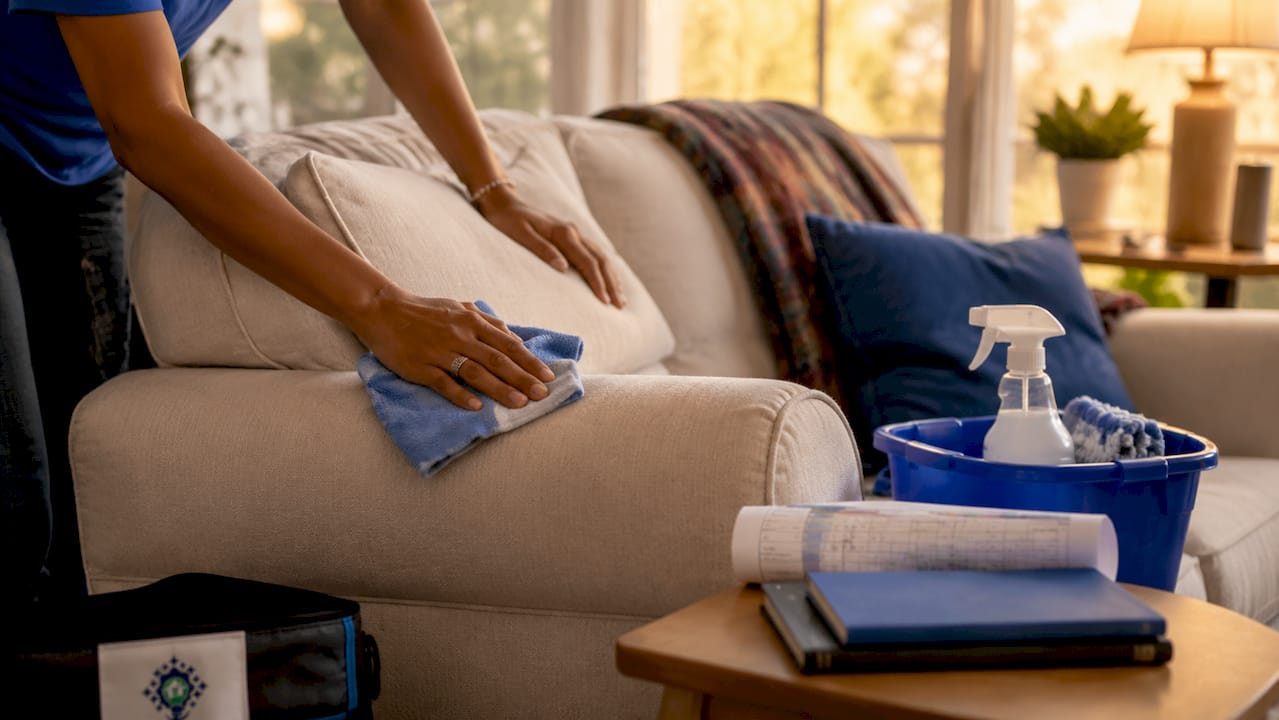
Choose a visit frequency based on the property, use of the space and tasks you want addressed. Discuss scheduling and the cleaning scope with the office before booking.
Here is what a consistent cleaning schedule delivers for your household:
- For kitchen work, identify the accessible counters, sink and appliance surfaces to be cleaned. Appliance interiors and other additional tasks should be discussed before the visit.
- For routine home cleaning, discuss dusting, floor care, kitchen surfaces and bathroom tasks. Detailed or additional work should be agreed before the appointment.
- Accountability. Written schedules make it clear who cleans what and when.
- Lower cost. Households that clean regularly on their own save roughly $1,200 annually compared to relying entirely on professional services.
- Predictability. Your home stays at a baseline level of clean, so no single session ever feels overwhelming.
What are the best models for scheduling cleaning tasks at home?
Not all scheduling approaches work equally well. The two main models are fixed-interval scheduling and condition-based scheduling. Fixed-interval means you clean every room on the same cycle regardless of use. Condition-based scheduling means you prioritize cleaning frequency based on actual usage patterns, giving more attention to high-traffic zones and less to rarely used spaces.
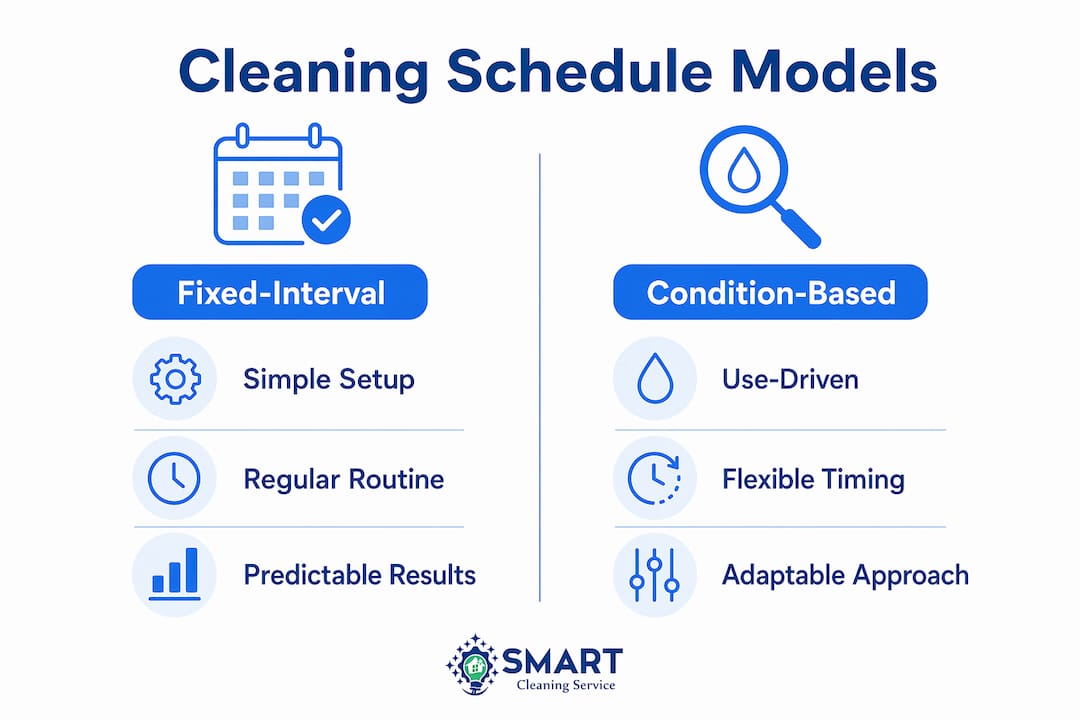
Condition-based scheduling is the stronger choice for most families. A guest bathroom used twice a week does not need the same attention as a kitchen used three times a day. Treating them identically wastes time in one place and risks neglect in the other.
The most practical structure groups tasks by frequency:
- Daily tasks. Wipe kitchen counters, wash dishes, and do a quick bathroom wipe-down. These take 10 to 15 minutes and prevent buildup.
- Weekly tasks. Vacuum floors, mop hard surfaces, scrub toilets and sinks, and change bed linens.
- Monthly tasks. Clean appliance interiors, wipe baseboards, dust ceiling fans, and wash windows.
- Seasonal tasks. Deep clean carpets, clear out closets, and address areas like behind large appliances.
Choose a visit frequency based on the property, use of the space and tasks you want addressed. Discuss scheduling and the cleaning scope with the office before booking.
| Scheduling model | Best for | Main advantage | Main risk |
|---|---|---|---|
| Fixed-interval | Simple households, low variability | Easy to follow | Over-cleans low-use areas |
| Condition-based | Families with varied room usage | Efficient use of time | Requires more initial planning |
| Series/recurring | Busy families, recurring routines | Reduces rebuild effort | Needs exception management |
Routine Cleaning Tasks and Priorities
Choose a visit frequency based on the property, use of the space and tasks you want addressed. Discuss scheduling and the cleaning scope with the office before booking.
Panic-cleaning is the clearest sign that a household lacks a schedule. You know the feeling: guests are arriving in two hours and suddenly every surface needs attention at once. A schedule prevents that scenario by keeping the home at a consistent baseline. There is no crisis because there is no backlog.
A home cleaning visit can include kitchens, bathrooms, accessible surfaces and floors. Share the areas you want addressed and confirm the tasks in your quote.
Routines also build momentum. When cleaning happens at the same time each week, it becomes habit rather than a decision. Families that treat cleaning as a fixed appointment, the same way they treat school pickup or a weekly grocery run, report far less friction around getting it done. The schedule does the motivating.
Can sustainable cleaning and scheduled routines work together?
We use one standard line of professional cleaning products. We don’t supply a separate eco-friendly or pet-friendly product line. If you want a specific product used, please supply it and discuss it with the office before the visit. The team may decline products that aren’t suitable for the task or surface.
We use one standard line of professional cleaning products. We don’t supply a separate eco-friendly or pet-friendly product line. If you want a specific product used, please supply it and discuss it with the office before the visit. The team may decline products that aren’t suitable for the task or surface.
Here are practical ways to combine sustainability with your cleaning timetable:
- Use concentrated, plant-based cleaners to reduce plastic waste and chemical exposure.
- Schedule bathroom and kitchen cleaning on the same day to consolidate product use.
- Microfiber cloths replace paper towels and perform better on most surfaces when used on a regular cycle.
- Assign a monthly slot to refill reusable spray bottles rather than buying new ones.
- Rotate cleaning focus by zone each week so no area goes too long without attention.
Choose a visit frequency based on the property, use of the space and tasks you want addressed. Discuss scheduling and the cleaning scope with the office before booking. Related reading: role of cleaning frequency.
What pitfalls should you avoid when building a cleaning schedule?
The most common mistake is underestimating transition time. Scheduling experts identify transition time as the biggest failure point in any cleaning plan. Moving between rooms, gathering supplies, and switching tasks all take time. Build in 10 to 15 minute buffers between major tasks so the schedule stays realistic.
Dusting can be included for accessible surfaces in the agreed rooms. Point out delicate items, shelves that should be left alone and any areas that need additional attention.
Flexibility matters too. Life happens: travel, illness, and busy weeks will disrupt any schedule. Build in a simple exception rule. If you miss a session, do not try to double up the next time. Just resume the normal schedule and accept that one missed cycle does not undo your system.
Pro Tip: Review your schedule every three months. Household routines change with seasons, school schedules, and work patterns. A schedule that worked in september may need adjustment by january. Treat it as a living document, not a permanent rule.
List the rooms and accessible surfaces you want cleaned before requesting an estimate. The work completed depends on the agreed priorities, property condition and time used. Related reading: time-saving cleaning tips.
Key Takeaways
A consistent cleaning schedule is the single most effective tool for maintaining home hygiene, saving time, and reducing the mental burden of household maintenance.
| Point | Details |
|---|---|
| Frequency beats intensity | Short, regular sessions reduce infection risk and prevent grime buildup better than occasional deep cleans. |
| Condition-based scheduling wins | Prioritize high-traffic areas more often; do not clean every room on the same fixed cycle. |
| Schedules cut cognitive load | Confirm the scope before booking |
| Sustainability fits naturally | Products discussed before service |
| Buffer time is non-negotiable | Build 10 to 15 minute transitions between tasks to keep your schedule realistic and sustainable. |
Why I think most families underestimate what a schedule actually does
Most people treat a cleaning schedule as a chore list. That framing undersells it completely. What a schedule actually does is remove cleaning from the category of things you have to decide about. And that is where the real value lives.
Nobody agreed on what “clean enough” meant or whose turn it was. A written schedule with assigned tasks and set days resolved that conflict faster than any conversation did. The schedule became the authority, not any one person.
That sounds counterintuitive, but it tracks. When you clean on a regular cycle, nothing ever gets bad enough to require a major effort. A 15-minute kitchen wipe-down on tuesday prevents a 90-minute scrub on saturday. The math is obvious once you see it.
If you are a busy family in the Seattle area, the professional cleaning workflow used by experienced cleaners is worth studying even if you plan to do most of the work yourself. The principles transfer directly to home use.
Smartcleaningwa makes consistent home cleaning simple
Smartcleaningwa serves families across the Greater Seattle Area with recurring house cleaning, deep cleaning, move-in and move-out cleaning, and Airbnb turnover services. Every service is built around a reliable schedule so your home stays consistently clean without you having to manage the details.
Smart Cleaning Service offers recurring home cleaning and deep cleaning in Seattle. We are licensed and insured. Share your household’s priorities and preferred frequency when requesting an estimate. For home visits, we send you a message when we’re on our way and another when the cleaning is finished. Related reading: deep clean in Seattle, get a free estimate.
FAQ
What is the role of scheduling in cleaning?
Scheduling in cleaning is the practice of assigning specific tasks to set days and times so cleaning happens consistently rather than reactively. It improves hygiene, saves time, and removes the daily mental burden of deciding what to clean.
How often should different areas of a home be cleaned?
Kitchens and bathrooms need attention daily or several times a week due to high use. Low-traffic rooms like guest bedrooms or formal dining rooms can be cleaned monthly without hygiene risk.
Does a cleaning schedule actually save time?
List the rooms and accessible surfaces you want cleaned before requesting an estimate. The work completed depends on the agreed priorities, property condition and time used.
What is condition-based cleaning scheduling?
Condition-based scheduling means adjusting cleaning frequency based on how much a space is actually used, rather than applying the same cycle to every room. It directs more time to high-traffic areas and less to rarely used ones.
Cleaning Products and Preferences
We use one standard line of professional cleaning products. We don’t supply a separate eco-friendly or pet-friendly product line. If you want a specific product used, please supply it and discuss it with the office before the visit. The team may decline products that aren’t suitable for the task or surface.
Recommended
- Smart Cleaning Service™ House Cleaning Seattle Kirkland Bellevue Redmond
- Smart Cleaning Service™ House Cleaning Seattle Kirkland Bellevue Redmond
- Smart Cleaning Service™ House Cleaning Seattle Kirkland Bellevue Redmond
- Smart Cleaning Service™ House Cleaning Seattle Kirkland Bellevue Redmond