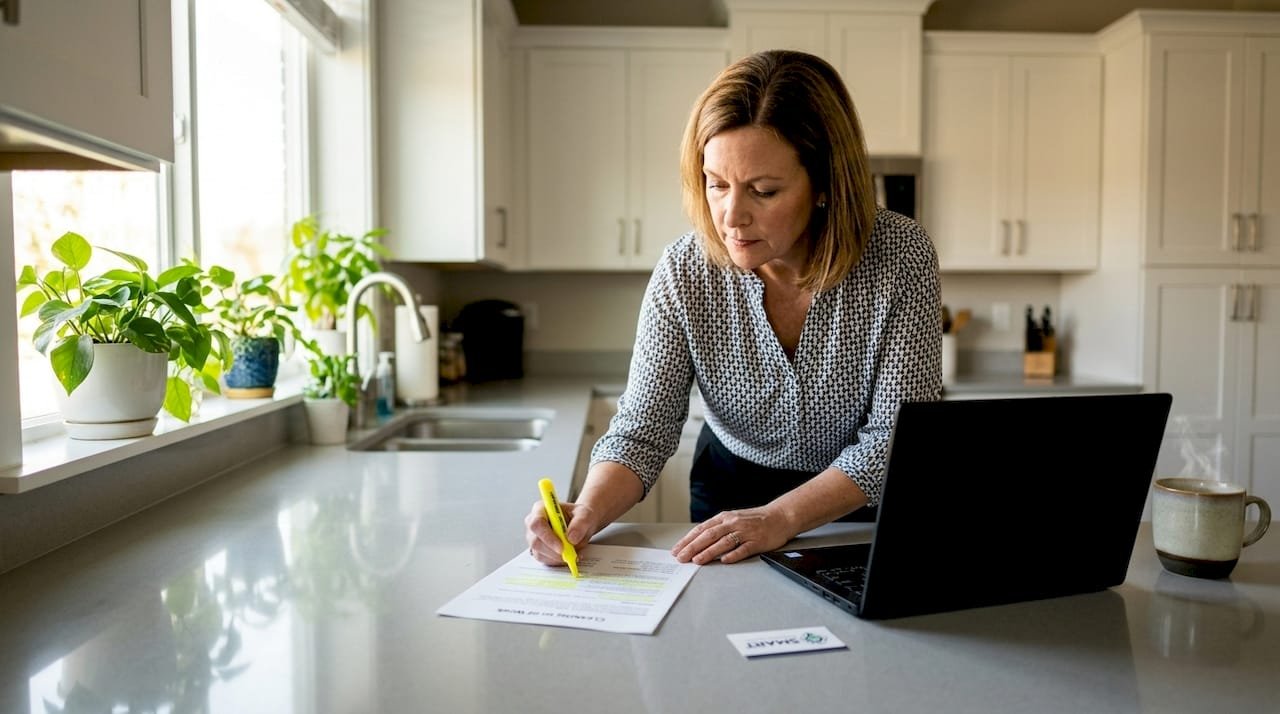
Dusting can be included for accessible surfaces in the agreed rooms. Point out delicate items, shelves that should be left alone and any areas that need additional attention.
What is a cleaning scope of work, and what does it include?
A cleaning scope of work is the operational backbone of any professional cleaning contract. Without it, both parties are guessing about what “clean” means. Six core sections make a scope complete and enforceable: property details, task lists by area, cleaning frequencies, product and equipment requirements, exclusions, and sign-off conditions.

Property and site details
The scope starts with a full description of the property. This includes total square footage, number of rooms or zones, floor types, and any areas with restricted access. A property map or annotated floor plan attached to the scope removes all ambiguity about which spaces are covered.
Task lists by area
Generic task lists fail. A strong cleaning service scope breaks tasks down by specific zone or room. The kitchen gets its own list. The lobby gets its own list. Each restroom gets its own list. This zone-by-zone structure is what improves crew accountability and makes it easy to verify that work was completed.
Frequency matrix
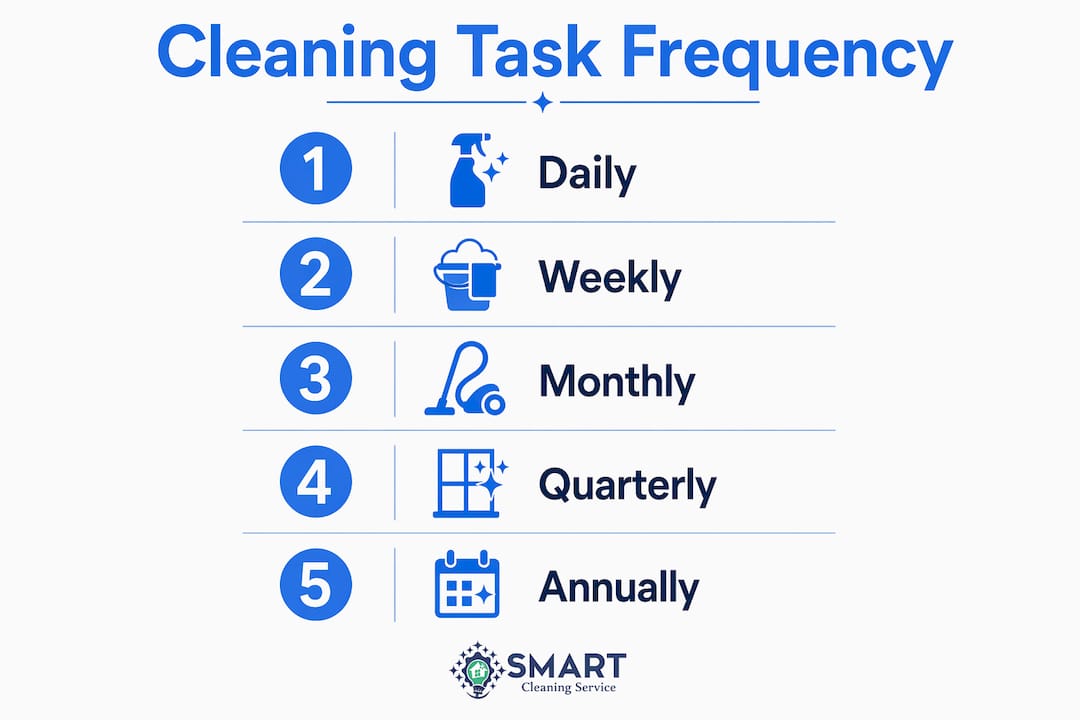
Every task needs an assigned frequency. Industry standards require a frequency matrix that breaks tasks into daily, weekly, and monthly cycles. Daily tasks cover high-touch surfaces and trash removal. Monthly tasks cover deep maintenance like vent cleaning and baseboard scrubbing. Without this matrix, cleaners default to whatever feels right, and that is rarely what the client expects.
Approved products and quality standards
Discuss floor vacuuming and mopping as part of the visit. Tell the office about the floor material and any manufacturer-specific care instructions.
Exclusions
Requirements vary with the property, activity and circumstances. Review the applicable requirements with a qualified adviser; a cleaning appointment does not certify legal or regulatory compliance.
Sign-off conditions
The scope closes with acceptance conditions. Both parties sign to confirm they understand and agree to the terms. This signature transforms the document from a checklist into a binding operational agreement.
How does a cleaning scope of work prevent disputes?
Requirements vary with the property, activity and circumstances. Review the applicable requirements with a qualified adviser; a cleaning appointment does not certify legal or regulatory compliance.
Routine home and office cleaning is separate from specialist remediation, clinical work or building maintenance. Describe the work before booking and consult an appropriate specialist when it falls outside ordinary cleaning.
Verification methods are the second line of defense. Verification tools like digital logging and supervisor inspections make the scope enforceable rather than decorative. Photo evidence attached to a completed task log gives both parties an objective record. Scopes that lack enforcement mechanisms result in cleaners skipping tasks and clients losing confidence in the service.
Identify the interior glass or mirrors you want cleaned and confirm which tasks are included. Access and surface condition should be reviewed before the appointment.
The role of communication between client and provider is also worth formalizing in the scope. Include emergency contact numbers, escalation paths, and response time expectations. A scope that covers communication protocols gives both sides a clear process when something goes wrong.
What are practical examples of cleaning tasks by frequency?
Frequency is the variable that most property managers underestimate. The same space needs different tasks at different intervals, and mixing them up either wastes money or lets the facility deteriorate. Cleaning frequency directly affects both quality and cost, and a well-built scope reflects that relationship.
Here is how tasks typically break down across a commercial or residential property:
- Discuss floor vacuuming and mopping as part of the visit. Tell the office about the floor material and any manufacturer-specific care instructions.
- Weekly tasks: Vacuuming carpets and upholstered furniture, mopping all hard floors, cleaning interior glass and mirrors, dusting horizontal surfaces, and scrubbing restroom grout.
- Monthly tasks: Deep cleaning kitchen appliances, washing windows, cleaning HVAC vents and air returns, scrubbing baseboards, and descaling faucets and showerheads.
The table below illustrates how the same space, a commercial restroom, carries tasks at three different frequencies:
| Task | Frequency | Standard |
|---|---|---|
| Routine surface cleaning | Daily | No visible soil, no odor |
| Scrub grout and tile walls | Weekly | No discoloration, no mildew |
| Descale faucets and drains | Monthly | No mineral buildup visible |
| Deep clean exhaust vents | Monthly | Vents free of dust accumulation |
This structure also applies to residential cleaning tasks in Airbnb turnovers and recurring home services. The frequency matrix is what separates a professional cleaning agreement from a casual handshake deal.
Understanding residential cleaning standards helps property managers set realistic expectations for both frequency and quality across different property types.
How to use a cleaning scope of work as a living document
A cleaning scope of work is not a static contract appendix. It must be updated as facilities change to reflect new areas, new products, or new standards. Treating it as a living document is what separates high-performing cleaning programs from ones that drift into mediocrity.
Here is how to keep the scope current and operational:
- Schedule quarterly reviews. Walk the property with the cleaning supervisor every three months. Note any changes to layout, occupancy, or use that affect cleaning requirements.
- Update products and equipment. If a new floor type is installed or a product is discontinued, the scope must reflect the change before the next service visit.
- Use zone classification for crew clarity. Leading firms use a color-coded risk matrix to guide cleaning intensity by zone. High-risk zones like restrooms and kitchens get more frequent and more rigorous attention than low-risk zones like storage rooms.
- Train staff to consult the scope. The scope is the crew’s operating manual. Supervisors should reference it during onboarding and during every quality inspection.
- Integrate with quality assurance. Link the scope to your inspection checklist. Every line item on the scope should have a corresponding verification step.
Pro Tip: Attach a photo reference guide to the scope showing what each task looks like when completed correctly. Linking cleaning standards to visual proof transforms the document from a wish list into an enforceable operational tool.
Industry leaders rank the cleaning scope as more critical than the service level agreement itself. The SLA sets the relationship. The scope runs the operation. Property managers who understand this distinction get far better results from their cleaning contracts.
Key Takeaways
A cleaning scope of work is the single most important document in any cleaning contract, and its quality determines whether the service succeeds or fails.
| Point | Details |
|---|---|
| Define tasks by zone | Break task lists down by specific room or area, not building-wide descriptions. |
| Use a frequency matrix | Assign every task a daily, weekly, or monthly cycle to prevent gaps and disputes. |
| Include an exclusions section | List services not covered to protect both parties from scope creep and billing conflicts. |
| Build in verification methods | Digital logs, photo evidence, and supervisor inspections make the scope enforceable. |
| Treat it as a living document | Review and update the scope quarterly to reflect facility changes and new standards. |
Why most cleaning scopes fail before the first month is over
The scope of work gets drafted once, signed, filed, and never opened again. That is the moment it stops working.
The most common pitfall is defining tasks in broad strokes. “Clean the office” is not a task. It is a wish. When a cleaner skips the baseboards or misses the interior of the microwave, the client has no written standard to point to. The cleaner is not wrong. The scope is.
The second pitfall is treating exclusions as optional. Property managers often feel awkward listing what the cleaning crew will not do. But that list is what protects everyone. Without it, the scope expands informally every week until the cleaning provider is doing work they never priced and the client expects it for free.
What actually works is specificity paired with accountability. A scope that defines “mopped floor” as no visible debris, no standing water, and no mop lines after drying gives the crew a target and the client a standard. Add a photo log and a 48-hour dispute window, and you have a document that runs itself.
My recommendation for any property manager drafting a scope: write it as if you will not be there to explain it. Every task, every standard, every exclusion should be clear enough for a new crew member to follow on day one without asking a single question.
How Smartcleaningwa delivers scope clarity for your property
Property managers and business owners in the Greater Seattle Area deserve a cleaning partner who shows up with a clear plan, not a vague promise. Smartcleaningwa builds every engagement around a detailed cleaning service scope that specifies tasks by zone, frequencies, approved products, and quality standards before the first visit.
The work for your visit should be agreed in the quote. Our team focuses on cleaning accessible surfaces, kitchens, bathrooms and floors, with additional priorities discussed before the appointment.
FAQ
What is a cleaning scope of work?
A cleaning scope of work is a formal written document that lists every cleaning task, the location where it applies, how often it is performed, and the quality standard it must meet. It serves as the operational backbone of any professional cleaning contract.
What should be included in a cleaning scope of work?
A complete scope includes property details, zone-by-zone task lists, a frequency matrix, approved products and equipment, an exclusions section, and sign-off conditions for both parties.
How does a cleaning scope prevent billing disputes?
An exclusions register lists services not covered by the contract, which stops scope creep before it starts. A dispute resolution timeline, typically 24 to 48 hours for reporting deficiencies, gives both parties a clear process for resolving issues without prolonged conflict.
How often should a cleaning scope of work be updated?
A cleaning scope should be reviewed at least quarterly and updated whenever the facility changes layout, occupancy, or use. Treating it as a living document keeps the cleaning program aligned with current conditions.
Is a cleaning scope of work the same as a service level agreement?
No. A service level agreement defines the relationship and performance expectations between client and provider. A cleaning scope of work defines the specific tasks, frequencies, and standards that make those expectations operational. Both documents work together, but the scope runs the day-to-day service. For home visits, we send you a message when we’re on our way and another when the cleaning is finished.
Recommended
- Why Automate Property Cleaning: A Manager’s Guide
- Smart Cleaning Service™ House Cleaning Seattle Kirkland Bellevue Redmond
- Smart Cleaning Service™ House Cleaning Seattle Kirkland Bellevue Redmond
- Smart Cleaning Service™ House Cleaning Seattle Kirkland Bellevue Redmond