
Dusting can be included for accessible surfaces in the agreed rooms. Point out delicate items, shelves that should be left alone and any areas that need additional attention.
1. What are the best dusting tools and materials for home surfaces?
The right tool determines whether you capture dust or just move it. Microfiber cloths attract and hold dust through static charge, while paper towels and feather dusters simply scatter particles back into the air. That difference matters most for allergy sufferers and anyone with pets.
Here is what belongs in your cleaning kit:
- Dry microfiber cloths: Use these on hard surfaces like shelves, counters, and furniture. Microfiber traps dust in its fibers rather than spreading it, but rotate to a fresh side every two to three surfaces to avoid smearing.
- Microfiber duster with an extendable handle: Reaches ceiling fans, crown molding, and the tops of cabinets without a ladder.
- Routine home and office cleaning is separate from specialist remediation, clinical work or building maintenance. Describe the work before booking and consult an appropriate specialist when it falls outside ordinary cleaning.
- Vacuum round brush attachment: Cleans vents and registers efficiently without pushing dust into the ductwork.
- Lint roller: Captures dust on fabric lampshades, upholstered headboards, and throw pillows where a cloth cannot grip.
- Damp microfiber cloth: Use on sticky or oily residue, such as kitchen cabinet tops or greasy range hood surfaces.
- Soft paintbrush or electronics brush: Safe for keyboards, speaker grilles, and intricate decor where a cloth would snag.
Pro Tip: Avoid spray polish directly on wood furniture. Spray the microfiber cloth instead, then wipe. This prevents product buildup that actually attracts more dust over time.
2. How to dust your home systematically to avoid redundant cleaning
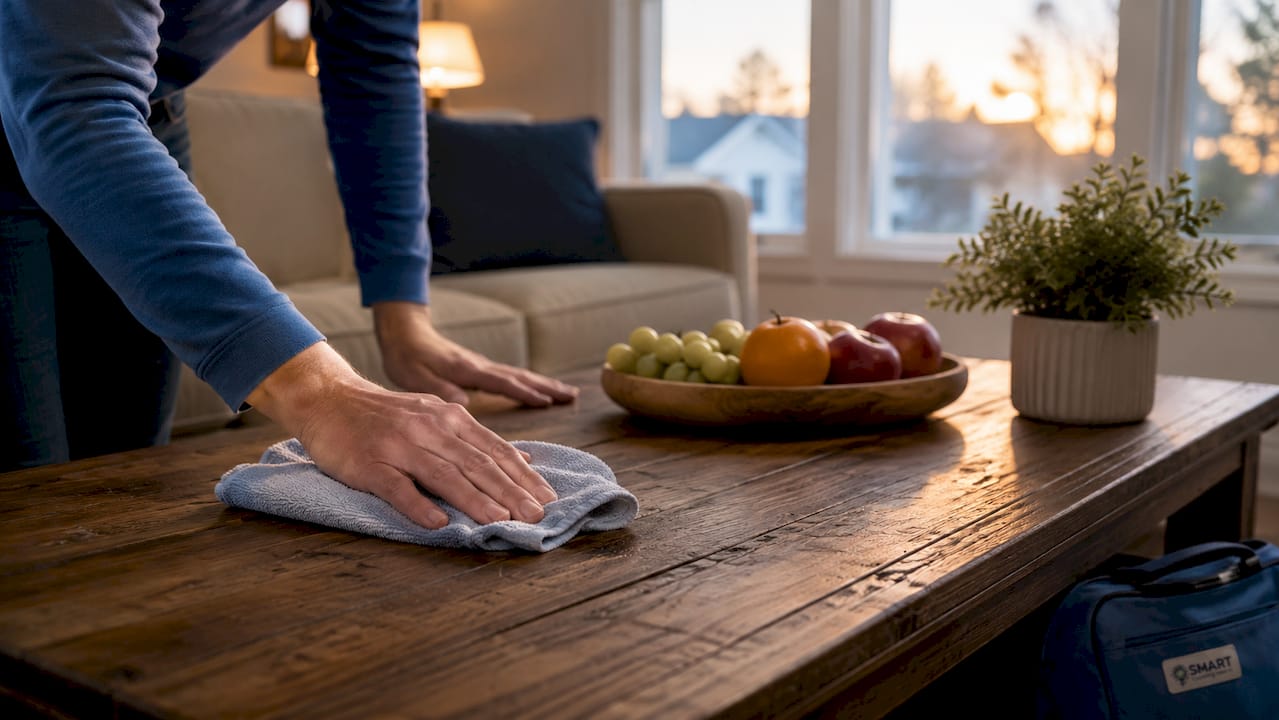
Cleaning order is more important than speed. Starting from the top and working down prevents dust from falling onto surfaces you have already cleaned. Skip this rule and you will wipe the same shelf twice.
List the rooms and accessible surfaces you want cleaned before requesting an estimate. The work completed depends on the agreed priorities, property condition and time used.
- Ceiling fans and light fixtures. Run the fan on low to push dust toward the blades, then wipe each blade with a damp microfiber cloth. Dry fans spread dust into the room.
- Crown molding and high shelves. Use an extendable duster. Work across the room from left to right so you do not miss sections.
- Wall art, mirrors, and upper cabinets. Wipe frames and glass with a dry microfiber cloth, then follow with a glass-specific cloth for streak-free results.
- Furniture surfaces and mid-height shelves. Use slow, deliberate strokes. Rushing causes the cloth to lift and drop dust rather than trap it.
- Electronics and screens. Use a soft brush or dry microfiber. Never spray liquid directly onto screens or keyboards.
- Baseboards and door frames. These collect more dust than most homeowners expect. A damp cloth picks up the grime that a dry cloth leaves behind.
- Floors last. Vacuum before mopping. Any dust that fell during the earlier steps gets captured here.
Pro Tip: Turn your HVAC system off before you start dusting. Running the system while you clean pulls disturbed dust through the vents and redistributes it throughout the house.
3. How often should you dust different areas and surfaces?
A weekly dusting schedule covers most common surfaces, but frequency depends on the surface type, room traffic, and whether you have pets or allergy sufferers in the home. Homes with pets or allergy sufferers need more frequent attention, particularly on upholstery and vents.
| Surface or area | Recommended frequency |
|---|---|
| Furniture, shelves, and counters | Weekly |
| Ceiling fans and light fixtures | Every 2 weeks |
| Baseboards, door frames, and walls | Monthly |
| Vents, registers, and blinds | Monthly |
| Upholstered furniture and fabric items | Monthly (vacuum weekly if pets present) |
| HVAC filter replacement | Every 2 to 3 months (every 2 months for pet owners or allergy sufferers) |
| Hard-to-reach areas (tops of cabinets, behind appliances) | Every 3 months or seasonally |
For kitchen work, identify the accessible counters, sink and appliance surfaces to be cleaned. Appliance interiors and other additional tasks should be discussed before the visit. Related reading: Deep cleaning, seasonal deep cleaning routine.
Changing your HVAC filter regularly is one of the highest-impact steps you can take. A clogged filter recirculates dust through every room in the house, undoing your cleaning work within hours.
4. Which preventive habits minimize dust buildup at home?
Reducing dust at the source is more efficient than cleaning it up after it settles. A few consistent habits cut the amount of dust entering and accumulating in your home significantly.
- Enforce a no-shoe policy. Entryway mats and no-shoe rules block a large share of outdoor dust, pollen, and debris before it reaches your floors and furniture.
- Groom pets regularly. Pet dander and fur are among the most common dust components in American homes. Brushing pets outdoors and washing their bedding weekly reduces the volume of particles they shed indoors.
- Dusting can be included for accessible surfaces in the agreed rooms. Point out delicate items, shelves that should be left alone and any areas that need additional attention.
- Reduce clutter. Every flat surface and decorative object is a dust collector. Fewer objects mean fewer surfaces to clean and less area for dust to settle.
- Seal air leaks around windows and doors. Gaps in weatherstripping pull outdoor dust and pollen directly into your living spaces. Sealing them reduces the volume of particles entering the home.
- Routine home and office cleaning is separate from specialist remediation, clinical work or building maintenance. Describe the work before booking and consult an appropriate specialist when it falls outside ordinary cleaning.
Pro Tip: Wipe baseboards and blinds with a dryer sheet after cleaning them. The anti-static coating actively repels dust rather than just removing what is already there, extending the time between cleanings.
5. What are the most common dusting mistakes to avoid?
Most dusting problems come from a small set of repeated errors. Fixing these habits produces better results with less effort.
- Using paper towels or dry feather dusters. Both push dust around the surface rather than capturing it. Paper towels in particular leave lint and spread fine particles into the air. Switch to microfiber for every surface.
- Cleaning in random order. The most common dusting error is skipping the top-to-bottom sequence. Dust falls downward. Cleaning floors before shelves means you clean floors twice.
- Ignoring vertical surfaces. Walls, door faces, and cabinet sides collect a surprising amount of dust and grime. Most homeowners wipe horizontal surfaces and skip vertical ones entirely.
- Discuss floor vacuuming and mopping as part of the visit. Tell the office about the floor material and any manufacturer-specific care instructions.
- Saturating the microfiber cloth. A cloth loaded with dust smears rather than captures. Fold the cloth into quarters and rotate to a clean face every two to three surfaces to maintain effectiveness.
- Dusting with the HVAC running. The system pulls airborne dust through the house and deposits it on surfaces you just cleaned. Turn it off before you start and leave it off for 15 to 20 minutes after finishing.
Key Takeaways
The most effective home dusting routine combines microfiber tools, a strict top-to-bottom order, weekly surface cleaning, and HVAC filter changes every 2 to 3 months to keep dust from resettling.
| Point | Details |
|---|---|
| Use microfiber, not paper towels | Microfiber captures dust in its fibers; paper towels spread particles across surfaces. |
| Always dust top to bottom | Starting at ceiling fans and finishing at floors prevents re-cleaning lower surfaces. |
| Follow a frequency schedule | Dust common surfaces weekly and tackle vents, baseboards, and fabrics monthly. |
| Change HVAC filters every 2 to 3 months | Clogged filters recirculate dust through every room, undoing your cleaning work. |
| Prevent dust at the entry point | No-shoe policies, entryway mats, and regular pet grooming reduce indoor dust at the source. |
Why your dusting routine is the most underrated part of home care
Start with the areas used most often and agree clear cleaning priorities. The routine should fit your household or workplace rather than a claim that the same approach works for everyone.
The real shift happens when you treat dusting as a system rather than a chore. The top-to-bottom sequence is not a suggestion. It is the difference between cleaning a room once and cleaning it three times. The same goes for tool selection. A quality microfiber cloth costs a few dollars and lasts hundreds of washes. It outperforms every paper towel, every feather duster, and most spray-and-wipe products on the market.
What surprises most people is how much HVAC maintenance affects their dusting results. You can follow every technique perfectly and still fight a losing battle if your filter is clogged. The filter is the one piece of the system that ties everything together. Change it on schedule and your surfaces stay cleaner longer.
Dusting can be included for accessible surfaces in the agreed rooms. Point out delicate items, shelves that should be left alone and any areas that need additional attention.
When professional cleaning fills the gaps your routine misses
Even a well-maintained dusting routine leaves blind spots. Hard-to-reach areas, deep vent cleaning, and full-room deep cleaning services require equipment and time that most homeowners cannot realistically commit to on a regular basis.

Our team focuses on the surfaces and tasks agreed for your visit. Tell us about delicate finishes or product preferences before the appointment so those details can be considered in the cleaning plan.
FAQ
What is the best tool for dusting at home?
Routine home and office cleaning is separate from specialist remediation, clinical work or building maintenance. Describe the work before booking and consult an appropriate specialist when it falls outside ordinary cleaning.
How often should you dust your home?
Common surfaces like shelves and furniture should be dusted weekly. Vents, baseboards, and fabric items need attention monthly, and HVAC filters should be replaced every 2 to 3 months, or every 2 months in homes with pets or allergy sufferers.
Why does dust come back so quickly after cleaning?
Dust resettles fast when the HVAC system runs during or after cleaning, when the top-to-bottom sequence is skipped, or when tools like paper towels scatter particles rather than capture them. Turning off the HVAC before dusting and using microfiber significantly slows the return of dust.
Does dusting order really matter?
Yes. Cleaning from the top down prevents dust from falling onto surfaces you have already wiped. Starting at ceiling fans and finishing at floors is the single most effective change most homeowners can make to their routine.
Can vinegar damage surfaces when dusting?
List the rooms and accessible surfaces you want cleaned before requesting an estimate. The work completed depends on the agreed priorities, property condition and time used.
Recommended
- Smart Cleaning Service™ House Cleaning Seattle Kirkland Bellevue Redmond
- Smart Cleaning Service™ House Cleaning Seattle Kirkland Bellevue Redmond
- Smart Cleaning Service™ House Cleaning Seattle Kirkland Bellevue Redmond
- Smart Cleaning Service™ House Cleaning Seattle Kirkland Bellevue Redmond