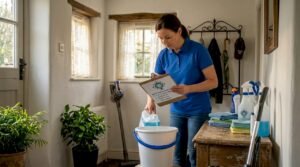
Compare estimates by the work listed, team size, minimum charge and billing method. Confirm the scope and any additional charges before the appointment.
How does communication improve cleaning service reliability and retention?
Communication reliability and service reliability are the same thing in the cleaning industry. A cleaner who shows up on time but never confirms the appointment in advance creates anxiety. A company that delivers great results but goes silent after a complaint loses the client anyway.
Discuss keys, door codes, alarms and building access instructions with the office before scheduling. Agree the entry and departure arrangements for your property.
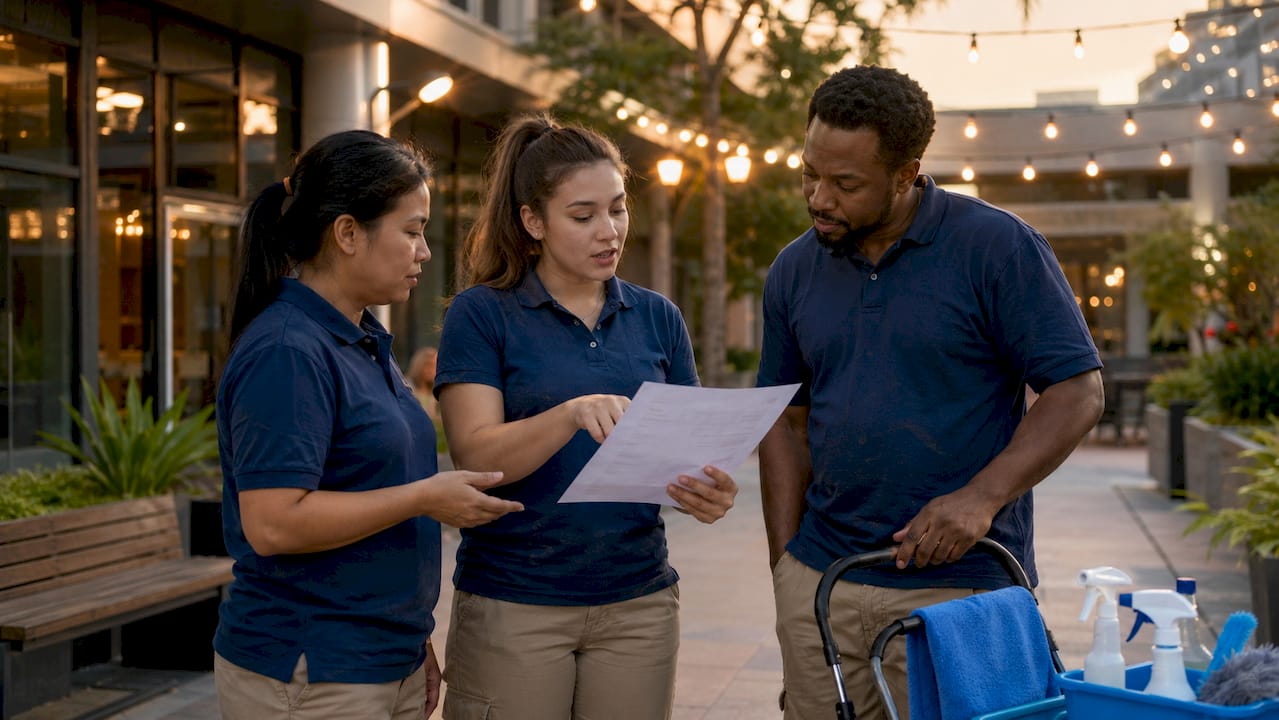
Proactive communication is the mechanism that prevents this. Best practices from facilities management professionals include monthly partnership meetings and 24-hour advance arrival confirmations. These two habits alone reduce scheduling confusion and give clients a regular channel to raise concerns before they become reasons to cancel.
Here is what strong communication looks like in practice for a residential or commercial cleaning client:
- Confirmation messages sent 24 hours before every visit, including the cleaner’s name and estimated arrival window
- Post-service summaries noting what was completed and any areas flagged for follow-up
- Proactive issue reporting when something goes wrong, before the client discovers it independently
- Documented scope of work that both parties have reviewed and agreed to in writing
- Scheduled check-ins for recurring clients, monthly or quarterly, to review service quality
Each of these touchpoints builds a record and a relationship. Together, they create the kind of long-term service reliability that no single excellent cleaning visit can establish on its own.
What communication strategies and tools work best in cleaning services?
The most effective communication strategy in cleaning services combines structured scheduling tools with a warm, personal tone. Technology handles the timing. Human judgment handles the tone.
Comparing communication channels
| Channel | Best use case | Key advantage |
|---|---|---|
| Text or SMS | Appointment confirmations, same-day updates | Fast, high open rate |
| Scope of work, price change notices, documentation | Creates a paper trail | |
| Phone call | Complaints, escalations, relationship check-ins | Builds personal connection |
| CRM software | Tracking service history, client preferences, notes | Centralizes all client data |
| In-person meeting | Monthly partnership reviews, contract renewals | Highest trust-building impact |
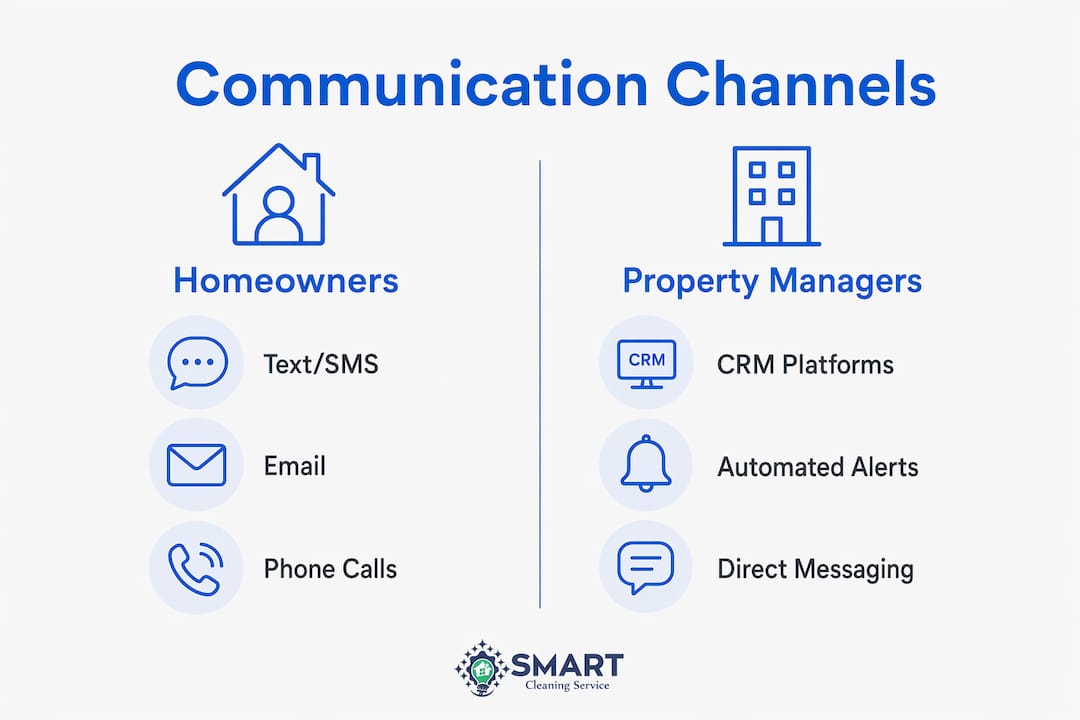
CRM platforms used by cleaning companies, such as Jobber or HouseCall Pro, allow teams to log every client interaction, track service preferences, and automate follow-up messages. That documentation matters more than most clients realize.
Documenting all service interactions and declined additional services protects the provider and reframes client complaints as proactive advice. If a client declines a deep clean of the oven for three consecutive visits and then complains the oven is dirty, the email trail shows the recommendation was made. That record shifts the conversation from failure to guidance.
Price increases are one of the most communication-sensitive moments in a client relationship. Proper advance notice and personalized explanations significantly reduce cancellations. The standard that works is 4 to 6 weeks of advance notice, delivered in a personal message that explains the reason, not a generic rate card update.
Pro Tip: When communicating a price increase, address the client by name, reference the specific services they receive, and explain what the increase covers. A message that reads like it was written for one person retains far more clients than a mass announcement.
How do communication needs differ between homeowners and property managers?
Homeowners and property managers both want reliable cleaning. They want very different things from the communication that surrounds it.
We use one standard line of professional cleaning products. We don’t supply a separate eco-friendly or pet-friendly product line. If you want a specific product used, please supply it and discuss it with the office before the visit. The team may decline products that aren’t suitable for the task or surface.
Property managers operate at a different scale. A property manager overseeing 10 or 20 units does not need warmth as the primary signal. They need structure, speed, and documentation. Their communication priorities look like this:
- Single point of contact for all properties, not a different number for every cleaner
- For home cleaning visits, we send a message when we are on the way and another when the cleaning is finished. Discuss other communication needs with the office before booking.
- Escalation protocols that are clear and fast when a unit has a problem
- Consolidated invoicing and reporting that matches their internal tracking systems
- Consistent service scope across all units so there are no surprises between properties
The mistake cleaning companies make is applying one communication style to both audiences. A property manager receiving warm, chatty messages about their 15 units will find it inefficient. A homeowner receiving terse status reports will feel like a transaction. The importance of reliable cleaning communication shows up differently for each audience, but the underlying need is identical: they both want to trust that the service will happen as agreed and that any deviation will be communicated immediately.
What are the most common communication failures in cleaning services?
The most damaging communication failure in cleaning services is silence after a problem. Clients rarely complain directly about small issues. They absorb them, and then they cancel.
Proactive communication about issues before the client discovers them prevents churn by demonstrating accountability. The client who receives a message saying “We noticed the bathroom grout near the shower needed extra attention today and addressed it” feels served. The client who discovers the same grout issue on their own and hears nothing feels ignored.
Here are the five most common communication failures and how to fix each one:
- Delayed arrival without notice. Fix: automate a text message the moment a schedule change occurs, not after the fact.
- Scope creep without documentation. Fix: confirm any changes to the service scope in writing before the visit, not during.
- Short-notice requests depend on availability, location and the work needed. Contact the office to check the schedule. An appointment is confirmed only after approval.
- Generic price increase notices. Fix: send personalized messages with 4 to 6 weeks of advance notice and a clear explanation of the reason.
- No follow-up after a complaint. Fix: establish a 24-hour callback standard for every complaint, regardless of severity.
Transparency about service issues builds more trust than delivering only positive news. Clients understand that cleaning is a human service and that mistakes happen. What they do not forgive is finding out about a problem from their own inspection rather than from the company they hired.
Pro Tip: After resolving a complaint, send a brief follow-up message two or three days later asking if everything is still to the client’s satisfaction. That second message is what turns a recovered complaint into a loyal client.
The role of communication tools in cleaning extends to the frontline team as well. Cleaners who have a clear channel to report issues to management, without fear of blame, catch problems before they reach the client. That internal communication loop is just as important as the external one.
Key takeaways
Effective communication in cleaning services is the single most reliable predictor of client retention, service consistency, and long-term business growth.
| Point | Details |
|---|---|
| Automation drives retention | Depends on the agreed scope |
| Consistency requires documentation | Depends on the agreed scope |
| Tone must match the audience | Homeowners need warmth and personalization; property managers need structure, speed, and consolidated reporting. |
| Silence after problems causes churn | Proactive issue reporting before the client discovers a problem is the single most trust-building communication act. |
| Price changes need personal notice | Personalized messages with 4 to 6 weeks of advance notice significantly reduce cancellations during rate increases. |
Why communication is the hardest and most important part of cleaning
Start with the areas used most often and agree clear cleaning priorities. The routine should fit your household or workplace rather than a claim that the same approach works for everyone.
The companies that lose clients rarely lose them over a missed baseboard or an imperfect kitchen. They lose them over a phone call that was not returned, a price increase that arrived without explanation, or a problem that the client found before the company mentioned it. Those are communication failures, not cleaning failures.
Managers who stay visible to both clients and teams, who escalate issues quickly and personally, build a level of trust that no marketing budget can replicate. The cleaner who feels supported by their manager communicates better with clients. That chain runs directly from internal culture to client satisfaction.
The other thing I would push back on is the instinct to sound professional by sounding formal. Corporate language in a cleaning service context reads as cold and distant. A message that says “We value your continued patronage and regret any inconvenience” does nothing. A message that says “Hi Sarah, we noticed the kitchen light fixture was out of reach today and wanted to flag it for you” does everything. The value of warm client communication is not a soft preference. It is a retention strategy.
Clients do not expect perfection. They expect honesty, responsiveness, and the sense that someone is paying attention. Any cleaning company that builds its communication around those three things will outperform competitors who clean better but communicate worse.
How Smartcleaningwa builds communication into every service
Smartcleaningwa serves homeowners and property managers across Seattle, Kirkland, Bellevue, and Redmond with a communication model built around the practices described in this article.
The work for your visit should be agreed in the quote. Our team focuses on cleaning accessible surfaces, kitchens, bathrooms and floors, with additional priorities discussed before the appointment.
FAQ
Why does communication matter so much in cleaning services?
Requirements vary with the property, activity and circumstances. Review the applicable requirements with a qualified adviser; a cleaning appointment does not certify legal or regulatory compliance.
How do automated communication tools improve cleaning service retention?
List the rooms and accessible surfaces you want cleaned before requesting an estimate. The work completed depends on the agreed priorities, property condition and time used.
What should a cleaning company communicate after a service problem?
The company should contact the client before they discover the issue, explain what happened, and describe the corrective action taken. Transparency about service failures builds more trust than silence or delayed fixes.
How far in advance should a cleaning company notify clients of a price increase?
4 to 6 weeks of advance notice with a personalized explanation significantly reduces client cancellations compared to short-notice or generic announcements.
Do homeowners and property managers need different communication styles?
Homeowners respond better to warm, personalized messages that acknowledge their specific preferences. Property managers need structured updates, consolidated reporting, and clear escalation protocols across multiple properties. For home visits, we send you a message when we’re on our way and another when the cleaning is finished.
Recommended
- Smart Cleaning Service™ House Cleaning Seattle Kirkland Bellevue Redmond
- Smart Cleaning Service™ House Cleaning Seattle Kirkland Bellevue Redmond
- Smart Cleaning Service™ House Cleaning Seattle Kirkland Bellevue Redmond
- Smart Cleaning Service™ House Cleaning Seattle Kirkland Bellevue Redmond