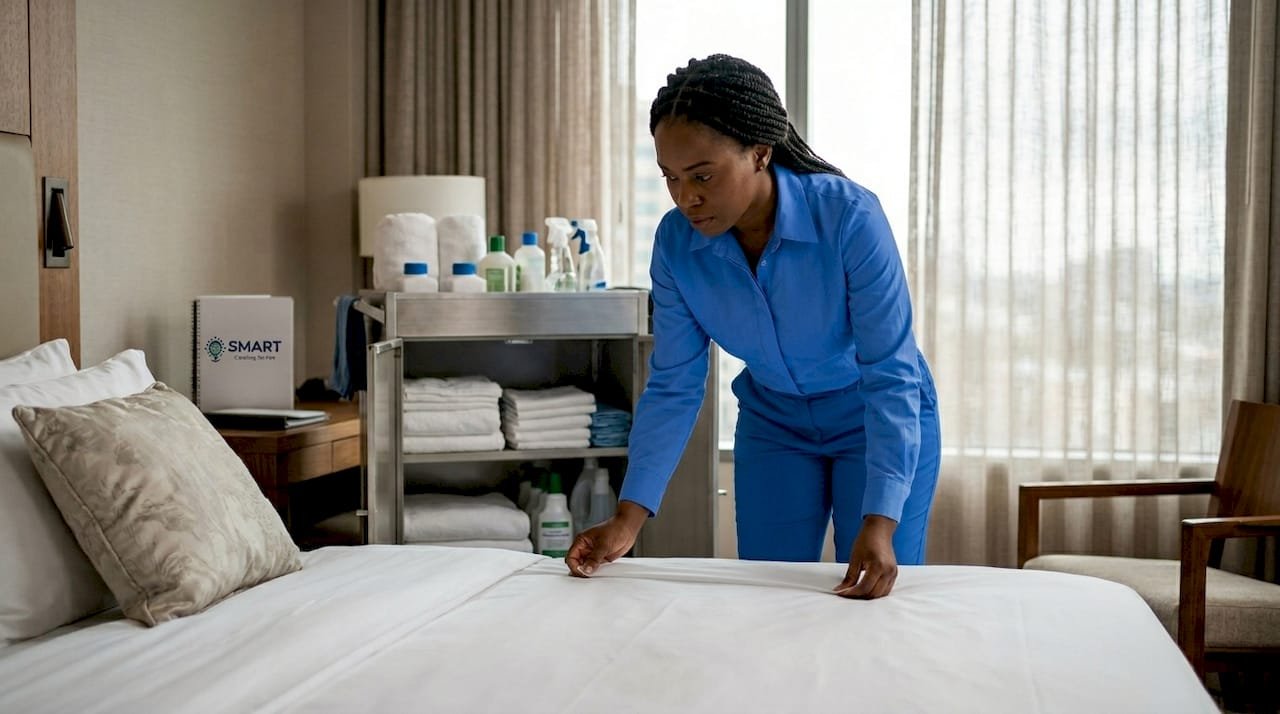
Cleanliness is the single most controllable factor determining whether a guest leaves a five-star review or a complaint that follows your property for years. According to a 2026 Ecolab survey, 40% of hotel guests rank cleanliness among their top three hotel selection criteria, placing it alongside price and location. That means your housekeeping program is not a back-of-house function. It is a direct revenue driver. The role of cleaning in guest satisfaction extends from first impressions through repeat bookings, and the data now shows exactly where properties win or lose.
What specific cleanliness issues most influence guest satisfaction and reviews?
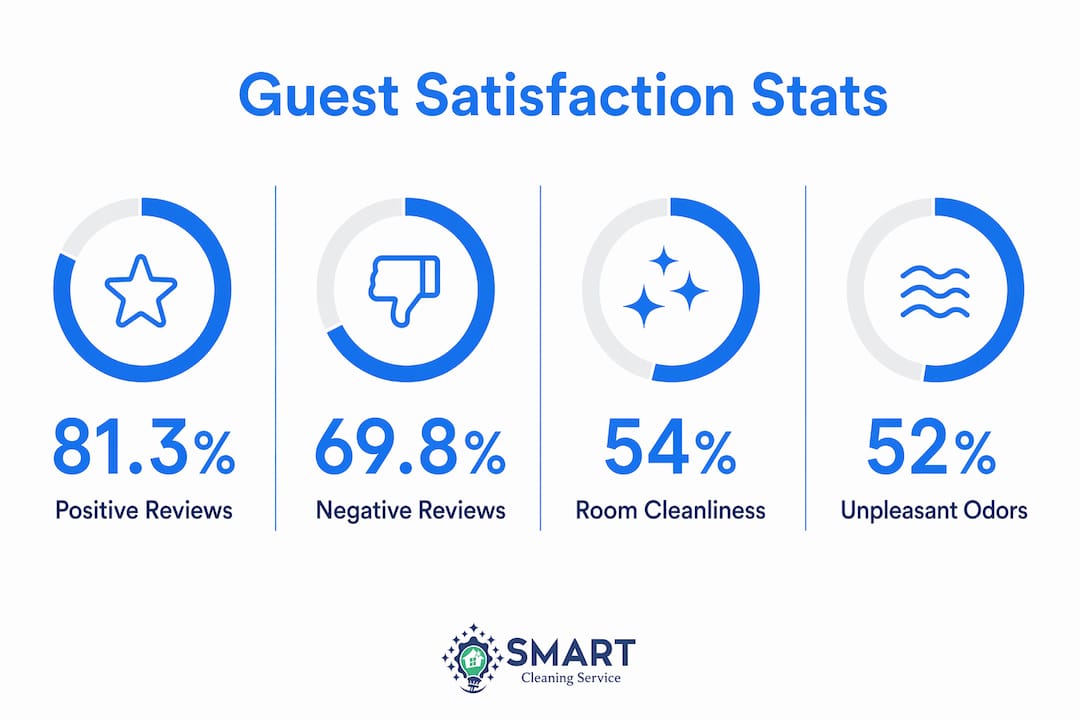
Room cleanliness, odors, and pest evidence are the three triggers that convert a neutral guest into a vocal critic. A 2026 Ecolab survey found that 54% cited room cleanliness as the top reason for negative feedback, followed by 52% citing unpleasant odors and 48% citing pest evidence. Each of those numbers represents a category of complaint that is entirely preventable with the right protocol.
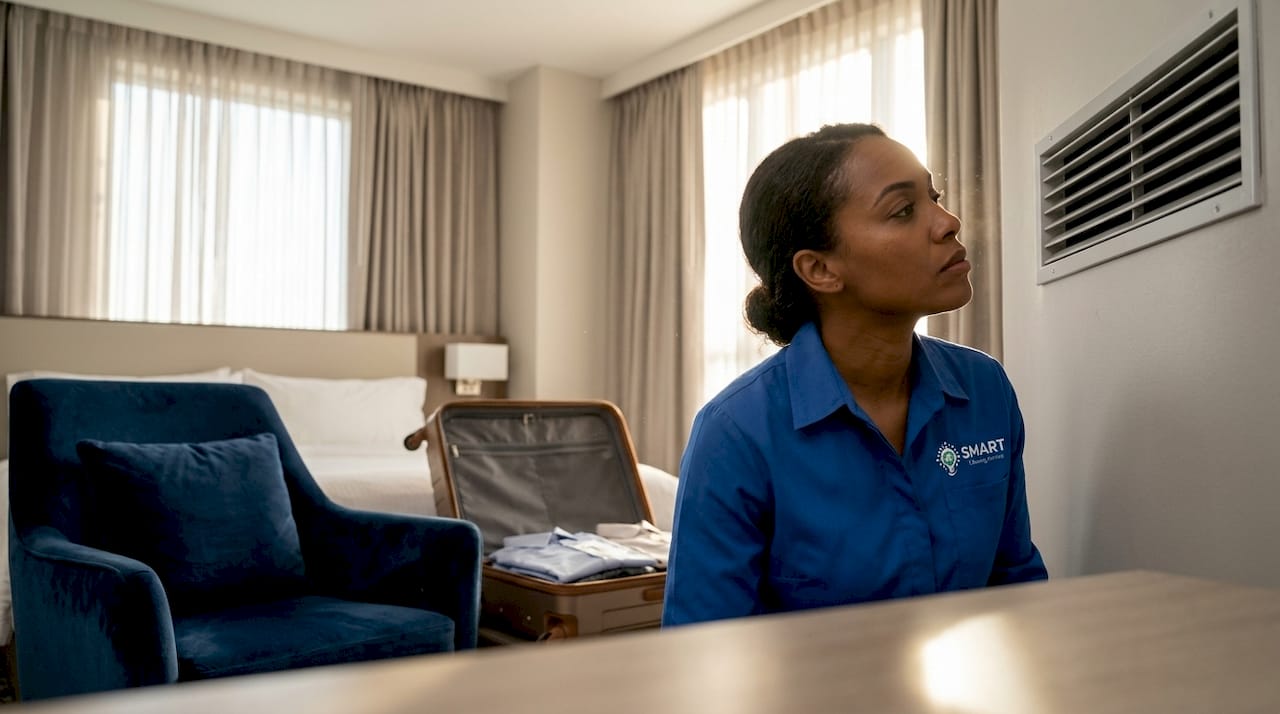
The importance of cleanliness in hospitality becomes even clearer when you look at review platforms. A TripAdvisor analysis found that cleanliness appears in 81.3% of positive reviews and in 69.8% of negative reviews. That asymmetry matters. Guests praise cleanliness when it exceeds expectations, but they punish its absence far more sharply. This aligns with expectancy-disconfirmation theory: guests assume a baseline of cleanliness, so meeting it earns little credit, but falling short earns disproportionate criticism.
The specific failure points most operators miss include:
- Soft furnishings: Upholstered headboards, curtains, and carpet edges collect odors and allergens that survive standard wipe-downs.
- Bathroom grout and fixtures: Visible mold or soap scum in grout lines signals neglect even when the rest of the room is spotless.
- High-contact textiles: Pillowcases, TV remotes wrapped in plastic, and throw blankets are among the first items guests inspect or smell.
- Trash and recycling areas: Odors from shared bins migrate into corridors and rooms, creating a negative sensory impression before guests even open their door.
Pro Tip: Treat your pre-check-in inspection as a guest review simulation. Walk the room as a first-time guest would: enter slowly, pause at the threshold to detect odors, run a finger along the headboard, and check under the bed. If anything fails that test, it will fail the guest.
Understanding guest perceptions of hotel cleanliness requires accepting that guests do not inspect rooms the way housekeeping supervisors do. They respond to sensory cues in the first 30 seconds. That window is where satisfaction is won or lost.
How do sensory experiences shape guest perceptions of cleanliness?
Sensory factors predict hotel ratings more reliably than traditional text sentiment analysis. A study analyzing 8 million reviews from over 10,000 hotels found that proximal senses, specifically smell and touch, influence ratings more strongly than distal senses like sight and sound. A room can look clean and still fail a guest’s evaluation because of a musty odor or a rough, stiff towel.
This distinction between proximal and distal senses has direct operational implications. Visual cleanliness is the baseline guests expect. Olfactory and tactile cleanliness are the differentiators that push ratings from three stars to five. A property that invests only in visible surface cleaning is leaving a significant portion of its guest satisfaction score on the table.
The table below summarizes how each sensory channel affects guest evaluation:
| Sensory channel | Guest trigger | Operational response |
|---|---|---|
| Olfactory (smell) | Musty odors, chemical residue, stale air | HVAC maintenance, odor-neutralizing products, ventilation checks |
| Tactile (touch) | Rough linens, sticky surfaces, damp towels | Linen quality standards, surface drying protocols |
| Visual (sight) | Dust, stains, visible grime | Standard cleaning checklists, lighting checks |
| Auditory (sound) | Noisy HVAC, dripping faucets | Maintenance integration with housekeeping rounds |
Musty air conditioning is one of the most common olfactory complaints in short-term rentals and hotels. Air conditioning odors often signal mold growth in the unit itself, not just surface dust, and require dedicated HVAC cleaning rather than air freshener. Masking odors with fragrance products is a short-term fix that guests recognize and resent.
Pro Tip: Build sensory acceptance criteria into your housekeeping sign-off checklist. Before a room is marked ready, the inspector should confirm: no detectable odor at the door threshold, linens pass a softness check, and all surfaces are dry to the touch. These three checks take under 60 seconds and directly address the top sensory failure points.
Training staff on sensory evaluation standards closes the gap between what housekeeping considers clean and what guests actually experience. That gap is where most negative reviews originate.
Comparing cleaning protocols that maximize guest satisfaction
Not all cleaning sequences produce the same hygiene outcome. The clean-then-disinfect sequence is the validated standard in hospitality hygiene, and the reason is microbiological. Disinfectants lose effectiveness when applied to surfaces that still carry soil, grease, or organic residue. Cleaning removes that barrier first, allowing the disinfectant to contact and kill pathogens directly. Skipping or reversing this sequence means your disinfection step is largely cosmetic.
High-touch surfaces require a dedicated disinfection step beyond general wipe-downs. Door handles, light switches, and remote controls carry the highest microbial load in any guest room and are the surfaces most likely to transfer illness between guests. A protocol that treats these surfaces the same as a desk or windowsill is not a hygiene protocol. It is a cleaning protocol, and the difference matters for both guest health and your liability exposure.
A well-structured room cleaning sequence for hospitality settings follows this order:
- Remove all trash and soiled linens before touching any surface, to avoid cross-contamination.
- Apply cleaning agents to bathroom fixtures, shower, and toilet and allow dwell time while completing other tasks.
- Dust all surfaces from high to low, including ceiling fans, light fixtures, and headboards.
- Clean bathroom surfaces after dwell time, using color-coded cloths to prevent cross-contamination between bathroom and bedroom.
- Disinfect all high-touch surfaces including switches, handles, remotes, and thermostats with an EPA-registered disinfectant.
- Vacuum and mop floors last, working toward the exit.
- Conduct a sensory inspection at the door threshold before marking the room ready.
Defined protocols with documented frequency, assigned equipment, and color-coded tools increase consistency across staff and shifts. Consistency is what converts a good cleaning day into a reliable guest satisfaction score. For Airbnb hosts and short-term rental operators, effective housekeeping protocols follow the same sequence logic, adapted for faster turnovers.
Pro Tip: Audit your protocol quarterly by having a manager complete a room inspection using only the criteria a guest would apply: sensory checks, high-touch surface tests with an ATP meter if available, and a review of the cleaning log. Discrepancies between the log and the physical condition of the room reveal training gaps before guests do.
Practical strategies for maintaining cleanliness and guest loyalty
Maintaining cleanliness for guest loyalty requires treating your cleaning program as a quality assurance system, not a task list. The distinction is operational: a task list gets checked off, while a quality assurance system gets measured, audited, and improved. Properties that treat cleaning as a system consistently outperform those that treat it as a chore.
The following strategies give hospitality professionals and property managers a concrete framework:
- Layer your pre-check-in checks. Assign a secondary inspector whose only job is to verify room cleanliness, odors, and pest evidence after the primary housekeeper signs off. This two-step check catches the failures that single-person inspections miss.
- Use digital audit tools. Platforms like GoAudits allow managers to run mobile inspections with photo documentation, SOP adherence scoring, and automatic escalation for failed items. Digital records also provide the audit trail needed if a guest complaint escalates to a regulatory inquiry.
- Respond to negative feedback within 24 hours. Guest satisfaction and hotel hygiene complaints left unaddressed on Google or TripAdvisor compound over time. A prompt, specific response that acknowledges the issue and describes the corrective action taken signals operational competence to future guests reading the review.
- Maintain cleaning records as a compliance asset. A 2026 case reported by the New Straits Times showed that viral cleanliness complaints led to a local council enforcement action and a mandatory seven-day correction period. Properties with documented SOPs and cleaning logs are far better positioned to respond to regulatory scrutiny and protect their reputation.
- Train staff on guest perspective, not just task completion. The most effective training programs walk housekeeping staff through a guest’s arrival experience, showing them exactly what a guest sees, smells, and touches in the first 60 seconds. That context transforms task execution into guest experience management.
For properties managing multiple units or cleaning teams, organizing cleaning teams efficiently is as important as the cleaning protocol itself. A well-trained team executing a weak protocol will underperform a moderately trained team with a strong, documented system.
The impact of cleaning on customer experience is cumulative. One poor turnover can generate a negative review that suppresses bookings for months. One consistently excellent cleaning program builds the reputation that fills your calendar without paid advertising.
Key takeaways
Cleanliness is the most controllable driver of guest satisfaction, and properties that treat it as a quality system rather than a task list consistently earn higher ratings and stronger repeat business.
| Point | Details |
|---|---|
| Cleanliness drives selection | 40% of guests rank cleanliness among their top three hotel selection factors, alongside price and location. |
| Sensory cues outrank visual checks | Smell and touch predict ratings more strongly than sight; train staff on sensory acceptance criteria, not just visual inspection. |
| Clean before you disinfect | Applying disinfectant to unclean surfaces reduces its effectiveness; always follow the clean-then-disinfect sequence. |
| High-touch surfaces need dedicated steps | Door handles, switches, and remotes carry the highest microbial load and require explicit disinfection beyond general wipe-downs. |
| Document everything | Cleaning audit trails protect against regulatory action and give managers the data needed to close training gaps before guests notice them. |
Why operators underestimate the sensory side of cleanliness
I have worked with enough hospitality operations to know that most cleaning programs are built around what managers can see on a checklist, not what guests experience when they walk through a door. That gap is where the one-star reviews live.
The research on sensory cues is not surprising to anyone who has ever checked into a hotel and immediately noticed a smell before seeing a single surface. What is surprising is how few properties have operationalized that knowledge. Sensory acceptance criteria are not complicated to implement. They take under two minutes per room. Yet most properties I encounter still rely on visual inspection alone, which means they are systematically missing the two sensory channels that most influence ratings.
The other pattern I see repeatedly is the clean-then-disinfect sequence being reversed or collapsed into a single step. Staff under time pressure will spray and wipe in one motion. That is understandable, but it is not disinfection. It is cleaning with a more expensive product. The solution is not more supervision. It is a protocol that makes the correct sequence the path of least resistance, with products staged in the right order and checklists that require sign-off at each step.
Properties that get this right do not just earn better reviews. They reduce complaint escalations, lower the risk of regulatory action, and build the kind of reputation that generates direct bookings. Cleanliness is not a cost center. It is the foundation of your guest experience strategy.
— Wilker
How Smartcleaningwa helps hospitality professionals raise their standards
If you manage properties in Seattle, Kirkland, Bellevue, or Redmond and your cleaning program is not producing the guest satisfaction scores you need, Smartcleaningwa delivers professional cleaning built around the protocols that actually move ratings. From Airbnb turnover services to deep cleaning and recurring commercial programs, every service is backed by documented checklists, real-time updates, and quality checks that align with what guests actually evaluate.
Properties that invest in professional cleaning see the return in reviews, repeat bookings, and long-term property value. Smartcleaningwa is licensed, insured, and focused on the details that guests notice first. Get a free cleaning estimate and see what a consistent, guest-ready cleaning standard looks like in practice.
FAQ
How does cleanliness affect hotel guest satisfaction scores?
Cleanliness appears in 81.3% of positive TripAdvisor reviews and 69.8% of negative ones, making it the single most frequently cited factor in both praise and complaint. Guests who encounter cleanliness failures are more likely to leave a negative review than guests who encounter service or amenity issues.
What are the most common cleanliness complaints from hotel guests?
Room cleanliness, unpleasant odors, and pest evidence are the top three triggers for negative feedback, cited by 54%, 52%, and 48% of guests respectively in 2026 survey data from Ecolab.
Why does the clean-then-disinfect sequence matter for guest safety?
Disinfectants require direct contact with a surface to kill pathogens, and soil or residue blocks that contact. Cleaning first removes the barrier, making the disinfection step microbiologically effective rather than cosmetic.
How do sensory factors influence guest perceptions of cleanliness?
Smell and touch influence hotel ratings more strongly than visual cleanliness alone, based on analysis of 8 million reviews across more than 10,000 hotels. A room that looks clean but smells musty or has rough linens will still generate lower satisfaction scores.
What documentation should hospitality operators keep for cleaning compliance?
Operators should maintain dated cleaning logs, signed inspection checklists, and SOP documentation for each property type. These records are the primary defense in regulatory inquiries and provide the data needed to identify and correct recurring cleaning failures before they reach guests.
Recommended
- Smart Cleaning Service™ House Cleaning Seattle Kirkland Bellevue Redmond
- Smart Cleaning Service™ House Cleaning Seattle Kirkland Bellevue Redmond
- Smart Cleaning Service™ House Cleaning Seattle Kirkland Bellevue Redmond
- Smart Cleaning Service™ House Cleaning Seattle Kirkland Bellevue Redmond