The top cleaning tasks for hosts are the repeatable, non-negotiable actions that determine whether a guest leaves a five-star review or a complaint. Hosts who treat cleaning as a system rather than a chore protect their ratings, repeat bookings, and property value. Sources like RedAwning, Guesty, and The Cleaning Station confirm that covering every surface, room, and restocking detail is what separates average rentals from consistently top-rated ones. This guide gives you a prioritized, room-by-room breakdown built for real turnover conditions.
1. Top cleaning tasks for hosts: the non-negotiables between guests
Every successful turnover starts with a fixed set of tasks that cannot be skipped or rushed. These are the actions that directly affect what guests see, touch, and smell the moment they walk in.
- Strip and replace all linens and towels. Linens and towels must be fully replaced between every guest, not just inspected. Guests notice immediately when bedding feels reused.
- Disinfect all high-touch surfaces. Door handles, light switches, remote controls, and countertops carry the highest germ load. Wiping too soon after applying disinfectant can reduce its efficacy by up to 90%, so dwell time matters.
- Deep-clean bathrooms. Bathroom deep cleaning covers toilets, showers, sinks, mirrors, and floors without exception. Bathrooms are the single most scrutinized room in any guest review.
- Thoroughly clean the kitchen. Wipe appliance exteriors, scrub the stovetop, clean inside the microwave, and sanitize the sink. Guests open the refrigerator and check the stovetop before they unpack.
- Vacuum and mop all floors. Thorough floor cleaning is a turnover must-do according to both Guesty and RedAwning. Pay attention to corners and under furniture where debris collects.
- Empty all trash bins and replace liners. A single forgotten trash bin with old waste is enough to trigger a one-star review.
- Restock consumables. Restocking toilet paper, soap, and coffee is listed as mandatory in RedAwning’s 2026 turnover checklist. Running out of basics is the most avoidable guest complaint.
- Reset smart locks and thermostats. Rotating access codes protects security. Resetting the thermostat to a comfortable default signals that the space was prepared with care.
- Perform a visual walkthrough. Check for damage, missing items, or anything left behind by the previous guest before the next one arrives.
Pro Tip: Start the laundry and dishwasher the moment you enter the property. Both cycles run while you clean, so you recover that time at the end of the turnover rather than waiting for them to finish.
2. Room-by-room cleaning guide for hosts
A room-by-room approach turns a long task list into a manageable sequence. Moving through the property in a fixed order prevents backtracking and missed spots.
Bedroom
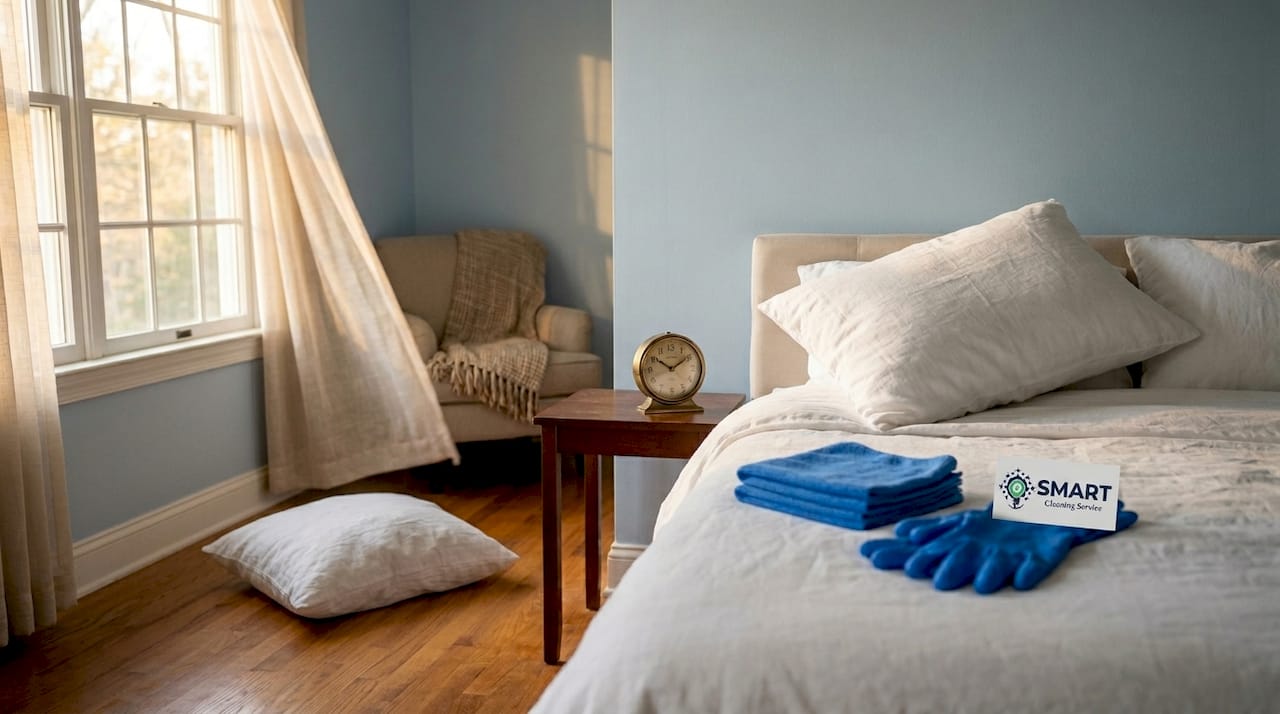
Launder all linens, pillowcases, and duvet covers. Dust all furniture surfaces, including nightstands and headboards. Vacuum under the bed, where dust and debris accumulate between stays. Disinfect high-touch points like lamp switches, alarm clocks, and USB charging ports. Check inside drawers and closets for items left behind.
Bathroom
Disinfect the toilet inside and out, scrub the shower and tub, and wipe down the sink and faucet. Check drains for hair and debris, a step Guesty’s 2024 checklist flags as one of the most commonly skipped. Clean the mirror and restock all toiletries. A weekly disinfection schedule for bathroom surfaces is recommended by HealthyChildren.org to support healthy guest environments.
Kitchen
Clean the refrigerator interior and wipe the exterior. Scrub the stovetop and clean inside the microwave. Run the dishwasher if dishes were used, and wipe cabinet fronts. For a thorough approach to this room, the step-by-step kitchen guide from Smartcleaningwa covers every surface in sequence. Restock coffee, cooking oil, and any provided pantry basics.
Living and common areas
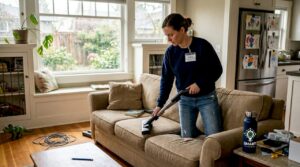
Vacuum upholstered furniture and rugs. Dust décor, shelves, and electronics. Clean TV screens with a dry microfiber cloth. Wipe window sills and spot-clean glass if fingerprints are visible.
Outdoor spaces
Sweep patios and entryways. Wipe down outdoor furniture. Remove any trash or debris from the yard or balcony. Outdoor first impressions set the tone before a guest even opens the front door.
Pro Tip: Take a photo of each room after cleaning. This creates a visual record for quality control, protects you in dispute situations, and helps new cleaners learn your standard quickly.
3. How to prioritize tasks and build an efficient workflow
Cleaning faster without cutting corners requires sequencing, not rushing. The order in which you complete tasks determines how much time you actually save.
Starting laundry and the dishwasher at the very beginning of a turnover is the single highest-leverage workflow decision a host can make. Both appliances run unattended while you clean, effectively eliminating their time cost from the total turnover window.
After starting those cycles, move to high-touch surface sanitization. Apply disinfectant and let it dwell while you move on to other tasks in the same room. This parallel approach means the disinfectant is doing its work while you vacuum or restock, rather than requiring you to stand and wait.
If you work with a cleaning team, assign roles by zone rather than by task type. One person handles bathrooms and linens while another covers the kitchen and common areas. This parallel workflow cuts total time without any single person rushing through their section.
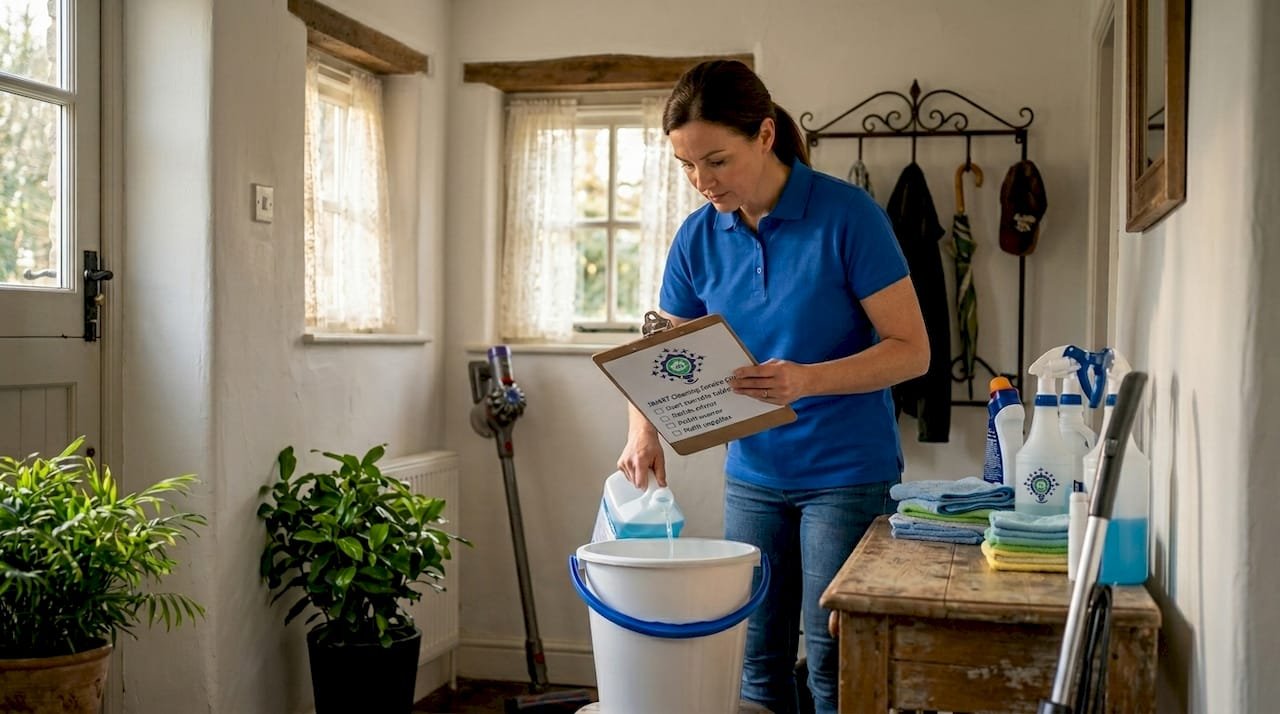
Stage your supplies before you start. Place the bathroom kit in the bathroom, the kitchen kit in the kitchen, and the linen set in the bedroom. Eliminating trips back to a central supply bag saves more time than most hosts realize.
Use a digital checklist, whether through a property management platform or a simple app like Google Tasks or Notion, to track completion room by room. Covering the entire turnover process end-to-end reduces guest complaints and protects repeat bookings. A checklist makes that coverage verifiable, not just intentional.
For tight turnarounds, read the last-minute cleaning guide from Smartcleaningwa, which addresses urgent scenarios without sacrificing the tasks that guests actually notice.
4. Overlooked cleaning areas that trigger negative reviews
The difference between a four-star and a five-star review often comes down to the spots that are easy to skip when you are moving fast.
- Drains and plug holes. Hair buildup in shower and sink drains is one of the most common guest complaints. Including drain checks in every routine turnover checklist directly improves review ratings.
- Under beds and furniture. Guests who drop something and reach under the bed will find whatever was missed. Dust bunnies and forgotten items from previous guests are both avoidable.
- Inside drawers and closets. Guests store their belongings here. A drawer with crumbs or a closet with a previous guest’s item signals that the cleaning was surface-level.
- Exhaust fans and ceiling fan blades. Dust accumulates quickly on both. Guests look up, and a visibly dusty ceiling fan undercuts every other cleaning effort in the room.
- Lingering odors. A space can look clean and still smell like the previous guest’s cooking or pet. Air the property out, use a neutral odor eliminator, and check soft furnishings like sofas and curtains.
Consistency is the operational backbone of successful host cleaning processes. Missed spots are almost never random. They are the result of skipping the same step repeatedly because it is not written into the checklist. Adding these overlooked areas to your standard list is the fastest way to close the gap between your cleaning effort and your guest rating.
Scheduling a separate deep clean every four to six weeks handles the tasks that do not belong in every turnover. Oven interiors, grout scrubbing, HVAC filter checks, and behind-appliance cleaning fall into this category. Separating deep-clean tasks from turnover tasks keeps both lists manageable and prevents either from being rushed.
Pro Tip: Walk through the property as a guest would. Enter through the front door, sit on the couch, and lie on the bed. You will notice what a cleaning walkthrough misses because you are experiencing the space rather than inspecting it.
5. Testing safety equipment during turnovers
Testing smoke alarms and safety equipment during turnovers is a step Guesty identifies as one hosts frequently skip. This takes under two minutes and protects both guests and the host from liability. Check smoke detectors, carbon monoxide alarms, and fire extinguisher accessibility at minimum. Replace batteries at the first sign of a low-battery chirp rather than waiting for the next turnover.
Safety checks belong on the same checklist as cleaning tasks, not on a separate mental list. When they are written down alongside the bathroom scrub and linen replacement, they get done consistently. Guests rarely mention safety equipment in reviews when it works. They absolutely mention it when it does not.
Key takeaways
Consistent, task-prioritized cleaning is the single most reliable driver of five-star guest reviews and repeat bookings for short-term rental hosts.
| Point | Details |
|---|---|
| Start with laundry and dishwasher | Running both appliances first eliminates their wait time from the total turnover window. |
| Respect disinfectant dwell time | Wiping surfaces too soon can cut disinfectant effectiveness by up to 90%. |
| Add overlooked spots to the checklist | Drains, fan blades, and drawer interiors are the most common sources of negative reviews. |
| Separate turnover tasks from deep cleans | Schedule deep cleans every four to six weeks to handle oven interiors, grout, and HVAC filters. |
| Test safety equipment every turnover | Smoke alarms and carbon monoxide detectors take two minutes to check and protect both guests and hosts. |
What I have learned after years of watching hosts clean
Most hosts who struggle with cleaning do not have a skill problem. They have a system problem. The tasks are not hard. The sequence is what trips people up.
The hosts I have seen earn the most consistent five-star reviews are not the ones who clean the longest. They are the ones who clean in the same order, with the same checklist, every single time. Consistency is what prevents the missed drain, the forgotten restock, and the dusty ceiling fan that shows up in a review three weeks later.
The other thing I have noticed is that hosts underestimate how much the overlooked spots matter relative to the obvious ones. Guests expect the bathroom to be clean. What surprises them, in a good way, is when the inside of the microwave is spotless and the soap dispenser is full. Those details signal that someone actually cared, not just cleaned.
If you manage multiple properties or face tight turnaround windows, the honest answer is that DIY cleaning becomes a liability at some point. Not because you cannot do it well, but because the time cost compounds. Bringing in a professional team for turnovers, even occasionally, resets your standard and shows you what thorough actually looks like in practice. That reference point alone is worth the investment.
View cleaning not as the last step before a guest arrives, but as the first step in their experience. The moment they open the door, the cleaning is already communicating something. Make sure it says the right thing.
— Wilker
Professional turnover cleaning for Seattle-area hosts
Managing every turnover alone is demanding, especially when bookings stack up or checkout and check-in fall on the same day. Smartcleaningwa provides Airbnb turnover cleaning and residential cleaning services across Seattle, Kirkland, Bellevue, and Redmond, covering every task on this list with licensed, insured cleaners and real-time updates. From linen management and consumables restocking to damage checks and deep cleans, the team handles the full turnover so you do not have to. If you want to know what professional-grade cleaning costs for your property, get a free estimate and see what consistent, guest-ready results look like.
FAQ
What are the most important cleaning tasks for hosts?
Replacing all linens and towels, disinfecting high-touch surfaces with proper dwell time, deep-cleaning bathrooms and kitchens, and restocking consumables are the non-negotiable tasks every host must complete between guests.
How do hosts clean efficiently during short turnovers?
Start the laundry and dishwasher immediately upon entering the property, then work through high-touch surfaces and rooms in a fixed sequence. Parallel workflows, staged supplies, and a digital checklist cut total time without skipping critical steps.
What cleaning spots do hosts most commonly miss?
Shower and sink drains with hair buildup, under beds, inside drawers and closets, ceiling fan blades, and exhaust fans are the most frequently skipped areas. These spots are the most common sources of negative guest reviews.
How often should hosts schedule a deep clean?
A deep clean every four to six weeks handles tasks like oven interiors, grout scrubbing, and HVAC filter checks that do not belong in every turnover. Separating these from the standard checklist keeps both lists practical and thorough.
Should hosts test smoke alarms during every turnover?
Yes. Testing smoke alarms and carbon monoxide detectors during each turnover takes under two minutes and is flagged by Guesty as a frequently skipped but critical safety step that protects both guests and the host.
Recommended
- Smart Cleaning Service™ House Cleaning Seattle Kirkland Bellevue Redmond
- Smart Cleaning Service™ House Cleaning Seattle Kirkland Bellevue Redmond
- Smart Cleaning Service™ House Cleaning Seattle Kirkland Bellevue Redmond
- Smart Cleaning Service™ House Cleaning Seattle Kirkland Bellevue Redmond