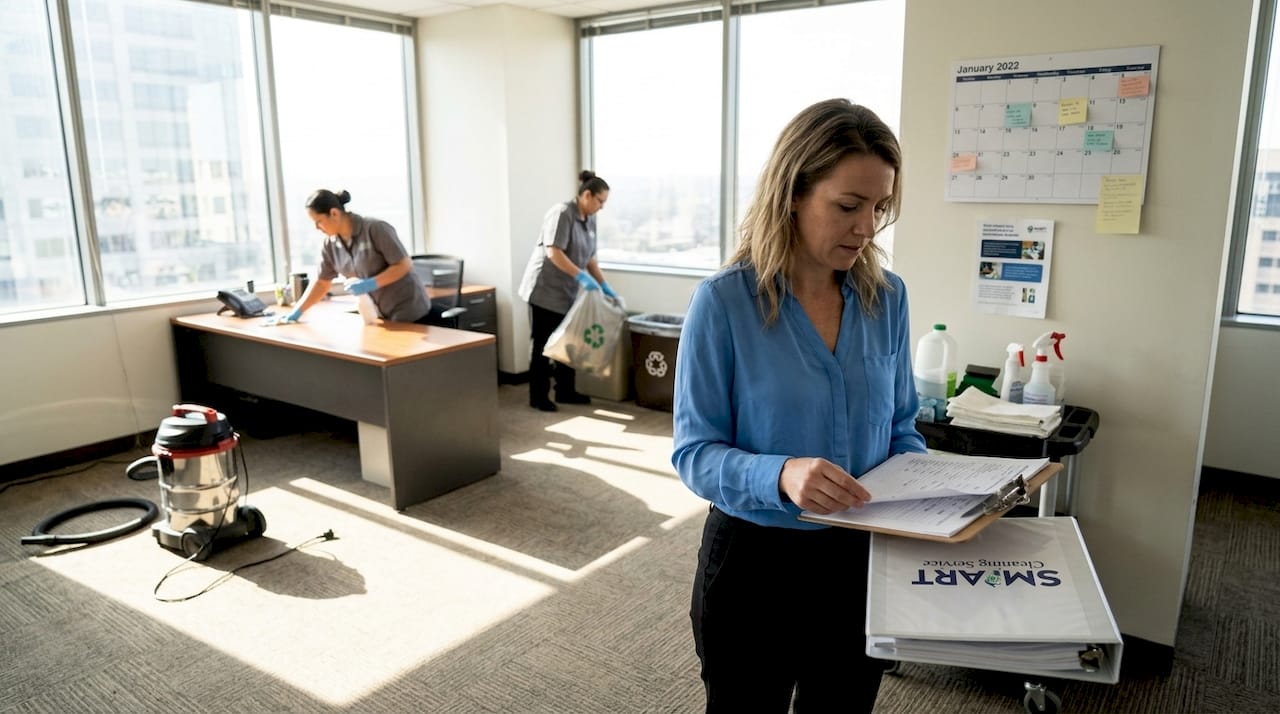
Dusting can be included for accessible surfaces in the agreed rooms. Point out delicate items, shelves that should be left alone and any areas that need additional attention.
Table of Contents
- The true cost of a dirty office
- Health, safety, and well-being: What’s really at stake
- Comparing in-house versus professional office cleaning
- Calculating ROI: What do you really gain by investing?
- Planning the Cleaning Scope
- Ready to see the difference? Choose a Seattle office cleaning solution that delivers results
- Frequently asked questions
Key Takeaways
| Point | Details |
|---|---|
| Cleanliness drives business | Depends on the agreed scope |
| Routine surface cleaning | Routine surface cleaning |
| Outsourcing boosts consistency | Bundled janitorial and porter services keep high-traffic offices spotless and prevent team burnout. |
| ROI beyond appearances | Investing in cleaning cuts business risks and pays back through improved productivity and reputation. |
The true cost of a dirty office
A dirty office is not just unpleasant. It is a liability that shows up in your bottom line in ways most managers never trace back to a mop and bucket.
Think about the last time you visited a vendor or partner’s office and noticed stained carpets, dusty surfaces, or overflowing trash cans. Did your confidence in that company drop a little? That instinct is not irrational. Research confirms that uncleanliness affects purchase decisions for nearly three out of four clients visiting commercial spaces. In Seattle’s competitive professional services, tech, and healthcare markets, even one lost client relationship can represent tens of thousands of dollars in revenue walking out the door.
For a workplace visit, list the shared areas and accessible surfaces to be cleaned. The cleaning scope, frequency and building access arrangements should be agreed in the quote.
Seattle’s famous rainy season makes this even more pressing. From October through April, muddy shoes, wet umbrellas, and damp entryways are a daily reality. High-traffic zones like lobbies, break rooms, and restrooms accumulate grime faster than in drier climates. Without a structured cleaning program, these spaces become visible trouble spots that employees and clients notice immediately.
“The real cost of a dirty office is invisible until it is not. By the time clients notice, the damage to trust is already done.”
Common problem areas in Seattle offices:
- Entryways and lobbies collecting mud and moisture
- Break rooms and kitchens with lingering odors and surface contamination
- Restrooms that signal overall hygiene standards to every visitor
- Meeting rooms where dust and clutter undermine professionalism
- High-touch surfaces like door handles, elevator buttons, and shared equipment
Pro Tip: Bundle janitorial and porter services to address high-traffic areas throughout the day. Janitorial teams handle deep evening cleaning while porter staff maintain visible spaces during business hours, so your office always looks presentation-ready.
Understanding the clean office advantages that go beyond surface appearance is the first step toward making a smarter investment decision. For businesses in the region, partnering with Seattle office cleaning services that understand local climate demands is not a luxury. It is a competitive strategy.
| Impact area | Without professional cleaning | With professional cleaning |
|---|---|---|
| Client first impression | Negative, trust eroded | Positive, professional image |
| Employee productivity | Reduced by clutter and stress | Higher focus and satisfaction |
| Routine surface cleaning | Above average | Below average |
| Facility wear and tear | Accelerated | Slowed through regular maintenance |
| Confirm applicable requirements | Elevated | Minimized with scheduled service |
Health, safety, and well-being: What’s really at stake
For a workplace visit, list the shared areas and accessible surfaces to be cleaned. The cleaning scope, frequency and building access arrangements should be agreed in the quote.
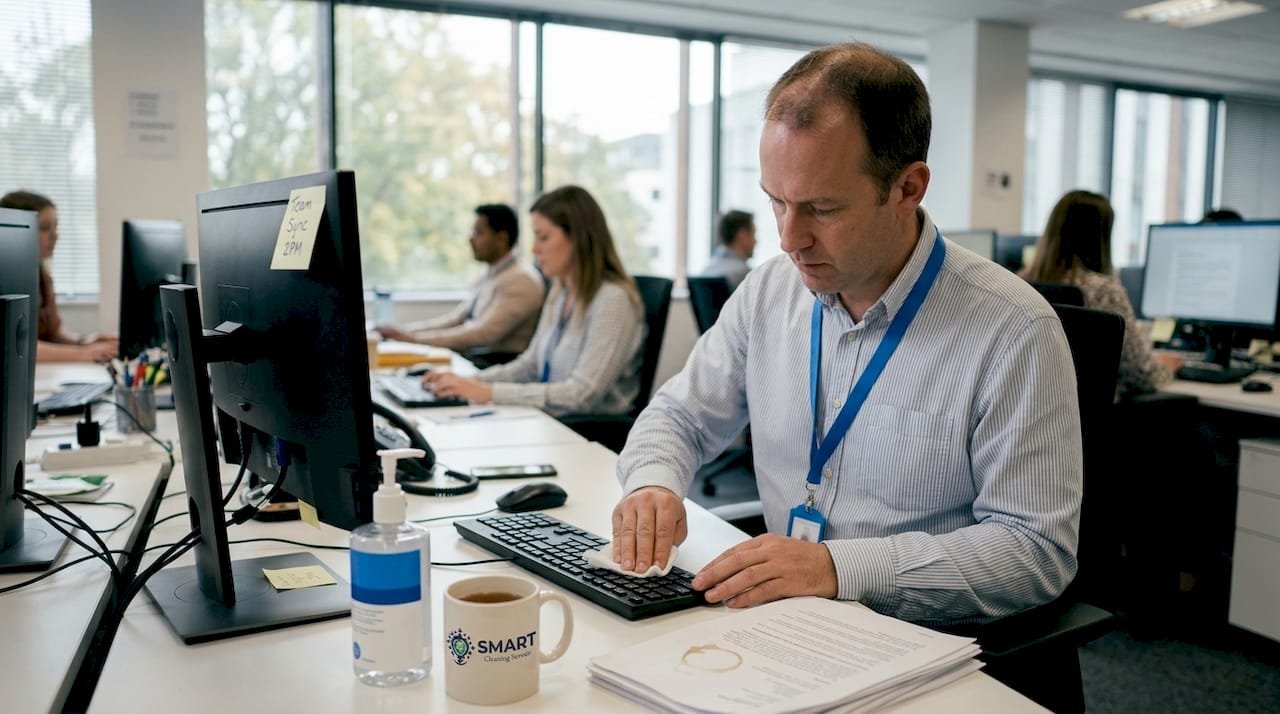
For a workplace visit, list the shared areas and accessible surfaces to be cleaned. The cleaning scope, frequency and building access arrangements should be agreed in the quote.
For kitchen work, identify the accessible counters, sink and appliance surfaces to be cleaned. Appliance interiors and other additional tasks should be discussed before the visit.
Key health and safety benefits of professional office cleaning:
- For an office cleaning estimate, share the workspace size, access requirements and areas to be cleaned. The scope and schedule should be agreed before service.
- List the rooms, accessible surfaces and floor areas that need attention. The quote should specify the work and the arrangements for building access.
- For an office cleaning estimate, share the workspace size, access requirements and areas to be cleaned. The scope and schedule should be agreed before service.
- Requirements vary with the property, activity and circumstances. Review the applicable requirements with a qualified adviser; a cleaning appointment does not certify legal or regulatory compliance.
- Requirements vary with the property, activity and circumstances. Review the applicable requirements with a qualified adviser; a cleaning appointment does not certify legal or regulatory compliance.
Requirements vary with the property, activity and circumstances. Review the applicable requirements with a qualified adviser; a cleaning appointment does not certify legal or regulatory compliance.
“Inconsistent in-house cleaning leads to burnout among staff tasked with it and inevitable blind spots in coverage. Outsourcing to professionals keeps standards high and removes the burden from your core team.”
Choose a visit frequency based on the property, use of the space and tasks you want addressed. Discuss scheduling and the cleaning scope with the office before booking. Related reading: Seattle hygiene guide.
Comparing in-house versus professional office cleaning
If you’re weighing whether to keep cleaning in-house or hire a professional service, the decision is rarely just about cost. It is about outcomes, reliability, and what your team’s time is actually worth.
For a workplace visit, list the shared areas and accessible surfaces to be cleaned. The cleaning scope, frequency and building access arrangements should be agreed in the quote.
Routine home and office cleaning is separate from specialist remediation, clinical work or building maintenance. Describe the work before booking and consult an appropriate specialist when it falls outside ordinary cleaning.
Why in-house cleaning falls short over time:
- Staff burnout when cleaning duties are added to existing workloads
- For an office cleaning estimate, share the workspace size, access requirements and areas to be cleaned. The scope and schedule should be agreed before service.
- No accountability system for coverage quality or missed areas
- Inability to scale up during high-traffic periods or after events
- Routine office cleaning can include restrooms, breakrooms, accessible work surfaces, floor vacuuming and mopping, and trash removal. Confirm the areas and frequency in the quote.
Why professional cleaning delivers more value:
- An office cleaning plan can cover common areas, restrooms, breakrooms and floors. Discuss any task outside routine cleaning separately before booking.
- Requirements vary with the property, activity and circumstances. Review the applicable requirements with a qualified adviser; a cleaning appointment does not certify legal or regulatory compliance.
- Specialty equipment that handles Seattle’s wet-weather challenges effectively
- Scalable service that adapts to your office size, foot traffic, and seasonal demands
- Detailed service logs that provide accountability and documentation for liability purposes
List the rooms, accessible surfaces and floor areas that need attention. The quote should specify the work and the arrangements for building access.
High-traffic Seattle workspaces simply require a level of consistency that in-house teams cannot reliably maintain. That is not a criticism of your staff. It is an honest assessment of what happens when cleaning is treated as a secondary responsibility rather than a core operational function.
| Factor | In-house cleaning | Professional cleaning |
|---|---|---|
| Cost predictability | Variable, hidden costs | Fixed, transparent pricing |
| Cleaning consistency | Declines over time | Maintained by service standards |
| Staff burden | High, causes burnout | None, frees your team |
| Equipment quality | Basic consumer grade | Commercial and specialty grade |
| Accountability | Minimal | Contractual with service logs |
| Seasonal adaptability | Low | High, especially for PNW conditions |
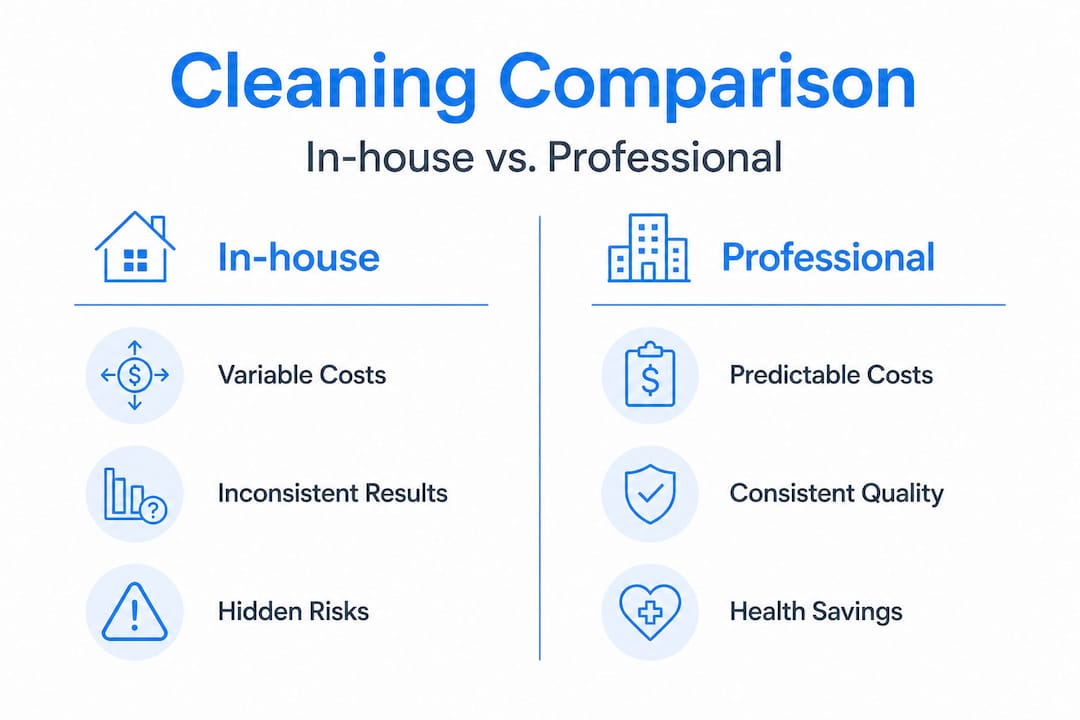
When you look at Seattle pro office cleaners versus in-house options side by side, the case for outsourcing becomes clear well before you factor in the ROI numbers.
Calculating ROI: What do you really gain by investing?
Return on investment in office cleaning is easier to calculate than most people expect, and the numbers tend to be more persuasive once you see them laid out.
For a workplace visit, list the shared areas and accessible surfaces to be cleaned. The cleaning scope, frequency and building access arrangements should be agreed in the quote.
Now layer in client retention. If uncleanliness influences purchase decisions for nearly three out of four people, and even one mid-sized client relationship is worth $20,000 to $100,000 per year in Seattle’s professional services market, then a single retained client more than pays for months of cleaning service.
How to calculate your office cleaning ROI:
- For a workplace visit, list the shared areas and accessible surfaces to be cleaned. The cleaning scope, frequency and building access arrangements should be agreed in the quote.
- Identify your average client lifetime value and estimate the risk of losing even one due to poor impressions
- Requirements vary with the property, activity and circumstances. Review the applicable requirements with a qualified adviser; a cleaning appointment does not certify legal or regulatory compliance.
- Compare the total risk exposure to your annual professional cleaning investment
- Factor in long-term savings from reduced wear on flooring, furniture, and equipment
Facility wear and tear is often overlooked in this calculation. Carpets cleaned regularly last significantly longer than those that are neglected. Grout and tile that receives professional treatment does not require expensive replacement as quickly. Hard surface floors that are properly maintained resist damage from the grit and moisture that Seattle winters bring in constantly. These savings compound over a five or ten year period into significant capital expenditure reductions.
| ROI factor | Estimated annual impact (20-person office) |
|---|---|
| Routine surface cleaning | Confirm the scope before booking |
| Client retention (1 account) | $20,000 to $100,000 in retained revenue |
| Lower facility replacement costs | $5,000 to $20,000 over time |
| Reduced liability and workers’ comp risk | Variable, potentially significant |
| Professional cleaning annual cost | $8,000 to $25,000 depending on scope |
The ROI of cleaning is not theoretical. It shows up in your operating costs, your client retention rates, and your team’s ability to perform at their best.
Planning the Cleaning Scope
Here is the uncomfortable truth most business leaders never say out loud: they treat cleaning as a grudge purchase. Something they have to do rather than something they choose to do strategically. That mindset is costing them more than they realize.
For a workplace visit, list the shared areas and accessible surfaces to be cleaned. The cleaning scope, frequency and building access arrangements should be agreed in the quote.
Seattle’s market amplifies both the upside and the downside of this decision. The city’s tech and professional services sectors attract sophisticated clients and employees who have high expectations. A muddy lobby or a grimy conference room does not just lose you a deal. It signals a broader lack of attention to detail that clients in these industries find alarming. On the flip side, a business that consistently presents a clean, professional environment builds a quiet trust premium that is very hard for competitors to replicate.
We have also seen firsthand that outsourcing cleaning solutions create operational benefits that go beyond hygiene. When your team is not worrying about who forgot to empty the trash or why the restroom smells, they focus on the work that actually moves your business forward. That is not a soft benefit. That is a measurable shift in organizational energy and output.
Compare estimates by the work listed, team size, minimum charge and billing method. Confirm the scope and any additional charges before the appointment.
Ready to see the difference? Choose a Seattle office cleaning solution that delivers results
For a workplace visit, list the shared areas and accessible surfaces to be cleaned. The cleaning scope, frequency and building access arrangements should be agreed in the quote.
Recurring office cleaning can focus on restrooms, breakrooms, accessible surfaces, floor vacuuming and mopping, and trash removal. The quote should identify the areas, priorities and frequency for your workplace.
Frequently asked questions
How often should my Seattle office be professionally cleaned?
Most offices benefit from at least weekly professional cleaning, but high-traffic Seattle spaces with heavy foot traffic, client-facing lobbies, or shared amenities typically require daily service to maintain consistent standards.
Planning the Cleaning Scope
For a workplace visit, list the shared areas and accessible surfaces to be cleaned. The cleaning scope, frequency and building access arrangements should be agreed in the quote.
Is professional cleaning worth the investment for smaller offices?
For a workplace visit, list the shared areas and accessible surfaces to be cleaned. The cleaning scope, frequency and building access arrangements should be agreed in the quote.
What’s the difference between janitorial and porter services in Seattle?
Janitorial services deliver thorough, systematic cleanings typically performed after hours, while porter services provide ongoing daytime upkeep in busy areas. Bundling both services is the most effective approach for high-traffic Seattle offices that need to look great all day long.
Recommended
- Smart Cleaning Service™ House Cleaning Seattle Kirkland Bellevue Redmond
- Seattle Office Cleaning Services | Smart Cleaning WA
- Smart Cleaning Service™ House Cleaning Seattle Kirkland Bellevue Redmond
- Smart Cleaning Service™ House Cleaning Seattle Kirkland Bellevue Redmond