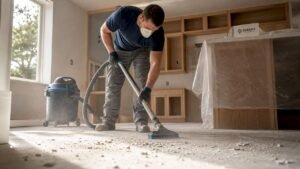
Discuss floor vacuuming and mopping as part of the visit. Tell the office about the floor material and any manufacturer-specific care instructions. Related reading: essential cleaning tools.
1. What are the main types of cleaning supplies?
Dusting can be included for accessible surfaces in the agreed rooms. Point out delicate items, shelves that should be left alone and any areas that need additional attention.
Detergents are the most common household cleaning agent. They work by breaking the bond between dirt, oil, and a surface so water can rinse them away. Dish soap, laundry detergent, and general surface sprays all fall into this group.
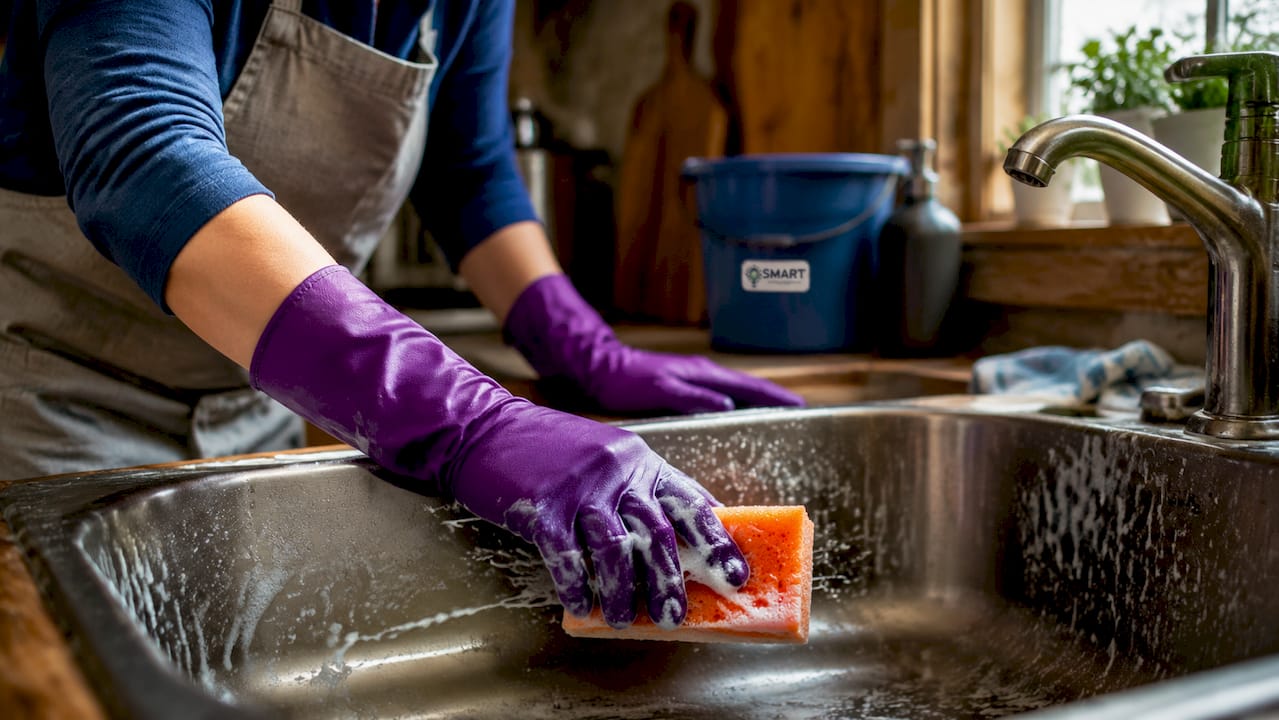
Degreasers go further than detergents. They cut through heavy grease and baked-on grime that a standard detergent cannot dissolve. Kitchen stovetops, range hoods, and garage floors are the most common targets.
For kitchen work, identify the accessible counters, sink and appliance surfaces to be cleaned. Appliance interiors and other additional tasks should be discussed before the visit.
Acid cleaners carry a pH of 1, 4, which gives them the power to dissolve mineral deposits, rust, and hard water scale. Bar Keepers Friend and CLR are two widely available acid-based products. Toilets, faucets, and showerheads respond well to acid cleaners when mineral buildup is the problem.
Follow the product label and the surface manufacturer’s care instructions. Do not mix cleaning products. Discuss any specific product request before a professional visit.
2. Which specialized cleaners work best for specific surfaces?
Specialized cleaners outperform all-purpose products on stubborn buildup by a significant margin. The reason is chemistry. A product formulated for soap scum contains acids or chelating agents that target calcium and magnesium deposits. A general spray does not. Using the right product for the right surface is the single biggest upgrade most homeowners can make.
Here is how specialized cleaners break down by surface:
- Floor cleaners: Hardwood floors need a pH-neutral cleaner to avoid stripping the finish. Tile and grout respond to alkaline cleaners that lift embedded dirt. Laminate floors require low-moisture formulas. Carpet cleaners use enzyme-based chemistry to break down organic stains at the fiber level.
- Glass cleaners: Products like Windex use ammonia or alcohol to dissolve fingerprints and film without leaving streaks. Streak-free formulas matter because glass shows every residue.
- Kitchen cleaners: These are formulated to cut cooked-on grease and food stains. Many contain degreasers plus surfactants for a two-step attack on kitchen grime.
- Bathroom cleaners: Designed to dissolve soap scum and mineral deposits simultaneously. Scrubbing Bubbles is a well-known example that combines acid chemistry with a foaming agent to cling to vertical surfaces.
The table below shows how surface type drives product choice:
| Surface | Soil type | Best cleaner category |
|---|---|---|
| Hardwood floor | Dust, light grime | pH-neutral floor cleaner |
| Tile and grout | Embedded dirt, mold | Alkaline cleaner or bleach solution |
| Glass and mirrors | Fingerprints, film | Ammonia or alcohol-based glass cleaner |
| Kitchen stovetop | Baked-on grease | Degreaser or heavy-duty kitchen cleaner |
| Bathroom fixtures | Soap scum, mineral scale | Acid-based bathroom cleaner |
Pro Tip: Check your room-by-room cleaning checklist before buying specialized products. Knowing which surfaces you have at home prevents buying cleaners you will never use.
3. What essential non-chemical tools does every home need?
Effective cleaning kits include microfiber cloths, durable scrub brushes, non-scratch sponges, and a vacuum with attachments. The right tool reduces scrubbing time and protects surfaces from damage. A chemical cleaner can only do its job if the tool applying it is suited to the task.
Here are the core physical tools every home should have:
- For kitchen work, identify the accessible counters, sink and appliance surfaces to be cleaned. Appliance interiors and other additional tasks should be discussed before the visit.
- Scrub brushes: Stiff-bristle brushes handle grout lines, tile edges, and textured surfaces where cloths cannot reach. A soft-bristle brush works for delicate surfaces like painted walls.
- Non-scratch sponges: Dual-sided sponges with a soft face and a scrubbing pad handle most everyday tasks without scratching glass or stainless steel.
- Vacuum with attachments: A vacuum with a crevice tool, upholstery brush, and hard-floor setting handles every surface in the home. Brands like Dyson and Shark offer models with multiple attachments for this reason.
- Squeegee: A squeegee on shower walls after every use prevents soap scum and mineral buildup from forming. This single habit cuts bathroom cleaning time significantly.
- Pumice stone: A pumice stone removes toilet bowl rings and mineral deposits that acid cleaners alone cannot fully clear. It is one of the most underused tools in residential cleaning.
- Extendable duster: Microfiber dusters on extendable handles reach ceiling fans, crown molding, and light fixtures without a ladder.
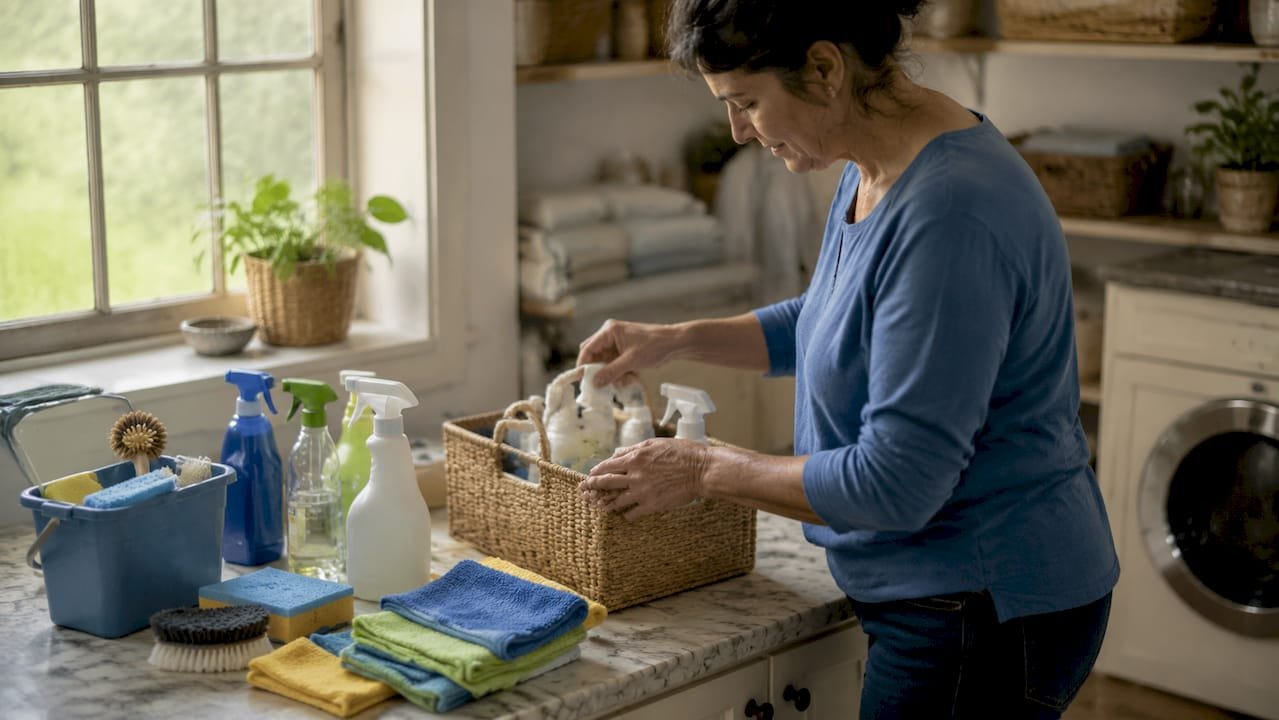
Pro Tip: Keep supplies organized in a dedicated cleaning caddy. Carrying everything you need from room to room cuts wasted time and makes your routine repeatable.
4. How to choose the best cleaning supplies for your home
Matching product chemistry to soil type is the foundation of effective cleaning. Using a kitchen degreaser on bathroom soap scum, or a glass cleaner on a greasy stovetop, leads to poor results and wasted product. The first step is identifying what you are actually cleaning: grease, mineral scale, organic stains, or general dust and dirt.
Follow this process to build a supply kit that fits your home:
- Identify your surfaces. List every surface type in your home: hardwood, tile, laminate, glass, stainless steel, painted drywall. Each surface has a compatible cleaner and an incompatible one.
- Dusting can be included for accessible surfaces in the agreed rooms. Point out delicate items, shelves that should be left alone and any areas that need additional attention.
- For kitchen work, identify the accessible counters, sink and appliance surfaces to be cleaned. Appliance interiors and other additional tasks should be discussed before the visit.
- Add specialty products for tough spots. All-purpose cleaners fall short on heavy-duty tasks like baked-on grease or mineral deposits. A pumice stone and an oxygen whitener like OxiClean handle the jobs a spray bottle cannot.
- We use one standard line of professional cleaning products. We don’t supply a separate eco-friendly or pet-friendly product line. If you want a specific product used, please supply it and discuss it with the office before the visit. The team may decline products that aren’t suitable for the task or surface. Related reading: safer home cleaning.
- Organize for efficiency. Group products by room or task. A bathroom caddy, a kitchen caddy, and a general-purpose caddy prevent hunting for supplies mid-clean.
- Avoid chemistry mismatches. Never combine bleach with ammonia-based cleaners. Never use acidic cleaners on natural stone like marble or granite. Read labels before mixing or layering products.
Key takeaways
The most effective home cleaning kit combines four chemical agent types with purpose-built physical tools, matched to specific surfaces and soil types for reliable results.
| Point | Details |
|---|---|
| Four chemical categories | Routine surface cleaning |
| Specialized beats all-purpose | Surface-specific cleaners outperform general sprays on stubborn buildup. |
| Tools matter as much as chemicals | Microfiber cloths, scrub brushes, and squeegees reduce effort and protect surfaces. |
| Match chemistry to soil | Using the wrong product for the soil type leads to poor results and wasted product. |
| Organize for consistency | A dedicated caddy makes cleaning routines faster and more repeatable. |
Practical considerations for your cleaning plan
The most common mistake I see is not buying the wrong product. It is buying the right product and using it on the wrong surface. A homeowner will spend fifteen minutes scrubbing a toilet ring with a bathroom spray when a pumice stone would clear it in forty-five seconds. The product knowledge gap is real, and it costs people time every single week.
The second mistake is underestimating microfiber. Most people still reach for paper towels out of habit. Microfiber cloths hold more soil per pass, leave no lint, and last hundreds of washes. Switching to a color-coded microfiber system is the single highest-return upgrade in any cleaning routine.
For kitchen work, identify the accessible counters, sink and appliance surfaces to be cleaned. Appliance interiors and other additional tasks should be discussed before the visit. Related reading: Maintenance cleaning, deep cleaning.
When the right supplies are not enough
Professional cleaners use the same product categories described here, but they bring trained technique, commercial-grade equipment, and a systematic approach that most homeowners cannot replicate on their own.

Smartcleaningwa serves homeowners and renters across Seattle, Kirkland, Bellevue, and Redmond with recurring house cleaning, deep cleaning, and move-in and move-out services. Every visit uses the right cleaning agents and tools for each surface in your home. If you want results that go beyond what a spray bottle and a sponge can deliver, professional residential cleaning is the logical next step. You can also request a free cleaning estimate to see what a professional service looks like for your specific home.
FAQ
What are the four main types of cleaning chemicals?
The cleaning plan should identify the rooms, tasks and priorities for your visit. Tell the office about access restrictions, delicate surfaces or areas that should be left alone.
Are all-purpose cleaners good enough for every task?
All-purpose cleaners handle light everyday cleaning but fall short on heavy-duty tasks like baked-on grease or hard water scale. Specialized products are needed for those situations.
What is the best cleaning tool for most surfaces?
Microfiber cloths are the most versatile cleaning tool for most surfaces. They hold more dust and dirt than cotton or paper towels and work on glass, countertops, appliances, and floors.
Can you mix different cleaning products together?
Follow the product label and the surface manufacturer’s care instructions. Do not mix cleaning products. Discuss any specific product request before a professional visit.
How do I organize cleaning supplies efficiently?
Group supplies by room or task in dedicated caddies. A bathroom caddy, a kitchen caddy, and a general-purpose caddy keep the right products accessible and make your routine faster and more consistent.
Recommended
- Smart Cleaning Service™ House Cleaning Seattle Kirkland Bellevue Redmond
- Smart Cleaning Service™ House Cleaning Seattle Kirkland Bellevue Redmond
- Smart Cleaning Service™ House Cleaning Seattle Kirkland Bellevue Redmond
- Smart Cleaning Service™ House Cleaning Seattle Kirkland Bellevue Redmond