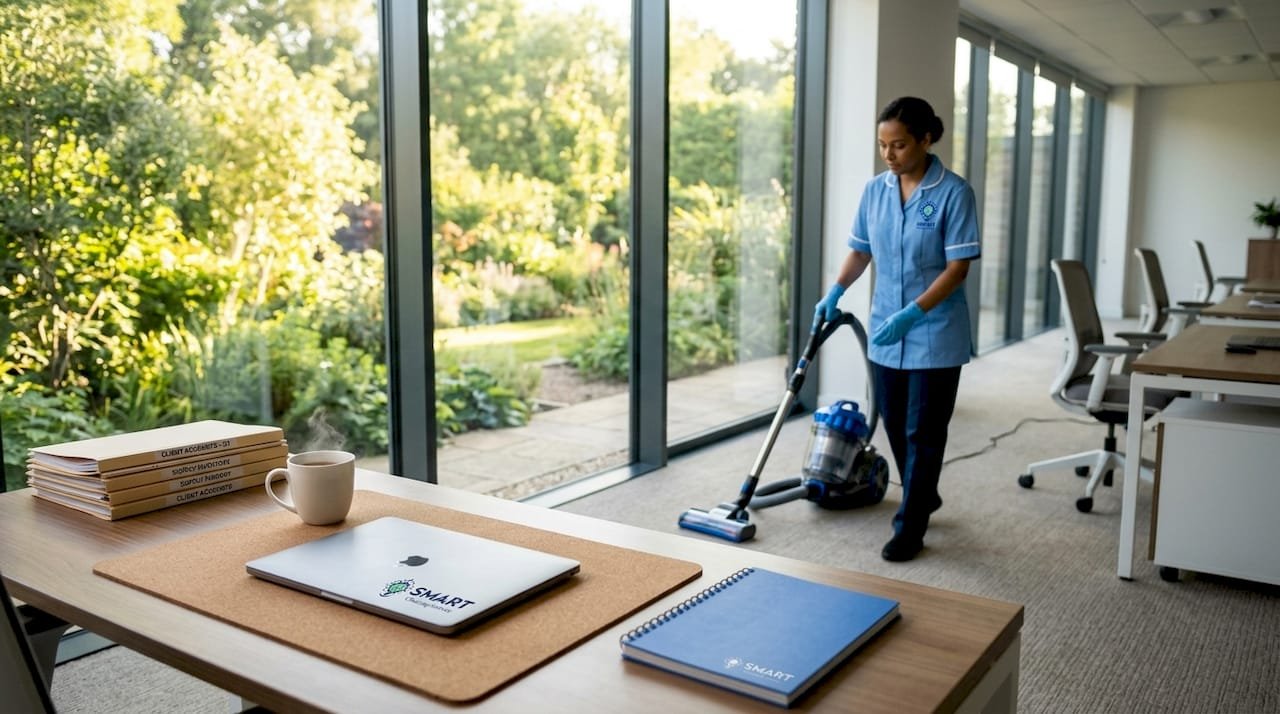
Regular office cleaning is the practice of routinely removing dirt, germs, and clutter from a workplace to protect employee health, preserve physical assets, and maintain a professional environment. Business owners and facility managers who treat cleaning as a core operational priority see measurable returns in productivity, reduced sick leave, and lower long-term maintenance costs. The evidence is clear: cleaning reduces germs and allergens in office spaces, directly cutting the number of sick days employees take. Understanding why regular office cleaning matters is the first step toward building a workplace that performs at its best.
Why regular office cleaning matters for employee health
The most direct benefit of consistent office hygiene is a measurable reduction in illness. Bacteria and viruses survive on hard surfaces for hours, and high-touch areas like keyboards, door handles, elevator buttons, and shared phones are the primary transmission points in any office. Frequent disinfecting of these surfaces breaks that transmission chain before it reaches your team.
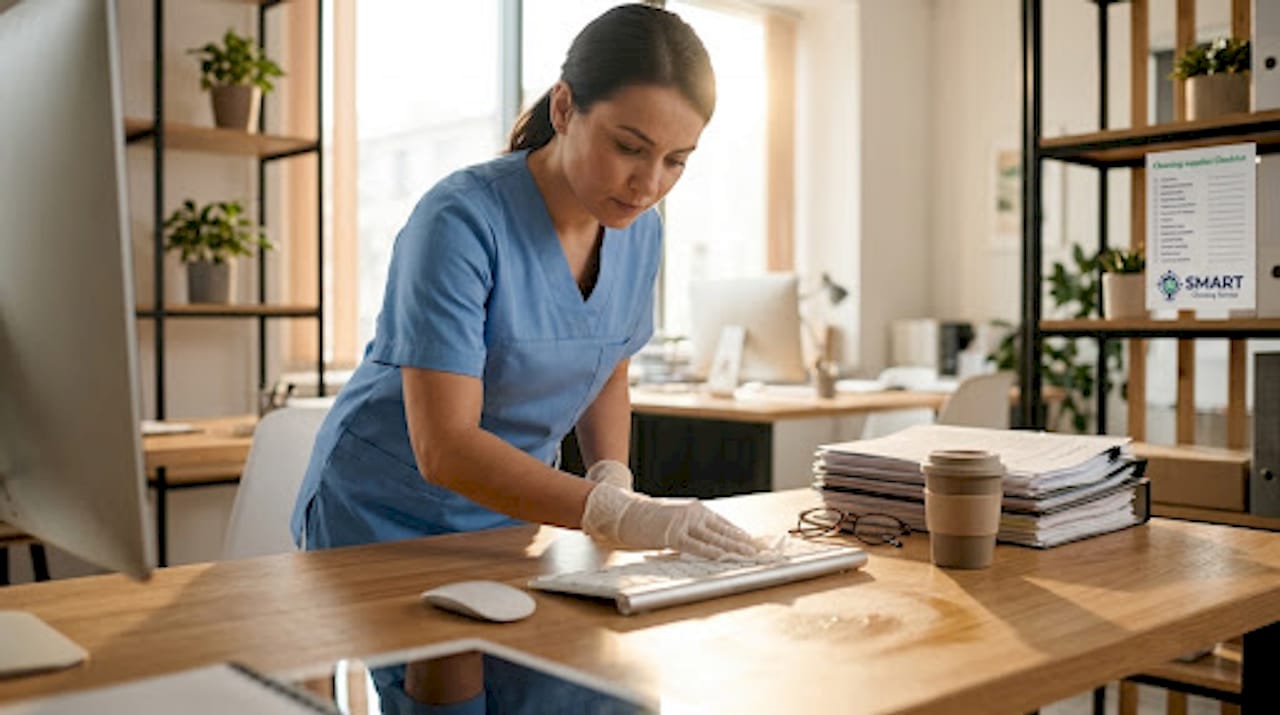
Fewer sick days translate directly into higher output. When one employee comes in sick and the workspace has not been properly sanitized, illness spreads quickly through shared air and surfaces. A structured cleaning program that targets restrooms, break rooms, and communal workstations keeps that cycle from starting.
Air quality is a factor most facility managers underestimate. Dust accumulation in HVAC vents, on blinds, and under furniture circulates allergens that trigger respiratory issues, headaches, and fatigue. These symptoms rarely send someone home, but they consistently reduce concentration and output throughout the workday.
“Repetitive physical activities like cleaning are regulating for the nervous system and can be calming.” — Medical Xpress, 2026
The psychological dimension matters too. Research shows that cleaning provides mental health benefits, including reduced stress and a greater sense of control. Employees who work in visibly clean spaces report lower anxiety and a stronger sense of organizational care. That sense of being valued is a retention factor, not just a comfort one.
- Disinfect keyboards, phones, and door handles daily
- Clean restrooms and break rooms at least twice per week
- Replace HVAC filters on schedule and dust vents monthly
- Address spills and visible mess immediately rather than at end of day
Pro Tip: Schedule high-touch surface disinfection for the start and end of each workday, not just during weekly cleans. This doubles your protection during peak transmission windows.
How cleaning protects office assets and saves money long term
Office furniture, flooring, and equipment represent significant capital investment. Without regular maintenance, that investment degrades faster than it should. Regular professional carpet maintenance can extend the lifespan of commercial flooring by several years, which means fewer replacement cycles and lower capital expenditure over time.
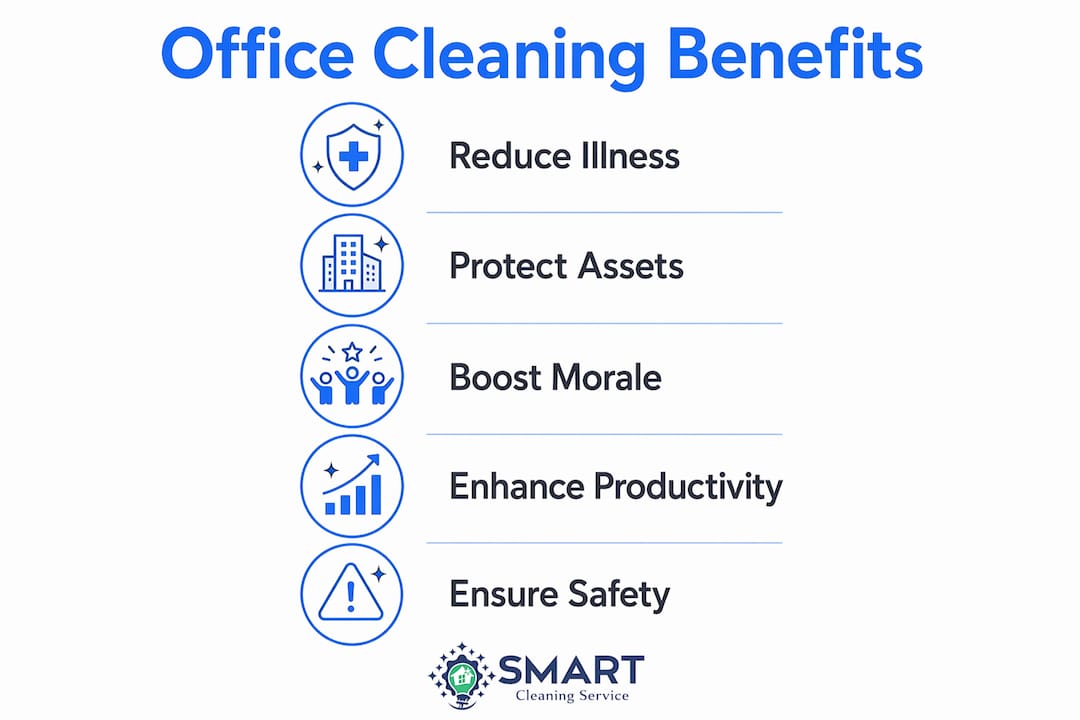
Carpet damage is a useful case study. Foot traffic grinds dirt particles into carpet fibers, causing matting and permanent discoloration that no amount of later cleaning can reverse. Consistent vacuuming and immediate stain treatment prevent that damage from becoming irreversible. Preventive matting at entry points further reduces the volume of debris tracked onto flooring throughout the day.
The same logic applies to office furniture. Fabric chairs and sofas accumulate oils, dust, and food residue that break down upholstery fibers over time. Hard surfaces like desks and shelving develop scratches and staining when grime is left to sit. Regular wiping and periodic deep cleaning preserve both appearance and structural integrity.
| Asset | Without regular cleaning | With regular cleaning |
|---|---|---|
| Commercial carpet | Replacement in 3 to 5 years | Lifespan extended by several years |
| Office furniture | Fabric degradation, staining | Retained appearance and structure |
| Hard flooring | Scratches, dullness, buildup | Consistent finish, reduced wear |
| HVAC system | Filter clogging, higher energy use | Efficient airflow, lower utility costs |
The financial argument is straightforward. Routine cleaning costs a fraction of what early asset replacement costs. A commercial carpet replacement for a mid-size Seattle office can run tens of thousands of dollars. A scheduled maintenance program costs a predictable monthly amount and delays that expense significantly.
Pro Tip: Place high-quality entrance mats at every building entry point. Studies on commercial flooring show that matting alone can reduce the volume of dirt tracked onto carpets by a substantial margin, cutting both cleaning frequency and long-term wear.
Does office cleanliness affect professional image and employee morale?
The answer is yes, and the effect is immediate. A clean office builds client trust from the moment a visitor walks through the door. Cluttered reception areas, stained carpets, and dirty restrooms communicate disorganization regardless of how strong your actual work product is. First impressions in business are formed in seconds, and the physical environment is a major input.
For employees, the impact is equally concrete. People spend a third of their waking hours at work. When that environment is clean, organized, and well-maintained, it signals that leadership takes the workplace seriously. That signal affects morale, engagement, and the informal norms around how people treat shared spaces.
Psychological research consistently links environment to mental state. Cluttered, dirty spaces increase cortisol levels and reduce the ability to focus. Clean environments do the opposite. The mental well-being benefits of clean spaces extend beyond individual comfort into team dynamics, with cleaner workplaces showing stronger norms around shared responsibility and mutual respect.
- Clients and visitors form opinions about your business within seconds of arrival
- Employees in clean offices report higher job satisfaction and lower stress
- Clean shared spaces reduce interpersonal friction over mess and hygiene
- A well-maintained office reinforces a culture of professionalism and accountability
What are the safety benefits of regular office cleaning?
Workplace safety compliance is a legal obligation for most businesses, and regular cleaning is one of the most direct ways to meet it. Cleaning reduces workplace risks including trips, slips, falls, and fire hazards by managing clutter, spills, and accumulated debris. These are not theoretical risks. Slips and falls are among the most common causes of workplace injury across industries.
A structured cleaning program addresses safety through several specific mechanisms:
- Spill management: Wet floors from spills or cleaning are marked and dried promptly, eliminating the primary cause of slip injuries.
- Clutter removal: Boxes, cables, and loose items left in walkways create trip hazards that accumulate gradually and go unnoticed until someone is hurt.
- Emergency exit maintenance: Clear, unobstructed exit routes are a legal requirement. Regular cleaning sweeps confirm that storage has not crept into these areas.
- Dust and debris control: Accumulated dust near electrical equipment and in storage areas is a fire risk. Routine cleaning removes this material before it becomes a hazard.
- Restroom and kitchen hygiene: These areas develop mold, bacteria, and pest attractants when not cleaned consistently, creating both health and safety violations.
Facility managers who document their cleaning schedules also create a paper trail that supports compliance audits and insurance claims. A scheduled cleaning plan reduces dirt accumulation and demonstrates due diligence to regulators and insurers alike.
How to build an effective office cleaning schedule
An effective cleaning program starts with an honest assessment of your office size, foot traffic, and the nature of your work. A law firm with private offices and minimal client traffic has different needs than a 50-person tech company with open-plan seating and a busy kitchen. Frequency must match reality, not a generic template.
The distinction between regular cleaning and deep cleaning is one that many facility managers blur. Regular cleaning covers daily and weekly tasks: vacuuming, surface wiping, restroom sanitation, trash removal, and kitchen tidying. Deep cleaning covers quarterly or biannual tasks: carpet extraction, upholstery cleaning, window washing, vent cleaning, and behind-appliance sanitation. Both are necessary. Neither replaces the other.
The in-house versus professional service decision comes down to consistency and specialization. In-house staff can handle daily tidying effectively, but professional cleaning services bring specialized equipment and industry-approved methods that reduce cross-contamination risks in ways that general staff cannot replicate. For high-traffic offices or those with compliance requirements, professional services are the more reliable choice.
Pro Tip: Use a cleaning continuity strategy between professional visits. Assign specific daily tasks to office staff, such as wiping down their own workstations and clearing dishes from the kitchen, so the professional team focuses on the work only they can do.
| Task | Frequency | Responsible party |
|---|---|---|
| High-touch surface disinfection | Daily | In-house or professional |
| Restroom and kitchen cleaning | Daily to twice weekly | Professional service |
| Vacuuming and floor care | Weekly | Professional service |
| Carpet extraction | Quarterly | Professional service |
| HVAC vent and filter cleaning | Every 3 to 6 months | Specialist contractor |
For guidance on maintaining clean office spaces between professional visits, a structured daily checklist assigned to staff keeps standards from slipping between scheduled cleans.
Key takeaways
Regular office cleaning protects employee health, preserves costly assets, reduces safety risks, and builds the professional image that clients and staff both respond to.
| Point | Details |
|---|---|
| Health and sick day reduction | Disinfecting high-touch surfaces daily cuts germ transmission and reduces employee absenteeism. |
| Asset lifespan extension | Regular carpet and furniture maintenance delays replacement costs by several years. |
| Safety and compliance | Scheduled cleaning removes trip hazards, fire risks, and supports regulatory compliance documentation. |
| Professional image | Clean offices build immediate client trust and reinforce employee morale and engagement. |
| Schedule structure | Separate daily tasks from quarterly deep cleans and match frequency to actual office traffic. |
The real cost of treating cleaning as optional
I have worked with enough Seattle-area businesses to know that cleaning budgets are almost always the first line item cut when costs need trimming. The logic seems sound on paper: cleaning is invisible when it works, so cutting it feels low-risk. That reasoning is wrong, and the consequences show up in ways that are expensive to reverse.
The offices I have seen that deferred cleaning for six months or more share a pattern. Carpets that needed extraction now need replacement. Employees who started calling in sick more frequently. A client who mentioned the restrooms in a post-visit email. None of these outcomes are dramatic on their own, but together they represent real money and real reputational damage.
What I tell business owners is this: cleaning is not a cost center. It is a maintenance program for your most productive asset, which is your workforce, and your most visible asset, which is your physical space. The productivity and health gains from a clean office are not soft benefits. They show up in attendance records, asset replacement cycles, and client retention.
The businesses that treat cleaning as an investment rather than an expense consistently outperform those that treat it as overhead. That is not a theory. It is a pattern I have observed repeatedly across industries and office sizes.
— Wilker
How Smartcleaningwa supports Seattle businesses with office cleaning
Smartcleaningwa provides professional office cleaning services for businesses across the Greater Seattle Area, including recurring maintenance programs tailored to your office size, traffic, and schedule. Every service is delivered by licensed and insured professionals using industry-approved methods, with real-time updates so you always know the work is done. Whether you need daily cleaning, weekly maintenance, or a one-time deep clean before a client visit, Smartcleaningwa builds a program around your actual needs. If you are ready to stop treating cleaning as an afterthought and start treating it as the operational investment it is, explore office cleaning options built specifically for Seattle businesses.
FAQ
Why does regular office cleaning reduce sick days?
Regular cleaning and disinfecting of high-touch surfaces like keyboards, phones, and door handles removes the bacteria and viruses that spread illness between employees. Fewer pathogens in the workspace means fewer infections and fewer days lost to illness.
How often should a commercial office be professionally cleaned?
Most offices benefit from professional cleaning at least once or twice per week for general maintenance, with quarterly deep cleans for carpets, upholstery, and HVAC systems. High-traffic offices or those with food preparation areas may require daily professional service.
Does office cleanliness affect employee productivity?
Yes. Clean environments reduce stress, improve focus, and lower the frequency of illness-related absences, all of which directly affect output. Research links clean workplaces to mental well-being and reduced cortisol levels in employees.
What is the difference between regular cleaning and deep cleaning?
Regular cleaning covers daily and weekly tasks such as vacuuming, surface wiping, and restroom sanitation. Deep cleaning addresses less frequent but higher-intensity tasks like carpet extraction, vent cleaning, and behind-appliance sanitation, typically performed quarterly or biannually.
Can regular cleaning extend the life of office carpets and furniture?
Yes. Professional carpet maintenance removes the embedded dirt that causes fiber breakdown and permanent matting, extending commercial flooring lifespan by several years compared to irregular or reactive cleaning.
Recommended
- Smart Cleaning Service™ House Cleaning Seattle Kirkland Bellevue Redmond
- Smart Cleaning Service™ House Cleaning Seattle Kirkland Bellevue Redmond
- Smart Cleaning Service™ House Cleaning Seattle Kirkland Bellevue Redmond
- Smart Cleaning Service™ House Cleaning Seattle Kirkland Bellevue Redmond