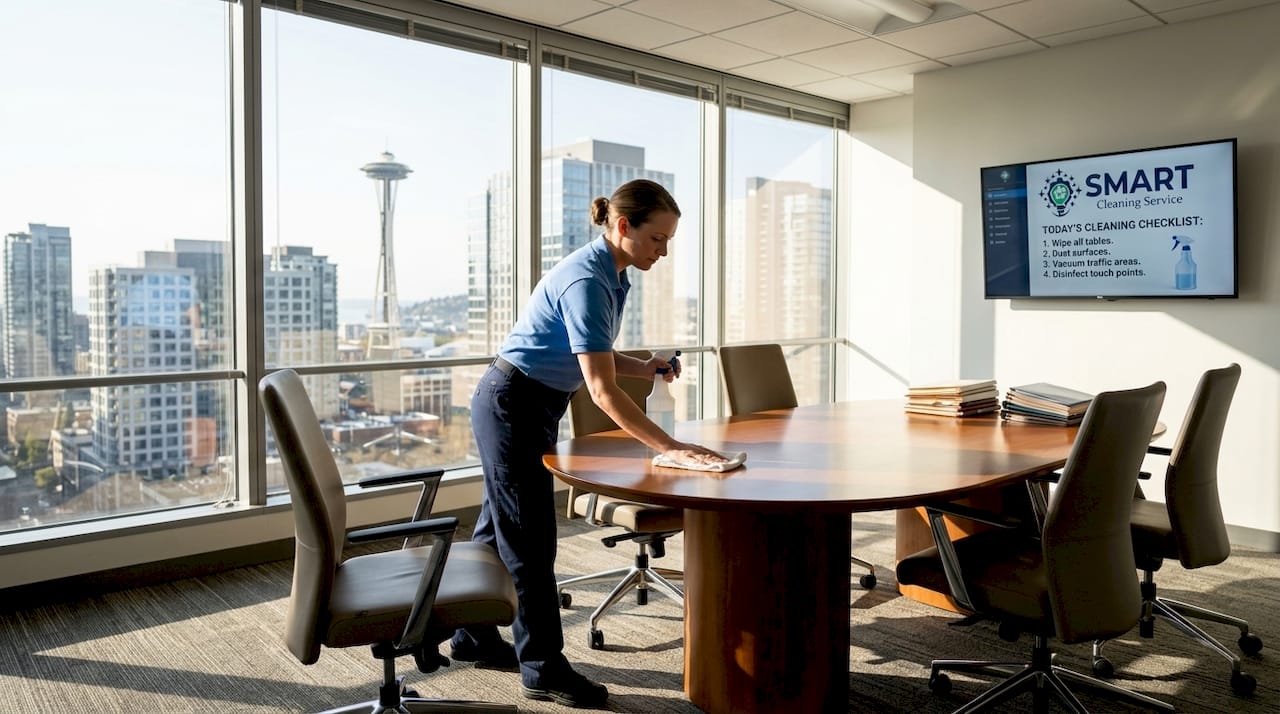
Most Seattle businesses assume commercial cleaning is just “good janitorial work” handled by someone with a mop and a spray bottle. That assumption is costing them. Modern commercial cleaning is a structured, documented operational program built around risk management, compliance, and measurable outcomes. With Washington State’s Clean Buildings Performance Standard adding formal requirements for many properties, treating cleaning as an afterthought is no longer just a quality issue. It’s a liability. This article breaks down exactly what commercial cleaning means, how it works, and what Seattle-area businesses and property managers need to know to stay ahead.
Table of Contents
- Defining commercial cleaning: Beyond just cleaning floors and surfaces
- Standardized processes: How modern cleaning delivers consistency and safety
- Compliance matters: State standards and regulations for Seattle-area properties
- The business case: Why well-designed cleaning programs drive real value
- From theory to practice: Building an effective cleaning program
- Why most Seattle businesses underestimate the value of true commercial cleaning
- Get dependable commercial cleaning: Seattle’s trusted choice
- Frequently asked questions
Key Takeaways
| Point | Details |
|---|---|
| Not just surface cleaning | Commercial cleaning in Seattle means documented processes and safety standards, not just wiping dirt from surfaces. |
| Compliance is essential | Washington State laws require many commercial buildings to meet strict cleaning and reporting standards. |
| Consistency through standards | Standardized cleaning protocols ensure reliable, safe, and high-quality results for every business. |
| Delivers real business value | Clean workspaces improve productivity, tenant satisfaction, and property value when supported by quality cleaning programs. |
| Actionable frameworks exist | Practical planning—from scheduling to documentation—helps Seattle property managers implement successful programs. |
Defining commercial cleaning: Beyond just cleaning floors and surfaces
To understand its importance, let’s clarify what commercial cleaning really entails in a business context.
Many people use “janitorial,” “custodial,” and “commercial cleaning” interchangeably. They’re not the same. Janitorial work typically covers routine, daily tasks like emptying trash, mopping floors, and restocking supplies. Commercial cleaning is a broader, more structured discipline that includes both routine maintenance and scheduled specialty services, all tied together by documented procedures and defined quality standards.
Well-designed commercial cleaning programs cover everything from daily high-touch surface disinfection to periodic deep cleaning of carpets, hard floors, upholstery, and ventilation areas. They are built specifically for the property type, occupancy level, and risk profile of each facility.
Here’s how commercial cleaning compares to other cleaning types:
| Feature | Residential cleaning | Janitorial | Commercial cleaning |
|---|---|---|---|
| Scope | Home-focused tasks | Routine maintenance | Full-spectrum program |
| Documentation | Rarely required | Basic logs | Required, detailed |
| Compliance needs | Minimal | Low | Often mandatory |
| Specialty services | Occasional | Rare | Scheduled |
| Risk management | Not applicable | Limited | Central to program |
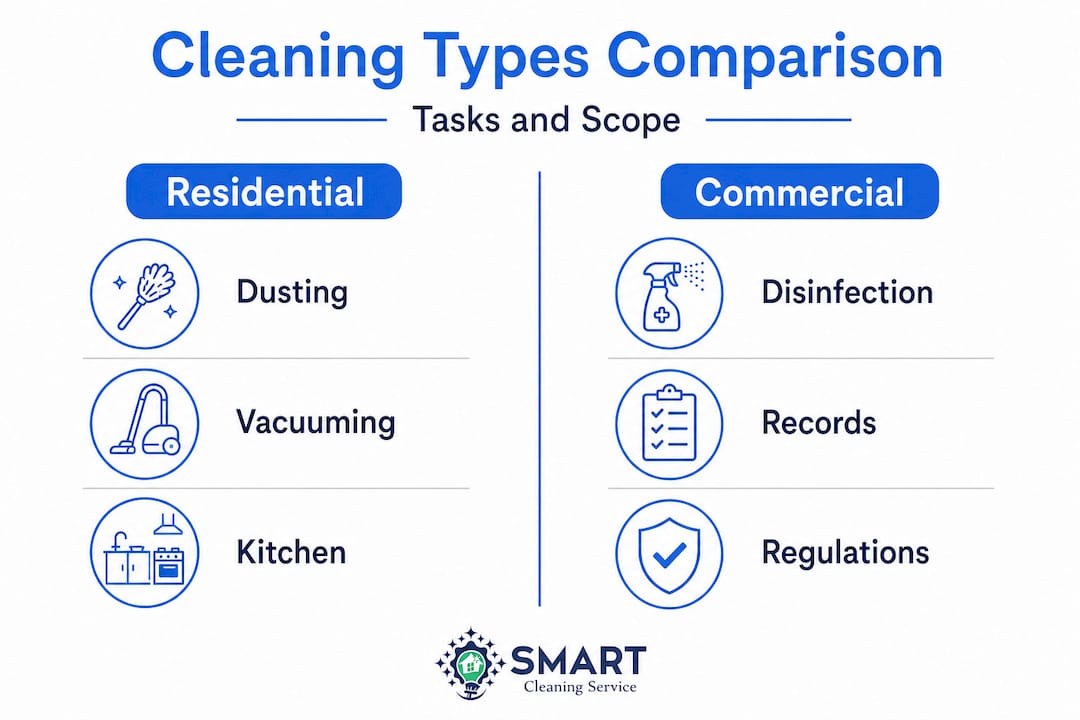
Understanding the difference between residential vs. commercial cleaning helps property managers set realistic expectations and choose the right service level.
Key areas covered in a true commercial cleaning program include:
- High-touch surface disinfection (doorknobs, light switches, elevator buttons)
- Restroom sanitation with documented chemical protocols
- Floor care including stripping, waxing, and carpet extraction
- Common area maintenance for lobbies, conference rooms, and break rooms
- Periodic deep cleaning for kitchens, HVAC vents, and hard-to-reach surfaces
“Commercial cleaning methodologies increasingly rely on standardized processes — cleaning sequence, correct chemicals and equipment, required frequencies, and documentation — to reduce risks like cross-contamination and inconsistent results.”
Cross-contamination is a genuine operational risk. Using the wrong cloth or wrong chemical in the wrong order in a restroom, then carrying that same equipment into a kitchen or conference room, can spread pathogens rather than eliminate them. A well-built program prevents that from happening by design, not by luck.
Standardized processes: How modern cleaning delivers consistency and safety
Once you understand the full scope, it’s clear that meeting modern expectations depends on more than just checklists. Here’s how leading services do it.
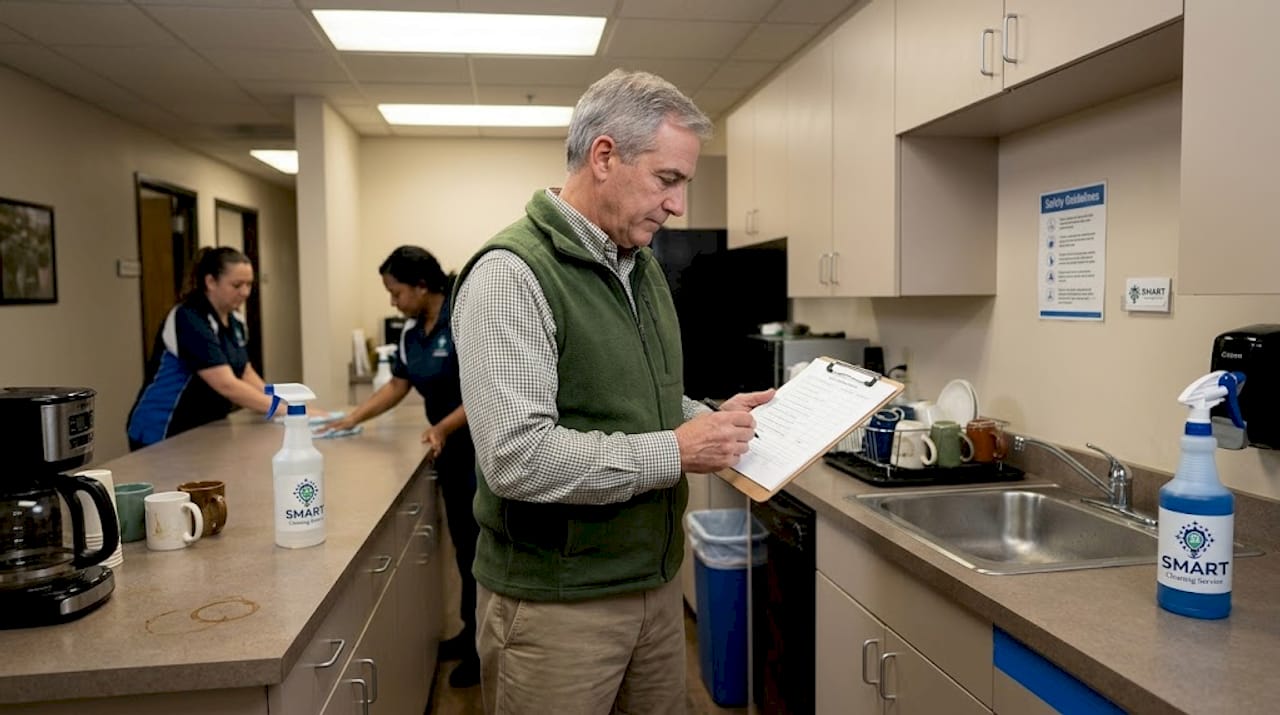
Professional commercial cleaning isn’t improvised. Every task, every product, and every sequence is determined in advance and documented for accountability. ISSA, the worldwide cleaning industry association, describes power clean standards as structured expectations that specify how tasks are performed, what tools and chemicals are used, correct sequences, proper dilution and dwell times for disinfectants, and required safety practices. That level of structure removes the guesswork.
Here’s how a standardized commercial cleaning workflow typically unfolds:
- Zone assignment. The facility is divided into zones based on risk level and traffic volume. Restrooms and kitchens are treated as high-risk; private offices are lower priority.
- Top-down cleaning. All tasks start from high surfaces and move downward to prevent recontamination.
- Color-coded tools. Different colored microfiber cloths and mop heads are assigned to specific zones, preventing cross-contamination.
- Chemical preparation. Disinfectants are diluted to exact ratios and allowed to sit at correct dwell times (the time a product must stay wet on a surface to kill pathogens).
- Documentation. Completed tasks are logged, signed, and timestamped for accountability.
Pro Tip: Ask any commercial cleaning vendor you’re evaluating whether they use documented dwell times for disinfectants. If they don’t know what that means, that tells you everything.
ISSA also promotes team cleaning methods, a structured approach where team members specialize in specific tasks rather than each person cleaning one entire room independently. One person handles all trash, another handles all restrooms, another handles all floors. This improves consistency, builds expertise, and cuts cleaning time significantly.
Explore professional cleaning techniques that reflect these industry-standard approaches in real-world applications.
| Cleaning approach | Task ownership | Consistency | Efficiency |
|---|---|---|---|
| Traditional zone cleaning | One person per room | Variable | Lower |
| Team cleaning | Specialized roles by task | High | Higher |
| Documented protocol cleaning | Standardized across all staff | Very high | Optimized |
Compliance matters: State standards and regulations for Seattle-area properties
Because these processes have to stand up to more than just internal standards, let’s look at how Seattle-area policies shape commercial cleaning.
Washington State has formalized “clean buildings” as a policy priority. The Washington Clean Buildings Performance Standard, administered by the state Department of Commerce, establishes requirements tied to building performance and compliance for commercial properties across the region. Many larger buildings must meet documentation and reporting requirements tied to this standard.
Key compliance points for Seattle-area property managers:
- Mandatory reporting for covered buildings is required by June 1, 2026, making documentation of cleaning programs time-sensitive.
- Properties that fail to comply may face penalties, reduced eligibility for certain programs, or reputational damage with tenants.
- Cleaning frequencies, procedures, and chemical use may all fall under regulatory scrutiny depending on building classification.
- Facilities in high-occupancy, healthcare-adjacent, or food service settings face additional layers of regulation.
Washington’s Clean Buildings Performance Standard formalizes compliance by requiring structured building performance records. For property managers, this means cleaning programs need to be documented, not just performed.
Understanding local cleaning regulations matters especially in settings like schools and high-occupancy buildings, where cleaning failure carries the most risk.
The link between cleanliness and compliance is not theoretical. Inspectors, tenants, and building certification programs all evaluate cleanliness as part of broader building quality assessments. A documented cleaning program is one of the fastest ways to demonstrate that a facility is managed responsibly.
The bottom line: If your building qualifies under Washington’s standards and you can’t produce cleaning records, you’re exposed. Not just to inspectors but to tenant complaints, liability, and future lease negotiations where cleanliness is a deciding factor.
The business case: Why well-designed cleaning programs drive real value
With compliance and structure in mind, it’s worth understanding exactly what your business stands to gain from investing seriously in commercial cleaning.
The return on a structured cleaning program is measurable across multiple areas. Cleanliness directly affects employee productivity, tenant retention, and the long-term condition of your physical assets. These are not soft benefits. They have real financial weight.
ISSA’s Cleaning Times resource provides industry workloading guidance intended to help planning, staffing, and scheduling for both routine maintenance and specialized projects. Using this kind of data-driven approach allows property managers to budget accurately, avoid overstaffing or understaffing, and ensure every square foot gets the right level of attention.
Key business benefits of a well-designed commercial cleaning program include:
- Reduced absenteeism. Cleaner workplaces mean fewer sick days, especially during cold and flu season.
- Lower maintenance costs. Regular floor care, for example, extends the life of hard flooring and carpet significantly.
- Stronger tenant retention. Cleaning and property value are directly connected. Tenants renew leases in buildings where they feel comfortable and cared for.
- Fewer complaints. Documented programs catch problems before they become tenant issues.
- Compliance readiness. Buildings with documented cleaning histories handle inspections and audits faster and with less stress.
Pro Tip: Schedule a quarterly walk-through with your cleaning provider to review which areas are getting complaints or showing wear. That data drives smarter scheduling and prevents expensive reactive repairs.
The office health benefits of regular professional cleaning go well beyond optics. A study environment or office space with clean air, sanitized surfaces, and orderly common areas measurably reduces stress and supports cognitive performance. For businesses in competitive Seattle markets, that edge matters.
From theory to practice: Building an effective cleaning program
To help you take action, here’s how to turn these concepts into an actionable cleaning program for your Seattle-area facility.
Building a commercial cleaning program from scratch or evaluating a vendor’s existing program comes down to six key elements. A documented program that covers all six gives you defensible records and consistent results.
- Map every building zone. Categorize spaces by risk level (restrooms, kitchens, reception, private offices) and traffic volume. This determines cleaning frequency for each area.
- Set documented frequencies. Define daily, weekly, monthly, and quarterly tasks in writing. This is the backbone of your cleaning program and the first thing any inspector or auditor will ask for.
- Specify chemicals, dilutions, and PPE. Every product used should have a documented dilution ratio, intended surface, and required personal protective equipment. No guessing allowed.
- Establish task sequences. As ISSA’s standardized cleaning processes make clear, the order tasks are performed directly affects quality and safety outcomes.
- Implement accountability systems. Digital checklists, supervisor sign-offs, and photo logs are now common in professional cleaning programs. These protect both the building manager and the cleaning service.
- Review and adapt regularly. Seattle’s commercial properties face seasonal challenges including increased rain-tracked debris, post-event deep cleaning needs, and evolving compliance requirements. Build review cycles into your program.
Maintaining commercial spaces in the Greater Seattle Area also means accounting for specific building types, from tech offices in Bellevue to mixed-use retail in Capitol Hill, each with different occupancy patterns and cleaning demands.
For regulated facilities, ISSA’s overview of infection control protocols makes clear that commercial cleaning in high-risk environments extends well beyond visual cleanliness into documented infection prevention and chemical management.
When to outsource vs. manage in-house: If your facility is under 10,000 square feet or you lack dedicated facilities staff, outsourcing to a licensed commercial cleaning provider almost always delivers better results at lower total cost than hiring internal cleaning staff. For larger properties with complex compliance requirements, a hybrid model where a professional service handles specialty cleaning while in-house staff manage daily basics can work well.
Pro Tip: Before signing any commercial cleaning contract, request a sample cleaning log from the vendor’s current accounts. If they don’t keep written records, they can’t guarantee consistency and they can’t support your compliance documentation.
Why most Seattle businesses underestimate the value of true commercial cleaning
Here’s an uncomfortable truth we see regularly: most Seattle business owners treat commercial cleaning as a line item to minimize, not a program to invest in. They shop on price alone, award the contract to the lowest bidder, and then wonder why their building still feels stale, why tenant complaints keep coming in, or why an inspection catches them off guard.
The mindset shift that changes outcomes is simple: stop asking “how much does cleaning cost?” and start asking “what does inadequate cleaning cost me?” The answer includes sick days, lease non-renewals, accelerated floor and surface wear, compliance penalties, and the hard-to-quantify damage to your brand when a client or prospective tenant walks into a building that doesn’t feel cared for.
We’ve also seen that tenant satisfaction insights consistently point to cleanliness as one of the top three factors in renewal decisions. Not rent. Not location. Cleanliness. That means a well-run cleaning program isn’t just an operational expense. It’s a retention strategy.
There’s also a risk management dimension that almost never gets discussed in budget meetings. Documented cleaning programs create a paper trail. If a tenant or employee claims they got sick due to unsanitary conditions, or if a slip-and-fall occurs in a space that wasn’t maintained, that documentation is your defense. The businesses that never think about this are the ones who find out too late why it matters.
Modern commercial cleaning, done right, reduces downtime, protects your assets, supports your compliance posture, and signals to everyone who walks through your door that you run a professional operation. That’s not a commodity. That’s a strategic advantage.
Get dependable commercial cleaning: Seattle’s trusted choice
If this article clarified how much more commercial cleaning involves than most businesses realize, the next step is working with a team that actually delivers on those standards.
Smart Cleaning Service provides licensed, insured commercial cleaning for Seattle-area offices and commercial properties, backed by real-time communication and documented results. Whether you need a consistent weekly program or a one-time deep clean to reset your facility, we build a plan around your space, your compliance requirements, and your schedule. Explore our Seattle office cleaning services or take the first step toward a cleaner, safer workspace by requesting a cleaning estimate today. No pressure, just practical solutions tailored to your facility.
Frequently asked questions
What tasks are included in a typical commercial cleaning service?
A standard commercial cleaning service covers routine dusting, disinfecting high-touch surfaces, floor care, restrooms, trash removal, and scheduled specialty tasks based on the property’s needs. Standardized processes ensure these tasks are performed in the correct sequence with appropriate chemicals to prevent cross-contamination.
How often should offices get professionally cleaned?
Most offices benefit from daily or multi-times-a-week cleaning for common areas and restrooms, with deeper cleaning monthly or quarterly. ISSA’s Cleaning Times resource provides workloading benchmarks to help match cleaning frequency to actual traffic and risk levels.
Are there legal requirements for commercial cleaning in Washington State?
Yes, Washington’s Clean Buildings Performance Standard requires qualifying commercial properties to meet cleaning and reporting standards, with mandatory reporting deadlines in 2026. Non-compliance can expose property managers to penalties and documentation gaps during audits.
What makes commercial cleaning different for healthcare or food facilities?
Commercial cleaning in healthcare or food environments involves specialized disinfection protocols, documented standard operating procedures, and compliance with strict industry regulations. ISSA explicitly connects modern commercial cleaning in these settings to infection prevention programs like GBAC STAR that require documented chemical management and staff training.
Recommended
- Smart Cleaning Service™ House Cleaning Seattle Kirkland Bellevue Redmond
- Smart Cleaning Service™ House Cleaning Seattle Kirkland Bellevue Redmond
- Smart Cleaning Service™ House Cleaning Seattle Kirkland Bellevue Redmond
- Professional Office Cleaning Services in Seattle, WA