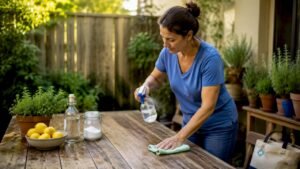
A room can look spotless and still harbor bacteria, allergens, and grime that pose real risks to your health. That’s the uncomfortable reality many Seattle homeowners and renters face every week, especially after a quick tidy-up that checks the visual boxes but misses the biological ones. The ISSA notes that a “visual clean” is not the same as a “sanitary clean,” a distinction that matters enormously when you’re trying to maintain a genuinely healthy home. This article breaks down what thorough cleaning actually means, gives you room-by-room examples, and shows you how to verify results like a professional.
Table of Contents
- What does thorough cleaning mean?
- Room-by-room examples of thorough cleaning tasks
- Comparing cleaning verification methods: How do you know it’s truly clean?
- Are your products up to the job? Cleaning performance and what to expect
- Our perspective: Why true thoroughness starts with mindset, not just checklists
- Ready for a truly thorough clean?
- Frequently asked questions
Key Takeaways
| Point | Details |
|---|---|
| Look beyond appearances | Thorough cleaning uses objective criteria, not just visual cues, to gauge true cleanliness. |
| Follow a systematic approach | Room-by-room checklists ensure no area is overlooked and tasks are completed in an effective order. |
| Verify cleaning results | Quantitative methods like ATP testing provide real assurance beyond the naked eye. |
| Choose certified products | Look for cleaning products with proven dirt removal power, ideally 80% or higher as certified by Green Seal. |
| Adopt a maintenance mindset | Ongoing vigilance and regular routines are the foundation of thorough home cleanliness. |
What does thorough cleaning mean?
Most people consider a space clean when surfaces look free of visible dirt and there are no obvious odors. That’s a reasonable starting point, but it’s not the full picture. Thorough cleaning goes several layers deeper, targeting the biological and chemical residues that live on surfaces long after a quick wipe-down.
Here’s how cleaning professionals define “thorough”:
- Thorough cleaning removes visible soil, reduces microbial load, and sanitizes contact surfaces in a deliberate, systematic sequence.
- Regular tidying focuses on organization and surface-level appearance. Things get picked up, counters get wiped, and floors get swept. It’s maintenance, not deep cleaning.
- Sanitary cleaning brings measurable results. Bacteria counts drop, allergen levels fall, and surfaces are genuinely safer to touch.
The gap between those categories is wider than most people expect. A kitchen counter can look shiny and still carry organic residue from yesterday’s meal prep. A bathroom tile can feel smooth and still host mold spores in the grout lines. This is exactly why the ISSA ATP testing framework uses swab-based science rather than visual judgment to confirm whether a surface is actually clean.
“Visual cleanliness is a starting point, not a finishing line. Truly thorough cleaning is measured by what you can’t see, not what you can.”
For Seattle homeowners, this distinction matters year-round. Our damp, cool climate encourages mold growth in bathrooms, under sinks, and around window seals. Regular wiping doesn’t address fungal spores. Thorough cleaning does.
Pro Tip: Write a “non-negotiables” list for your home, three to five surfaces you commit to cleaning thoroughly every week regardless of whether they look dirty. Kitchen faucet handles, toilet flush levers, and light switches are good starting points for most households.
You can find practical apartment cleaning tips specifically tailored to Seattle living spaces if you want to adapt these standards to a smaller footprint.
Room-by-room examples of thorough cleaning tasks
Knowing the definition is one thing. Applying it room by room is where real change happens. Professional cleaners follow a systematic order because it matters. You don’t mop a floor and then wipe dusty shelves above it. You work from top to bottom, from dry to wet, and from the least contaminated areas to the most contaminated ones.
Here’s a breakdown of what thorough cleaning looks like in each major area of your home:
Kitchen
- Clear and wipe down all cabinet fronts, including the handles where oil and bacteria accumulate.
- Degrease the stovetop, including burner grates or glass surface beneath the coils.
- Clean inside the microwave, including the ceiling of the unit where splatter hides.
- Pull out the refrigerator and stove to vacuum and mop behind and underneath them.
- Scrub the sink basin and the drain rim where biofilm builds up quickly.
- Disinfect all contact surfaces: faucet handles, light switches, countertop edges.
- Wipe down the backsplash and degrease grout lines.
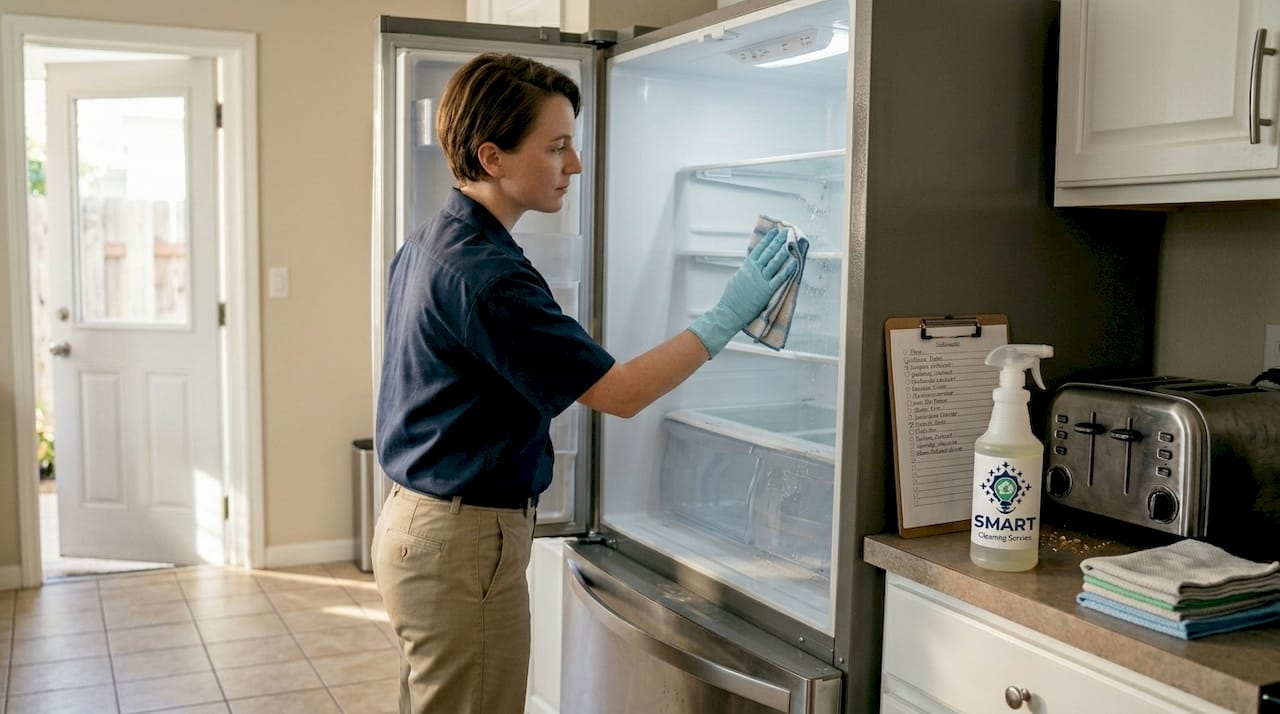
- Empty, wipe, and sanitize the interior of the refrigerator, including the rubber door seals.
Bathroom
- Spray and soak the toilet bowl, then clean the tank lid, seat hinges, and base where urine collects.
- Scrub grout lines in the shower or tub with a stiff brush and an appropriate cleaner.
- Clean the shower head by soaking it in a descaling solution to remove mineral buildup common in Seattle tap water.
- Wipe down baseboards, which collect hair and dust that vacuuming misses.
- Clean window tracks and sills where moisture and mold often start.
- Sanitize the toothbrush holder, soap dispensers, and cup holders.
Bedroom and living areas
- Wash or steam-clean pillow covers, mattress protectors, and curtains every season.
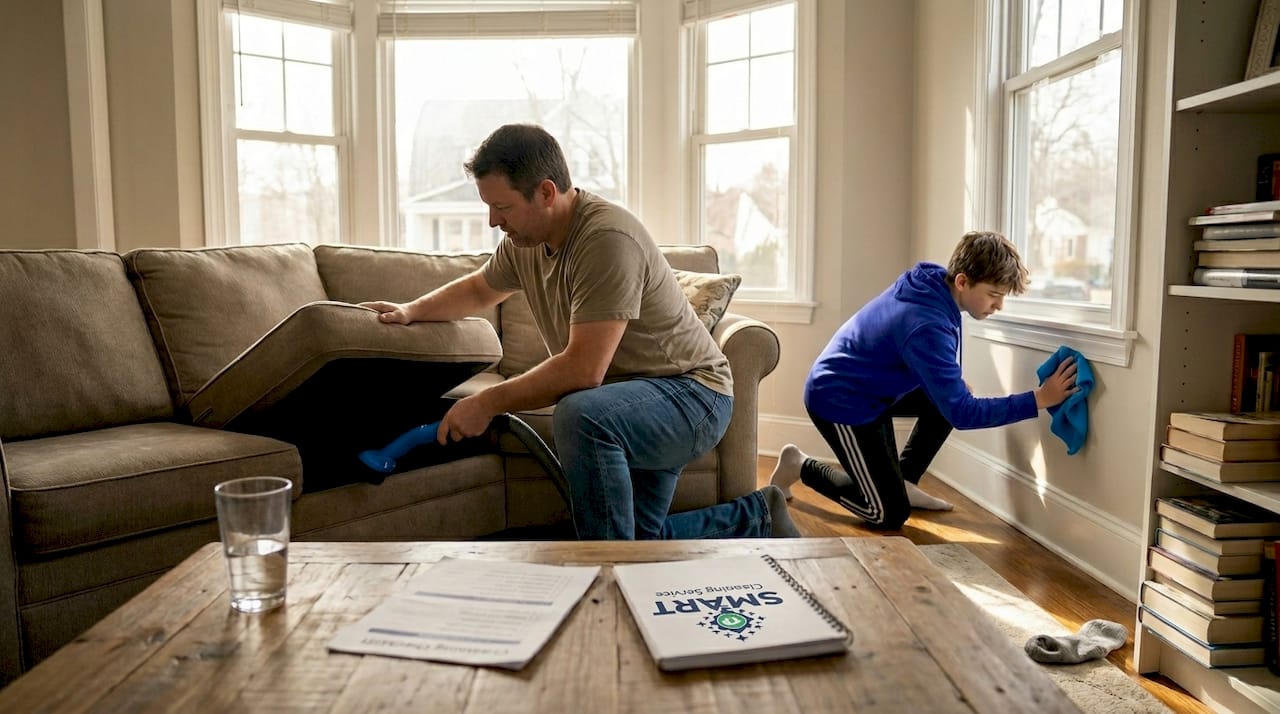
- Move furniture to vacuum and clean beneath beds, sofas, and dressers.
- Wipe down baseboards and door frames with a damp cloth.
- Clean ceiling fan blades, which shed accumulated dust into the air every time they spin.
- Spot-clean upholstered surfaces on sofas and chairs.
- Disinfect remote controls, gaming controllers, and charging cables.
A professional move-out cleaning checklist captures the gold standard for high-stakes cleans, and many of those tasks translate directly to regular home maintenance. According to systematic move-out protocols, a true deep clean includes cleaning behind and under appliances, degreasing countertops and backsplashes, scrubbing grout and shower areas, and cleaning window tracks. These aren’t just landlord requirements. They’re the benchmarks for what a thoroughly clean home actually looks like.
Pro Tip: Treat your home to a full move-out-standard clean at least twice a year, even if you’re not moving. You’ll be surprised how much soil accumulates in places you walk past every single day without noticing.
Seattle renters in particular can benefit from reviewing the ultimate move-out checklist before the end of a lease. And if you’re settling into a new place, move-in cleaning explained covers why starting fresh in a new home requires the same level of rigor.
Comparing cleaning verification methods: How do you know it’s truly clean?
You’ve worked through a detailed checklist. Everything looks clean, smells clean, and feels clean. But is it? This is where verification methods come into play, and the difference between professional-grade results and good-enough results often comes down to how you answer that question.
| Verification method | What it detects | Skill required | Best for |
|---|---|---|---|
| Visual inspection | Visible soil, streaks, staining | Low | Quick checks, appearance-based jobs |
| Smell test | Odors from bacteria, mold, or chemicals | Low | Identifying problem areas |
| White cloth wipe test | Residual surface dust or grime | Low to medium | Spot-checking after cleaning |
| ATP swab testing | Organic residue including bacteria and food particles | Medium | Professional verification, high-stakes environments |
ATP testing works by detecting adenosine triphosphate, which is an energy molecule present in all organic matter. When you swab a surface and insert the swab into a luminometer device, it produces a light reading. The ISSA confirms that lower ATP readings generally indicate cleaner surfaces, giving you a measurable score rather than a judgment call.
“ATP testing turns ‘I think it’s clean’ into ‘I can prove it’s clean.’ That shift in accountability changes how seriously people take the process.”
For most homeowners, ATP testing isn’t something you need to do regularly. But understanding the concept changes how you approach cleaning. If you know that surfaces can fail a scientific test despite looking fine, you’ll start paying attention to how long a disinfectant needs to sit before you wipe it, whether you’re actually agitating surfaces with enough friction, and whether your products have any real killing power at all.
Visual inspection is always worth doing. The white cloth test is a great habit, especially on ceiling fans and baseboards. But if you ever have a reason to verify sanitation rigorously (after illness, before hosting vulnerable guests, or following a pest issue), ATP swab kits are available for home use and deliver results in seconds.
Are your products up to the job? Cleaning performance and what to expect
Not all cleaning products deliver the same results, and the label can be misleading if you don’t know what to look for. The most honest benchmark in the residential cleaning world comes from third-party certification.
What Green Seal certification tells you
Green Seal is an independent nonprofit organization that tests cleaning products for both environmental safety and actual cleaning performance. Their testing protocol measures whether a product removes soil under real conditions. Green Seal’s performance standard requires general-purpose cleaners to remove a minimum of 80% of test soil in a standardized lab protocol. That 80% threshold matters because it separates products that smell nice from products that actually work.
How to spot an effective cleaning product
Look for these indicators when choosing a cleaner for your home:
- Third-party certification such as Green Seal, EPA Safer Choice, or EcoLogo. These verify both performance and ingredient safety.
- Specific claims that name the organisms or residues the product addresses. “Kills 99.9% of bacteria” with a visible EPA registration number is more credible than vague claims like “extra strength.”
- Dwell time instructions on the label. Products that require a contact time of 30 seconds to several minutes are genuine disinfectants. Products that say “spray and wipe” may only clean, not sanitize.
- Surfactant content in the ingredients list. Surfactants break down grease and organic soil. A product without them is essentially diluted water with fragrance.
| Product type | Good for | Limitations |
|---|---|---|
| General-purpose cleaner | Everyday soil removal on counters, sinks, and surfaces | May not disinfect without EPA registration |
| Disinfectant cleaner | Killing germs on contact surfaces | Requires proper dwell time, may not remove heavy soil first |
| Enzyme-based cleaner | Organic stains, pet messes, drain buildup | Slower acting, better for soaking than quick-wipe use |
| Green Seal certified cleaner | Thorough cleaning with lower environmental impact | May cost slightly more than conventional options |
Seattle households that prioritize both health and sustainability will find that certified eco-friendly products perform as well as conventional cleaners when used correctly. The key phrase is “used correctly.” Following label directions for concentration and contact time makes far more difference than brand choice alone.
Our perspective: Why true thoroughness starts with mindset, not just checklists
We’ve seen the inside of hundreds of Seattle homes across neighborhoods from Ballard to Bellevue, and we’ll tell you something most cleaning articles won’t: checklists are necessary but not sufficient. The homeowners and renters who maintain genuinely clean, healthy spaces aren’t just following longer lists. They think about their homes differently.
Here’s the shift we see make the biggest difference. Most people clean reactively, when something looks bad, smells off, or guests are coming over. Thorough cleaning requires a proactive mindset, a decision to address areas before they become visible problems. Grout doesn’t get scrubbed once it turns gray. It gets scrubbed before it turns gray, because you know it will if you don’t.
The second thing we notice is that people underestimate the compounding value of routine. A quick wipe of the stovetop after every use takes 45 seconds. Degreasing a stovetop that hasn’t been properly cleaned in six months takes 20 minutes and considerable effort. The time investment looks similar on a calendar, but the workload and the results are completely different.
There’s also an often-ignored connection between cleanliness and home value. Maintaining a genuinely clean environment preserves surfaces, prevents mold damage, and extends the life of appliances. Research on cleaning’s impact on home value shows that the condition of a home directly affects both its perceived and actual market value. That’s not just a resale argument. It’s a reason to protect the home you’re living in right now.
What most people miss about thorough cleaning is this: it’s not a single event. It’s a standard you set and maintain. The deep clean is where you reset the baseline. The routine is what keeps it there.
Ready for a truly thorough clean?
Knowing what thorough cleaning requires is a meaningful first step. Actually doing it, especially across every room and every overlooked surface in your home, takes time, the right products, and a reliable process.
At Smart Cleaning Service, we specialize in exactly the kind of results this article describes. Our deep cleaning service targets the grout lines, baseboards, appliance interiors, and contact surfaces that routine cleaning skips. If you’re preparing to move, our move-in/out cleaning pros follow a rigorous protocol that meets the highest standards for sanitation and soil removal. We’re licensed, insured, and serving homeowners and renters across the Greater Seattle Area. Get a free quote today and find out how we can help you reset your home’s baseline.
Frequently asked questions
What is the difference between basic and thorough cleaning?
Basic cleaning handles visible dirt and organization, while thorough cleaning sanitizes contact surfaces and removes biological residue you can’t see. The ISSA confirms that a “visual clean” is not the same as a “sanitary clean,” and that distinction is where the real health impact lives.
How do professionals verify if cleaning is actually thorough?
Professionals use ATP swab testing to measure organic residue on surfaces after cleaning. As ISSA explains, lower ATP readings from a swab-and-luminometer test indicate genuinely cleaner surfaces, giving verifiable evidence beyond visual assessment.
Which cleaning products are proven to be effective?
Products certified by Green Seal meet a verified performance standard. According to Green Seal’s testing protocol, certified general-purpose cleaners must remove at least 80% of test soil under standardized lab conditions, which sets a real bar for effectiveness.
What are examples of tasks included in a thorough move-out clean?
A thorough move-out clean covers cleaning behind and under appliances, scrubbing shower grout, degreasing countertops and backsplashes, and washing window tracks. These systematic move-out tasks represent the full scope of what a truly deep residential clean involves.
Recommended
- Smart Cleaning Service™ House Cleaning Seattle Kirkland Bellevue Redmond
- Smart Cleaning Service™ House Cleaning Seattle Kirkland Bellevue Redmond
- Smart Cleaning Service™ House Cleaning Seattle Kirkland Bellevue Redmond
- Smart Cleaning Service™ House Cleaning Seattle Kirkland Bellevue Redmond