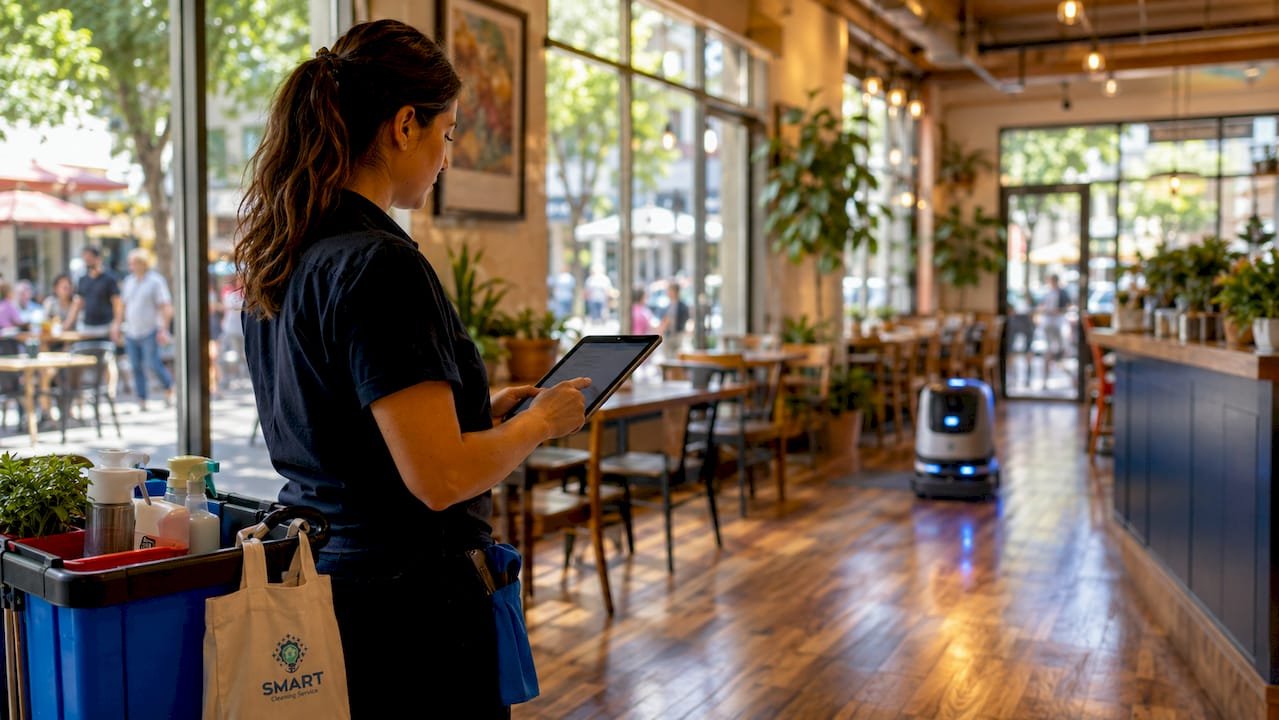
The role of technology in cleaning services is the use of automated systems and digital tools that reduce costs, improve scheduling, and raise the quality of results across residential and commercial environments. For homeowners, renters, and property managers in cities like Seattle, this shift is already visible. Cleaning companies that use workflow automation, IoT sensors, and route optimization software deliver faster, more consistent results than those relying on manual processes alone. Understanding how these tools work helps you choose a provider who actually uses them, rather than one who just claims to.
How does the role of technology in cleaning services work?
Dusting can be included for accessible surfaces in the agreed rooms. Point out delicate items, shelves that should be left alone and any areas that need additional attention.

Automation platforms built for cleaning companies use conditional logic to treat residential and commercial jobs differently. A recurring house cleaning in Bellevue triggers a different workflow than a commercial office turnover in downtown Seattle. The system routes the right crew, sends the right checklist, and fires the right invoice automatically. Automated invoicing and follow-up workflows also improve cash flow for cleaning businesses, which means fewer billing errors and faster confirmation for you.
The transparency benefit is equally significant. Platforms that give clients real-time access to audit logs and performance metrics close the transparency gap that has long frustrated property managers. You can see when a crew arrived, what was completed, and whether any issues were flagged, without making a single phone call.
Key features that define a well-built cleaning automation platform include:
- Conditional scheduling logic that separates residential, commercial, and Airbnb turnover workflows
- List the rooms and accessible surfaces you want cleaned before requesting an estimate. The work completed depends on the agreed priorities, property condition and time used.
- Digital checklists tied to specific property types and service levels
- For home cleaning visits, we send a message when we are on the way and another when the cleaning is finished. Discuss other communication needs with the office before booking.
- Integrated invoicing that triggers automatically on job completion
Pro Tip: When evaluating a cleaning company, ask whether their software integrates with your preferred communication channel, such as email or text. A provider locked into a single app ecosystem may create friction when you need quick updates.
What do IoT sensors do for cleaning quality and cost?
Compare estimates by the work listed, team size, minimum charge and billing method. Confirm the scope and any additional charges before the appointment.
For property managers overseeing multiple units or office buildings, this matters in two ways. First, you stop paying for cleaning that was not needed. Second, you get data showing which areas of a property require more frequent attention, which helps you negotiate service contracts with real numbers instead of guesswork.
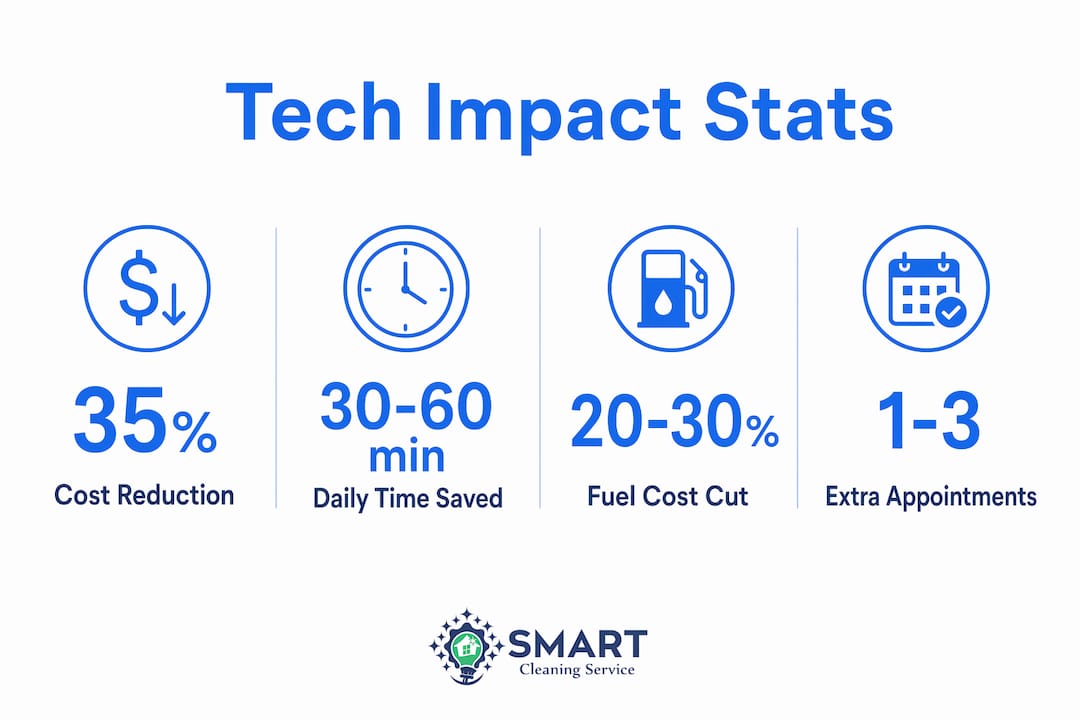
The environmental benefits are real too. Demand-based cleaning reduces the use of chemicals and water in areas that do not need treatment. This connects directly to energy-saving cleaning practices that lower a property’s environmental footprint without sacrificing cleanliness.
The most common IoT applications in professional cleaning include:
- Occupancy sensors that track how many people use a restroom or common area
- Smart bin monitors that alert crews only when bins are near capacity
- List the rooms and accessible surfaces you want cleaned before requesting an estimate. The work completed depends on the agreed priorities, property condition and time used.
- Floor traffic counters that identify high-wear zones requiring more frequent mopping or vacuuming
How does route optimization cut costs and add appointments?
Requirements vary with the property, activity and circumstances. Review the applicable requirements with a qualified adviser; a cleaning appointment does not certify legal or regulatory compliance.
That last number is the one property managers and Airbnb hosts should focus on. One to three additional appointments per crew per day means a cleaning company can serve more clients without hiring more staff. That capacity gain translates into faster booking availability for you, especially during peak turnover seasons.
A home cleaning visit can include kitchens, bathrooms, accessible surfaces and floors. Share the areas you want addressed and confirm the tasks in your quote.
The features that make route optimization work in practice:
- Requirements vary with the property, activity and circumstances. Review the applicable requirements with a qualified adviser; a cleaning appointment does not certify legal or regulatory compliance.
- GPS tracking that shows dispatchers where every crew is in real time
- Automated client notifications when a crew is 15 to 30 minutes away
- Last-minute rescheduling tools that rebuild the day’s route when a job changes
- Transit vs. billable time reporting that shows how efficiently crews are deployed
A home cleaning visit can include kitchens, bathrooms, accessible surfaces and floors. Share the areas you want addressed and confirm the tasks in your quote.
You can also review how professionals manage multiple crews to understand what good operational management looks like from a scheduling and dispatch perspective.
Does technology replace cleaning workers or change their roles?
Technology does not replace cleaning workers. It shifts their responsibilities. Technology augments rather than replaces human roles, moving cleaners from purely manual labor toward supervision, quality control, and data interpretation. This shift is already happening at companies like Cummins Facility Services, where team leads now review sensor data and performance dashboards as part of their daily routine.
The challenge is what industry leaders call the “managerial gap.” When a company deploys automation software or IoT sensors without training its staff to use them, the technology sits underused. Without comprehensive staff training, expensive cleaning technology fails to deliver expected ROI. The investment in tools must be matched by an equal investment in people.
For you as a client, this has a practical implication. A cleaning company that has adopted technology but not trained its team will still deliver inconsistent results. The right question to ask is not just “do you use software?” but “how do your team leads use the data it generates?”
The skills cleaning professionals now need include:
- Data reading to interpret occupancy reports and quality scores
- System management to update digital checklists and flag exceptions
- Client communication using platform-generated reports instead of verbal updates
- Quality auditing using photo documentation tools tied to each job
“Cleaning professionals will increasingly shift to supervisory roles requiring data interpretation and strategic facility management skills.” AllTradesJournal
The role of communication in cleaning services is directly enhanced when automation handles routine updates, freeing human staff to focus on complex client needs and problem-solving.
Key Takeaways
Technology in cleaning services delivers measurable gains in cost, speed, and quality when automation, IoT sensing, and route optimization are combined with trained human oversight.
| Point | Details |
|---|---|
| Automation cuts overhead fast | Depends on the agreed scope |
| IoT sensors reduce wasted service | Depends on the agreed scope |
| Route optimization adds capacity | Optimized routing saves 30 to 60 minutes of daily drive time and enables 1 to 3 more jobs per crew per day. |
| Training determines real ROI | Technology without staff training fails to deliver results; ask providers how their teams use the data. |
| Transparency builds trust | Client-facing portals with real-time job data give property managers accountability without phone calls. |
Why I think most clients are asking the wrong question about cleaning tech
Most homeowners and property managers ask cleaning companies, “Do you use technology?” That is the wrong question. The right question is, “What does your technology actually change about how my home gets cleaned?”
The gap between what a platform can do and what a team actually uses is where service quality lives or dies. Technology creates a competitive moat for cleaning companies, but only when the whole operation is built around it, not bolted on top.
The clients who get the best results are the ones who ask for proof. Request a sample of the completion report your provider sends after each job. Ask whether you will receive a notification when your crew is en route. Find out if your property has a digital service history you can access. These are not unreasonable demands. They are the baseline of what good technology in cleaning should deliver.
The future of residential and property cleaning is not fully robotic. Most clients mistakenly expect touchless, fully automated cleaning, but the real value lies in integrated platforms that coordinate equipment and people on a common dashboard. The best cleaning outcomes come from trained humans using good data, not from machines working alone. That combination is what you should be looking for in any provider you hire.
Smartcleaningwa brings tech-driven cleaning to Seattle homes
The work for your visit should be agreed in the quote. Our team focuses on cleaning accessible surfaces, kitchens, bathrooms and floors, with additional priorities discussed before the appointment.
Scheduling, dispatch, and job tracking all run through digital systems that keep you informed without requiring you to chase down your cleaning crew. Whether you need recurring house cleaning or a thorough deep clean before a move or listing, Smartcleaningwa delivers the kind of organized, documented service that technology makes possible. Licensed, insured, and focused on quality, Smartcleaningwa is the provider to call when you want results you can verify, not just trust.
FAQ
What is cleaning service automation?
Compare estimates by the work listed, team size, minimum charge and billing method. Confirm the scope and any additional charges before the appointment.
How do IoT sensors improve residential cleaning?
List the rooms and accessible surfaces you want cleaned before requesting an estimate. The work completed depends on the agreed priorities, property condition and time used.
Does route optimization software really save time?
Compare estimates by the work listed, team size, minimum charge and billing method. Confirm the scope and any additional charges before the appointment.
Will technology replace my cleaning crew?
Technology shifts cleaning roles toward supervision and quality control rather than replacing workers. The human element remains critical, and providers who train their teams to use data tools deliver better results than those who do not.
What should I ask a cleaning company about their technology?
Ask which notifications or documentation are actually included before booking. Do not assume a provider offers live tracking, digital reports or app integrations. For home visits, we send you a message when we’re on our way and another when the cleaning is finished.
Recommended
- For routine home cleaning, discuss dusting, floor care, kitchen surfaces and bathroom tasks. Detailed or additional work should be agreed before the appointment. Related reading: Routine Cleaning Tasks and Priorities.
- The Role of Communication in Cleaning Services – Smart Cleaning Service
- Smart Cleaning Service™ House Cleaning Seattle Kirkland Bellevue Redmond
- Smart Cleaning Service™ House Cleaning Seattle Kirkland Bellevue Redmond