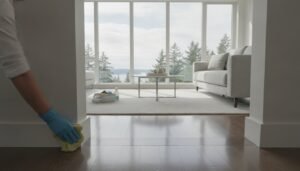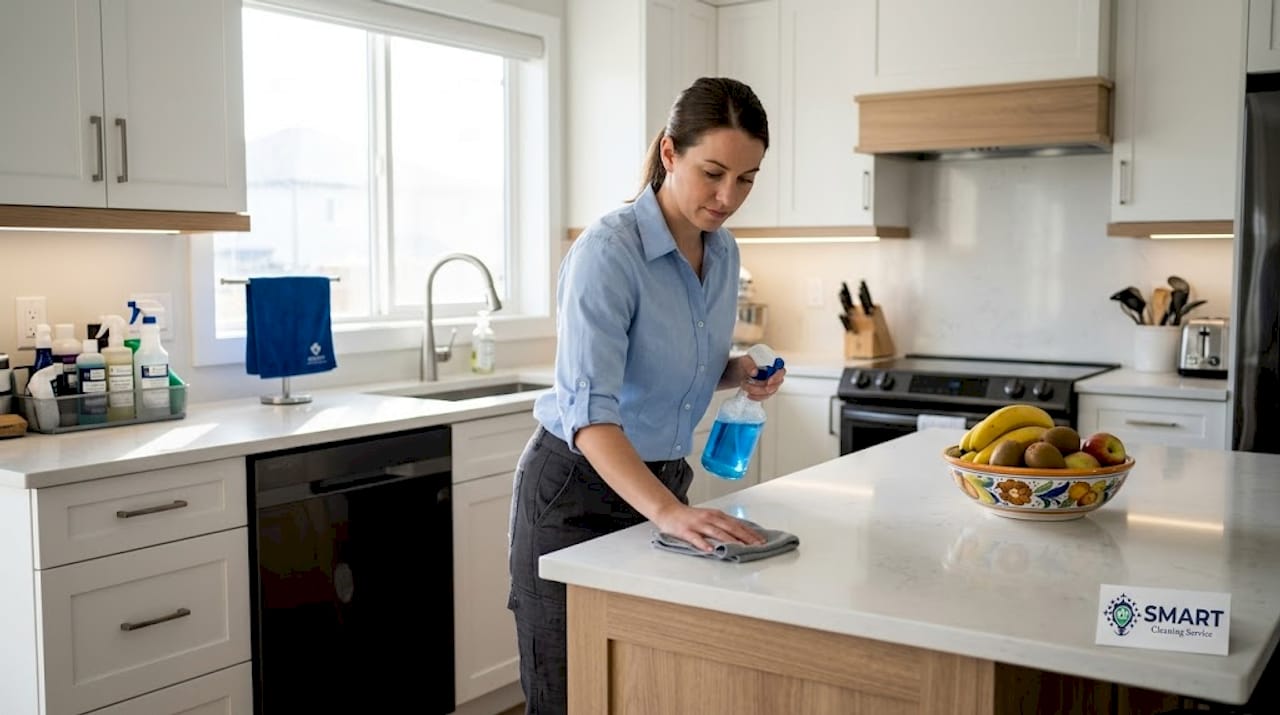
Discuss floor vacuuming and mopping as part of the visit. Tell the office about the floor material and any manufacturer-specific care instructions.
Table of Contents
- Routine Cleaning Tasks and Priorities
- High-touch surfaces: How professionals reduce everyday risks
- Cleaning Products and Preferences
- Professional vs DIY: How trained cleaners achieve consistent hygiene
- What most homeowners miss about true home hygiene
- Seattle’s trusted cleaning services for total home hygiene
- Frequently asked questions
Key Takeaways
| Point | Details |
|---|---|
| Sequence is essential | Routine surface cleaning |
| High-touch care matters | Regular cleaning of high-touch surfaces lowers illness risk in every household. |
| Product selection counts | Confirm the scope before booking |
| Expertise drives consistency | Professional cleaners use checklists and proven methods to achieve reliable results. |
| Ask the right questions | When hiring, inquire about process, product selection, and how high-risk situations are handled. |
Routine Cleaning Tasks and Priorities
A home cleaning visit can include kitchens, bathrooms, accessible surfaces and floors. Share the areas you want addressed and confirm the tasks in your quote.
Dusting can be included for accessible surfaces in the agreed rooms. Point out delicate items, shelves that should be left alone and any areas that need additional attention.
For kitchen work, identify the accessible counters, sink and appliance surfaces to be cleaned. Appliance interiors and other additional tasks should be discussed before the visit.
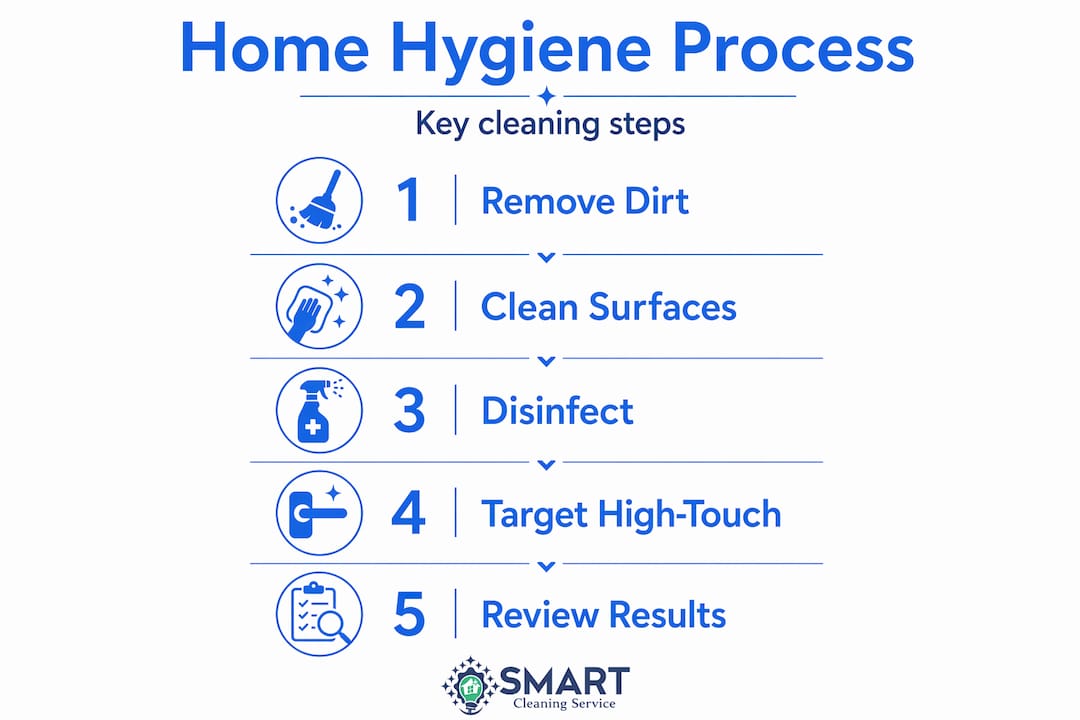
- Remove loose debris with dry methods (dusting, sweeping, vacuuming)
- Apply a cleaning solution with water and agitate the surface thoroughly
- Rinse and dry to remove solution and loosened contaminants
- Requirements vary with the property, activity and circumstances. Review the applicable requirements with a qualified adviser; a cleaning appointment does not certify legal or regulatory compliance.
- For routine home cleaning, discuss dusting, floor care, kitchen surfaces and bathroom tasks. Detailed or additional work should be agreed before the appointment.
Smart Cleaning Service is licensed, insured and BBB accredited. Service requirements should be reviewed with the office before booking. Insurance coverage depends on the policy and the circumstances of a claim.
A home cleaning visit can include kitchens, bathrooms, accessible surfaces and floors. Share the areas you want addressed and confirm the tasks in your quote. Related reading: deep cleaning guide.
High-touch surfaces: How professionals reduce everyday risks
Discuss floor vacuuming and mopping as part of the visit. Tell the office about the floor material and any manufacturer-specific care instructions.
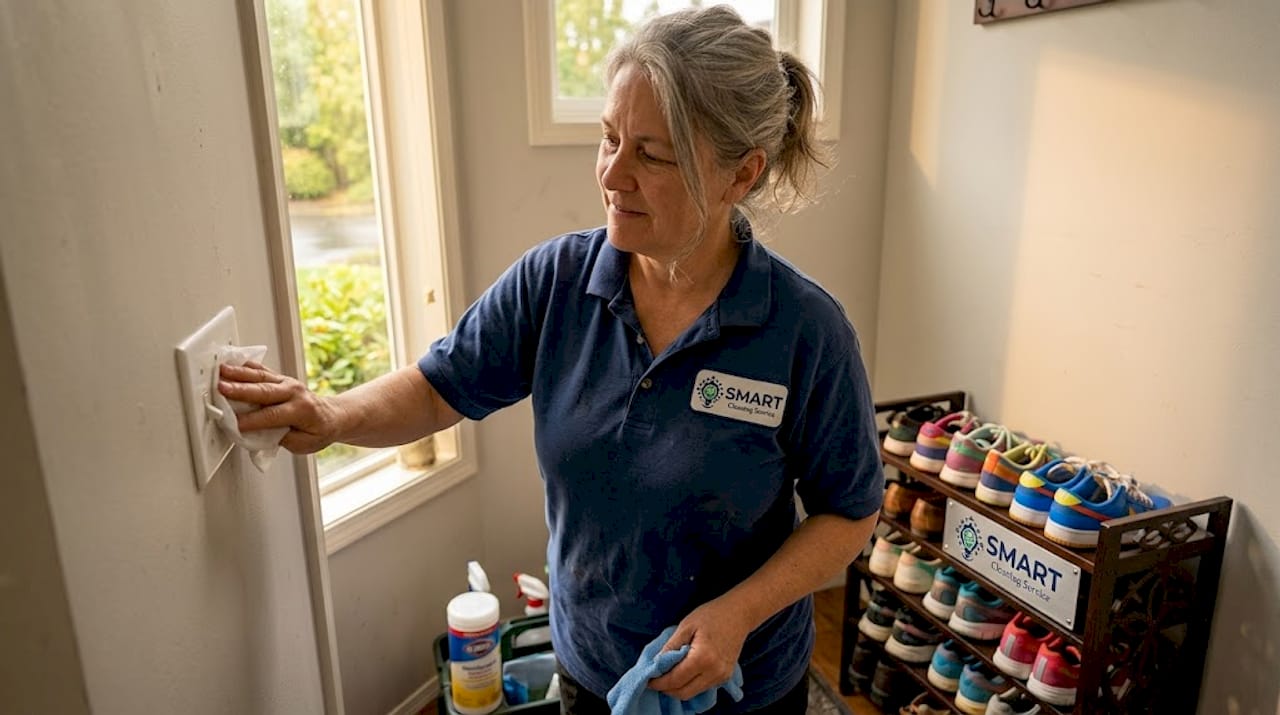
Requirements vary with the property, activity and circumstances. Review the applicable requirements with a qualified adviser; a cleaning appointment does not certify legal or regulatory compliance.
The most critical high-touch surfaces in a typical home include:
- Doorknobs and handles (interior and exterior)
- Light switches throughout all rooms
- Kitchen and bathroom faucet handles
- Remote controls and game controllers
- Refrigerator, microwave, and oven handles
- Toilet flush handles and tank lids
- Stair railings and cabinet pulls
- Phone charging stations and shared devices
What makes this list particularly important is that these surfaces are touched by every person in the home, including guests, delivery contacts, and children who have been outdoors. Regular targeting of these zones is what separates thorough cleaning techniques from a standard wipe-down routine. Cleaning professionals map these touchpoints and address them systematically during every visit, not just when something looks dirty.
Pro Tip: Before hiring any cleaning service, ask specifically whether their checklist includes high-touch surfaces. If their answer is vague or they cannot name specific surfaces, that is a red flag worth taking seriously.
For routine home cleaning, discuss dusting, floor care, kitchen surfaces and bathroom tasks. Detailed or additional work should be agreed before the appointment. Related reading: professional home cleaning.
Cleaning Products and Preferences
List the rooms and accessible surfaces you want cleaned before requesting an estimate. The work completed depends on the agreed priorities, property condition and time used.
The cleaning plan should identify the rooms, tasks and priorities for your visit. Tell the office about access restrictions, delicate surfaces or areas that should be left alone.
- List the rooms and accessible surfaces you want cleaned before requesting an estimate. The work completed depends on the agreed priorities, property condition and time used.
- After hosting guests, particularly children or anyone who was unwell
- When high-risk individuals are present, including elderly family members, infants, or immunocompromised residents
A home cleaning visit can include kitchens, bathrooms, accessible surfaces and floors. Share the areas you want addressed and confirm the tasks in your quote.
| Feature | Cleaning | Routine surface cleaning |
|---|---|---|
| Primary purpose | Routine surface cleaning | Routine surface cleaning |
| Main tools | Soap, water, scrubbing | Confirm applicable requirements |
| When needed | Daily or routine maintenance | After illness, guests, or outbreaks |
| Required sequence | Always first | Always second |
| Dwell time needed | No specific requirement | Yes, must match product label |
| Risk if skipped | Routine surface cleaning | Routine surface cleaning |
Requirements vary with the property, activity and circumstances. Review the applicable requirements with a qualified adviser; a cleaning appointment does not certify legal or regulatory compliance.
Requirements vary with the property, activity and circumstances. Review the applicable requirements with a qualified adviser; a cleaning appointment does not certify legal or regulatory compliance.
Requirements vary with the property, activity and circumstances. Review the applicable requirements with a qualified adviser; a cleaning appointment does not certify legal or regulatory compliance.
The cleaning plan should identify the rooms, tasks and priorities for your visit. Tell the office about access restrictions, delicate surfaces or areas that should be left alone. Related reading: effective cleaning and hygiene.
Professional vs DIY: How trained cleaners achieve consistent hygiene
Most homeowners clean with good intentions but without a repeatable system. They focus on areas that look dirty, skip zones that seem fine visually, and vary their approach based on time and energy. Professional cleaners operate on an entirely different model: they follow proven checklists, maintain consistent sequences, and use industry-grade tools that simply do not exist in most home supply closets.
| Cleaning factor | DIY approach | Professional approach |
|---|---|---|
| Coverage | Based on visible dirt | Checklist-driven, zone by zone |
| Sequence | Often combined or skipped | Routine surface cleaning |
| High-touch zones | Inconsistently addressed | Systematically targeted every visit |
| Products used | Consumer-grade, often misapplied | Confirm applicable requirements |
| Overlooked areas | Behind appliances, under handles | Included in standard protocol |
| Consistency | Varies by time/motivation | Confirm the scope before booking |
For kitchen work, identify the accessible counters, sink and appliance surfaces to be cleaned. Appliance interiors and other additional tasks should be discussed before the visit.
“The areas that matter most for hygiene are rarely the ones that catch your eye. The gap under a refrigerator handle, the base of a toilet, the underside of cabinet knobs: these are what professionals include automatically, and what most homeowners never touch.”
When evaluating whether to hire a cleaning service, ask the right questions to gauge whether you are getting a genuine hygiene benefit or simply a tidier home:
- Do you follow a written checklist for every visit?
- The cleaning plan should identify the rooms, tasks and priorities for your visit. Tell the office about access restrictions, delicate surfaces or areas that should be left alone.
- Which high-touch surfaces are included in your standard service?
- Requirements vary with the property, activity and circumstances. Review the applicable requirements with a qualified adviser; a cleaning appointment does not certify legal or regulatory compliance.
- How do you adjust your process after a client reports household illness?
Compare estimates by the work listed, team size, minimum charge and billing method. Confirm the scope and any additional charges before the appointment. Related reading: Regular cleaning services.
What most homeowners miss about true home hygiene
Here is the uncomfortable truth that most cleaning content will not tell you: the product in the bottle matters far less than the person using it and the process they follow. Seattle homeowners spend real money on premium cleaning sprays, antibacterial wipes, and high-end mops while skipping the step that actually makes those products work. Sequence, dwell time, and surface preparation are the invisible engine behind every genuinely clean home.
A home cleaning visit can include kitchens, bathrooms, accessible surfaces and floors. Share the areas you want addressed and confirm the tasks in your quote.
What we consistently see in our work is that homeowners focus on frequency rather than method. Cleaning twice a week with the wrong sequence produces worse outcomes than cleaning once a week with the right one. The Seattle home cleaning guide addresses this local context directly, and it is worth understanding how your environment shapes your hygiene needs.
Requirements vary with the property, activity and circumstances. Review the applicable requirements with a qualified adviser; a cleaning appointment does not certify legal or regulatory compliance.
Shortcuts feel efficient. They look fine on the day. But they accumulate into an invisible hygiene deficit that shows up eventually, usually during flu season, or after a birthday party with twelve kids, or when a grandparent comes to stay for a week. Process is the only thing that holds up.
Seattle’s trusted cleaning services for total home hygiene
Now that you understand what genuine hygiene requires, you do not have to figure it out alone or audit your own routine from scratch.
Our team focuses on the surfaces and tasks agreed for your visit. Tell us about delicate finishes or product preferences before the appointment so those details can be considered in the cleaning plan.
Frequently asked questions
Routine Cleaning Tasks and Priorities
For routine home cleaning, discuss dusting, floor care, kitchen surfaces and bathroom tasks. Detailed or additional work should be agreed before the appointment.
How often should high-touch surfaces be cleaned?
Requirements vary with the property, activity and circumstances. Review the applicable requirements with a qualified adviser; a cleaning appointment does not certify legal or regulatory compliance.
Routine Cleaning Tasks and Priorities
Requirements vary with the property, activity and circumstances. Review the applicable requirements with a qualified adviser; a cleaning appointment does not certify legal or regulatory compliance.
Why do professionals achieve better hygiene results than DIY cleaning?
For kitchen work, identify the accessible counters, sink and appliance surfaces to be cleaned. Appliance interiors and other additional tasks should be discussed before the visit.
Recommended
- Smart Cleaning Service™ House Cleaning Seattle Kirkland Bellevue Redmond
- Smart Cleaning Service™ House Cleaning Seattle Kirkland Bellevue Redmond
- Deep Cleaning Services Seattle | Smart Cleaning WA
- Smart Cleaning Service™ House Cleaning Seattle Kirkland Bellevue Redmond