
Not all house cleaning is the same, and assuming it is can cost you money, your security deposit, or your health. Many Seattle-area homeowners book a standard cleaning before moving out, only to discover the landlord expects a far more thorough service. Others pay for a deep clean every week when a routine visit would do the job just fine. Understanding the real differences between cleaning types puts you in control, saves you from surprises, and helps you get genuine value out of every appointment. This guide breaks down what house cleaning involves, which service fits your situation, and exactly what to expect when you book a pro.
Table of Contents
- What is house cleaning? Key concepts defined
- Types of house cleaning services: Routine, deep, and move-in/move-out
- What actually happens during a professional house cleaning?
- Choosing the right cleaning service for your home and lifestyle
- What most guides miss about house cleaning: Long-term impact on well-being and property value
- Ready for a cleaner, healthier Seattle-area home?
- Frequently asked questions
Key Takeaways
| Point | Details |
|---|---|
| Not all house cleaning is the same | Routine, deep, and move-related services differ in tasks, areas, and goals. |
| Deep cleans target hidden grime | Professional deep cleanings cover areas regular cleans miss and are vital for hygiene. |
| Move-in/move-out cleans protect deposits | Thorough cleaning during moves ensures homes are ready for the next occupant and helps renters recover deposits. |
| Right service fits your home’s needs | Analyze your lifestyle, pets, and cleaning history to choose the optimal cleaning plan and frequency. |
| Professional service means peace of mind | Hiring reputable cleaners means a healthier, more comfortable home with less stress for you. |
What is house cleaning? Key concepts defined
House cleaning is the process of removing dust, dirt, bacteria, and other contaminants from the surfaces and spaces inside a home. That sounds straightforward, but the term covers a wide spectrum of services, and the differences between them are not minor. Choosing the wrong type is like bringing a carry-on to a cross-country move. It technically fits the idea, but it does not come close to solving the actual problem.
At the most basic level, professional house cleaning falls into three categories:
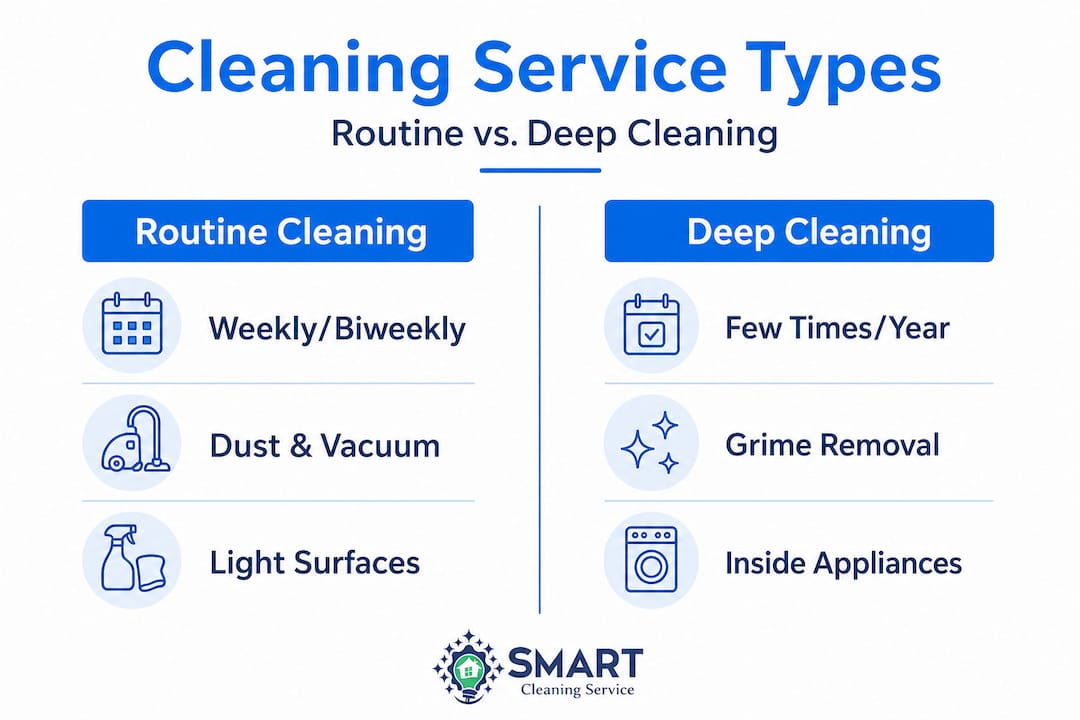
- Routine cleaning: Regular maintenance tasks that keep a tidy home in good shape. Think dusting, vacuuming, mopping, wiping counters, scrubbing toilets, and cleaning bathroom mirrors.
- Deep cleaning: A more intensive service targeting built-up grime in places that routine visits skip. Deep cleaning targets hard-to-reach areas like inside appliances, ovens, and fridges, as well as baseboards, grout, behind furniture, light fixtures, ceiling fans, and window tracks.
- Specialty cleaning: Services designed for specific situations, most commonly move-in and move-out cleaning, post-construction cleanup, and short-term rental turnovers.
Here is a quick side-by-side comparison to make the distinctions concrete:
| Feature | Basic cleaning | Deep cleaning | Move-in/move-out cleaning |
|---|---|---|---|
| Frequency | Weekly or biweekly | Every 3-6 months | One-time, at transition |
| Inside appliances | No | Yes | Yes |
| Baseboards and grout | No | Yes | Yes |
| Inside cabinets | No | No (usually) | Yes |
| Window tracks | No | Yes | Yes |
| Goal | Maintenance | Reset and refresh | Vacant home prep |
| Best for | Regularly maintained homes | All home types periodically | Renters, buyers, sellers |
Understanding these distinctions before you call a cleaning company is one of the most practical things you can do. It prevents billing disagreements and ensures the team shows up prepared for the right job.
Types of house cleaning services: Routine, deep, and move-in/move-out
Once you understand the categories, choosing a service becomes much easier. Each type serves a different need and fits a different schedule or life event.
Routine cleaning is the backbone of a consistently clean home. A biweekly schedule is the most common choice for Seattle families. During a routine visit, cleaners handle dusting surfaces, vacuuming carpets and rugs, mopping hard floors, cleaning bathrooms (toilets, tubs, sinks, mirrors), wiping kitchen counters, and taking out trash. The goal is maintenance, not transformation. Routine cleaning works best when your home is already reasonably tidy and you want to keep it that way without spending your weekends scrubbing.
Deep cleaning is the reset button. Deep cleaning tackles built-up grime in the spots that routine visits skip entirely, like inside the oven, behind the refrigerator, inside the dishwasher, and along baseboards. Grout scrubbing, ceiling fans, and window tracks all get attention too. Pros recommend booking a deep clean every 3-6 months or seasonally. In Seattle, that aligns perfectly with the spring pollen season and the post-summer transition into rainy months when indoor air quality matters more.
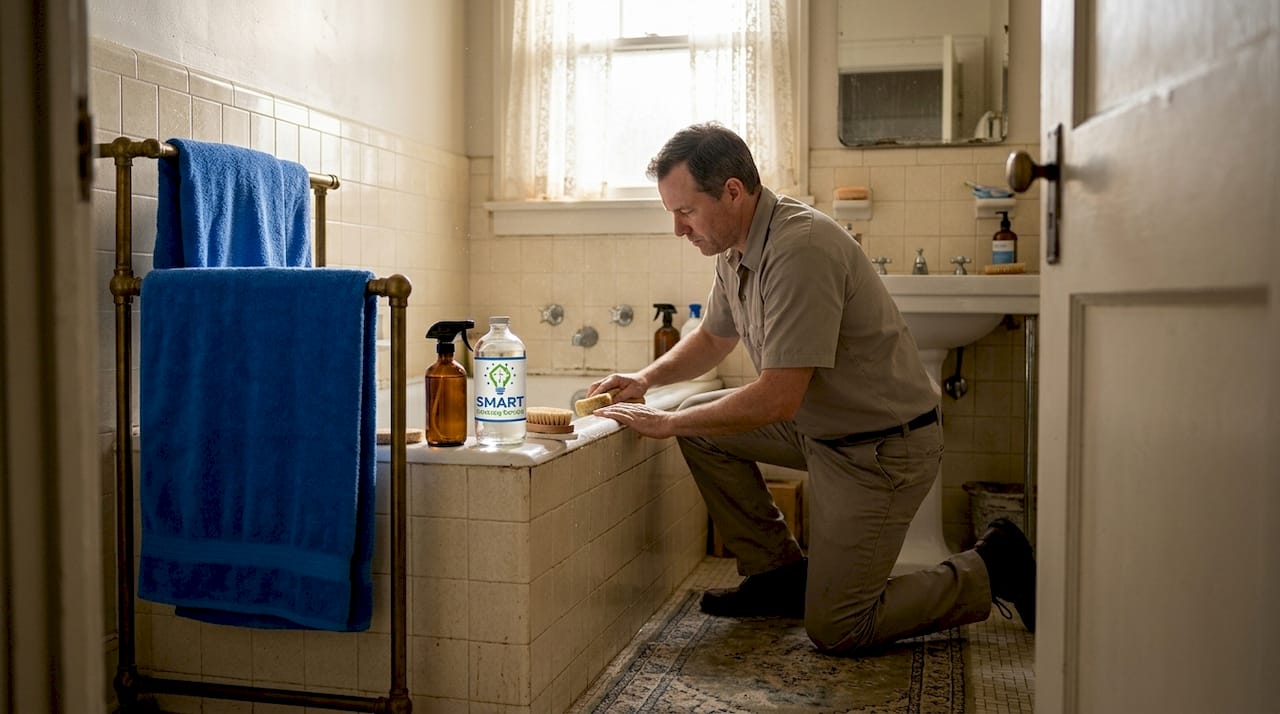
Pro Tip: If you have never had a professional deep clean, your first appointment with a new service should almost always be a deep clean rather than a routine visit. It gives the team a proper baseline to maintain going forward.
Move-in and move-out cleaning are the most specialized and most misunderstood services on the list. Move-in cleaning prepares vacant properties for new occupants by sanitizing all surfaces, interiors of cabinets and appliances, floors, and bathrooms fully when the space is empty. Move-out cleaning removes traces of prior residents to meet landlord standards, often required for deposit return. These services are best done when the home is empty because cleaners can reach every corner without navigating around furniture and personal belongings.
Here is a summary of what each service covers and when to book it:
| Service type | What’s included | When to book |
|---|---|---|
| Routine cleaning | Dusting, vacuuming, mopping, bathrooms, kitchen surfaces | Weekly or biweekly |
| Deep cleaning | All routine tasks plus appliances, grout, baseboards, fixtures | Every 3-6 months |
| Move-in cleaning | Full sanitization, inside cabinets, appliances, all rooms | Before moving into a new home |
| Move-out cleaning | Deep clean tailored to landlord checklist, deposit-focused | Before handing over keys |
For more detail on move-in cleaning explained, including what landlords typically expect, that resource covers the process thoroughly. If you are approaching a seasonal refresh, deep cleaning for Seattle homes walks through the step-by-step process specific to the Pacific Northwest climate. And for anyone preparing for a move, the move-in/move-out cleaning overview lays out exactly what the service covers.
What actually happens during a professional house cleaning?
Knowing what type of service to book is one thing. Understanding what actually happens during the appointment helps you prepare, set expectations, and get the most out of your investment.
Here is a typical flow for a professional cleaning visit:
- Arrival and walkthrough: The cleaning team arrives within the scheduled window. A quick walkthrough confirms the scope of work, any areas to prioritize, and access to supplies or locked spaces.
- Top-down cleaning: Pros work from ceiling to floor in every room. Dusting ceiling fans and light fixtures first prevents dust from falling onto surfaces that were already cleaned.
- Kitchen focus: Counters, stovetops, sinks, cabinet exteriors, and appliance fronts get wiped down. During a deep clean or move-out, the inside of the oven and fridge are included.
- Bathroom sanitizing: Toilets, tubs, showers, mirrors, and floors all receive attention. Grout scrubbing is added for deep cleans.
- Living areas and bedrooms: Vacuuming, dusting furniture, wiping baseboards (for deep cleans), and mopping hard floors.
- Final review: A walk-through to confirm quality and catch any missed spots before the team leaves.
Seattle homes come with some specific quirks worth mentioning. Rainy weather means outdoor debris tracks in more easily, especially in entryways and mudrooms. Pet owners often deal with extra fur and dander on upholstered surfaces. Homes near wooded areas in neighborhoods like Wedgwood or Shoreline can accumulate more dust and pollen. A good cleaning company factors these regional realities into their process.
Move-out cleaning standard: The goal is a property that removes traces of prior residents and meets landlord standards for cleanliness, including sanitized surfaces, cleaned interiors of cabinets and appliances, and spotless bathrooms. This is not the same as a routine clean, and using the wrong service can result in a failed walkthrough.
Most professional cleaning companies bring their own supplies and equipment, including commercial-grade vacuums, microfiber cloths, and eco-friendly or allergen-conscious cleaning solutions. If you have specific product preferences or allergies, communicate that clearly when scheduling a cleaning service so the team arrives prepared. What cleaners typically do not provide: cleaning up heavy clutter, doing laundry, or organizing personal belongings. That prep falls to you before the team arrives.
Choosing the right cleaning service for your home and lifestyle
The best cleaning plan is the one that actually fits your life, not just the most comprehensive or the cheapest option. Here are the key questions to ask before booking:
- How big is your home? Larger homes naturally take longer and may cost more per visit. A two-bedroom apartment has different needs than a four-bedroom house in Bellevue.
- Do you have pets? Pet hair and dander require extra attention on upholstered furniture and carpets, and a good cleaning team should know to address this.
- Do you or anyone in your household have allergies? If so, ask about the products used and whether the team can use fragrance-free or HEPA-filter-equipped equipment.
- Are you approaching a lease renewal or move? If yes, a move-out clean is almost certainly the right call, not a standard routine visit.
- How long since your last deep clean? If the answer is “over six months” or “never,” start there.
Pro Tip: In Seattle, the two best times to schedule a seasonal deep cleaning are early spring (March to April) when pollen levels spike, and late fall (October to November) when wet weather pushes more time indoors. Timing your deep cleans around these windows keeps indoor air quality at its best when it matters most.
When you communicate with a cleaning provider, be specific. Tell them which rooms see the most traffic, where pets spend time, and whether there are any surfaces that need special care (hardwood floors, natural stone counters, etc.). A good company will document your preferences and carry them forward to every visit. Vague instructions produce vague results.
Here is a quick checklist to help you decide when to upgrade from routine to a deeper service:
- It has been more than three months since a thorough cleaning
- You notice buildup around faucets, grout lines, or stovetop rings
- You are moving in or out of a property
- You have had house guests for an extended stay
- Allergy symptoms are worsening indoors without an obvious cause
- Your home had recent construction or renovation work
What most guides miss about house cleaning: Long-term impact on well-being and property value
Most articles about house cleaning focus entirely on the practical, what rooms are covered, what the price includes, what to expect on the day. That is useful information, but it misses the bigger picture entirely.
Consistent, thorough cleaning is not just about aesthetics. It is a long-term investment in your health, your mental state, and your home’s actual market value. We see this clearly working with homeowners and renters across the Seattle area, and the difference between clients who treat cleaning as a habit versus a reaction is striking.
From a health perspective, homes that receive regular professional cleaning carry measurably fewer allergens, lower concentrations of dust mites, and better indoor air quality overall. For anyone dealing with asthma or seasonal allergies in Seattle’s notoriously pollen-heavy spring, this is not a small thing. It is a genuine quality-of-life improvement that compounds over time.
There is also a stress dimension that almost nobody talks about. Living in a cluttered or dirty space is mentally exhausting in ways that are hard to quantify but easy to feel. When clients tell us they feel more relaxed at home after a professional cleaning, that is a real and documented response, not just a nice-to-have.
And then there is the real estate angle. Seattle homeowners thinking about cleaning’s impact on real estate value often underestimate how much presentation affects buyer perception and appraisals. A home that has been consistently maintained looks and smells different from one that has been cleaned only before listing. Buyers notice. Agents notice. Appraisers notice.
The honest perspective: people who think of cleaning as an expense are usually the ones paying more in the long run, through damage that builds up slowly on grout and fixtures, through lost security deposits, through reduced resale appeal. People who treat regular cleaning as part of home maintenance come out ahead on nearly every measure.
Ready for a cleaner, healthier Seattle-area home?
Understanding your cleaning options is the first step. Acting on that knowledge is what actually changes how your home feels and functions every day.
At Smart Cleaning Service, we work with Greater Seattle homeowners and renters across every stage of the cleaning spectrum. Whether you need routine home cleaning to stay on top of daily life, a thorough deep cleaning services session to reset your space, or certified move-in/move-out specialists to protect your deposit and impress a new landlord, our licensed and insured team is ready. We communicate in real time, arrive prepared, and deliver consistent results you can count on. Take two minutes to get a fast estimate and find out which service fits your home and schedule.
Frequently asked questions
How often should I book deep cleaning for my home?
Deep cleaning every 3-6 months is what most professionals recommend, with seasonal timing being especially effective for Seattle homes dealing with pollen in spring and wet conditions in fall.
What is the difference between move-in and move-out cleaning?
Move-in cleaning prepares vacant properties for new occupants with full sanitization, while move-out cleaning is tailored to remove signs of prior residents and meet landlord standards so tenants can recover their security deposits.
Does professional cleaning include inside appliances?
Inside appliances and ovens are covered during deep cleaning and move-related services, but routine maintenance cleans typically focus on exterior surfaces only unless you specifically request more.
What should I do to prepare my home for cleaners?
Pick up personal clutter from floors and surfaces before the team arrives, and communicate any special priorities or concerns clearly when you book so the cleaners arrive prepared and focused on what matters most to you.
Is house cleaning worth it for renters?
Absolutely. Professional cleaning saves renters significant time and is often the deciding factor in whether a landlord returns a security deposit, since move-out cleaning to landlord standards is far more thorough than what most tenants accomplish on their own.
Recommended
- Smart Cleaning Service™ House Cleaning Seattle Kirkland Bellevue Redmond
- Smart Cleaning Service™ House Cleaning Seattle Kirkland Bellevue Redmond
- Smart Cleaning Service™ House Cleaning Seattle Kirkland Bellevue Redmond
- Smart Cleaning Service™ House Cleaning Seattle Kirkland Bellevue Redmond