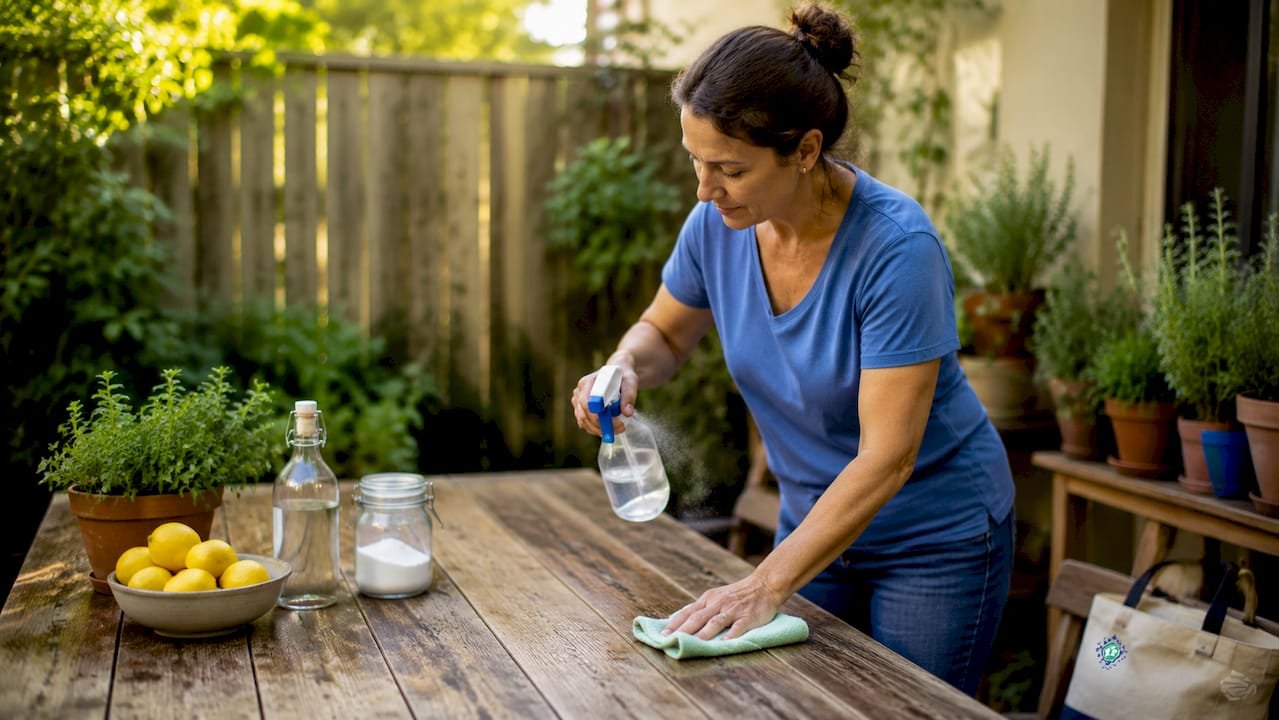
Green cleaning methods are defined as cleaning practices that use non-toxic, biodegradable, or plant-based ingredients to remove dirt and germs without harming your health or the environment. The industry term for this practice is “sustainable cleaning,” and it covers everything from DIY vinegar sprays to EPA Safer Choice certified products. Unlike conventional cleaners that rely on synthetic chemicals, eco-friendly cleaning techniques protect indoor air quality, reduce chemical exposure, and cut environmental waste. This guide covers the tools, techniques, and product selection strategies you need to clean your home effectively and safely.
What are green cleaning methods and why do they matter?
Green cleaning methods replace petroleum-based solvents and synthetic fragrances with safer alternatives like white vinegar, baking soda, and plant-derived surfactants. The core goal is to maintain a clean, hygienic home without introducing harmful residues onto surfaces your family touches every day.
The environmental case is strong. A 2026 study found that a green cleaning protocol cut chemical use by 82.6%, energy use by 49.5%, and textile waste by 92.4% compared to conventional methods. Those numbers show that the biggest gains come not just from swapping products but from rethinking the entire cleaning system, including how much product you use and how you handle cleaning cloths.
For homeowners, the health benefits are equally compelling. Conventional cleaners often release volatile organic compounds (VOCs) that linger in indoor air long after you finish cleaning. Switching to non-toxic cleaning practices reduces that exposure directly, especially in kitchens and bathrooms where ventilation is limited.
What ingredients and tools do you need to start?
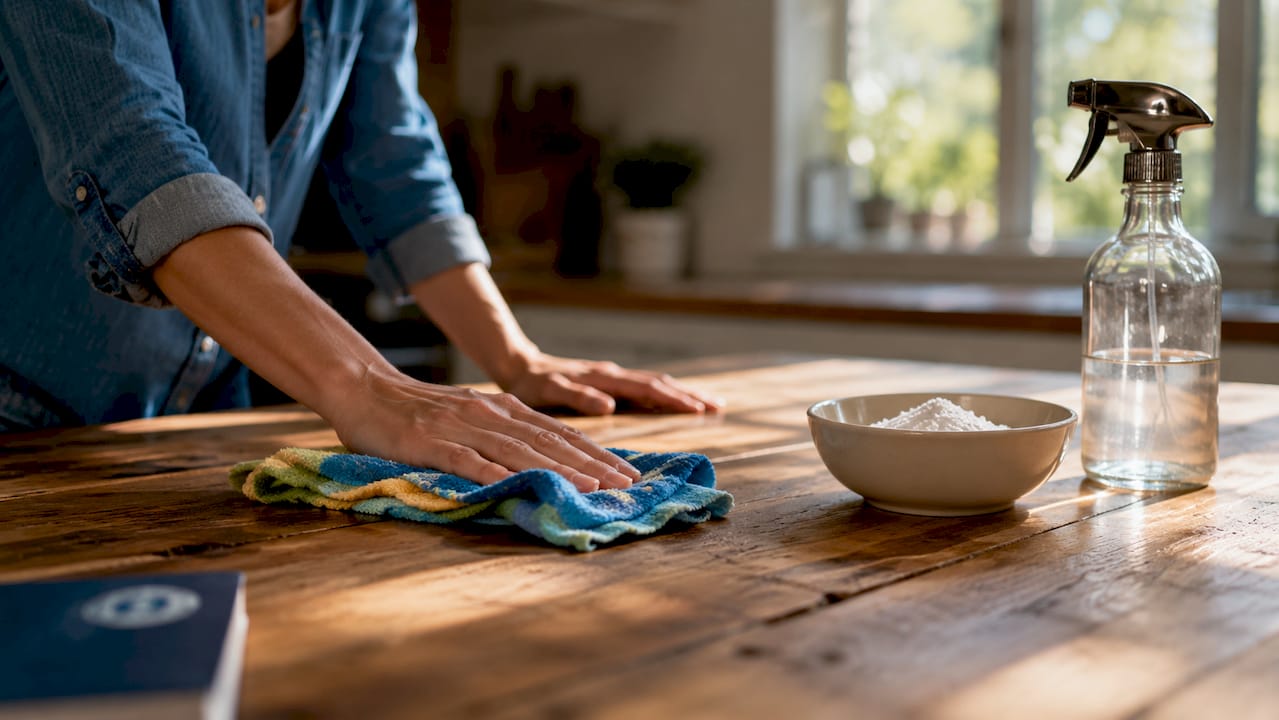
The foundation of any green cleaning kit is a short list of versatile, affordable ingredients. White vinegar, baking soda, castile soap, and hydrogen peroxide handle the majority of household cleaning tasks. Each one works through a different mechanism: vinegar is acidic and cuts through mineral deposits and soap scum; baking soda is a mild mineral abrasive that scrubs without scratching; castile soap uses plant-based surfactants to lift grease; hydrogen peroxide acts as a mild oxidizing disinfectant.
| Ingredient | Best Use | Key Caution |
|---|---|---|
| White vinegar (5% acetic acid) | Glass, shower tiles, mineral deposits | Never use on marble or granite |
| Baking soda | Scrubbing sinks, deodorizing | Avoid mixing with vinegar in closed containers |
| Castile soap | All-purpose cleaning, floors | Dilute well; residue builds up if overused |
| Hydrogen peroxide (3%) | Disinfecting counters, cutting boards | Keep away from colored fabrics |
| Tea tree essential oil | Antimicrobial boost in sprays | Toxic to cats and dogs; use with caution |
Beyond ingredients, microfiber cloths are the single most important tool in a green cleaning kit. They trap bacteria and dirt through mechanical action alone, reducing the amount of cleaning solution you need by a significant margin.
Pro Tip: Never mix bleach with vinegar. The combination produces toxic fumes that can cause respiratory irritation and are dangerous in enclosed spaces like bathrooms.
DIY natural cleaners are cost-effective and give you full ingredient control. Certified green products from brands carrying the EPA Safer Choice label offer a tested, consistent alternative when you want guaranteed performance without formulating your own solutions. Both approaches work. The right choice depends on your time, budget, and comfort with mixing solutions.
How to apply green cleaning techniques room by room
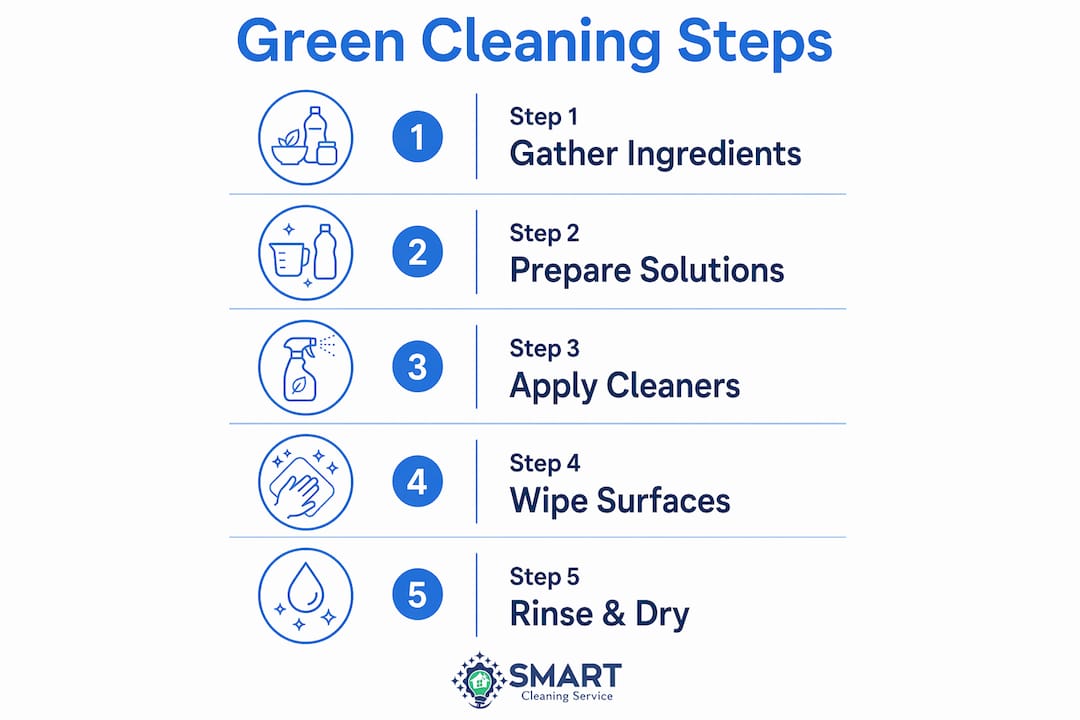
Matching your cleaner to the type of soil is the core principle of effective eco-friendly cleaning. Acidic cleaners like vinegar dissolve alkaline soils such as hard water deposits and soap scum. Alkaline cleaners like castile soap cut through acidic soils like grease and food residue. Using the wrong chemistry means more scrubbing and worse results.
Cleaning the kitchen
- Clear counters and remove loose debris with a dry microfiber cloth.
- Spray a diluted castile soap solution (1 teaspoon per 2 cups of water) on countertops and let it sit for 2 minutes.
- Wipe with a damp microfiber cloth, then buff dry to prevent streaks.
- For the stovetop, apply a baking soda paste directly to grease spots, wait 5 minutes, then scrub with a damp cloth.
- Rinse the sink with undiluted white vinegar to dissolve mineral buildup, then wipe clean.
For a deeper kitchen cleaning routine, the sequence matters as much as the products. Always clean top to bottom so debris falls onto surfaces you have not yet cleaned.
Cleaning the bathroom
- Spray shower glass with a 5% acetic acid solution (standard white vinegar) and allow a 10-minute dwell time before wiping with microfiber.
- Apply a baking soda and castile soap paste to the tub and tile grout. Scrub with a stiff brush, then rinse thoroughly.
- Clean the toilet bowl with undiluted white vinegar, let it sit for 5 minutes, then scrub and flush.
- Wipe the mirror with a 50/50 vinegar and water solution using a lint-free microfiber cloth for a streak-free finish.
Floors and general surfaces
Add 1/4 cup of castile soap to a bucket of warm water for hardwood or tile floors. Wring the mop nearly dry before each pass. Excess water damages hardwood and leaves residue on tile. For glass surfaces throughout the home, the vinegar and water spray used in the bathroom works equally well.
Pro Tip: Batch your cleaning tasks by chemistry type. Do all vinegar-based tasks first, then all soap-based tasks. This prevents accidental mixing and cuts the time you spend rinsing between products.
How do you choose certified green products and avoid greenwashing?
Greenwashing is the practice of marketing a product as environmentally friendly without meeting any verified standard. The EPA recommends looking for two specific labels to cut through vague claims: Safer Choice and Design for the Environment (DfE). Safer Choice certifies that every ingredient in a product meets safety standards for human health and the environment. DfE applies stricter requirements specifically to antimicrobial products, which face higher scrutiny because of their active biocidal ingredients.
Vague terms like “eco safe,” “natural,” or “green formula” carry no regulatory weight. Any brand can print them on a label without meeting a single verified standard. The EPA provides online search tools where you can look up certified products by category, from dish soap to bathroom disinfectants.
Before buying any green cleaning product, ask yourself these questions:
- Does the label show an EPA Safer Choice or DfE seal?
- Does the brand disclose a full ingredient list?
- Does the product specify dilution ratios and usage instructions?
- Is the packaging recyclable or refillable?
- Does the brand make specific performance claims backed by testing data?
If a product fails more than two of these checks, it is likely greenwashing. Certified products also tend to be more concentrated, which means you use less per cleaning session. That concentration benefit compounds over time, reducing both cost and plastic waste.
Pro Tip: Download the EPA Safer Choice product search tool to your phone’s home screen. You can check a product’s certification status while standing in the store aisle.
When should you disinfect vs. just clean?
Cleaning and disinfecting are not the same thing. Cleaning removes visible dirt, grease, and debris from a surface. Disinfecting kills or inactivates pathogens on a surface that has already been cleaned. Skipping the cleaning step before disinfecting reduces the disinfectant’s effectiveness because organic matter shields microbes from the active ingredient.
Research confirms that green cleaning protocols achieve microbial reductions comparable or superior to conventional cleaning when applied correctly. The key variable is not the product. It is the process.
Effective disinfection requires that the surface stays visibly wet for the full contact time specified on the label, typically 3–10 minutes. Spraying a surface and immediately wiping it dry does not meet the kill claim. If the surface dries before the contact time is up, you must reapply.
Situations that require disinfection rather than routine cleaning include:
- After handling raw meat on a kitchen surface
- When a household member has a confirmed illness
- After a pet accident on a hard floor
- High-touch surfaces like door handles and light switches during cold and flu season
- Bathroom surfaces in shared or high-traffic homes
For routine daily cleaning, disinfection is unnecessary and counterproductive. Over-disinfecting damages surfaces, contributes to antimicrobial resistance, and increases your chemical exposure without adding hygiene benefit. A healthier home cleaning approach reserves disinfection for situations where it genuinely reduces health risk.
Key takeaways
Green cleaning methods work because they combine safer chemistry, correct contact time, and mechanical action to deliver hygiene results without the environmental and health costs of conventional products.
| Point | Details |
|---|---|
| Match chemistry to soil type | Use acidic cleaners for mineral deposits and alkaline cleaners for grease to clean more effectively. |
| Dwell time determines disinfection | Keep surfaces wet for 3–10 minutes to meet kill claims; quick wiping fails disinfection. |
| Look for EPA certification | Safer Choice and DfE labels are the only reliable way to verify a product’s green credentials. |
| DIY cleaners require safety rules | Never mix bleach and vinegar, and avoid tea tree oil around pets. |
| Reduce dose and textile waste | Concentrated products and reusable microfiber cloths deliver the largest environmental gains. |
What i have learned after years of green cleaning
The transition to sustainable cleaning practices is not as dramatic as most people expect. The hardest part is unlearning the idea that a strong chemical smell means something is clean. It does not. That smell is often a sign of VOC exposure, not cleanliness.
My own routine centers on three products: diluted castile soap for general surfaces, white vinegar for glass and mineral buildup, and a 3% hydrogen peroxide spray for kitchen disinfection after raw meat. I have used microfiber cloths exclusively for years. The mechanical action they provide genuinely reduces how much solution I need, which means I go through product more slowly and spend less.
The one mistake I see most often is people mixing DIY recipes without understanding the chemistry. Baking soda and vinegar together create a fizzing reaction that looks impressive but neutralizes both ingredients, leaving you with water and salt. They work far better used separately. Understanding that single fact improves your results immediately.
My honest recommendation: start with one room and one certified product. Read the label fully before you use it. Pay attention to dilution ratios and contact times. Once you see that a simple vinegar spray cleans shower glass as well as any commercial product, the rest of the transition follows naturally. You can find more practical guidance on safer home cleaning to build your routine from there.
— Wilker
Professional green cleaning for seattle area homeowners
Switching to eco-friendly cleaning techniques at home takes knowledge and consistency. If you want the results without the learning curve, Smartcleaningwa brings both to your door.

Smartcleaningwa serves homeowners across Seattle, Kirkland, Bellevue, and Redmond with professional residential cleaning that prioritizes your family’s health and the environment. Every visit uses EPA-certified products, microfiber tools, and protocols built around the same contact time and chemistry principles covered in this article. You get a thoroughly clean home without synthetic chemical residue, and you get it done reliably, with real-time updates and licensed, insured professionals. Request a free estimate and see what a genuinely clean home feels like.
FAQ
What is green cleaning?
Green cleaning is the practice of using non-toxic, biodegradable, or plant-based products and techniques to clean surfaces without harming human health or the environment. The EPA recognizes Safer Choice and DfE certifications as the standard for verified green cleaning products.
What are examples of green cleaning methods?
Common examples include cleaning shower glass with a white vinegar spray and microfiber cloth, scrubbing sinks with a baking soda paste, and mopping floors with a diluted castile soap solution. Each method replaces a synthetic chemical with a safer, plant-based or mineral alternative.
Are DIY natural cleaners as effective as store-bought green products?
DIY cleaners like the Greenpeace-recommended formula of 1 part white vinegar, 5 parts warm water, and 2 drops of tea tree oil are effective for general surface cleaning. Certified store-bought products offer more consistent antimicrobial performance and are the better choice when disinfection is required.
How do i know if a green cleaning product is legitimate?
Look for the EPA Safer Choice or Design for the Environment (DfE) seal on the label. Vague terms like “natural” or “eco safe” carry no regulatory standard and are not reliable indicators of a product’s safety or environmental impact.
Does green cleaning actually disinfect surfaces?
Yes, when applied correctly. Research confirms that green protocols achieve microbial reductions comparable to conventional disinfectants, provided the surface stays wet for the full label-specified contact time of 3–10 minutes.
Recommended
- Smart Cleaning Service™ House Cleaning Seattle Kirkland Bellevue Redmond
- Smart Cleaning Service™ House Cleaning Seattle Kirkland Bellevue Redmond
- Smart Cleaning Service™ House Cleaning Seattle Kirkland Bellevue Redmond
- Smart Cleaning Service™ House Cleaning Seattle Kirkland Bellevue Redmond