
Finding reliable cleaning staff in Seattle is harder than it sounds. A cleaner who doesn’t show up on a turnover day can cost an Airbnb host hundreds of dollars in lost bookings and a scathing review. For homeowners, a bad hire means strangers in your home without clear boundaries or supervision. Seattle also has specific labor laws that catch many well-meaning property owners off guard. This guide walks you through every stage of the hiring process, from writing a solid job description to staying legally compliant, so you end up with cleaning staff you can actually count on long-term.
Table of Contents
- Clarifying your needs: Tasks, schedules, and job descriptions
- Seattle legal requirements: Labor laws, written agreements, and fair-chance practices
- Screening and interviewing candidates for reliability
- Onboarding, retention, and expectation management
- What most guides miss about hiring cleaning staff in Seattle
- Get professional help or free estimates for cleaning staff in Seattle
- Frequently asked questions
Key Takeaways
| Point | Details |
|---|---|
| Start with specificity | Define cleaning tasks, schedule, and requirements before posting any job. |
| Know Seattle labor laws | Use written agreements and understand background check rules for legal compliance. |
| Screen for reliability | Structured interviews and reference checks help avoid unreliable hires. |
| Retain through clarity | Keeping expectations clear and supporting staff prevents turnover and strengthens performance. |
| Professional help available | Smart Cleaning Service™ offers vetted staff and estimate options for Seattle property owners and managers. |
Clarifying your needs: Tasks, schedules, and job descriptions
Before you post a single listing, you need a clear picture of what you actually need. Vague job postings attract vague candidates. When you write a specific job description that spells out tasks, frequency, schedule, and physical and transportation requirements, you filter out mismatches before they waste your time.
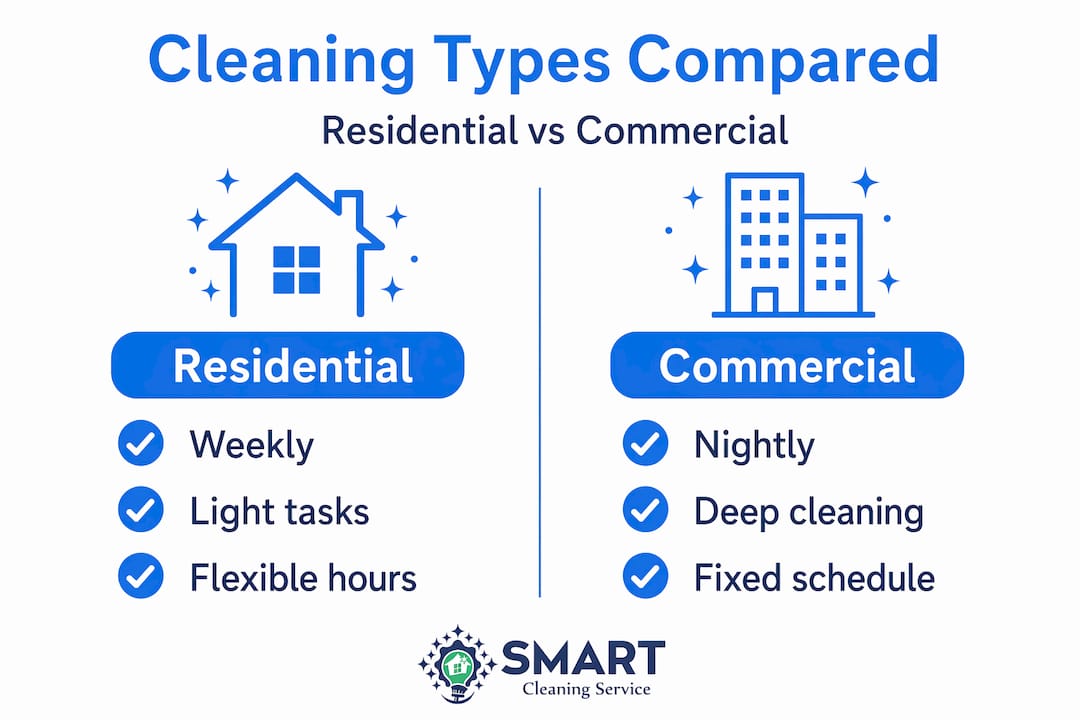
Think through every recurring task in your property. Does the role include laundry? Window washing? Restocking supplies for guests? Are there stairs involved, heavy furniture to move around, or products you require the cleaner to use? Each of these details matters. A cleaner who is great with light residential work may struggle with the demands of a commercial office suite that requires nightly cleaning after business hours.
Key elements every job description should include:
- Specific tasks (vacuuming, mopping, bathroom sanitizing, kitchen deep clean)
- Frequency and schedule (weekly, biweekly, every Airbnb turnover)
- Estimated hours per visit and total hours per week or month
- Pay range and whether you expect an employee or independent contractor
- Physical requirements (lifting, kneeling, ladder use)
- Transportation requirements (do they need a car, or is transit access enough?)
- Location and whether parking is provided
The table below breaks down how residential and commercial cleaning needs typically differ, which affects what you put in your job description.
| Factor | Residential cleaning | Commercial cleaning |
|---|---|---|
| Frequency | Weekly or biweekly | Nightly or several times per week |
| Hours per shift | 2 to 5 hours | 3 to 8 hours |
| Tasks focus | General tidying, deep clean areas | Trash, restrooms, floors, common areas |
| Supplies | Often provided by homeowner | Usually cleaner’s own equipment |
| Access requirements | Key or code | Badge or security access |
| Legal classification | May fall under Domestic Workers Ordinance | Standard employment law applies |
Pro Tip: Start by walking through your property and writing down every task that frustrates you when it is not done. That list becomes the foundation of your job description. It also gives candidates a realistic preview of expectations so they do not quit after the first shift.
For Airbnb and short-term rental hosts, learning how to organize cleaning teams efficiently can save you from scrambled turnovers and missed checkouts. The same discipline you bring to guest communication should apply to building your cleaning team.
Seattle legal requirements: Labor laws, written agreements, and fair-chance practices
Once you know exactly what role you need filled, you have to make sure you are meeting Seattle’s legal standards before you start recruiting. Seattle is one of the most worker-protective cities in the country. Ignoring local ordinances is not just risky for your wallet; it can damage relationships with staff you actually want to keep.
The Domestic Workers Ordinance
If you are hiring someone to clean inside your home on a regular basis, Seattle’s Domestic Workers Ordinance likely applies to you. The ordinance covers domestic workers, which include housecleaners, and places obligations on “hiring entities.” These include individual homeowners, not just businesses. Key requirements include providing a written agreement before work begins, meeting Seattle’s minimum wage, maintaining basic recordkeeping, and offering rest and meal periods consistent with city standards.
This matters even if you hire through an agency. Depending on how the arrangement is structured, you may still qualify as a hiring entity under the ordinance. When in doubt, consult Seattle’s Office of Labor Standards or a local employment attorney.
The Fair Chance Act and background check timing
Seattle’s Fair Chance Act and incoming Washington background check requirements significantly change when and how you can ask about a candidate’s criminal history. The core rule is simple: do not ask about criminal history before you have made a conditional job offer. Asking too early is a violation. Once you extend a conditional offer, you can run a background check, review the results, and make an individualized assessment before finalizing the hire.
Critical compliance note: Never include criminal history questions in an application form or ask about them during an interview. Only conduct background checks after extending a conditional offer of employment. Seattle’s rules are stricter than the state’s general standard, and violations can result in fines from the Office of Labor Standards.
The table below summarizes which legal frameworks apply depending on whether you are hiring for a home or a commercial property.
| Legal area | Residential hire | Commercial hire |
|---|---|---|
| Domestic Workers Ordinance | Almost always applies | Generally does not apply |
| Written agreement required | Yes (under DWO) | Best practice but not DWO-required |
| Seattle minimum wage | Yes | Yes |
| Fair Chance Act (background checks) | Yes | Yes |
| Recordkeeping requirements | Yes (under DWO) | Standard employment records |
Understanding these rules also improves your reputation as a trustworthy employer, which makes it easier to attract reliable candidates. If you are weighing the option of hiring independently versus working with a vetted service, our guide on vetting cleaning companies walks through what a properly licensed and compliant operation looks like. For commercial property managers, our office cleaning guide covers additional standards relevant to your space.
Screening and interviewing candidates for reliability
Legal compliance and a clear job description set the table. Now comes the part that actually determines whether your hire shows up when they are supposed to. Reliability is not something you can see on a resume. You have to screen for it deliberately.

A structured screening process starts before the formal interview. Use a phone or video pre-screen to confirm the candidate’s availability matches your schedule, ask about transportation, and gauge their communication style. If they are hard to reach or vague during pre-screening, that is a preview of what working with them will feel like.
Here is a step-by-step approach that works well for Seattle residential and commercial hires:
- Post with specificity. Your job listing should mirror your job description. Candidates who respond to a detailed post are more serious applicants.
- Phone pre-screen (10 to 15 minutes). Confirm they have reviewed the role, ask about availability, and listen for clarity and promptness in their answers.
- In-person or video interview. Walk through the space if possible. Discuss specific scenarios (“what would you do if you noticed a broken fixture?”). Look for problem-solving instincts, not just cleaning experience.
- Work history review. Ask for a timeline of previous cleaning or service roles. Gaps are not automatically red flags, but large unexplained gaps deserve a follow-up question.
- Reference checks. Contact at least two previous employers or clients. Do not skip this step even if the candidate seems perfect.
Red flags to watch for during screening:
- Inconsistent answers about availability or previous roles
- Unwillingness to provide references or vague reference contact details
- History of frequent short-term positions without explanation
- Poor response time to scheduling or interview confirmations
Positive signals that indicate reliability:
- Long-term relationships with previous clients or employers
- Specific answers about cleaning products, techniques, and problem scenarios
- Proactive communication about scheduling constraints before you have to ask
- References who answer promptly and offer specific, positive feedback
Pro Tip: When you call references, skip generic questions like “was she a good cleaner?” and ask instead, “Was she ever late without notifying you in advance?” and “How did she handle a situation where something went wrong?” These questions surface patterns of behavior that predict reliability far better than vague praise. A solid cleaner vetting checklist can help you stay consistent across multiple candidate interviews.
Onboarding, retention, and expectation management
Hiring someone great and then leaving them to figure things out on their own is one of the most common reasons cleaning relationships fall apart. Onboarding is where you either set your new hire up for success or plant the seeds of a future problem.
Start with a written agreement before the first day of work. This document should outline duties, schedule, pay, notice requirements, and your process for giving feedback. Under Seattle’s Domestic Workers Ordinance, this is a legal requirement for in-home hires. Beyond compliance, a written agreement gives both parties something concrete to return to when expectations drift.
Key onboarding steps:
- Walk through the property together on the first day, not just hand over a key
- Provide a room-by-room checklist of tasks and preferred products
- Explain your communication preferences (text, app, written notes on site)
- Clarify what counts as an emergency versus what can wait until the next visit
- Set a probationary period of 30 to 60 days with a scheduled check-in
Ongoing retention is where most hiring guides go silent. Research shows that in service businesses, unreliable and revolving staff are among the top reasons businesses fail to grow. For homeowners and property managers, turnover means restarting an exhausting process and absorbing weeks of inconsistent service in between. The cost of replacing a cleaning worker, including time spent re-screening and re-onboarding, almost always exceeds the cost of treating existing staff well.
Ways to keep good cleaning staff:
- Acknowledge specific good work verbally or in writing, not just silence when things go right
- Pay on time, every time, without the cleaner having to ask
- Communicate schedule changes as early as possible and apologize for last-minute changes
- Ask for feedback on what would make their work easier and act on reasonable suggestions
- Address issues directly and respectfully instead of letting resentment build
For property managers handling move-outs, our move-out cleaning checklist gives your cleaning staff a ready-made standard to work from, which removes ambiguity and reduces complaints from both tenants and new occupants.
Pro Tip: Set a calendar reminder every three to six months to review your written agreement with your cleaning staff. Schedules change, properties get renovated, and what worked at the start may need updating. A brief annual conversation shows respect and prevents small misalignments from becoming bigger frustrations.
What most guides miss about hiring cleaning staff in Seattle
Most hiring guides treat legal compliance as a box-checking exercise. Sign an agreement, run a background check after the offer, pay minimum wage. Done. But in practice, Seattle’s labor standards for domestic workers are not just legal obligations. They are a framework for building the kind of trust that makes a cleaning relationship last.
Here is what practical experience actually teaches: the cleaners who stay longest are the ones who felt respected from the very first interaction. That starts not with the written agreement itself but with how you present it. If you hand someone a written agreement apologetically, like it is a burden you are both enduring, you have already signaled that you see compliance as overhead. If you present it as the foundation of a professional relationship, you set a completely different tone.
Treating household cleaning as employment under Seattle’s domestic worker standards, including confirmed written terms and proper wage recordkeeping, is not just about avoiding fines. It signals to your cleaner that they are dealing with someone serious, organized, and fair. Those signals attract and retain serious, organized, and reliable workers.
The probationary period is another tool most guides mention without explaining its real value. A 30-day probation with a documented check-in is not about creating an escape hatch to fire someone easily. It is a structured moment to have the kind of candid conversation that prevents small misalignments from becoming permanent bad habits. Use that check-in to ask what is working, share your observations, and adjust expectations together.
Finally, consider that organizing your cleaning teams with the same rigor you bring to financial or property records directly reduces the chance of turnover. Clear systems, documented expectations, and consistent communication are what separate a cleaning relationship that lasts years from one that falls apart after three months.
Get professional help or free estimates for cleaning staff in Seattle
Navigating Seattle’s hiring process takes time, and not every homeowner or property manager wants to manage it alone.
At Smart Cleaning Service, we take the guesswork out of reliable, professional cleaning for Seattle-area homes and commercial properties. Our team is fully vetted, licensed, and insured, so you get the benefits of a trusted cleaning relationship without carrying the legal and logistical weight of direct employment. Whether you need recurring residential service, Airbnb turnovers, or a consistent commercial cleaning solution, we are ready to help. Learn more about professional home cleaning options, explore our commercial cleaning solutions, or get a free estimate today and see what dependable, high-quality cleaning actually looks like.
Frequently asked questions
What is required in a cleaning staff job description in Seattle?
A strong job description should list tasks, schedule, pay, physical requirements, and transportation expectations in specific terms to attract qualified candidates and meet Seattle’s hiring standards.
When do Seattle homeowners need to run background checks on cleaning staff?
Background checks must only happen after a conditional offer, in line with Seattle’s Fair Chance Act, which prohibits asking about criminal history before an offer is extended.
Are household cleaning hires in Seattle subject to special labor laws?
Yes. Under Seattle’s Domestic Workers Ordinance, in-home cleaning hires require written agreements, minimum wage compliance, and basic labor standards that apply even to individual homeowners.
How can property managers reduce cleaning staff turnover?
Focus on retention over recruitment by establishing clear written agreements, paying on time, communicating schedule changes early, and acknowledging good work consistently rather than waiting until something goes wrong.
Recommended
- Smart Cleaning Service™ House Cleaning Seattle Kirkland Bellevue Redmond
- Smart Cleaning Service™ House Cleaning Seattle Kirkland Bellevue Redmond
- Home Office House Cleaning Seattle | Smart Cleaning Service™
- Home Office House Cleaning Seattle | Smart Cleaning Service™