Discuss the bathroom surfaces and fixtures that need attention. Tell the office about buildup, delicate finishes or maintenance issues before scheduling.
Table of Contents
- Preparing for a professional cleaning: tools, checklist, and setting expectations
- Step-by-step professional cleaning workflow for Seattle homes
- Efficiency and quality assurance with team cleaning and quality control processes
- Routine Cleaning Tasks and Priorities
- Verifying cleaning quality: client inspections, photo documentation, and feedback loops
- Rethinking what makes a cleaning service reliable: beyond checklists and speed
- Partnering with Smart Cleaning WA for reliable professional home cleaning
- Frequently asked questions
Key Takeaways
| Point | Details |
|---|---|
| Structured cleaning workflow | Confirm the scope before booking |
| Importance of checklists | Checklists help align client and cleaner expectations and reduce missed or skipped tasks. |
| Team cleaning benefits | Dividing tasks among team members boosts efficiency and consistency by reducing wasted motion. |
| Routine surface cleaning | Routine surface cleaning |
| Verification through documentation | Use photo documentation and client feedback systems to confirm cleaning quality and prevent disputes. |
Preparing for a professional cleaning: tools, checklist, and setting expectations
The first step in any solid professional cleaning workflow happens before anyone sets foot in your home. Preparation determines whether the job goes smoothly or turns into a back-and-forth about what was and wasn’t included.
What you should have ready before the cleaners arrive:
- A clear list of rooms and areas in scope, including any exclusions
- Access instructions (key code, lockbox, building entry)
- Notes on pets, fragile items, or surfaces that need special care
- Any product preferences or allergy sensitivities for cleaning solutions
- An agreed checklist with the cleaning company so both sides know what’s expected
Cleaning Business Academy recommends using entry steps and checklists to align expectations between clients and cleaners before work begins. That alignment is what separates a reliable service from a frustrating one. Most disputes over cleaning quality trace back to a misaligned scope, not actually poor cleaning.
On the professional side, arriving with the right tools is non-negotiable. The benefits of hiring a cleaning service include access to commercial-grade equipment that most homeowners don’t keep around.
| Tool or supply | Purpose |
|---|---|
| Microfiber cloths (color-coded) | Prevent cross-contamination between bathrooms and kitchens |
| Check the product specifications and the agreed cleaning scope. | Routine surface cleaning |
| Extendable duster | Reaches ceiling fans, crown molding, and high shelves |
| Grout brush and detail tools | Deep cleaning tile, edges, and fixtures |
| Confirm applicable requirements | Routine surface cleaning |
| Squeegee and glass cleaner | Streak-free windows and shower glass |
Pro Tip: Ask your cleaning company for their service checklist before the appointment, not after. If they can’t provide one, that tells you something important about how they operate.
Setting realistic expectations also means understanding that some things, like rust stains or years of built-up grease, may require multiple visits or specialized treatments. A professional who tells you that upfront is doing you a favor.
With a clear understanding of what to prepare, let’s dive into the step-by-step cleaning workflow professionals follow to transform your home.
Step-by-step professional cleaning workflow for Seattle homes
Seattle homes come in all shapes: craftsman bungalows in Ballard, high-rise apartments in Capitol Hill, newer townhouses in Beacon Hill. The room layout changes, but the sequence a trained cleaner follows does not.
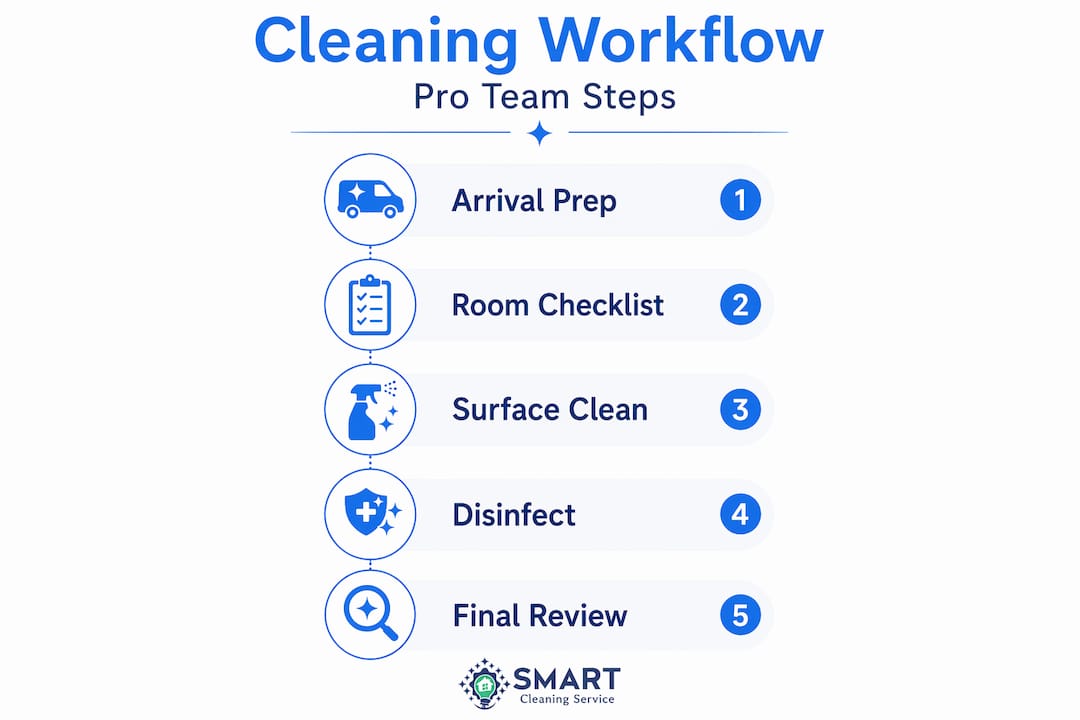
- Entry and walkthrough , Before touching anything, a professional documents the condition of the home and confirms the scope with the client or via a pre-agreed checklist.
- Gather and stage supplies , All tools are staged at the starting point to avoid unnecessary trips back and forth. This alone cuts significant time on larger homes.
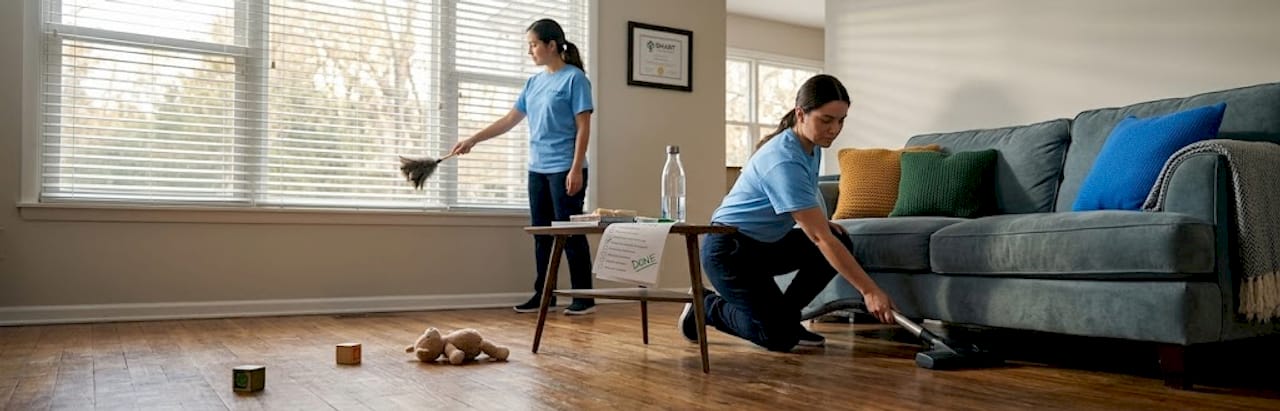
- Top-down dusting , Starting from ceiling fans, light fixtures, and shelves before anything else means dust falls onto surfaces that haven’t been cleaned yet. This is one of the most commonly skipped steps in amateur cleaning.
- Kitchen cleaning , Counters, appliances (exterior and interior if agreed), sink, fixtures, and floors in sequence.
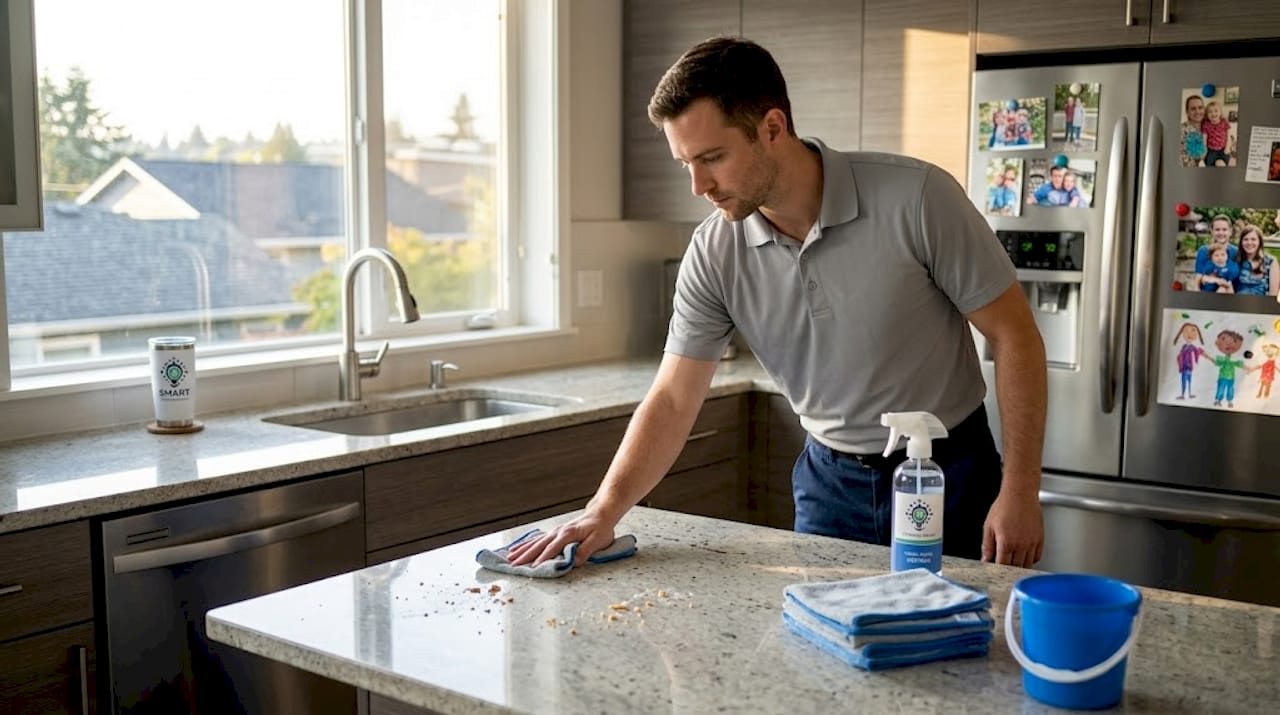
- For kitchen work, identify the accessible counters, sink and appliance surfaces to be cleaned. Appliance interiors and other additional tasks should be discussed before the visit.
- Bedrooms and living areas , Dusting, vacuuming, mopping, and surface wiping in each room.
- Floors last , Vacuuming and mopping happen after all surface work is done to pick up everything that fell during the clean.
- Final walkthrough , Checking each room against the checklist before locking up and notifying the client.
The Cleaning Business Academy recommends structuring every service as arrival steps, room-by-room tasks, and final checks, with checkboxes and clear marking for any tasks that don’t apply. This structure is what enables a professional residential cleaning workflow to remain consistent across different cleaners, different homes, and different service types.
| Service type | Typical sequence focus | Average time added vs. standard clean |
|---|---|---|
| Standard recurring clean | Full checklist, surface focus | Baseline |
| Deep clean | Includes interiors, baseboards, fixtures | Depends on the agreed scope |
| Move-in / move-out | Photos, top-to-bottom, all cabinets | Tasks agreed before booking |
For a move-out visit, review your lease checklist and agree the cleaning priorities before scheduling. Cleaning is separate from the landlord’s inspection and deposit decision.
Now that you know the workflow basics, here’s how professional teams optimize cleaning time and quality using specialized methods.
Efficiency and quality assurance with team cleaning and quality control processes
List the rooms and accessible surfaces you want cleaned before requesting an estimate. The work completed depends on the agreed priorities, property condition and time used.
Requirements vary with the property, activity and circumstances. Review the applicable requirements with a qualified adviser; a cleaning appointment does not certify legal or regulatory compliance.
Why this matters for you as a Seattle homeowner:
- Faster turnaround without cutting corners on individual tasks
- Less chance of a step being skipped because one person “thought someone else got it”
- Easier quality checks because each zone has a clear owner
- Faster onboarding for new team members since they learn one function deeply
The cleaning plan should identify the rooms, tasks and priorities for your visit. Tell the office about access restrictions, delicate surfaces or areas that should be left alone.
Surprise inspections on a percentage of jobs are something most homeowners don’t know about, but reputable cleaning companies do this internally. A supervisor or lead cleaner will arrive unannounced to spot-check a job in progress or after completion. You benefit from this whether you know it’s happening or not.
Requirements vary with the property, activity and circumstances. Review the applicable requirements with a qualified adviser; a cleaning appointment does not certify legal or regulatory compliance. Related reading: team cleaning strategies.
A home cleaning visit can include kitchens, bathrooms, accessible surfaces and floors. Share the areas you want addressed and confirm the tasks in your quote.
Routine Cleaning Tasks and Priorities
For routine home cleaning, discuss dusting, floor care, kitchen surfaces and bathroom tasks. Detailed or additional work should be agreed before the appointment.
The cleaning plan should identify the rooms, tasks and priorities for your visit. Tell the office about access restrictions, delicate surfaces or areas that should be left alone.
- Dusting can be included for accessible surfaces in the agreed rooms. Point out delicate items, shelves that should be left alone and any areas that need additional attention.
- A home cleaning visit can include kitchens, bathrooms, accessible surfaces and floors. Share the areas you want addressed and confirm the tasks in your quote.
- Let it sit. This is called dwell time (also called contact time), and skipping it is one of the most common errors in amateur cleaning.
- Wipe or allow to air dry per the product’s instructions.
For routine home cleaning, discuss dusting, floor care, kitchen surfaces and bathroom tasks. Detailed or additional work should be agreed before the appointment.
A home cleaning visit can include kitchens, bathrooms, accessible surfaces and floors. Share the areas you want addressed and confirm the tasks in your quote.
What to never do:
- Follow the product label and the surface manufacturer’s care instructions. Do not mix cleaning products. Discuss any specific product request before a professional visit.
- Use the same cloth for the toilet and then the sink, even after rinsing.
- List the rooms and accessible surfaces you want cleaned before requesting an estimate. The work completed depends on the agreed priorities, property condition and time used.
Discuss the bathroom surfaces and fixtures that need attention. Tell the office about buildup, delicate finishes or maintenance issues before scheduling. Related reading: deep cleaning techniques.
A home cleaning visit can include kitchens, bathrooms, accessible surfaces and floors. Share the areas you want addressed and confirm the tasks in your quote.
Verifying cleaning quality: client inspections, photo documentation, and feedback loops
Trust is built through transparency. For move-in and move-out situations especially, documentation is not optional. It is your protection.
What a solid verification process looks like:
- Dated before-and-after photos of every room and key surfaces, taken at the start and end of the job
- A completed checklist submitted by the cleaners when the job is finished
- A follow-up communication from the company within 24 hours confirming completion and inviting feedback
- A clear process for requesting a re-clean if something was missed
For a move-out visit, review your lease checklist and agree the cleaning priorities before scheduling. Cleaning is separate from the landlord’s inspection and deposit decision.
Pro Tip: Before your move-out clean, do your own walkthrough with photos. Share these with your cleaning company. This creates a shared record that protects both parties and sets a clear starting point for the job.
The feedback loop matters too. After a recurring service, a quick check-in from your cleaning company is a sign they care about getting it right, not just getting it done. If you never hear from your cleaner after a job, that silence is information. You can also explore scheduling cleaning and verification to see how Seattle-area homeowners manage recurring appointments with built-in quality checks.
Having covered how to verify service quality, let’s explore an expert perspective that challenges common client assumptions about professional cleaning workflows.
Rethinking what makes a cleaning service reliable: beyond checklists and speed
Here’s an opinion you won’t hear often: a checklist alone does not make a cleaning company good. It makes them organized. Those are different things.
For kitchen work, identify the accessible counters, sink and appliance surfaces to be cleaned. Appliance interiors and other additional tasks should be discussed before the visit.
A checklist is a tool for aligning expectations and reducing skipped tasks, not a substitute for training on the right sequence. The difference between a cleaner who knows why the order matters and one who just follows a list is visible in the results.
Sequencing and route planning reduce wasted motion and make cleaning more consistent. But that knowledge has to be trained, reinforced, and inspected. It doesn’t happen because someone read a checklist once.
What this means for you as a Seattle homeowner: don’t just ask a cleaning company for their checklist. Ask how they train their team. Ask what happens when a cleaner misses something. Ask if they do quality checks. A company that can answer those questions confidently has built systems. A company that can only show you a list of tasks has built paperwork.
Compare estimates by the work listed, team size, minimum charge and billing method. Confirm the scope and any additional charges before the appointment.
Partnering with Smart Cleaning WA for reliable professional home cleaning
The workflows described throughout this guide aren’t abstract theory. They’re the actual standard that separates cleaning services that deliver consistent results from those that leave you guessing after every visit.
Smart Cleaning Service is licensed, insured and BBB accredited. Service requirements should be reviewed with the office before booking. Insurance coverage depends on the policy and the circumstances of a claim. Related reading: recurring home cleaning.
Frequently asked questions
What is a professional cleaning workflow and why does it matter?
A professional cleaning workflow is a defined sequence of steps and checklists that cleaning teams follow to deliver consistent, thorough service tailored to your home and service type. Structured workflows with checklists align expectations between the client and the cleaner and reduce the chance of missed tasks.
How do professional cleaning teams maintain quality on recurring cleanings?
For routine home cleaning, discuss dusting, floor care, kitchen surfaces and bathroom tasks. Detailed or additional work should be agreed before the appointment.
Routine Cleaning Tasks and Priorities
The cleaning plan should identify the rooms, tasks and priorities for your visit. Tell the office about access restrictions, delicate surfaces or areas that should be left alone.
Planning the Cleaning Scope
They include dated photo documentation of pre-existing damage and post-cleaning conditions as a standard part of the workflow. Photo documentation of pre-existing conditions is essential for preventing disputes and confirming the scope of work was completed.
What benefits does team cleaning offer over solo cleaning in professional services?
Team cleaning assigns defined tasks and routes to each worker, reducing wasted effort, improving consistency across rooms, speeding up training for new staff, and making quality checks simpler and more reliable.
Recommended
- Smart Cleaning Service™ House Cleaning Seattle Kirkland Bellevue Redmond
- Smart Cleaning Service™ House Cleaning Seattle Kirkland Bellevue Redmond
- Smart Cleaning Service™ House Cleaning Seattle Kirkland Bellevue Redmond
- Smart Cleaning Service™ House Cleaning Seattle Kirkland Bellevue Redmond