
For kitchen work, identify the accessible counters, sink and appliance surfaces to be cleaned. Appliance interiors and other additional tasks should be discussed before the visit.
Table of Contents
- What is deep cleaning and how does it differ from regular cleaning?
- The step-by-step process of deep cleaning your Seattle home
- Why Seattle’s unique climate and lifestyle affect your deep cleaning needs
- Kitchen Cleaning Tasks
- How to decide when and how often to schedule deep cleaning for your home
- Why typical cleaning routines fall short for Seattle homes and what really matters
- Routine Cleaning Tasks and Priorities
- Frequently asked questions
Key Takeaways
| Point | Details |
|---|---|
| Deep cleaning defined | Routine surface cleaning |
| Seattle-specific needs | The rainy, mold-prone climate along with kids or pets means more frequent deep cleaning is essential. |
| 3-step cleaning process | Routine surface cleaning |
| Kitchen focus | Rotating monthly and quarterly deep cleans of the kitchen prevent buildup and extend appliance life. |
| Professional help benefits | Confirm the scope before booking |
What is deep cleaning and how does it differ from regular cleaning?
Discuss the bathroom surfaces and fixtures that need attention. Tell the office about buildup, delicate finishes or maintenance issues before scheduling.
The deep cleaning definition most experts agree on is this: deep cleaning accesses “beneath, behind, and within” areas that routine cleans miss, and is recommended two to four times yearly depending on household conditions. That means pulling the fridge out, scrubbing grout with a stiff brush, cleaning inside the oven, and wiping down every baseboard in the house.
Here is what a proper deep cleaning covers that standard cleaning does not:
- Baseboards, door frames, and window sills
- Ceiling fans, light fixtures, and vents
- Grout lines in kitchens and bathrooms
- Inside appliances (oven, fridge, dishwasher, microwave)
- Behind and underneath furniture
- Cabinet interiors and drawer tracks
- Blinds, shades, and window tracks
An appointment starts with the property details and the work you want done. Share the location, access arrangements and priorities when requesting an estimate.
The difference between deep and regular cleaning is not just about time or effort. It is about intention. Regular cleaning prevents visible mess. Deep cleaning services in Seattle address the underlying buildup that affects your health, your air, and the longevity of your home’s surfaces and appliances.
The step-by-step process of deep cleaning your Seattle home
Requirements vary with the property, activity and circumstances. Review the applicable requirements with a qualified adviser; a cleaning appointment does not certify legal or regulatory compliance.
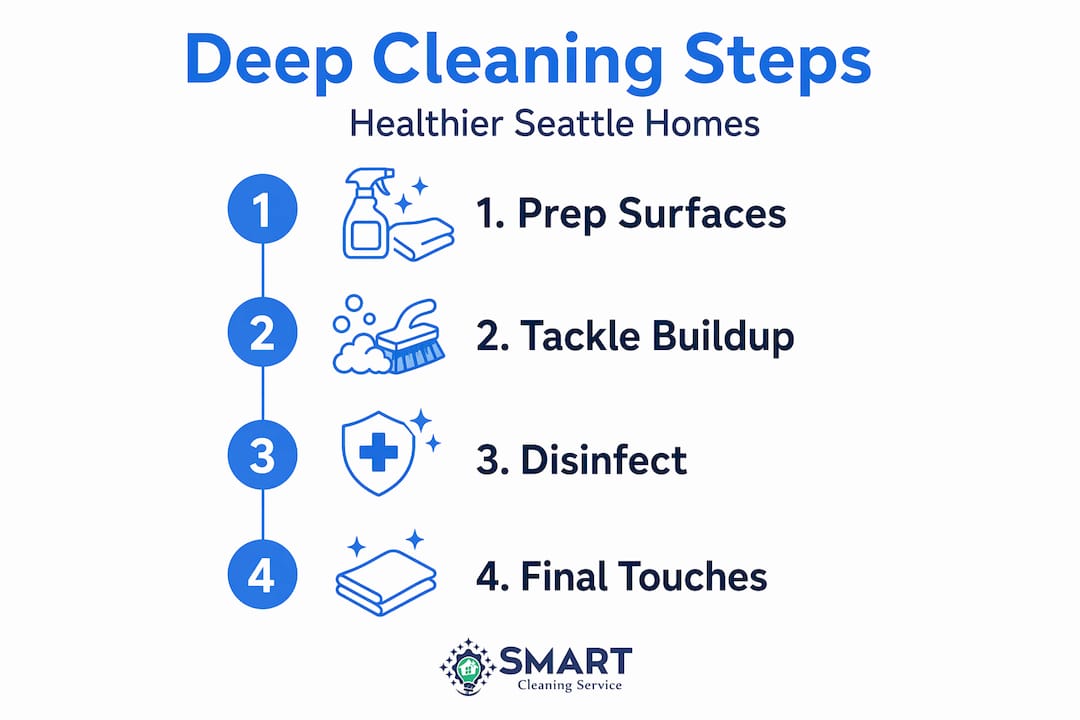
Follow this sequence for the best results:
- List the rooms and accessible surfaces you want cleaned before requesting an estimate. The work completed depends on the agreed priorities, property condition and time used.
- For kitchen work, identify the accessible counters, sink and appliance surfaces to be cleaned. Appliance interiors and other additional tasks should be discussed before the visit.
- Requirements vary with the property, activity and circumstances. Review the applicable requirements with a qualified adviser; a cleaning appointment does not certify legal or regulatory compliance.
- Tackle hidden zones. After the three-phase approach on main surfaces, work through the areas your routine never touches: inside drawers, underneath the dishwasher lip, behind the toilet, inside vents.
- Work top to bottom, room to room. Dust from ceiling fans and vents first so debris falls onto surfaces you have not yet cleaned. Finish with floors.
For kitchen work, identify the accessible counters, sink and appliance surfaces to be cleaned. Appliance interiors and other additional tasks should be discussed before the visit. Related reading: deep clean your house step-by-step.
Understanding these phases clarifies how thorough deep cleaning can reduce unhealthy buildup and infection risk at home.
Why Seattle’s unique climate and lifestyle affect your deep cleaning needs
Seattle gets roughly 38 inches of rain per year. Wet shoes, damp coats, and moisture-laden air mean that your entryways, bathrooms, and poorly ventilated corners are fighting a constant battle against mold, mildew, and tracked-in grime. This is not a generic cleaning problem , it is a specifically Pacific Northwest one.
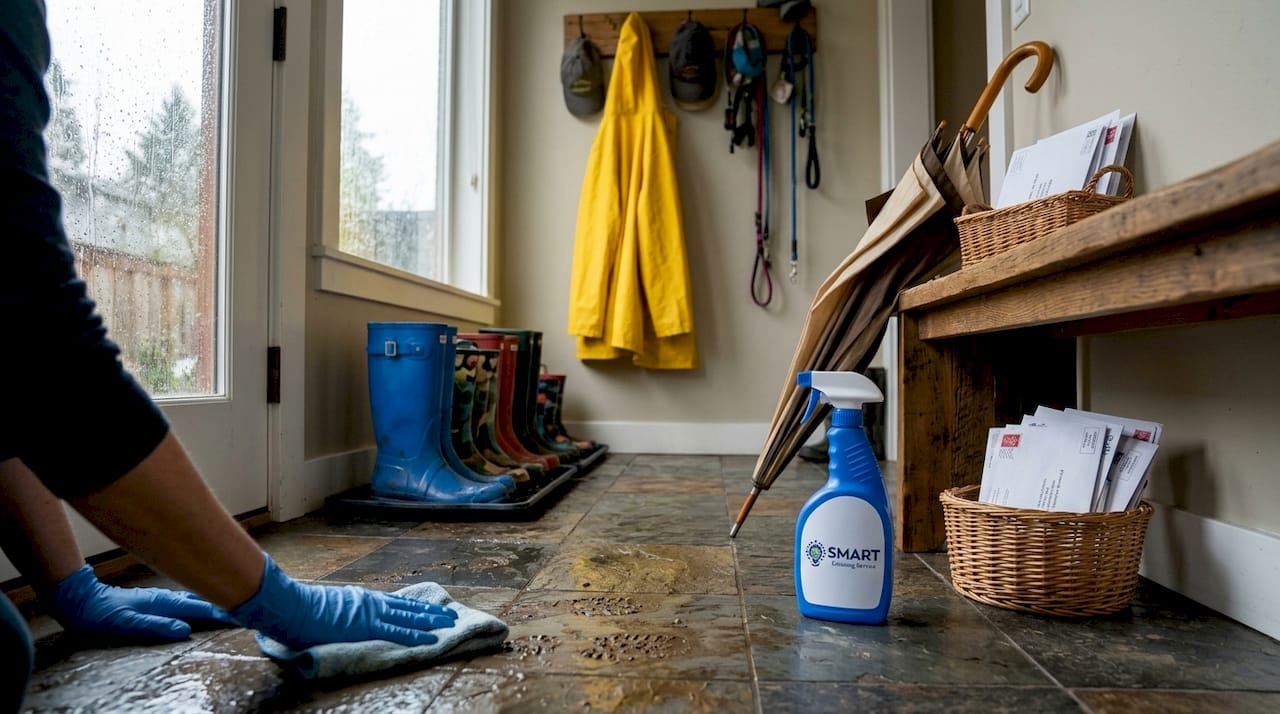
Seattle residents should schedule deep cleaning every three to six months, or quarterly for homes with pets or kids, due to accelerated mold and dirt buildup. That is a tighter schedule than what most national cleaning guides recommend, and it reflects real local conditions.
Here is how different household types in Seattle should think about frequency:
- Pets or young children at home: Quarterly deep cleans at minimum
- Humid or poorly ventilated rooms: Inspect monthly, deep clean every three months
- High-traffic apartments and rentals: Every three to four months
- Smaller single-person or couple households: Every four to six months
| Room | Recommended deep clean frequency |
|---|---|
| Kitchen | Every one to three months |
| Bathrooms | Every one to three months |
| Bedrooms | Every three to six months |
| Living areas | Every three to six months |
| Entryways (especially in Seattle) | Monthly inspection, quarterly deep clean |
Seattle’s climate does not just bring rain. It brings sustained humidity that settles into corners, grout lines, and behind appliances where mold grows quietly for months before you notice it.
Discuss the bathroom surfaces and fixtures that need attention. Tell the office about buildup, delicate finishes or maintenance issues before scheduling. Related reading: seasonal deep cleaning guide.
Kitchen Cleaning Tasks
For kitchen work, identify the accessible counters, sink and appliance surfaces to be cleaned. Appliance interiors and other additional tasks should be discussed before the visit.
Cleaning pro Becky Rapinchuk advises monthly kitchen deep cleans with a rotating focus on appliances and cabinets quarterly to avoid buildup and extend appliance life. Here is what that looks like in practice:
Monthly kitchen deep cleaning tasks:
- Wipe down all countertops, backsplash tiles, and cabinet fronts
- Clean inside the microwave and wipe the exterior
- For kitchen work, identify the accessible counters, sink and appliance surfaces to be cleaned. Appliance interiors and other additional tasks should be discussed before the visit.
- Mop the floor and clean behind the trash can
Quarterly deep cleaning tasks:
- Pull out the refrigerator and clean the coils and floor beneath it
- Deep clean the oven interior and stovetop burner grates
- Run a cleaning cycle on the dishwasher with a specialty cleaner
- Degrease the vent hood filter above your stove
- Empty every drawer and cabinet, wipe the interior surfaces, and check for crumbs or moisture
Pro Tip: A refrigerator with dirty condenser coils works harder to stay cold, which raises your energy bill and shortens the appliance’s life. Pull it out every three months, vacuum the coils, and wipe the floor underneath. It takes fifteen minutes and pays for itself. Find more detail in our kitchen cleaning secrets guide.
Routine home and office cleaning is separate from specialist remediation, clinical work or building maintenance. Describe the work before booking and consult an appropriate specialist when it falls outside ordinary cleaning.
How to decide when and how often to schedule deep cleaning for your home
No single schedule works for every household. Deep cleaning frequency depends on household size, presence of kids or pets, and local climate, ranging from twice a year to quarterly or monthly for kitchens. The right answer for your home starts with an honest assessment.
Ask yourself these questions:
- Do you have pets that shed or track in outdoor debris?
- Do you have children under ten years old?
- Does your home have poor ventilation or rooms that stay damp?
- Do you cook frequently at home?
- The cleaning plan should identify the rooms, tasks and priorities for your visit. Tell the office about access restrictions, delicate surfaces or areas that should be left alone.
If you answered yes to two or more of those, you are in the quarterly or more frequent category. Here is a practical comparison:
| Household type | Recommended frequency |
|---|---|
| Single person, no pets, apartment | Twice yearly |
| Couple, no pets, house | Twice to three times yearly |
| Family with children, no pets | Three to four times yearly |
| Any household with pets | Quarterly |
| Rental property or Airbnb | After every tenant or booking |
The deep cleaning scheduling guide for Seattle homes goes deeper into tailoring this by room and season. Seattle’s late fall and early spring are especially important windows, when moisture levels spike and the transition between seasons shifts what your home accumulates.
Routine home and office cleaning is separate from specialist remediation, clinical work or building maintenance. Describe the work before booking and consult an appropriate specialist when it falls outside ordinary cleaning.
Why typical cleaning routines fall short for Seattle homes and what really matters
Discuss the bathroom surfaces and fixtures that need attention. Tell the office about buildup, delicate finishes or maintenance issues before scheduling.
Requirements vary with the property, activity and circumstances. Review the applicable requirements with a qualified adviser; a cleaning appointment does not certify legal or regulatory compliance.
In Seattle specifically, the wet climate is not just an inconvenience. Sustained moisture in the home creates a mold growth window that most surface routines never address. Mold begins to form within 24 to 48 hours of moisture exposure on organic materials. Your bathroom grout, your window tracks, the silicone seal on your kitchen sink , these are all live exposure points.
A home cleaning visit can include kitchens, bathrooms, accessible surfaces and floors. Share the areas you want addressed and confirm the tasks in your quote.
The cleaning plan should identify the rooms, tasks and priorities for your visit. Tell the office about access restrictions, delicate surfaces or areas that should be left alone. Related reading: benefits of professional cleaning services.
Routine Cleaning Tasks and Priorities
Requirements vary with the property, activity and circumstances. Review the applicable requirements with a qualified adviser; a cleaning appointment does not certify legal or regulatory compliance.
The work for your visit should be agreed in the quote. Our team focuses on cleaning accessible surfaces, kitchens, bathrooms and floors, with additional priorities discussed before the appointment.
Frequently asked questions
How often should I deep clean my home in Seattle?
Seattle residents typically deep clean every three to six months, or quarterly if they have pets or children, to combat accelerated mold and dirt buildup driven by the region’s humid climate.
Routine Cleaning Tasks and Priorities
A home cleaning visit can include kitchens, bathrooms, accessible surfaces and floors. Share the areas you want addressed and confirm the tasks in your quote.
Are professional deep cleaning services worth the cost in Seattle?
Routine home and office cleaning is separate from specialist remediation, clinical work or building maintenance. Describe the work before booking and consult an appropriate specialist when it falls outside ordinary cleaning.
Can I deep clean my kitchen myself or should I hire a pro?
For kitchen work, identify the accessible counters, sink and appliance surfaces to be cleaned. Appliance interiors and other additional tasks should be discussed before the visit.
What areas in my home are most important to target during deep cleaning?
Focus on high-touch and hidden spots like baseboards, grout lines, ceiling fans, vents, and inside appliances, with bathrooms and kitchens prioritized most frequently due to moisture and heavy daily use.
Recommended
- Smart Cleaning Service™ House Cleaning Seattle Kirkland Bellevue Redmond
- Smart Cleaning Service™ House Cleaning Seattle Kirkland Bellevue Redmond
- Smart Cleaning Service™ House Cleaning Seattle Kirkland Bellevue Redmond
- Seattle Deep Cleaning Services: Home Transformation